Kiki Kogelnik Auction Prices and Value Guide
Kiki Kogelnik auction prices are tracked in Appraisily's artist market index, with source-directory coverage of 455 records. Use this page to review sold-lot activity, market context, and valuation factors before requesting a formal appraisal.
Kiki Kogelnik auction prices: quick answer
Kiki Kogelnik auction prices depend on medium, size, date, condition, provenance, edition details, attribution confidence, and recent comparable auction sales.
- Artist
- Kiki Kogelnik
- Source records
- 455
- Market update
- 2026-02-06
Kiki Kogelnik market snapshot
Kiki Kogelnik shows deep auction liquidity with 280 tracked lots. Median realized sale is around $1,800. Category concentration is still broad or sparse. Last 12 months recorded 15 sales. Latest recorded sale: 2026-01-26.
Realized price distribution
- Under $1,000 (7.4% · 17 sales)
- $1,000 to $10,000 (79.6% · 183 sales)
- $10,000+ (13.0% · 30 sales)
- Median sale (last 12 months)
- $5,000
- Sales recorded (last 12 months)
- 15
- Median shift vs prior year
- 0.0%
- Latest recorded sale
- 2026-01-26
Artist context
About Kiki Kogelnik
Born
1935
Died
1997
Nationality
Austrian, American
Kiki Kogelnik (1935–1997) was an Austrian-born painter, sculptor, printmaker, and ceramicist who became a significant figure in the post-war art world after relocating from Vienna to New York City in the early 1960s. She studied at the Academy of Fine Arts Vienna before moving to Paris in 1959 and then to New York around 1961, where she established her studio on 29th Street. Kogelnik is widely associated with Pop Art—contributing to the landmark artist's book 1¢ Life (1964) and exhibiting at MoMA—though she resisted being strictly categorized within any single movement. Her output spans bold figurative paintings, silkscreen prints, ceramics, vinyl wall pieces, and sculpture, often engaging with themes of technology, the human body, and space exploration. The Kiki Kogelnik Foundation, based in Vienna, now manages her estate and promotes ongoing scholarship of her work.
Pop ArtPainting (oil, acrylic)Printmaking (screenprint, lithograph)SculptureCeramicsStylized human figures and body partsTechnology and space-age imagery
Common works and media
Kogelnik produced paintings in oil and acrylic, screen prints and lithographs, ceramic works, vinyl cut-outs mounted directly on walls, freestanding sculpture, and works on paper. Common subjects include stylized figures, disembodied body parts, technological motifs, and space-age imagery. Her editioned prints from the 1960s—particularly contributions to the 1¢ Life portfolio—are among the most frequently encountered works at auction. Later periods include vibrant figurative canvases and mixed-media constructions from the 1970s through the 1990s.
Market and appraisal context
Kiki Kogelnik's auction market demonstrates strong and steady liquidity, with 291 recorded lots spanning December 2002 to March 2026, of which 241 carry realized prices. Activity is consistent: 21 lots appeared in the trailing 12 months and 22 in the prior 12-month window, indicating stable demand. The price distribution is wide—from $2 for minor ephemera to $162,500 for a major work—with a median of $1,875 USD, reflecting a market where editioned screenprints dominate transaction volume while unique paintings command significantly higher prices. Screenprints are the most frequently traded segment. Titles such as Bathing in Green, Sunkist, Erato, War Baby, and Lady with Hat appear repeatedly, typically realizing $2,250–$4,750 USD at RoGallery and regional US houses. Unique works in oil and acrylic trade at materially higher levels: a painting sold at Selkirk Auctioneers realized $60,000 USD, and Dorotheum and Van Ham in Vienna have recorded results of €20,000–€22,000 EUR. Austrian houses—Dorotheum, Im Kinsky, and Van Ham—concentrate the higher-value unique works, while US houses including Bonhams, Christie's, Heritage Auctions, and Freeman's handle a mix of prints and paintings. The Kiki Kogelnik Foundation's ongoing scholarship and recent museum exhibitions continue to drive collector awareness upward.
Auction categories and appraisal factors
Common auction categories
- Screenprints and multiples
- Paintings (oil and acrylic)
- Works on paper
- Sculpture
- Ceramics
Value drivers
- Medium and period: 1960s Pop-related works tend to attract stronger collector interest
- Editioned prints, including contributions to 1¢ Life (1964), appear regularly at auction
- Provenance, exhibition history, and condition affect value across all media
- Posthumous museum exhibitions and Foundation scholarship have contributed to growing market attention
- Medium is the primary price driver: unique paintings in oil or acrylic trade at $20,000–$60,000+, while editioned screenprints typically realize $1,400–$4,750.
- Period matters: 1960s Pop-related works and 1¢ Life portfolio contributions attract the strongest collector interest.
Appraisal caveats
- Her oeuvre spans many media and periods; attribution should be verified through the Kiki Kogelnik Foundation or published catalogues.
- Market visibility has increased in recent years but published auction-price trend data was not available in this source pack.
- The $162,500 maximum likely represents a single outlier or museum-quality painting; the median of $1,875 better reflects the typical transaction level dominated by prints.
- Auction results mix USD and EUR; currency conversion should be applied when comparing lots across US and Austrian houses.
Evidence
Sources for artist context
This source-grounded artist context passed Appraisily's promotion threshold: high confidence, strong sources.
- Wikidata library authority
- Wikipedia wikipedia
- Getty Vocabulary Program library authority
- VIAF library authority
- Library of Congress library authority
- The Museum of Modern Art museum or university
Recent sale records
Selected public auction records currently in the Appraisily lot index. Use them as market context, then request a formal appraisal before you sell, insure, or donate.

kiki kogelnik triangle screenprint · RoGallery · 2026-06-30 kiki kogelnik triangle screenprint RoGallery · 2026-06-30

kiki kogelnik austrian american 1935 1997 bathing in green · Chiswick Auctions · 2026-06-11 kiki kogelnik austrian american 1935 1997 bathing in green Chiswick Auctions · 2026-06-11

kiki kogelnik bathing in green screenprint · RoGallery · 2026-06-04 kiki kogelnik bathing in green screenprint RoGallery · 2026-06-04
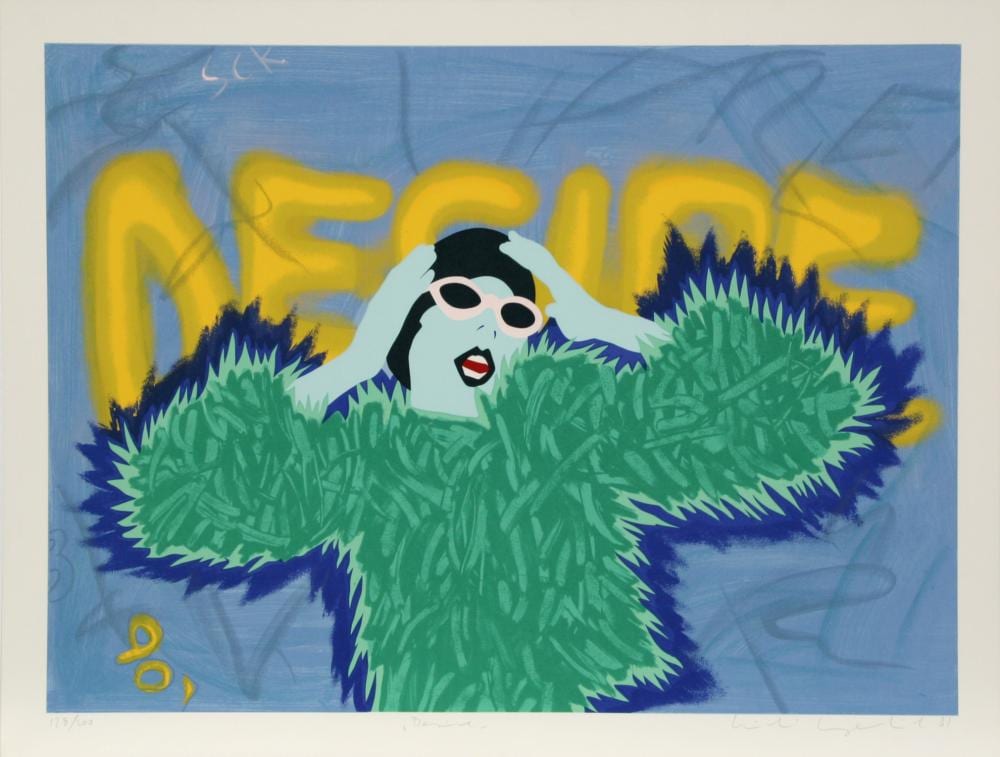
kiki kogelnik desire screenprint · RoGallery · 2026-04-23 kiki kogelnik desire screenprint RoGallery · 2026-04-23

kiki kogelnik war baby screenprint · RoGallery · 2026-03-25 kiki kogelnik war baby screenprint RoGallery · 2026-03-25
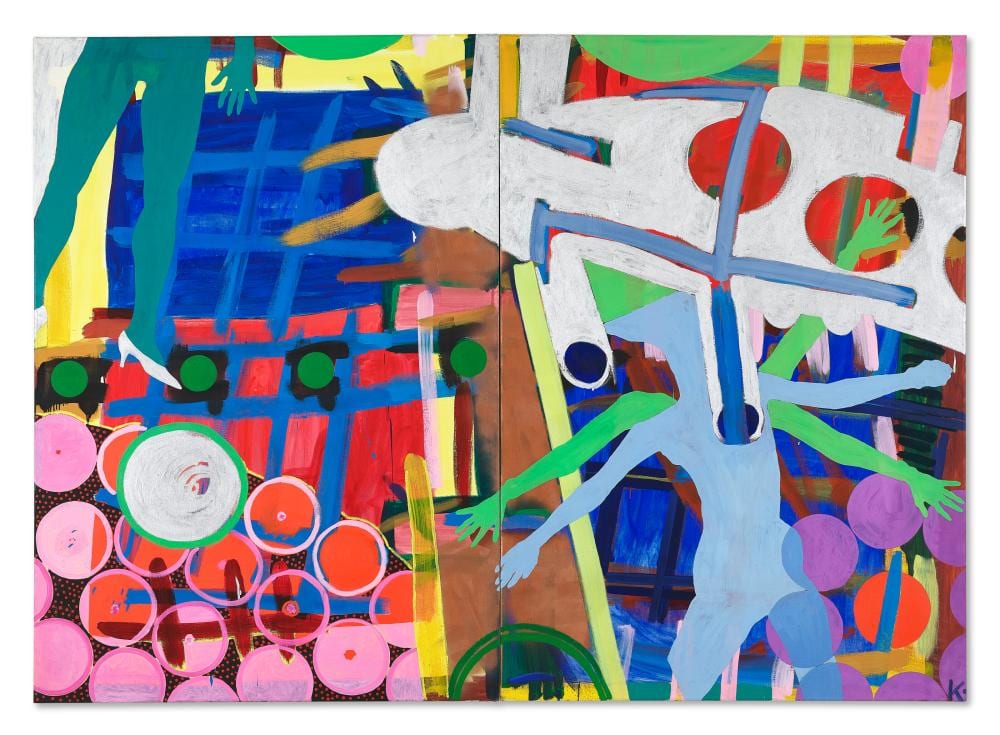
kiki kogelnik 1935 1997 untitled oil and acrylic on canvas in two part · Christie's · 2026-03-07 kiki kogelnik 1935 1997 untitled oil and acrylic on canvas in two part Christie's · 2026-03-07
Data basis
This page is built from Appraisily's public auction market index. Private transactions, incomplete sale feeds, and attribution changes may not be fully represented.
Artist value FAQ
How much is Kiki Kogelnik worth?
Comparable public auction sales are the best starting point, but final value depends on the specific artwork, condition, size, medium, provenance, and attribution confidence.
Can Appraisily value my Kiki Kogelnik artwork?
Yes. Appraisily can review photos, dimensions, signatures, condition, provenance, and comparable market data to prepare a current valuation.