Jean Dubuffet Auction Prices and Value Guide
Jean Dubuffet auction prices are tracked in Appraisily's artist market index, with source-directory coverage of 5,049 records. Use this page to review sold-lot activity, market context, and valuation factors before requesting a formal appraisal.
Jean Dubuffet auction prices: quick answer
Jean Dubuffet auction prices depend on medium, size, date, condition, provenance, edition details, attribution confidence, and recent comparable auction sales.
- Artist
- Jean Dubuffet
- Source records
- 5,049
- Market update
- 2026-02-06
Jean Dubuffet market snapshot
Jean Dubuffet shows very deep auction liquidity with 3,067 tracked lots. Median realized sale is around $28,000. Category concentration is still broad or sparse. Last 12 months recorded 136 sales. Latest recorded sale: 2025-12-27.
Realized price distribution
- Under $1,000 (17.0% · 319 sales)
- $1,000 to $10,000 (20.7% · 389 sales)
- $10,000+ (62.4% · 1,173 sales)
- Median sale (last 12 months)
- $9,450
- Sales recorded (last 12 months)
- 136
- Median shift vs prior year
- +81.7%
- Latest recorded sale
- 2025-12-27
Artist context
About Jean Dubuffet
Born
1901
Died
1985
Nationality
French
Also known as
Bufe, Jandu, Louis-Léon Forget, Jean-Philippe-Arthur Dubuffet
Jean Dubuffet (1901–1985) was a French painter, sculptor, and printmaker whose work challenged prevailing ideas of beauty and high culture. Born in Le Havre, he trained as a painter but spent much of his early adulthood working as a wine merchant. He committed to art full-time at the age of 41 and quickly developed a radical visual language rooted in raw, instinctual expression. Dubuffet is best known as the founder of art brut—a term he coined to describe work made outside the academic tradition by children, folk artists, and the mentally ill—and for building the Collection de l'art brut, now housed in Lausanne, Switzerland. Over four decades he worked across painting, drawing, lithography, sculpture, and mixed media, continually experimenting with unconventional materials such as gravel, sand, and resin. His work is held by major institutions worldwide, including the Museum of Modern Art, Tate, and the Centre Pompidou.
Art BrutÉcole de ParisPaintingSculptureLithographyPrintmakingAbstract figures and textured surfacesUrban and everyday scenes
Common works and media
Dubuffet worked across a wide range of media. Common work types encountered at auction and in appraisal contexts include oil and acrylic paintings with heavily textured surfaces, gouaches on paper, lithographic prints (often in editions), ink and felt-tip marker drawings, polystyrene and resin sculptures, and large-scale outdoor painted sculptures. His imagery ranges from abstracted figures and faces to dense, map-like compositions and the distinctive linear forms of the Hourloupe period. Posters and exhibition prints also appear on the market.
Market and appraisal context
Jean Dubuffet maintains one of the deepest and most liquid auction markets among post-war French artists, with 3,188 recorded lots and 1,937 priced sales spanning from 1998 to April 2026. Price dispersion is extreme: the recorded range runs from $10 for small prints and posters to $23.8 million for major paintings, with a median of $25,932 and a 75th percentile at $162,500. This wide band reflects the vast difference in value between Dubuffet's large oil paintings and sculptures—particularly works from the textured 1940s–50s period and the Hourloupe cycle (1962–1974)—and his extensive output of lithographs, serigraphs, and editions, which circulate frequently at four-figure and sub-$500 levels. Top-tier works consistently appear at Christie's and Sotheby's, while a long tail of regional and specialist houses (Artcurial, Bonhams, Piasa, Hindman, Galerie Kornfeld, Wright, Rago, and others) handles mid-range and print material. Trailing-12-month volume is 155 lots versus 207 in the prior year, indicating a still-active but slightly softer market. The breadth of the record base—spanning over two dozen auction houses across the US, UK, France, Switzerland, and Germany—provides strong comparable-sale coverage for appraisals at every tier.
Auction categories and appraisal factors
Common auction categories
- Post-War and Contemporary Art
- Prints and Multiples
- Painting
- Sculpture
- Works on Paper
Value drivers
- Medium: oil paintings and large-scale sculptures generally command higher prices than works on paper, prints, or lithographs
- Period: works from major series such as the Hourloupe cycle or early textured paintings from the 1940s–50s are particularly sought after
- Provenance and exhibition history: documented gallery and museum provenance strengthens value
- Authenticity: Dubuffet used pseudonyms (Jandu Bufe, Louis-Léon Forget) and signed works in varied ways, making attribution verification important
- Condition: Dubuffet's experimental use of unorthodox materials (gravel, sand, plaster, resin) can create unique condition issues that affect appraised value
- Medium and format: oil paintings and large-scale sculptures command the highest prices; lithographs, serigraphs, and works on paper trade at significantly lower tiers
Appraisal caveats
- Dubuffet's extensive print output and multiples mean that not all works bearing his name carry equal rarity or value; edition size and medium must be verified.
- Attribution should account for his use of the pseudonyms Jandu Bufe and Louis-Léon Forget.
- With over 5,000 recorded auction lots, the range of realized prices is wide; comparable sales must be matched closely by medium, period, and dimensions.
- With 3,188 lots recorded, the price range spans from $10 to $23.8 million. Broad statements about 'Dubuffet values' are unreliable; any appraisal or purchase decision must be grounded in medium-specific, period-specific comparable sales.
Evidence
Sources for artist context
This source-grounded artist context passed Appraisily's promotion threshold: high confidence, strong sources.
- Library of Congress library authority
- The Museum of Modern Art museum or university
- RKD library authority
- VIAF library authority
- Wikidata library authority
- Wikipedia wikipedia
Recent sale records
Selected public auction records currently in the Appraisily lot index. Use them as market context, then request a formal appraisal before you sell, insure, or donate.

jean dubuffet 1901 1985 les grandes art res · Christie's · 2016-11-15 jean dubuffet 1901 1985 les grandes art res Christie's · 2016-11-15
jean dubuffet 1901 1985 paysage gris aux taches cerises gray landscape w · Christie's · 2021-12-01 jean dubuffet 1901 1985 paysage gris aux taches cerises gray landscape w Christie's · 2021-12-01
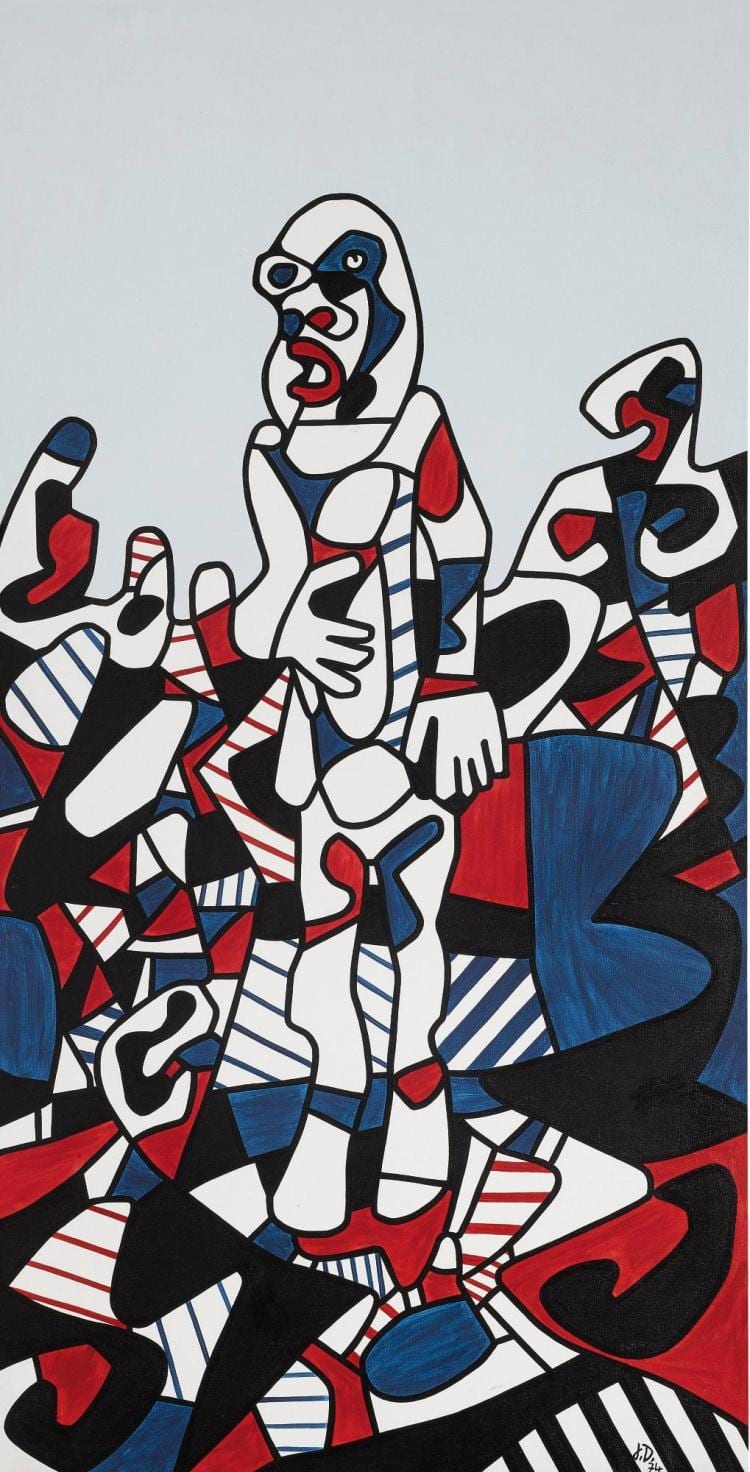
jean dubuffet promenade agreste · Sotheby's · 2018-03-31 jean dubuffet promenade agreste Sotheby's · 2018-03-31

jean dubuffet 1901 1985 tre et para tre to be and to seem · Christie's · 2017-03-07 jean dubuffet 1901 1985 tre et para tre to be and to seem Christie's · 2017-03-07
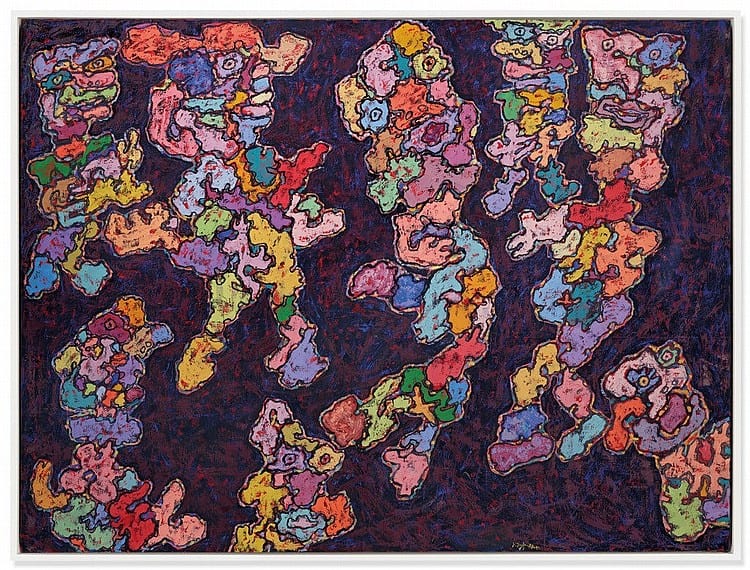
jean dubuffet 1901 1985 c r monie ceremony oil on canvas 64 7 8 x 86 5 8in 164 7 x 220cm · Christie's · 2019-06-25 jean dubuffet 1901 1985 c r monie ceremony oil on canvas 64 7 8 x 86 5 8in 164 7 x 220cm Christie's · 2019-06-25
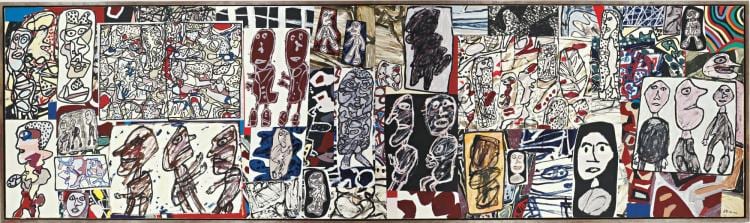
jean dubuffet le tissu social · Sotheby's · 2015-11-11 jean dubuffet le tissu social Sotheby's · 2015-11-11
Data basis
This page is built from Appraisily's public auction market index. Private transactions, incomplete sale feeds, and attribution changes may not be fully represented.
Artist value FAQ
How much is Jean Dubuffet worth?
Comparable public auction sales are the best starting point, but final value depends on the specific artwork, condition, size, medium, provenance, and attribution confidence.
Can Appraisily value my Jean Dubuffet artwork?
Yes. Appraisily can review photos, dimensions, signatures, condition, provenance, and comparable market data to prepare a current valuation.