Henri de Toulouse-Lautrec Auction Prices and Value Guide
Henri de Toulouse-Lautrec auction prices are tracked in Appraisily's artist market index, with source-directory coverage of 11,999 records. Use this page to review sold-lot activity, market context, and valuation factors before requesting a formal appraisal.
Henri de Toulouse-Lautrec auction prices: quick answer
Henri de Toulouse-Lautrec auction prices depend on medium, size, date, condition, provenance, edition details, attribution confidence, and recent comparable auction sales.
- Artist
- Henri de Toulouse-Lautrec
- Source records
- 11,999
- Market update
- 2026-02-16
Henri de Toulouse-Lautrec market snapshot
Henri de Toulouse-Lautrec shows very deep auction liquidity with 1,507 tracked lots. Median realized sale is around $3,024. Category concentration is still broad or sparse. Last 12 months recorded 319 sales. Latest recorded sale: 2026-01-26.
Realized price distribution
- Under $1,000 (32.1% · 260 sales)
- $1,000 to $10,000 (40.9% · 332 sales)
- $10,000+ (27.0% · 219 sales)
- Median sale (last 12 months)
- $2,750
- Sales recorded (last 12 months)
- 319
- Median shift vs prior year
- 0.0%
- Latest recorded sale
- 2026-01-26
Artist context
About Henri de Toulouse-Lautrec
Born
1864
Died
1901
Nationality
French
Also known as
Toulouse-Lautrec, Henri Marie Raymond de Toulouse-Lautrec-Monfa, Comte Henri Marie Raymond de Toulouse-Lautrec-Montfa, Treclau
Henri de Toulouse-Lautrec (1864–1901) was a French painter, printmaker, and poster designer whose work defined the visual culture of Montmartre's nightlife during the Belle Époque. Born into an aristocratic family in Albi in southern France, he moved to Paris as a young artist and became a fixture of the city's cabarets, dance halls, and theaters. His depictions of performers at the Moulin Rouge, the cancan dancer La Goulue, and singer Jane Avril remain among the most recognizable images of late 19th-century Paris. Though his career lasted barely a decade before his death at age 36, Toulouse-Lautrec produced an extraordinary body of paintings, lithographic posters, drawings, and prints that bridged fine art and commercial illustration. His bold compositions, flat areas of color, and unconventional cropping placed him among the leading Post-Impressionist innovators and influenced the development of modern graphic design.
Post-ImpressionismOil paintingLithographyDrawingPoster designMontmartre nightlife and cabaretMoulin Rouge and café-concert performersCancan dancers and entertainersProstitutes and brothel scenes
Common works and media
The most frequently encountered Toulouse-Lautrec works at auction are color lithographic posters and prints, especially the Moulin Rouge, Jane Avril, Aristide Bruant, and Divan Japonais series. Original oil paintings appear less often but include portrait, cabaret, and brothel interior scenes. Works on paper range from finished drawings in crayon and ink to rapid sketches and caricatures. Illustrated books and café-concert programs with original lithographic covers also appear. Ceramic pieces, though rare, represent a lesser-known category. Collectors should distinguish between lifetime impressions, later restrikes, and reproductive copies.
Market and appraisal context
Toulouse-Lautrec's auction market is one of the deepest for any Post-Impressionist, with 1,558 indexed lots and 849 carrying realized prices spanning 1997 to April 2026. Liquidity is strong: 230 lots traded in the most recent 12-month window and 397 in the prior period. The price distribution is extremely wide, reflecting the full range of media: from $10 for reproduction posters and minor prints to $22.4 million for major oil paintings, with a median of $3,125 and a 75th percentile at $11,000. Lithographic posters and prints dominate volume, traded heavily through Poster Auctions International and Swann Auction Galleries. Original paintings, when they appear, trade at Christie's and Sotheby's for seven- to eight-figure sums. Ceramics are rare but notable—a Yvette Guilbert earthenware piece realized $138,600 at Christie's in May 2025. Recent poster results include Reine de Joie at $20,000, The Chap Book at $20,000, and May Belfort at $11,000 at Poster Auctions International.
Auction categories and appraisal factors
Common auction categories
- Lithography
- Poster design
- Oil painting
- Drawing
- Printmaking
Value drivers
- Medium and technique: original oil paintings are significantly rarer and more valuable than lithographs and posters; hand-colored proofs and deluxe editions fall between.
- Catalogue raisonné references: Wittrock numbers for posters and prints, and Dortu catalogue numbers for paintings, are standard authentication and valuation references.
- Edition and state: lithographic edition size, trial proofs, and progressive states materially affect value; unique proofs and early states command premiums.
- Condition and conservation: foxing, tearing, fading, trimming, and later coloration are common issues in works on paper and posters from this period.
- Provenance and exhibition history: documented ownership through recognized collections, galleries, or museum deaccession increases market confidence.
- Subject matter: Moulin Rouge, Jane Avril, Aristide Bruant, and Yvette Guilbert subjects are among the most sought-after imagery.
Appraisal caveats
- Toulouse-Lautrec is among the most widely reproduced and faked artists of the late 19th century. Posthumous restrikes, reproduction posters, and after-work prints circulate widely; attribution verification through catalogue raisonné entries is essential.
- The large body of nearly 12,000 auction records in this dataset spans a wide range of media, from original paintings to reproduction posters, producing a very broad price distribution that should not be averaged without segmenting by medium and edition.
- The record set mixes lifetime impressions, posthumous restrikes, reproduction posters, and works 'after' Toulouse-Lautrec—price statistics span all tiers and should not be averaged without segmenting by medium and edition
- Toulouse-Lautrec is among the most widely reproduced and faked late-19th-century artists; attribution verification through catalogue raisonné entries is essential before any appraisal
Evidence
Sources for artist context
This source-grounded artist context passed Appraisily's promotion threshold: high confidence, strong sources.
- Wikidata library authority
- Wikipedia wikipedia
- VIAF library authority
- Library of Congress library authority
- The Museum of Modern Art museum or university
- Tate museum or university
Recent sale records
Selected public auction records currently in the Appraisily lot index. Use them as market context, then request a formal appraisal before you sell, insure, or donate.

henri de toulouse lautrec 1864 1901 · Christie's · 2005-11-01 henri de toulouse lautrec 1864 1901 Christie's · 2005-11-01
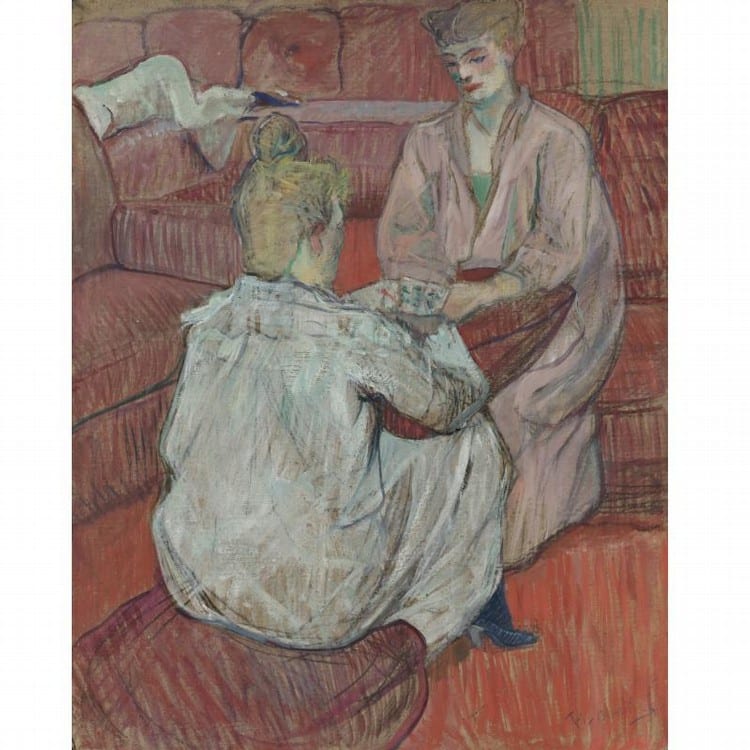
henri de toulouse lautrec · Sotheby's · 2006-11-07 henri de toulouse lautrec Sotheby's · 2006-11-07
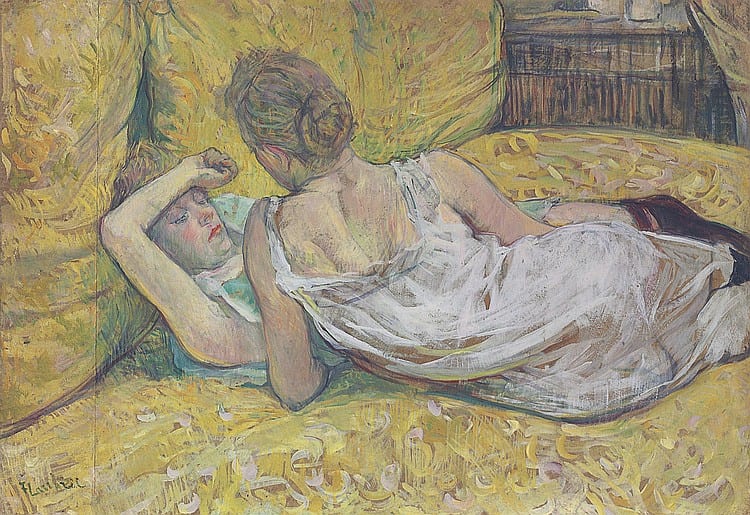
henri de toulouse lautrec 1864 1901 · Christie's · 2009-02-04 henri de toulouse lautrec 1864 1901 Christie's · 2009-02-04
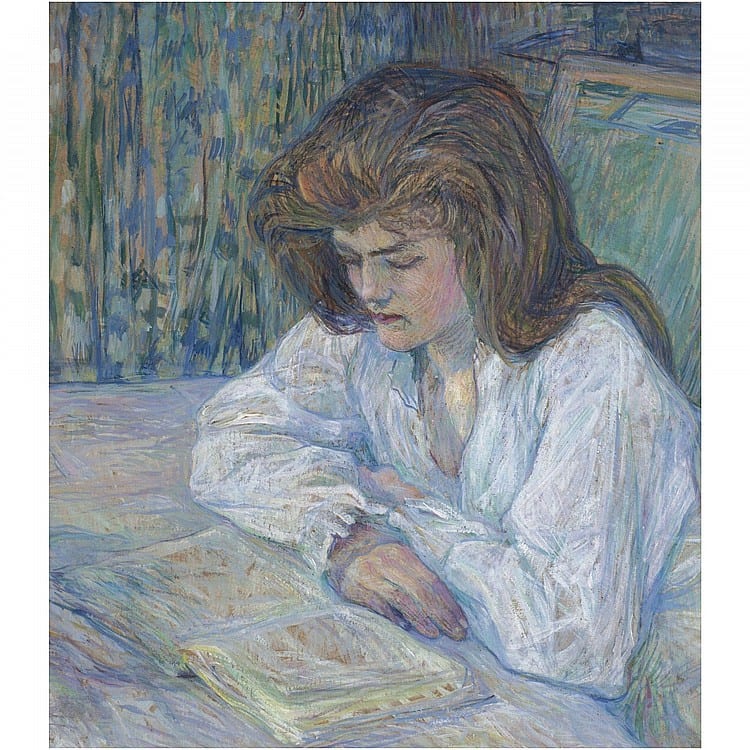
henri de toulouse lautrec · Sotheby's · 2011-06-22 henri de toulouse lautrec Sotheby's · 2011-06-22
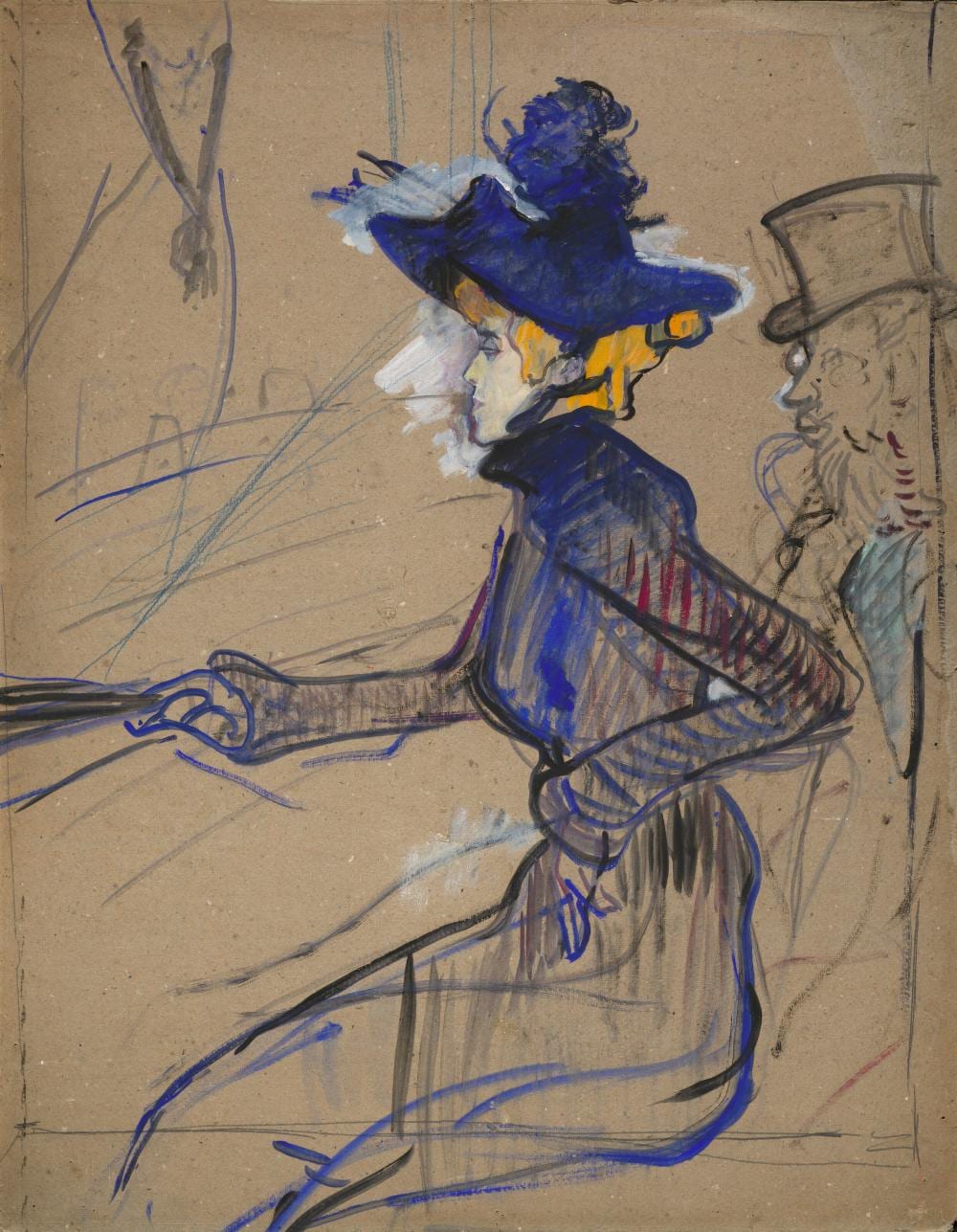
henri de toulouse lautrec 1864 1901 jane avril au divan japonais peintu · Christie's · 2025-04-09 henri de toulouse lautrec 1864 1901 jane avril au divan japonais peintu Christie's · 2025-04-09

henri de toulouse lautrec 1864 1901 · Christie's · 2008-11-05 henri de toulouse lautrec 1864 1901 Christie's · 2008-11-05
Data basis
This page is built from Appraisily's public auction market index. Private transactions, incomplete sale feeds, and attribution changes may not be fully represented.
Artist value FAQ
How much is Henri de Toulouse-Lautrec worth?
Comparable public auction sales are the best starting point, but final value depends on the specific artwork, condition, size, medium, provenance, and attribution confidence.
Can Appraisily value my Henri de Toulouse-Lautrec artwork?
Yes. Appraisily can review photos, dimensions, signatures, condition, provenance, and comparable market data to prepare a current valuation.