George Keyt Auction Prices and Value Guide
George Keyt auction prices are tracked in Appraisily's artist market index, with source-directory coverage of 255 records. Use this page to review sold-lot activity, market context, and valuation factors before requesting a formal appraisal.
George Keyt auction prices: quick answer
George Keyt auction prices depend on medium, size, date, condition, provenance, edition details, attribution confidence, and recent comparable auction sales.
- Artist
- George Keyt
- Source records
- 255
- Market update
- 2026-02-06
George Keyt market snapshot
George Keyt shows deep auction liquidity with 200 tracked lots. Median realized sale is around $17,500. Category concentration is still broad or sparse. Last 12 months recorded 6 sales. Latest recorded sale: 2025-12-09.
Realized price distribution
- Under $1,000 (1.2% · 2 sales)
- $1,000 to $10,000 (33.5% · 56 sales)
- $10,000+ (65.3% · 109 sales)
- Median sale (last 12 months)
- $32,760
- Sales recorded (last 12 months)
- 6
- Median shift vs prior year
- +100.0%
- Latest recorded sale
- 2025-12-09
Artist context
About George Keyt
Born
1901
Died
1993
Nationality
Sri Lankan
Also known as
George Percival Sproule Keyt
George Keyt (1901–1993), born George Percival Sproule Keyt, is widely regarded as Sri Lanka's most distinguished modern painter. Active through the twentieth century, Keyt developed a distinctive visual language shaped by cubism and the flat, decorative planes of Henri Matisse, blended with deep engagement with South Asian visual traditions. Ancient Buddhist sculpture from sites such as Sanchi, Nagarjunakonda, and Gandhara provided recurring formal and narrative inspiration. The Jataka tales — traditional stories of the Buddha's past lives — became a signature subject throughout his career. Keyt's synthesis of European modernist structure with Indian and Sri Lankan iconographic content made his work a landmark in South Asian modern art. His paintings are held in institutional and private collections internationally, and he remains a central figure in the study of modernism beyond the Western canon.
CubismpaintingJataka talesBuddhist themes
Common works and media
Keyt is best known for oil paintings on canvas and works on paper depicting Jataka tale narratives, Buddhist figures, and female forms rendered in a cubist-derived idiom. His output also includes drawings, sketches, and murals. Works range from small-scale studies to large figurative compositions. Collectors may encounter both paintings and works on paper at auction, with the former typically representing the higher-value segment of his market.
Market and appraisal context
George Keyt's works appear regularly in South Asian modern and contemporary art sales at international auction houses. Key valuation factors include the period of execution, whether the work reflects his signature cubist-inflected style or Buddhist narrative subjects, medium, dimensions, provenance, and condition. Paintings with clear exhibition or publication history tend to achieve stronger results. Collectors should verify authenticity through documented provenance, as Keyt's market prominence means attribution questions can arise. Comparable public auction records from major houses are the most reliable benchmark for current estimates.
Auction categories and appraisal factors
Value drivers
- Provenance and exhibition history in Sri Lankan and international galleries
- Period and style — cubist-influenced works and Buddhist-themed compositions are most recognized
- Medium and condition — oil paintings generally command stronger results than works on paper
Appraisal caveats
- No major auction-house biographical or lot-notes page was collected in this source pack. Market observations are derived from encyclopedic and authority sources and should be supplemented with current comparable sale records before any appraisal conclusion.
Evidence
Sources for artist context
This source-grounded artist context passed Appraisily's promotion threshold: high confidence, strong sources.
- Wikidata library authority
- Wikipedia wikipedia
- Getty Vocabulary Program library authority
- VIAF library authority
- Library of Congress library authority
- RKD library authority
Recent sale records
Selected public auction records currently in the Appraisily lot index. Use them as market context, then request a formal appraisal before you sell, insure, or donate.
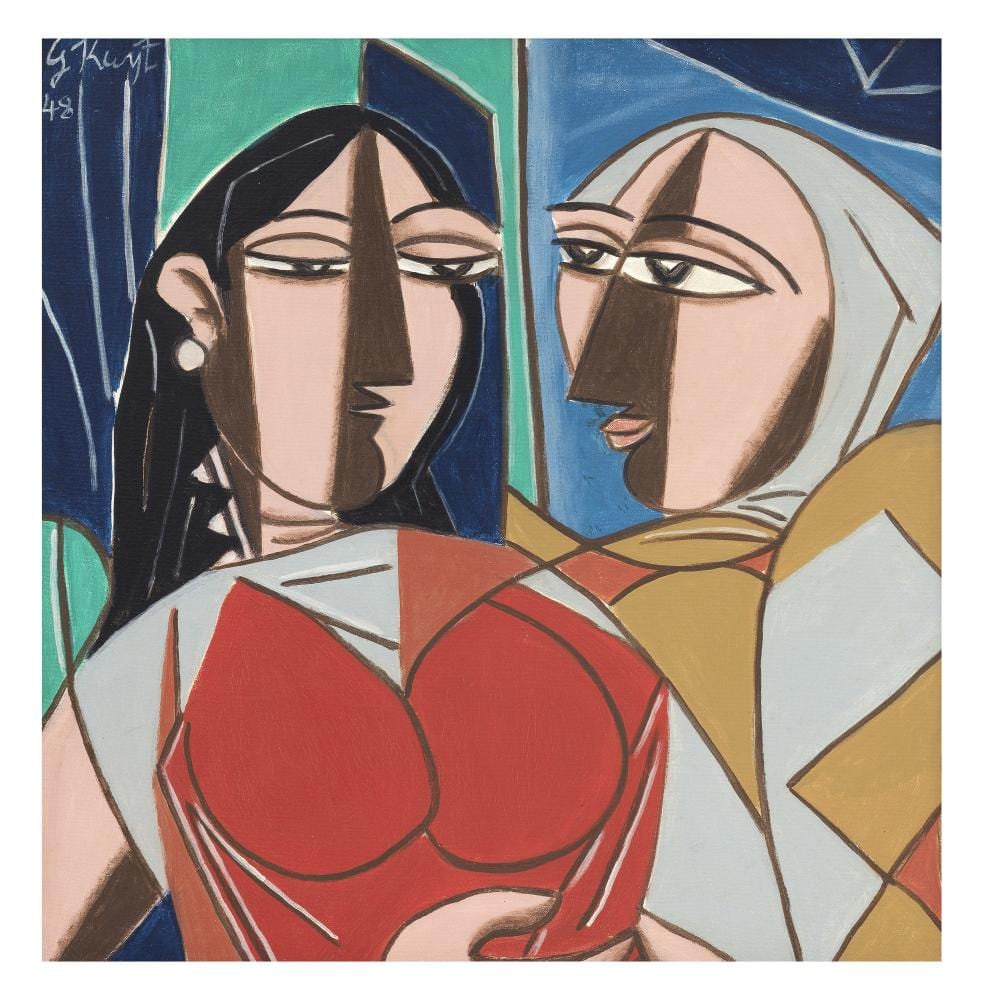
george keyt 1901 1993 maya and radha · Bonhams · 2026-06-02 george keyt 1901 1993 maya and radha Bonhams · 2026-06-02
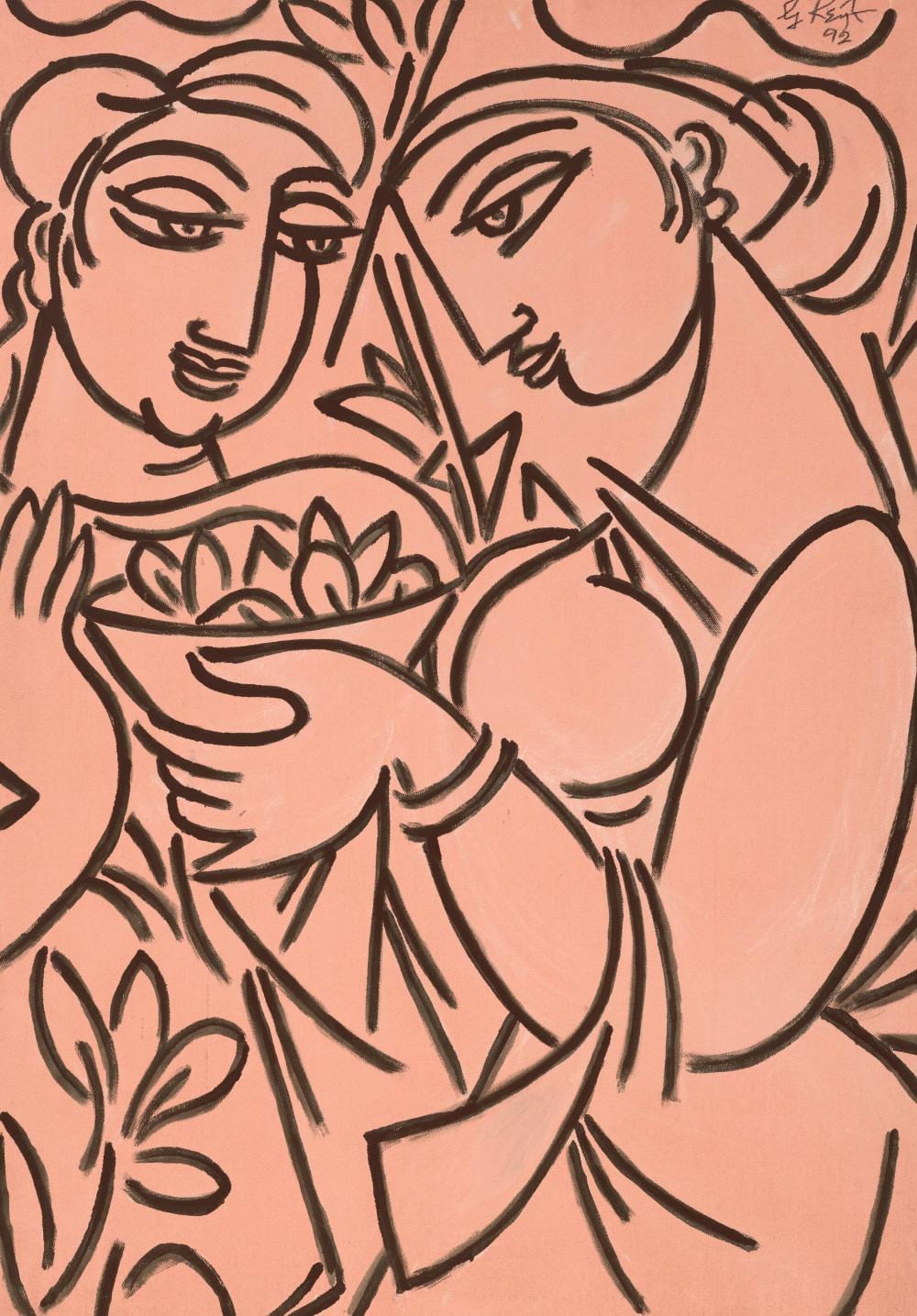
george keyt 1901 1993 the offering acrylic on canvas42 x 29 in 106 · Christie's · 2026-03-25 george keyt 1901 1993 the offering acrylic on canvas42 x 29 in 106 Christie's · 2026-03-25
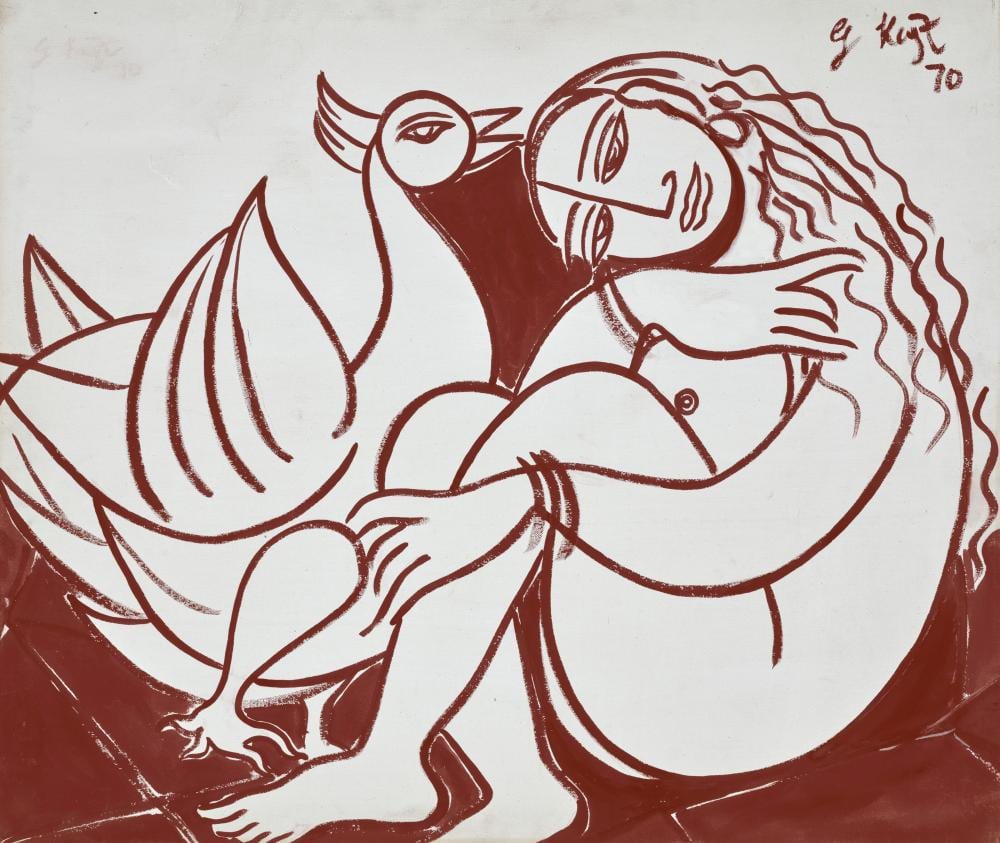
george keyt 1901 1993 untitled leda and the swan acrylic on canvas28 · Christie's · 2026-03-25 george keyt 1901 1993 untitled leda and the swan acrylic on canvas28 Christie's · 2026-03-25
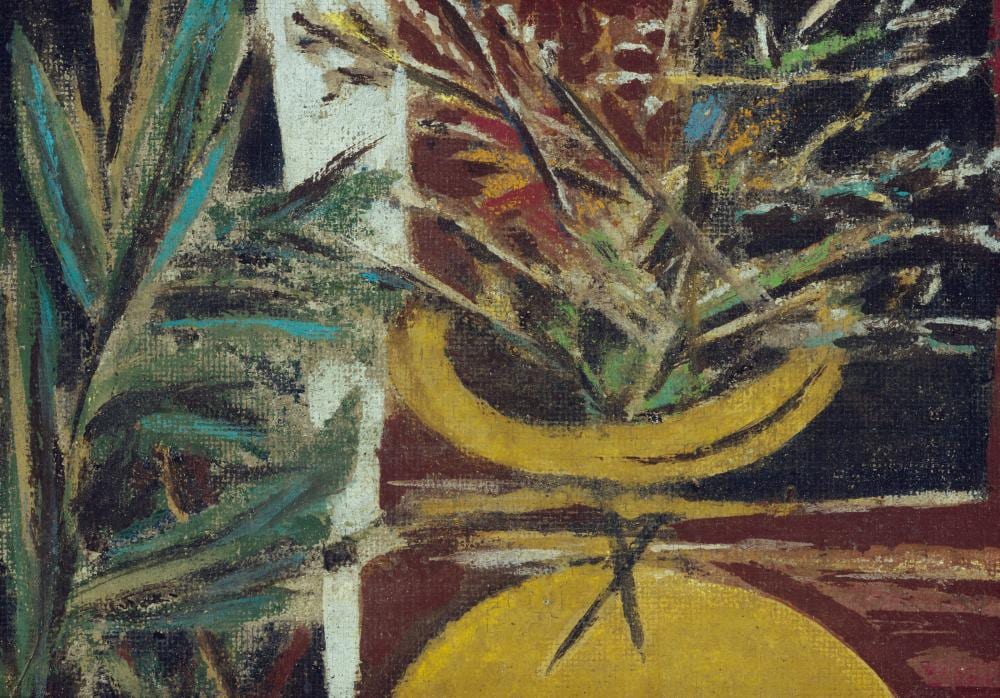
george keyt 1901 1993 untitled still life oil on board6 x 9 in 16 · Christie's · 2026-03-25 george keyt 1901 1993 untitled still life oil on board6 x 9 in 16 Christie's · 2026-03-25
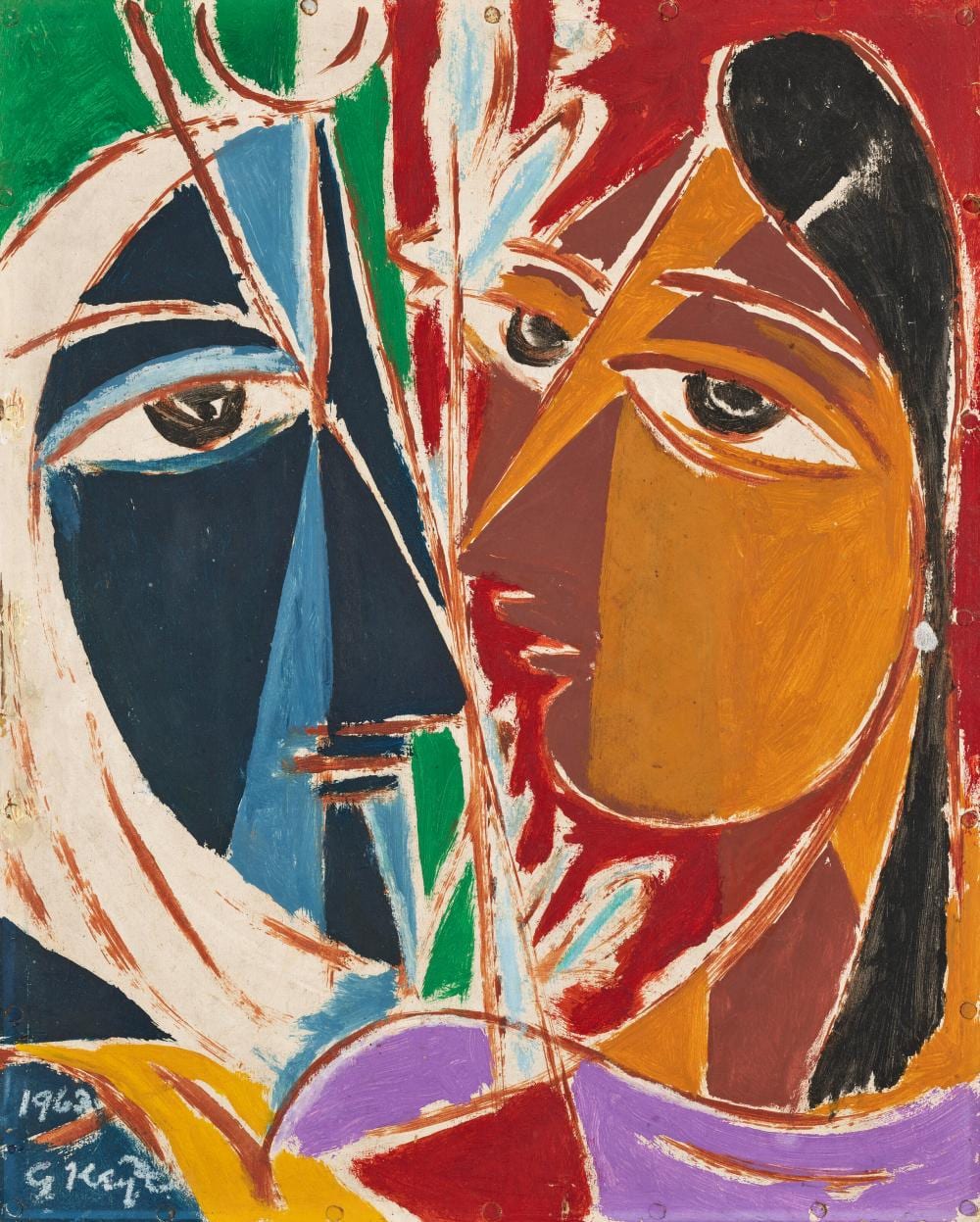
george keyt 1901 1993 untitled radha and krishna oil on board14 7 8 x · Christie's · 2025-09-17 george keyt 1901 1993 untitled radha and krishna oil on board14 7 8 x Christie's · 2025-09-17
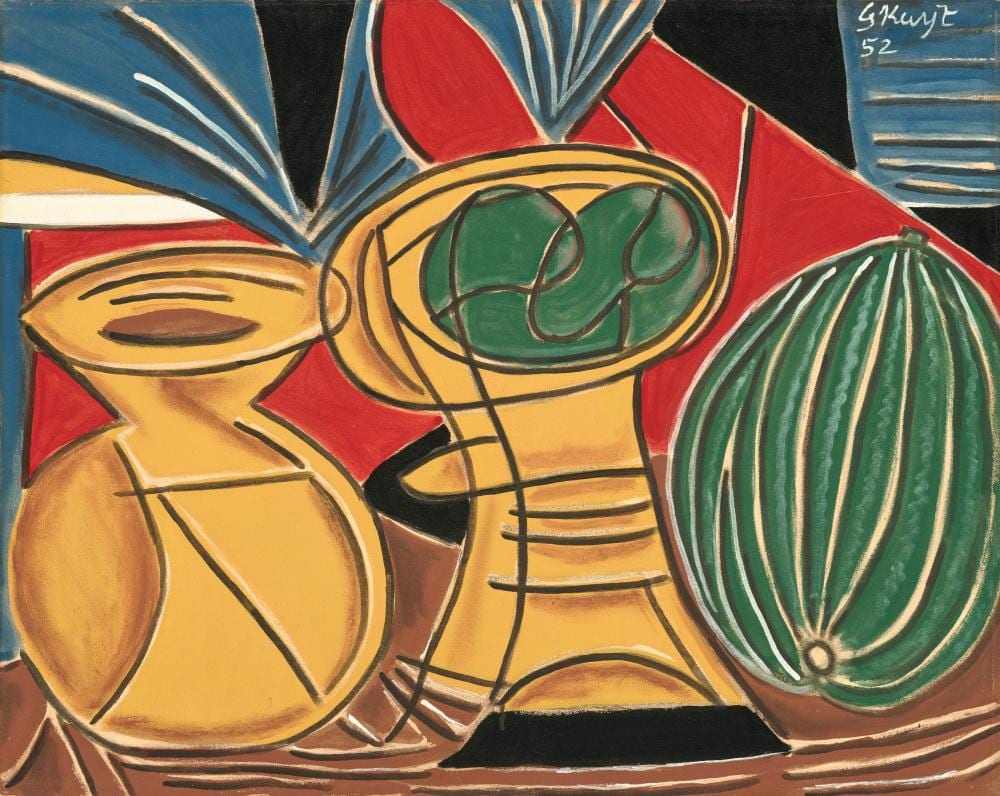
george keyt 1901 1993 untitled still life oil on canvas24 x 30 3 8 in · Christie's · 2025-03-19 george keyt 1901 1993 untitled still life oil on canvas24 x 30 3 8 in Christie's · 2025-03-19
Data basis
This page is built from Appraisily's public auction market index. Private transactions, incomplete sale feeds, and attribution changes may not be fully represented.
Artist value FAQ
How much is George Keyt worth?
Comparable public auction sales are the best starting point, but final value depends on the specific artwork, condition, size, medium, provenance, and attribution confidence.
Can Appraisily value my George Keyt artwork?
Yes. Appraisily can review photos, dimensions, signatures, condition, provenance, and comparable market data to prepare a current valuation.