André Derain Auction Prices and Value Guide
André Derain auction prices are tracked in Appraisily's artist market index, with source-directory coverage of 3,623 records. Use this page to review sold-lot activity, market context, and valuation factors before requesting a formal appraisal.
André Derain auction prices: quick answer
André Derain auction prices depend on medium, size, date, condition, provenance, edition details, attribution confidence, and recent comparable auction sales.
- Artist
- André Derain
- Source records
- 3,623
- Market update
- 2026-02-06
André Derain market snapshot
André Derain shows very deep auction liquidity with 1,157 tracked lots. Median realized sale is around $3,500. Category concentration is still broad or sparse. Last 12 months recorded 38 sales. Latest recorded sale: 2026-01-08.
Realized price distribution
- Under $1,000 (24.9% · 186 sales)
- $1,000 to $10,000 (42.5% · 317 sales)
- $10,000+ (32.6% · 243 sales)
- Median sale (last 12 months)
- $1,000
- Sales recorded (last 12 months)
- 38
- Median shift vs prior year
- 0.0%
- Latest recorded sale
- 2026-01-08
Artist context
About André Derain
Born
1880
Died
1954
Nationality
French
André Derain (1880–1954) was a French painter, sculptor, and printmaker who played a defining role in twentieth-century art. Born in Chatou, a suburb west of Paris, he studied at the Académie Carrière where he met Henri Matisse. Together they launched Fauvism at the 1905 Salon d'Automne, a movement built on liberated, non-naturalistic color. Derain's Fauve canvases—from Collioure, London, and the south of France—remain among the most recognizable works of early modernism. By 1910 his palette tightened under the influence of Cézanne and the Old Masters, and after World War I he became a leading figure in the Return to Order, painting classically composed figures, landscapes, and still lifes with restrained tonality. Alongside painting, he produced sculptures, lithographs, woodcuts, book illustrations, and stage designs. An official authentication committee under the Association des Amis d'André Derain continues to catalogue and authenticate his work.
FauvismReturn to Order (Neo-classicism)oil paintingsculpturelithographywatercolorlandscapefigure paintingstill lifebook illustration
Common works and media
Collectors and appraisers most often encounter Derain's oil paintings—landscapes, figure compositions, portraits, and still lifes. He also produced a substantial body of works on paper including watercolors, gouaches, pastels, and drawings. His printmaking encompasses lithographs, woodcuts, and etchings, many created as book illustrations for literary commissions. Sculpture, while less prolific, appears at auction occasionally. Photographs taken by Derain later in his life also survive in institutional collections.
Market and appraisal context
André Derain maintains a deep and liquid auction market spanning more than two decades. Appraisily's auction-record index traces 1,192 lots catalogued since September 2002, with 764 carrying recorded prices and activity continuing through April 2026. The price distribution is exceptionally wide: observed lots range from approximately €40 for minor prints at the low end to a maximum recorded price of roughly $16.3 million for a top-tier Fauve-period oil painting, underscoring the premium placed on Derain's earliest and most iconic work. The interquartile range (p25 €960 to p75 €15,000) and a median near €3,380 reflect a broad middle market dominated by later paintings, works on paper, prints, and multiples. Fifty-four lots appeared in the most recent twelve-month window (down from seventy-nine the prior year), suggesting a still-active but slightly cooling turnover. The house mix is anchored by Christie's and Sotheby's at the top of the market, with a strong French regional presence including Artcurial, Tajan, Osenat, Piasa, and Millon & Associés, plus Bonhams and Swann Auction Galleries internationally. The Jacques Thalheimer collection dispersal at Osenat in March 2026 produced multiple five-figure results (€9,000–€14,100) for portraits and figure studies, demonstrating sustained collector demand for well-provenanced post-Fauve material.
Auction categories and appraisal factors
Common auction categories
- Impressionist & Modern Art
- Prints & Multiples
- Works on Paper
- Sculpture
- Old Master & Modern Prints
Value drivers
- Period: Fauve-period paintings (1905–1907) are the most sought-after at auction
- Medium: Oil paintings command premiums over works on paper and prints
- Authenticity: The official Comité d'authentification under the Association des Amis d'André Derain is the recognized authentication body
- Provenance: Documented exhibition and collection history significantly affects value
- Subject: Landscapes, figure studies, and still lifes from key creative periods attract stronger bidding
- Period: Fauve-period oils (1905–1907) dominate the top of the market; Cézanne-influenced works (c. 1908–1910) also command premiums; post-1918 neo-classical works trade at significantly lower levels.
Appraisal caveats
- Attribution should be verified through the official Comité d'authentification; unsigned or unauthenticated works require expert review.
- Derain's later neo-classical output is voluminous and stylistically varied, which can complicate attribution without committee confirmation.
- Market value varies significantly across his creative periods; Fauve-era works are substantially more valuable than later production.
- The $16.28 million maximum recorded price represents an extreme outlier; the vast majority of lots trade below €15,000. Any appraisal should be anchored to period-, medium-, and quality-specific comparables rather than headline auction records.
Evidence
Sources for artist context
This source-grounded artist context passed Appraisily's promotion threshold: high confidence, strong sources.
- Library of Congress library authority
- RKD Netherlands Institute for Art History library authority
- VIAF library authority
- Wikidata library authority
- Wikipedia wikipedia
- Tate museum or university
Recent sale records
Selected public auction records currently in the Appraisily lot index. Use them as market context, then request a formal appraisal before you sell, insure, or donate.
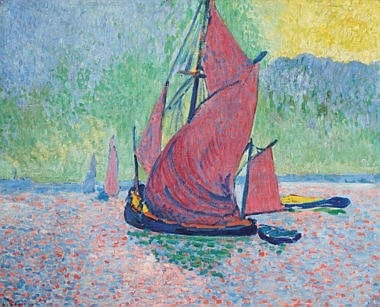
andr derain 1880 1954 les voiles rouges oil on canvas 30 x 39 in 81 3 x 100 2 cm · Christie's · 2019-05-13 andr derain 1880 1954 les voiles rouges oil on canvas 30 x 39 in 81 3 x 100 2 cm Christie's · 2019-05-13
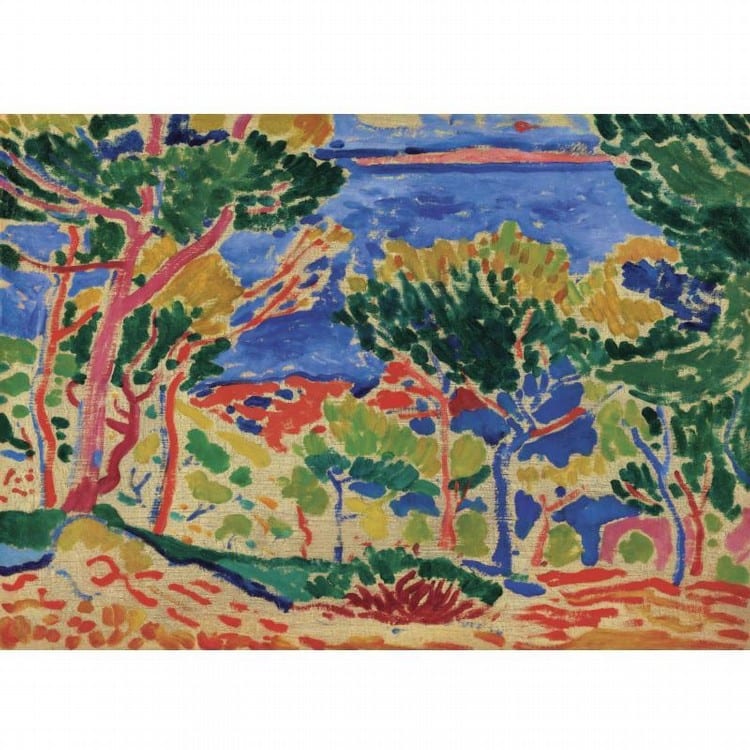
andr derain · Sotheby's · 2006-05-03 andr derain Sotheby's · 2006-05-03
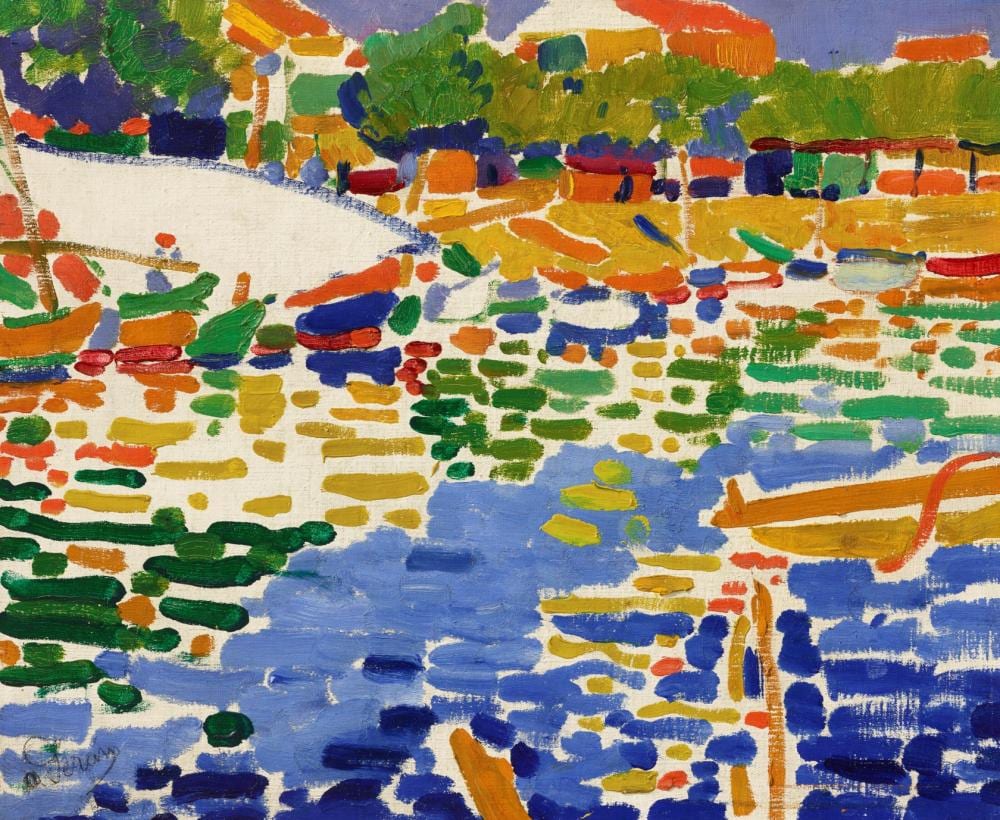
andre derain 1880 1954 barques amarr es l estaque oil on canvas 15 1 8 · Christie's · 2022-11-17 andre derain 1880 1954 barques amarr es l estaque oil on canvas 15 1 8 Christie's · 2022-11-17
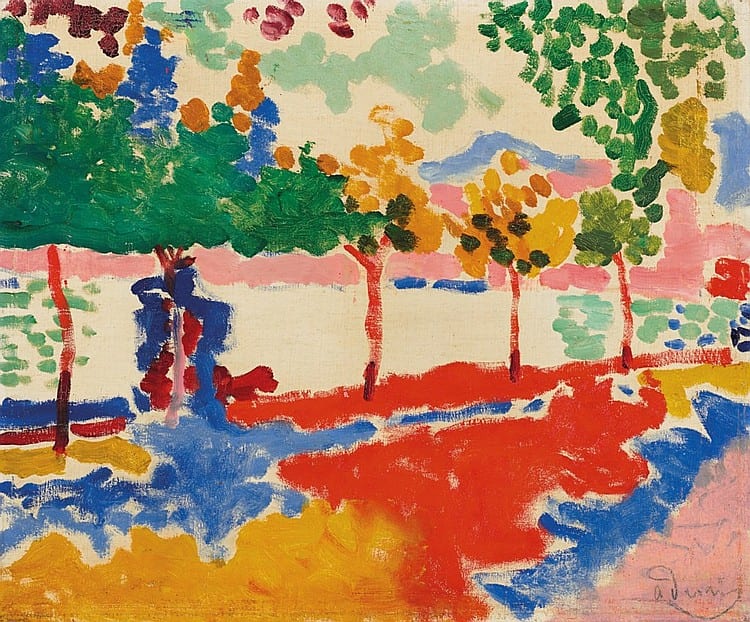
andr derain 1880 1954 bords de rivi re · Christie's · 2019-11-11 andr derain 1880 1954 bords de rivi re Christie's · 2019-11-11
Data basis
This page is built from Appraisily's public auction market index. Private transactions, incomplete sale feeds, and attribution changes may not be fully represented.
Artist value FAQ
How much is André Derain worth?
Comparable public auction sales are the best starting point, but final value depends on the specific artwork, condition, size, medium, provenance, and attribution confidence.
Can Appraisily value my André Derain artwork?
Yes. Appraisily can review photos, dimensions, signatures, condition, provenance, and comparable market data to prepare a current valuation.