Alexander (1898) Calder Auction Prices and Value Guide
Alexander (1898) Calder auction prices are tracked in Appraisily's artist market index, with source-directory coverage of 27,746 records. Use this page to review sold-lot activity, market context, and valuation factors before requesting a formal appraisal.
Alexander (1898) Calder auction prices: quick answer
Alexander (1898) Calder auction prices depend on medium, size, date, condition, provenance, edition details, attribution confidence, and recent comparable auction sales.
- Artist
- Alexander (1898) Calder
- Source records
- 27,746
- Market update
- 2026-02-06
Alexander (1898) Calder market snapshot
Alexander (1898) Calder shows solid auction liquidity with 52 tracked lots. Median realized sale is around $72,000. Category concentration is still broad or sparse. Last 12 months recorded 21 sales. Latest recorded sale: 2025-11-30.
Realized price distribution
- Under $1,000 (12.5% · 5 sales)
- $1,000 to $10,000 (12.5% · 5 sales)
- $10,000+ (75.0% · 30 sales)
- Median sale (last 12 months)
- $317,500
- Sales recorded (last 12 months)
- 21
- Median shift vs prior year
- +100.0%
- Latest recorded sale
- 2025-11-30
Artist context
About Alexander (1898) Calder
Born
1898
Died
1976
Nationality
American
Also known as
Sandy Calder, Alexander Calder
Alexander Calder (1898–1976) was an American sculptor renowned for inventing the mobile — a form of abstract kinetic sculpture that moves with air currents — and for the large-scale painted steel stabiles installed in public spaces worldwide. Born into a family of sculptors in Lawnton, Pennsylvania, Calder studied mechanical engineering before turning to art at the Art Students League in New York and the Académie de la Grande Chaumière in Paris. A pivotal 1930 visit to Piet Mondrian's studio shifted his work fully toward abstraction. Over a prolific career he befriended leading modernists including Marcel Duchamp, Joan Miró, and Jean Arp, and became one of the most celebrated artists of the twentieth century, receiving the Presidential Medal of Freedom and the Golden Lion at the Venice Biennale. His work is held by dozens of major museums, including MoMA, the Metropolitan Museum of Art, the Tate, and the National Gallery of Art.
Kinetic artAbstract artSurrealismSculpture — wire, sheet metal, steel plate, stainless steel, bronze, woodGouache and paintingLithographs and printsJewelry — brass, copper, gold wireAbstract forms and biomorphic shapesKinetic movement and balanceMonumental public sculpture
Common works and media
Collectors most frequently encounter Calder's hanging mobiles (suspended painted metal elements on wire arms), standing mobiles, and freestanding stabiles in bolted or welded sheet metal. Gouaches on paper, ink drawings, and lithographic prints are widely circulated. Smaller-scale wire sculptures, jewelry in brass or copper wire, and textile designs also appear at auction. Monumental public stabiles such as Flamingo in Chicago and La Grande Vitesse in Grand Rapids are landmark installations but are not exchanged on the private market.
Market and appraisal context
Alexander Calder is one of the most consistently traded modern sculptors in the global auction market. Appraisily auction records index 55 lots spanning June 2007 to November 2025, with 42 carrying a realized price. The price distribution is exceptionally wide: from $60 at the low end (lithographs and minor prints) to $6.39 million for the monumental work Armada at Sotheby's in May 2025, with a median of $66,000 and a 75th percentile at $508,000. This dispersion reflects the vast difference between unique sculptures and works on paper versus editioned lithographs. Named auction houses include Sotheby's, Christie's, Bonhams, Galerie Kornfeld, Koller, and Setdart, confirming deep institutional demand. Liquidity is strong—17 priced lots in the most recent 12-month window versus 13 in the prior period—indicating active and growing market participation. The May 2025 Sotheby's sessions alone produced multiple seven-figure results including Paulette ($5.66M), 20 White in 20 Inches ($2.37M), and Round and Round ($508K), demonstrating robust demand for major sculptures.
Auction categories and appraisal factors
Common auction categories
- Sculpture — mobiles, stabiles, standing mobiles
- Works on paper — gouaches and drawings
- Prints — lithographs
- Jewelry — unique wire pieces
Value drivers
- Calder Foundation authentication is critical; the Foundation maintains the authoritative catalogue raisonné and disputes have been litigated
- Scale is a major factor: monumental outdoor stabiles command the highest values, while tabletop mobiles and works on paper are more accessible
- Period matters: pre-war wire sculptures and early mobiles (1930s) are historically significant; postwar painted-sheet-metal stabiles are the most sought-after
- Material, condition of painted surfaces, provenance history, and foundry marks (e.g., Etablissements Biemont, Tours for post-1962 monumental works) affect appraisal
- Calder Foundation authentication is critical; the Foundation maintains the authoritative catalogue raisonné and unverified works carry significantly different market treatment
- Scale is a major driver: monumental outdoor stabiles and large mobiles command the highest values, while tabletop mobiles, gouaches, and prints are more accessible
Appraisal caveats
- Authentication disputes have been reported; works not verified by the Calder Foundation may carry significantly different market treatment
- Calder's output was large and varied in medium and scale; comparable auction results should match work type, period, and size closely
- The current auction record set mixes unique sculptures, gouaches, and editioned lithographs—price statistics span all tiers and should not be applied to any single work without classification by medium, scale, and period
- Several recent indexed lots have sparse title or image metadata; these records cannot always be classified by work type and may skew aggregate statistics
Evidence
Sources for artist context
This source-grounded artist context passed Appraisily's promotion threshold: high confidence, strong sources.
- Wikidata library authority
- Wikipedia wikipedia
- Tate museum or university
- Calder Foundation artist estate or foundation
- Encyclopaedia Britannica encyclopedia
- Getty Research Institute library authority
Recent sale records
Selected public auction records currently in the Appraisily lot index. Use them as market context, then request a formal appraisal before you sell, insure, or donate.
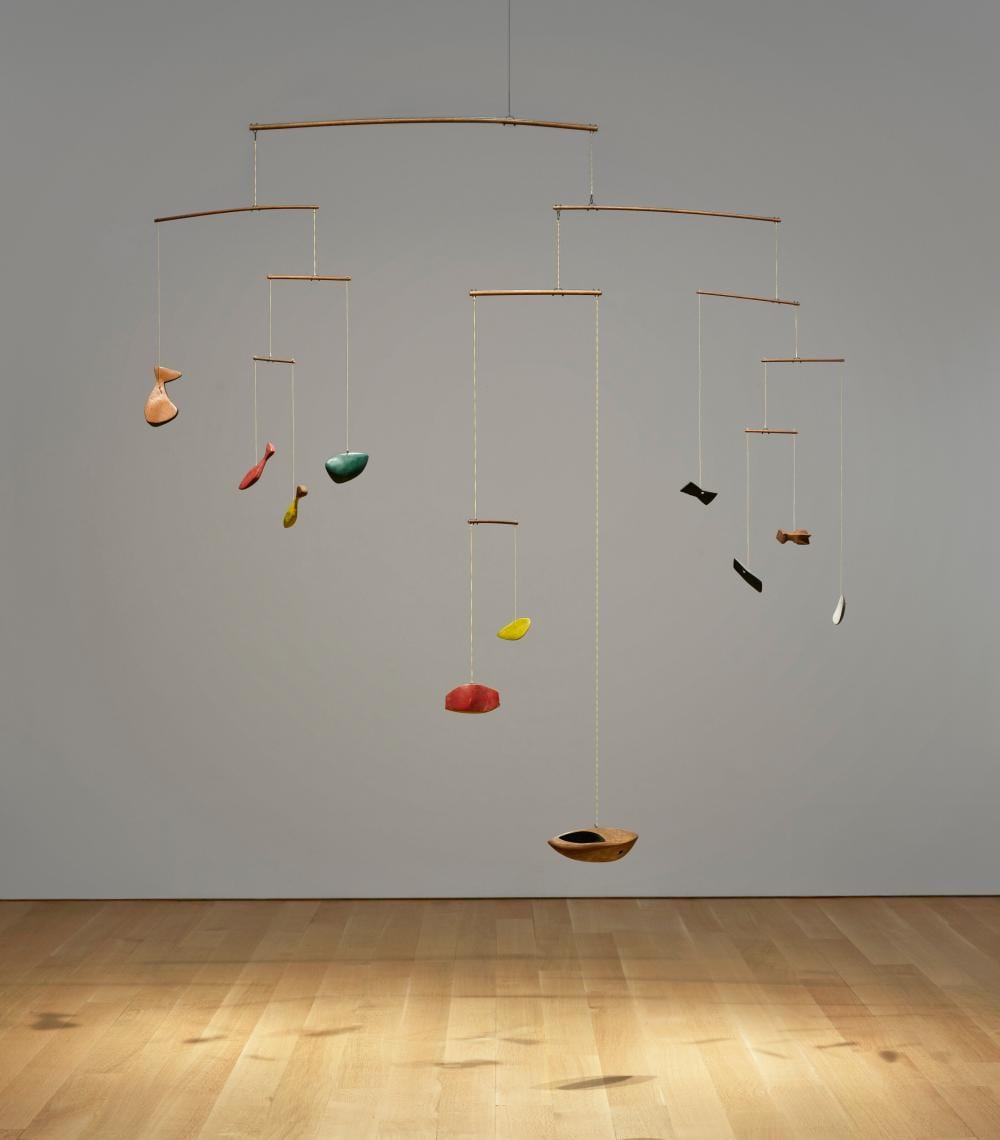
alexander calder 1898 1976 painted wood hanging mobile wood string wi · Christie's · 2025-11-17 alexander calder 1898 1976 painted wood hanging mobile wood string wi Christie's · 2025-11-17
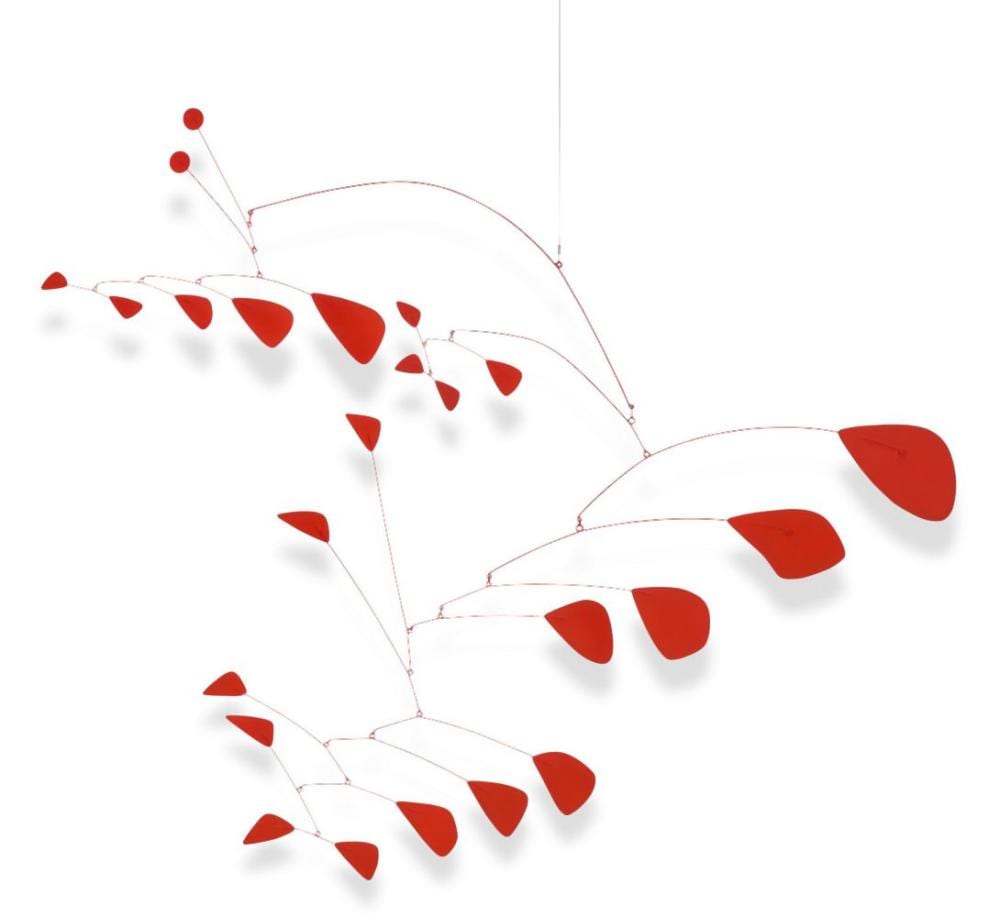
alexander calder 1898 1976 sumac vi · Christie's · 2024-11-19 alexander calder 1898 1976 sumac vi Christie's · 2024-11-19
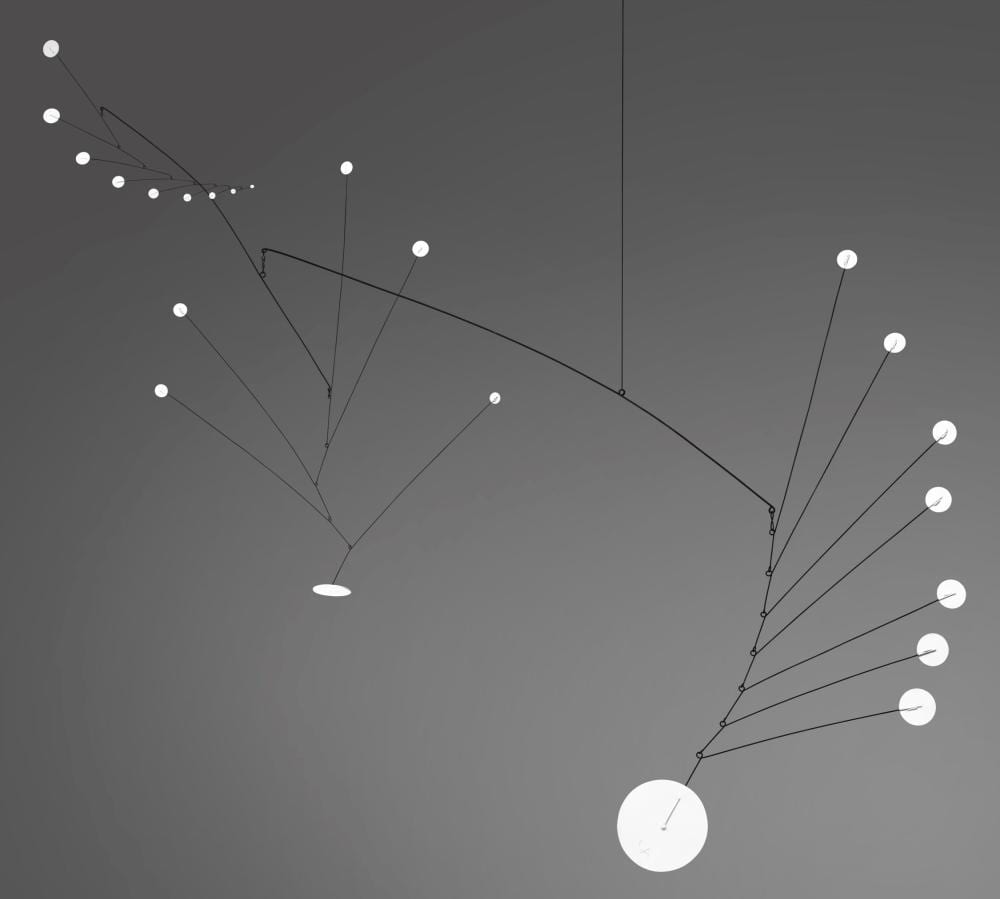
alexander calder 1898 1976 gypsophila sheet metal wire and paint 53 x 48 · Christie's · 2025-05-12 alexander calder 1898 1976 gypsophila sheet metal wire and paint 53 x 48 Christie's · 2025-05-12
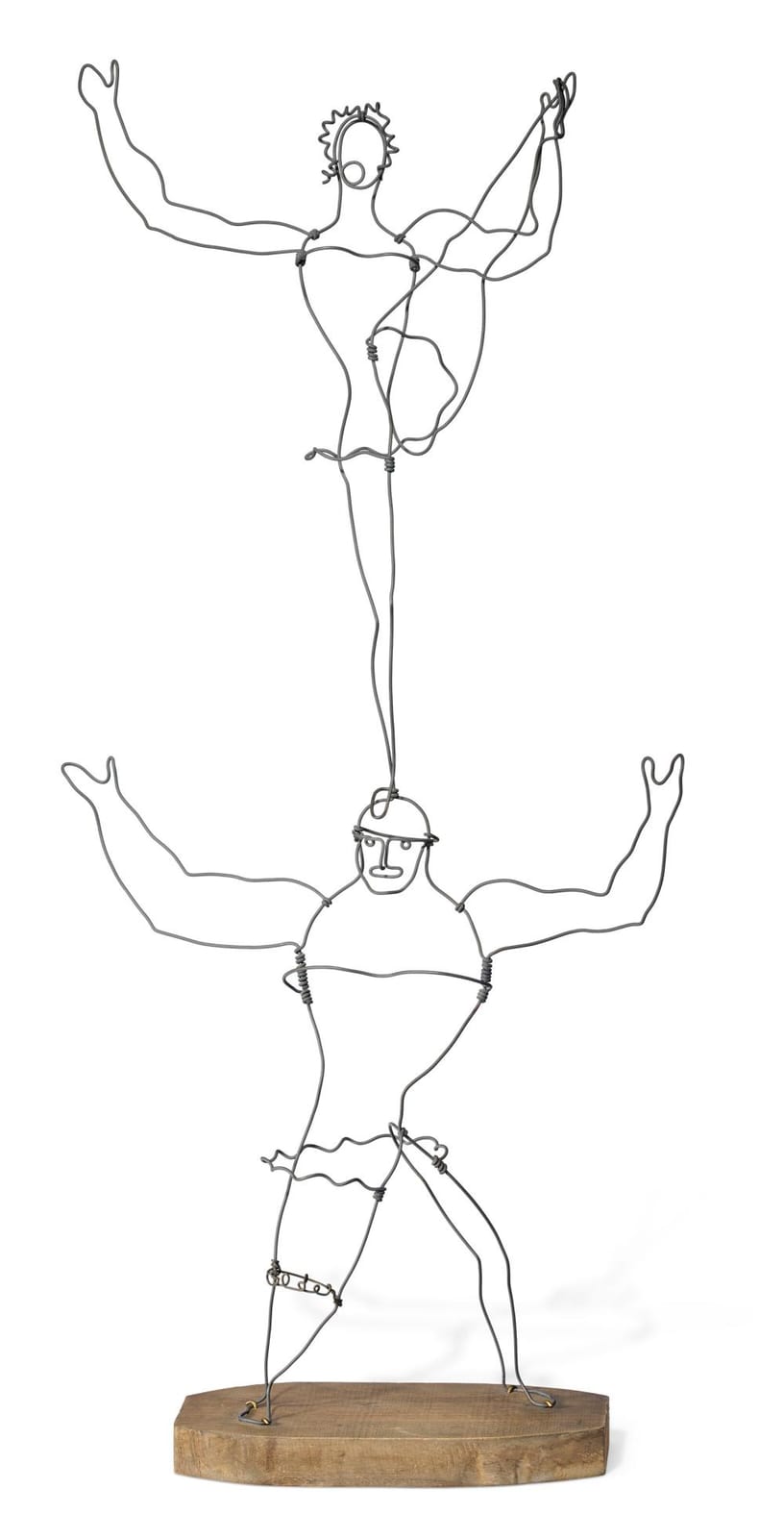
alexander calder 1898 1976 acrobats wire and wood34 x 17 x 7 in 88 · Christie's · 2025-11-17 alexander calder 1898 1976 acrobats wire and wood34 x 17 x 7 in 88 Christie's · 2025-11-17
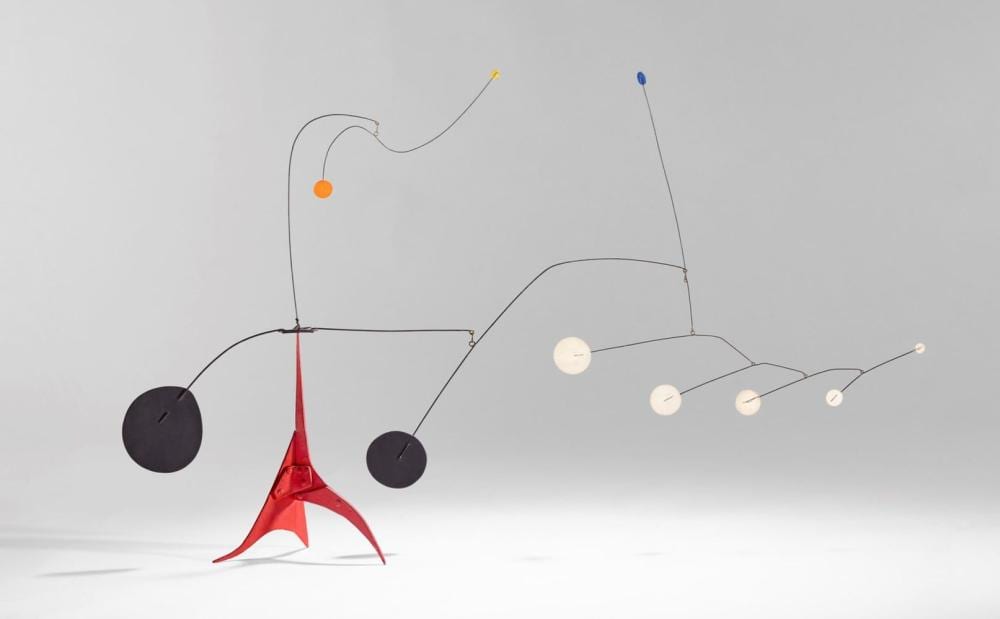
alexander calder 1898 1976 untitled standing mobile sheet metal wire and · Christie's · 2022-11-09 alexander calder 1898 1976 untitled standing mobile sheet metal wire and Christie's · 2022-11-09
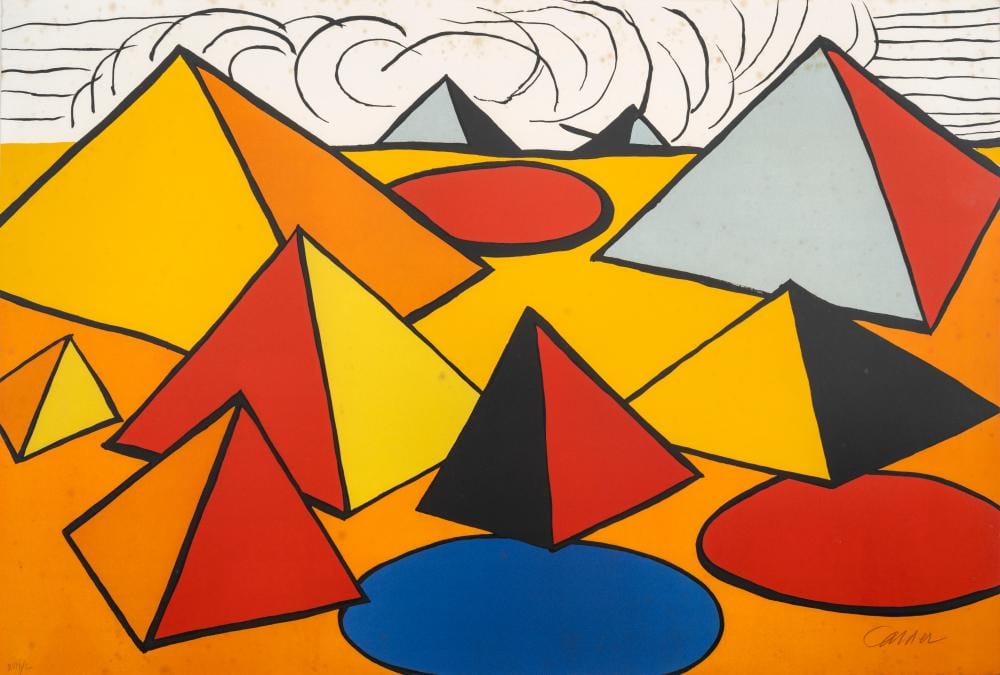
alexander calder piramides · Bogota Auctions · 2024-05-30 alexander calder piramides Bogota Auctions · 2024-05-30
Data basis
This page is built from Appraisily's public auction market index. Private transactions, incomplete sale feeds, and attribution changes may not be fully represented.
Artist value FAQ
How much is Alexander (1898) Calder worth?
Comparable public auction sales are the best starting point, but final value depends on the specific artwork, condition, size, medium, provenance, and attribution confidence.
Can Appraisily value my Alexander (1898) Calder artwork?
Yes. Appraisily can review photos, dimensions, signatures, condition, provenance, and comparable market data to prepare a current valuation.