
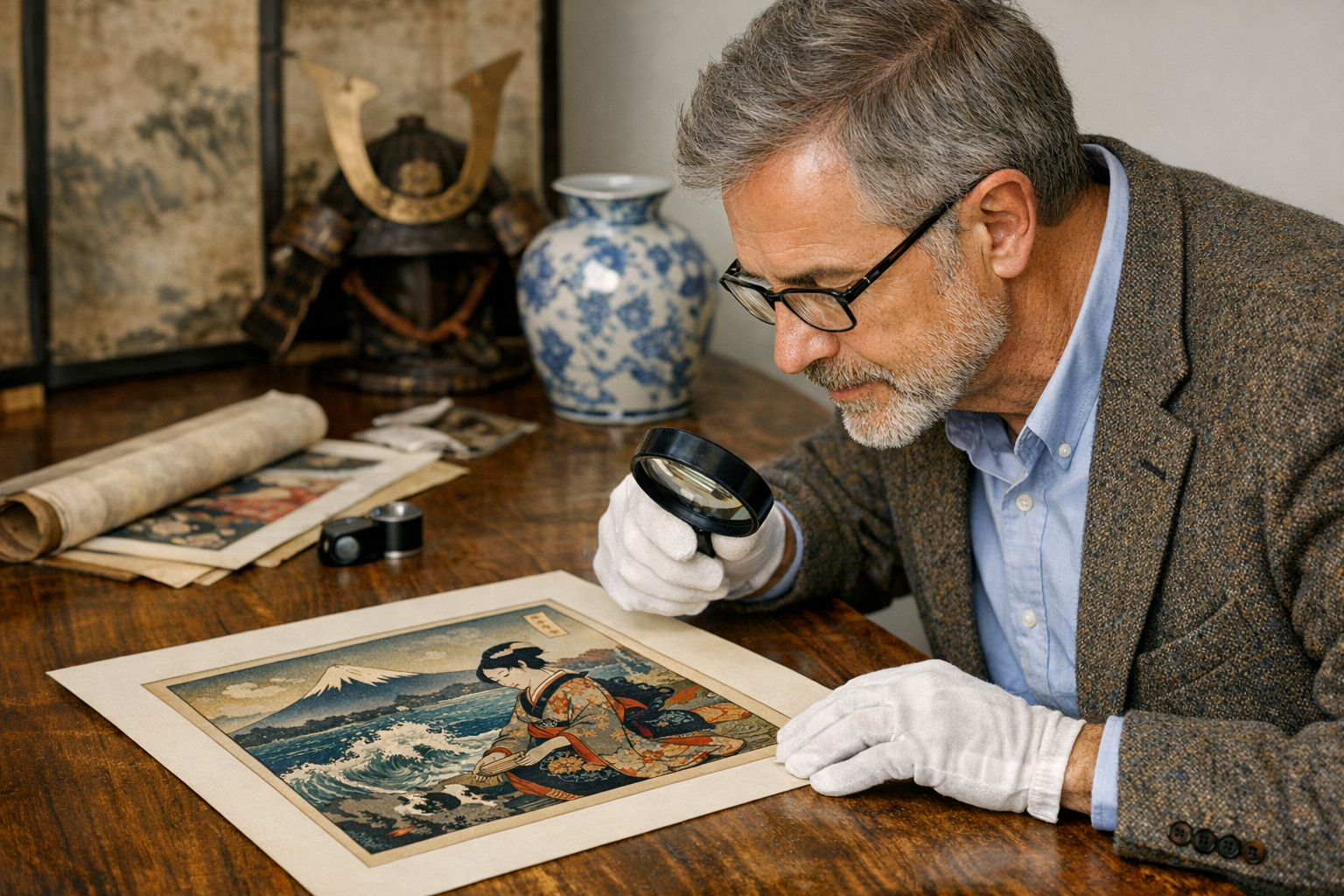
When Asian art needs a qualified appraisal: donation, estate, and insurance checklist
When one piece of Asian art becomes a legal filing object, your decision changes fast. A bowl, scroll, or bronze that feels merely decorative can become a tax-facing, insurer-facing, or probate-facing asset. Start with the legal trigger, then build proof from the item outward.
Use this only when the outcome is likely to be reported, defended, or challenged.
Start with the outcome, not the object story
High-stakes appraisal issues usually fail because evidence is added after the fact, not at the start. The first question is not, "How much might this be worth?" It is, "Why are you processing this item in a legal, tax, or claims context?"
When this is for a charitable donation, estate administration, or insurance matter, quality of evidence often matters more than speed. Before you compare market numbers, confirm which lane is active:
- Donation lane: value can affect tax reporting when a contribution is claimed and filing rules are strict.
- Estate lane: inheritance and probate valuation needs coherent ownership and timeline notes.
- Insurance lane: loss and replacement decisions usually require date-stamped condition history.
Free estimate versus signed written appraisal
A free estimate helps you decide direction quickly, but a qualified signed appraisal is the formal document used when you will cite value in reporting or disputes. On this lane, the safer default is to move to the written route when filing risk is real.
Practical distinction:
- Free estimate: validates direction, identifies what is missing, and is low-friction.
- Signed appraisal: supports tax-ready, estate-ready, or policy-ready language and review trails.
- Best first move: collect evidence before request, then move to the right lane.
In other words: start with proof, then decide whether a formal report is required. That prevents expensive back-and-forth later.
Confirm the trigger, then confirm the evidence
Mixed web signals are common in this space, so use threshold references as a checklist rather than a conclusion. The same article may mention different dollar amounts across jurisdictions and filing types; treat all figures as strong prompts to escalate your documentation, not as final rules.
For this lane, prepare in this order:
- Goal: donation deduction, inheritance allocation, or claims review.
- Deadline: filing date, probate cut-off, or claims window.
- Category: sculpture, painting, scroll, ceramic, object type, maker clues.
- Evidence depth: photos, provenance, restoration notes, ownership chain.
When the timeline is short, you usually start with a written report earlier instead of trying to perfect every detail first.
Use auction references as a proof moment, not a final answer
Comparable-sale examples can calibrate expectations quickly. In the current internal pool for this topic, recent records included a signed piece near USD 250, a comparable lot near USD 375, another around USD 2,750, and one reaching USD 4,400. A donation-box lot near USD 2,000 also appears in the same lane.
Use those as directional context only. The same object can move far from these figures if the glaze quality, restoration, mount, or provenance profile is different. That is why the proof step comes first: scope, condition, and ownership details must match before your final conclusion.
If your item has unusually strong inscriptions or restoration history, two lots that appear close on headline category can still sit far apart in valuation. Always separate "similar appearance" from "similar risk profile."
Donation, estate, insurance lane check
Not sure if your Asian art needs a written report first?
Upload photos and context. If your case is filing-ready, we will guide you into the next lane.
Free. No card needed. Takes about two minutes.
A quick scenario to avoid expensive delay
A family inherits six painted ceramics and one appears to have subtle repairs. One sibling wants to donate immediately, another wants a faster sale, and counsel asks for valuation before probate closes. Without a clean evidence set, every option drags: donation papers stall, valuation scope changes, and legal review slows.
The practical move is simple and repeatable: split the object into facts first, then decide lane. Identify category, condition, chain of ownership, and deadlines before discussing final value language.
Once those basics are in place, the right path is usually clear: free first read for direction, signed report for filing-ready confidence.
Prepare an evidence packet before requesting a report
The strongest packets are consistent, not fancy. Include:
- Object profile: title, category, dimensions, medium, provenance, and maker context.
- Condition evidence: front, back, edges, mounts, seals, labels, and repair details.
- Provenance notes: transfer chain, family history, invoices, and prior appraisal trail if any.
- Usage context: storage environment, climate stress, transport history, and display conditions.
- Deadline details: filing window, estate events, or claims calendar.
When this is organized before request submission, appraisers can focus on valuation judgment instead of filling missing basics.
Lane-by-lane checklist for this topic
- Donation: focus on claim-support language and defensible condition photography.
- Estate: prioritize ownership continuity and transfer timing.
- Insurance: include damage photos with date references and repair context.
- Borderline or mixed intent: run a free estimate first and escalate only when filing is confirmed.
If your objective changes mid-way, repeat only the missing sections of evidence instead of restarting from scratch.
Common mistakes that weaken valuation confidence
- Relying on a single angle and calling it complete condition coverage.
- Mixing charitable deduction goals with insurance goals in one submission.
- Skipping restoration detail because it feels minor.
- Using broad internal references as exact value equivalents.
- Submitting late, which compresses the review timeline and lowers confidence.
Correcting one of these early usually gives better clarity than adding another photo set later.
Search variations this guide answers
People ask
- Do I need a qualified appraisal for donated Asian art?
- What does IRS-ready appraisal evidence include?
- Should I get a free estimate before donation?
- How do restorations change Asian art value?
- Can donation and insurance needs be handled together?
- Which photos matter for Asian art valuation?
- How soon before probate should I request an appraisal?
- What is a stronger evidence packet for claims review?
References
Qualified appraisal lane
Need tax-ready, legal-ready, or insurer-ready language?
Start a formal review and get a specialist opinion in the right lane for donation, estate, or insurance.
Choose your next step
Use the path that matches the decision you need to make about the item.
Not sure it is worth appraising?
Start with a lower-friction screen to understand the likely category, evidence, and next step.
Upload photos for a free first lookWant proof before paying?
See how a signed report documents photos, comparable evidence, condition notes, and value conclusions.
View signed report sampleNeed a signed report?
Use this for insurance, estate, donation, resale, or documented value decisions.
Need documentation now? Start signed appraisalNeed local or specialist help?
Compare directory options when the work needs in-person review or a specialist near you.
Find local art specialistsSee what the report looks like
Sample reports show how photos, comparable evidence, condition notes, and a value conclusion are documented.
Machine-readable summaries
Use these machine-friendly references for AI and crawler discovery of Appraisily content.