Old Singer Sewing Machine Value: appraisal and value basics
Old Singer Sewing Machine Value research should start with identification, condition, provenance, and item-specific market evidence. Use this guide to compare the signals that matter before paying for a formal appraisal or deciding whether to sell.
Introduction to Vintage Singer Sewing Machines
What Makes Old Singer Sewing Machines Valuable?
Age and Rarity
Model and Serial Number
Condition
Singer Sewing Machine Condition Assessment
Check applicable items to determine the condition of your sewing machine
- Machine is in complete working order
- Original decals are intact and vibrant
- No rust or significant wear on metal parts
- Original finish is well-preserved
- All original accessories are present
- Cabinet or case is in good condition
- No modifications or replacement parts
- Manual and documentation are included
Original Components and Accessories
Decorative Elements
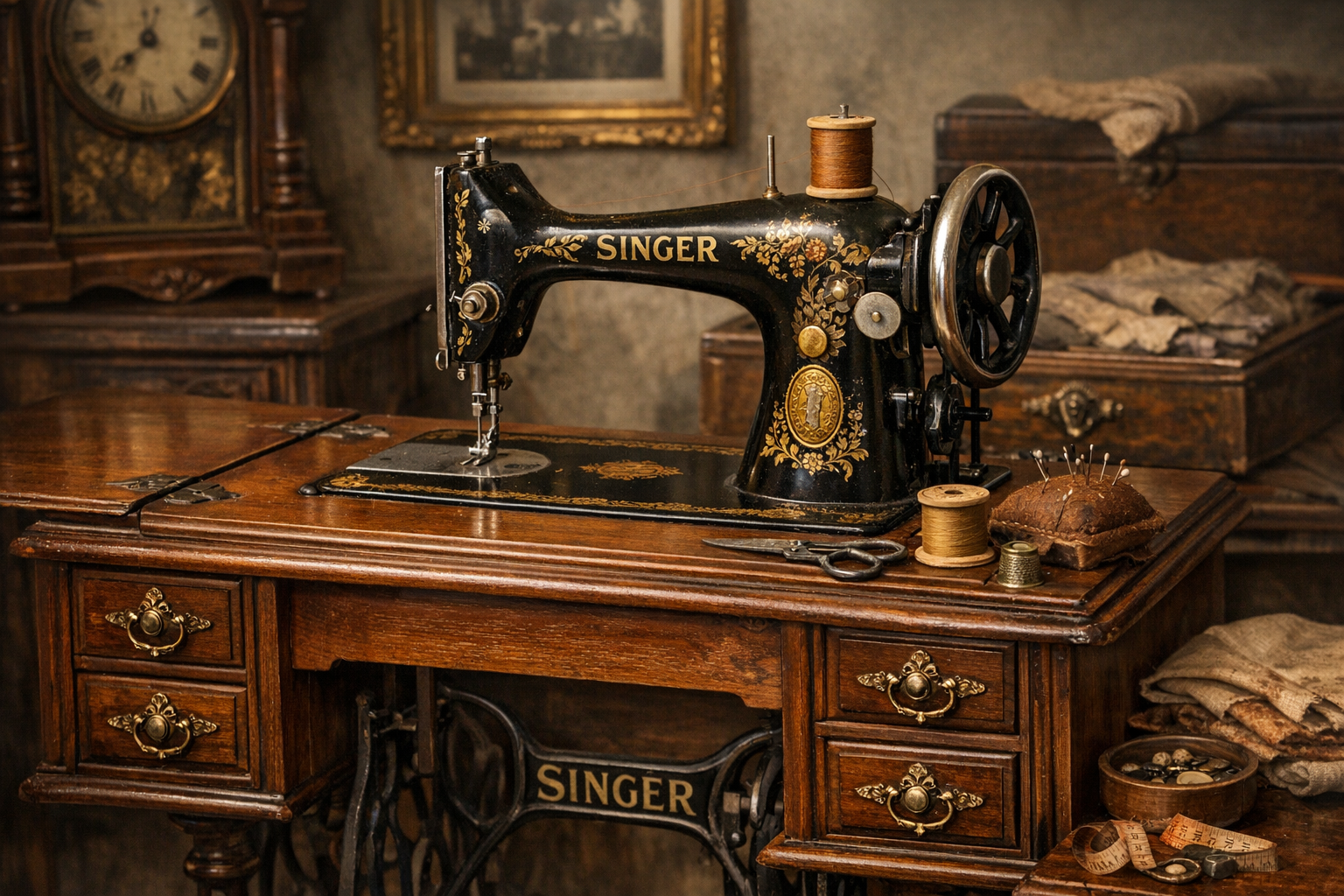
Most Valuable Singer Sewing Machine Models
High-Value Singer Sewing Machine Models
Current market values for sought-after Singer models
How to Identify Your Singer Model and Age
Locating the Serial Number
Most Singer sewing machines have their serial numbers prominently displayed on a small plate or stamped directly into the machine. Common locations include:
- On the front of the machine near the handwheel
- On the base or bed of the machine
- On the machine’s underside
- On a plate near the on/off switch (for electric models)
Using the Serial Number to Date Your Machine
Once you have located the serial number, you can determine when your machine was manufactured by consulting Singer’s online databases or resources dedicated to vintage sewing machines. The International Sewing Machine Collectors’ Society (ISMCS) maintains comprehensive records that can help date your machine precisely.
For example, a machine with serial number G8943621 was manufactured in 1910, while one with H1234567 dates to 1922. This dating information is essential for establishing your machine’s age and potential value.Singer Sewing Machine Historical Timeline
- 1851
First Singer Machine
Isaac Merritt Singer patents his first commercial sewing machine. Early models are now extremely rare and valuable.
- 1856-1860
Early Expansion
Introduction of "turtle back" models with distinctive curved design. These early machines command premium prices today.
- 1870-1880
Decorative Era
Singer produces highly ornate machines with intricate "fiddle base" designs and decorative details that are highly collectible.
- 1900-1920
Golden Age
Mass production of popular models like the 66 and 15. Models with "Red Eye" and "Gingerbread" decals from this period are sought after.
- 1933-1964
Featherweight Era
Introduction of the popular lightweight Model 221 "Featherweight." These portable machines remain among the most valuable Singer models.
- 1950-1970
Modern Transition
Shift toward modern designs and plastic components. Most machines from this period have lower collector value.
Singer Sewing Machine Value Ranges by Era
Singer Sewing Machine Values by Time Period
Average market values based on era of manufacture
| Category | Price | Notes |
|---|---|---|
| Singer Model 1 | market-dependent values+ | First model produced (1851); extremely rare with only a few surviving examples |
| Singer Model 2 "Turtle Back" | market-dependent values | Distinctive turtle-shaped base; produced in small numbers in the 1850s |
| Singer "Letter" Series (A-G) | market-dependent values | Early models from 1859-1861; rare transverse shuttle machines |
| Singer Featherweight 221 | market-dependent values | Popular portable model (1933-1964); especially valuable in black or white |
| Singer Turtleback Fiddle Base | market-dependent values | Ornate cast iron "violin" base from 1870s; highly decorative |
| Singer 66 Red Eye | market-dependent values | Features distinctive "Red Eye" decals (1906-1921); prized by collectors |
| Singer 201 | market-dependent values | Known as "the Cadillac of Singers"; praised for smooth operation |
| Singer 301 | market-dependent values | Lightweight successor to the Featherweight; high-quality construction |
</tbody> </table>
Recent Auction Results for Singer Sewing Machines
| Category | Price | Notes |
|---|---|---|
| Pre-1900 Machines | market-dependent values+ | Exceptional examples with original parts, cabinets, and decorative features |
| 1900-1930 Models | market-dependent values | Models like 66, 15, and 127 with intact decals and working condition |
| 1930-1950 Models | market-dependent values | Includes desirable Featherweight models; higher values for rare colors |
| 1950-1970 Models | market-dependent values | Generally less valuable unless in mint condition or specialized models |
| Post-1970 Models | market-dependent values | Limited collector interest; valued primarily for practical use |
</tbody> </table>
How Cabinet Style Affects Singer Value
Types of Singer Cabinets and Their Values
- Treadle Cabinets: These foot-powered cabinets with ornate iron work can add market-dependent values to a machine’s value when in good condition with working mechanisms.
- Bentwood Cases: Curved wooden cases designed for portability, particularly valuable for Featherweight and other portable models. A pristine bentwood case can add market-dependent values to a machine’s value.
- Parlor Cabinets: Ornate wooden cabinets designed to look like fine furniture when closed. These can significantly increase value, sometimes adding market-dependent values for elaborate models in excellent condition.
- Folding Table Cabinets: Cabinets with folding leaves that can convert from a compact table to a larger work surface. These functional pieces can add market-dependent values to a machine’s value.
- Industrial Stands: Cast iron stands designed for commercial use. These durable pieces can add market-dependent values to a machine’s overall value.
Where to Sell Your Vintage Singer Sewing Machine
Online Marketplaces
Specialty Dealers and Collectors
Auction Houses
Antique Shops and Consignment Stores
Tips for Maximizing Your Singer's Value
Proper Cleaning and Maintenance
Documentation and Provenance
Original Parts and Accessories
Professional Restoration
Common Questions About Singer Sewing Machine Values
How do I find the value of my old Singer sewing machine?
- Identify the model and serial number (usually found on a small plate on the machine)
- Use online resources like the Singer website or the International Sewing Machine Collectors’ Society database to determine the manufacturing date
- Research recent sales of similar models on platforms like eBay, 1stDibs, or auction sites
- Consider the machine’s condition, completeness, and whether it has its original case or cabinet
- For potentially valuable models, consider getting a professional appraisal
How much can I sell my Singer sewing machine for?
- Common models from the 1960s or later typically sell for market-dependent values
- Models from the 1900s-1950s in good condition can sell for market-dependent values
- Rare models like early "Turtle Back" machines or specialized versions can fetch market-dependent values
- Featherweight models (221/222) are particularly sought after, selling for market-dependent values depending on condition and accessories
Are Singer sewing machines worth anything?
- Age and rarity: Older and uncommon models typically command higher prices
- Condition: Machines in working order with original parts are more valuable
- Decorative elements: Models with intact, ornate decals or special finishes are worth more
- Completeness: Machines with original accessories, manuals, and cabinets have increased value
What is the value of a Singer sewing machine from the 1890s?
- Specific model (some are more collectible than others)
- Condition of the machine and its decorative decals
- Whether it has its original attachments and accessories
- Presence and condition of the original cabinet or case
What is the most valuable Singer sewing machine?
-
Singer Model 1 (1851): As the first model produced by Singer, these are extremely rare and can fetch market-dependent values when documented.
-
Singer "Turtle Back" (1856-1860): Known for their distinctive curved shape, these early models can sell for market-dependent values in good condition.
-
Singer Letter Series (A-G models from 1859-1861): These rare transverse shuttle machines can command prices of market-dependent values.
-
Ornate Parlor Cabinet Models (1870s-1880s): Elaborate cabinets with mother-of-pearl inlay or rare wood can reach market-dependent values.
-
Rare Featherweight Variations: Particularly the 222K free-arm model and white Featherweights can sell for market-dependent values.
External Resources for Singer Sewing Machine Valuation
Singer Official Website
Singer's official guide to determining the value of your sewing machine, including identification tips and valuation guidance.
International Sewing Machine Collectors' Society
Comprehensive database for dating Singer machines by serial number, plus articles on specific models and their history.
PBS Antiques Roadshow Appraisal
Video appraisal of a Singer oak-cased sewing machine and table from approximately 1900, providing insight into valuation factors.
Woman's World Singer Value Guide
Detailed guide to determining Singer sewing machine values with price ranges for different models and conditions.
eBay Singer Sewing Machine Collectibles
Browse current listings and completed sales of vintage Singer machines to gauge current market values.
Mearto Singer Appraisals
Professional appraisal service specializing in Singer sewing machines with examples of past valuations.
1stDibs Vintage Singer Listings
High-end marketplace featuring premium antique and vintage Singer sewing machines with current asking prices.
Conclusion: Is Your Old Singer Sewing Machine a Hidden Treasure?
While not every vintage Singer sewing machine is worth a fortune, many have significant value to collectors and enthusiasts. By understanding the factors that influence value—age, model, condition, and original components—you can better assess whether your Singer is a common model worth a modest sum or a rare treasure worth hundreds or even thousands of dollars.
Whether you’re considering selling your Singer sewing machine or simply want to appreciate its historical significance, taking the time to research its model, age, and unique characteristics will help you understand its true value. And even if your machine doesn’t have exceptional monetary worth, these durable pieces of history often continue to function beautifully after a century or more—a testament to the quality craftsmanship that made Singer a household name worldwide.For those interested in collecting vintage sewing machines, the Singer brand offers an accessible entry point with models available at nearly every price point. From common Model 15s and 66s that can be found for under market-dependent values to rare early models worth thousands, Singer’s vast production history provides collecting opportunities for enthusiasts with diverse interests and budgets.Choose your next step
Use the path that matches the decision you need to make about the item.
Need a signed report?
Use this for insurance, estate, donation, resale, or documented value decisions.
Start a signed reportNot sure it is worth appraising?
Start with a lower-friction screen to understand the likely category, evidence, and next step.
Use the free screenerNeed local or specialist help?
Compare directory options when the work needs in-person review or a specialist near you.
Find local specialistsSee what the report looks like
Sample reports show how photos, comparable evidence, condition notes, and a value conclusion are documented.
Get old Singer sewing machines appraised
Upload photos of the machine, serial number, decals, plate, case, cabinet, attachments, motor, and condition notes.
- Expert report with photos and market context
- Fast turnaround
- Fixed, upfront pricing
No obligation. Secure upload.
Continue your valuation journey
Choose the next best step after reading this guide
Our directories connect thousands of readers with the right appraiser every month. Pick the experience that fits your item.
Antique specialists
Browse the Antique Appraiser Directory
Search 300+ vetted experts by location, specialty, and response time. Perfect for heirlooms, Americana, and estate items.
Modern & fine art
Browse the Art Appraisers Directory
Compare fine art, contemporary, and design appraisers by city and specialty in our public directory.
Machine-readable summaries
Use these machine-friendly references for AI and crawler discovery of Appraisily content.
Ready for pricing guidance?
Start a secure online appraisal
Upload images and details. Certified specialists respond within 24 hours.
Start sewing machine appraisal