What soda bottles price actually sell for
A common example is a different sale from a high-end named piece.
Typical sales. 6 Vintage Soda Bottles sold for $15.
(11) Vintage Glass Soda Pop Bottles sold for $15.
7 Vintage Soda Bottles sold for $20.
Colorful Glass Soda & Beer Bottles (4) sold for $25.
Soda Pop Bottles And Wooden Crate Estate Collection sold for $28.
36 Vintage Soda Pop Bottles + Wood Coke Crate sold for $80.
High-value outlier. Seven box lots of bottles including vintage bottles, Pepsi, Moxie, soda bottles, pi… sold for $450.
Photograph maker marks, model, condition, and completeness before treating any one sale as yours.
What similar items actually sold for
To help ground this guide in real market activity, here are recent example auction comps from Appraisily’s internal database. These matched sales are market context only, not an object estimate or identification, and they do not guarantee a price for your specific soda bottle.
Shown USD range: USD 15-USD 1,700. Median of these 5 USD examples: USD 140.
| Comparable | What sold | Auction house | Date | Lot | Source-reported amount |
|---|---|---|---|---|---|
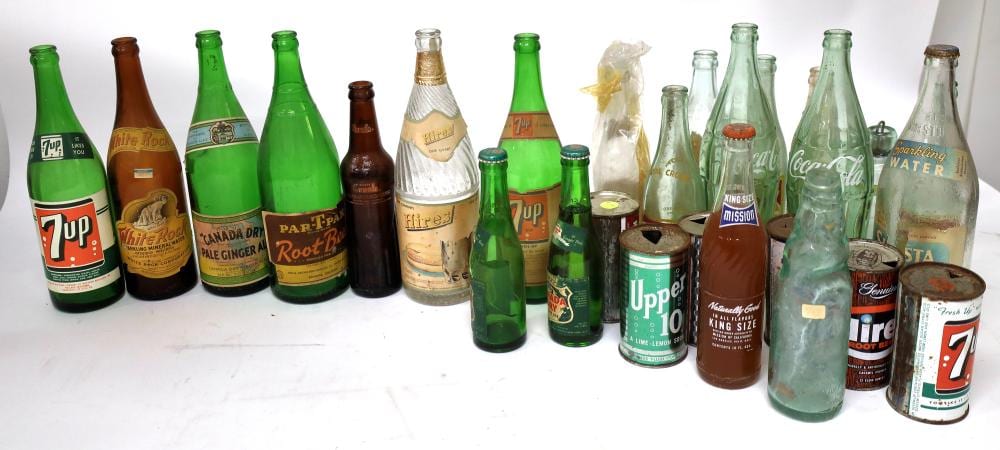 |
SODA POP BOTTLE COLLECTION [155046]Source blocked; provenance matched | Holabird Western Americana | 2022-08-27 | 3485 | USD 140 (buyer’s-premium treatment unknown) |
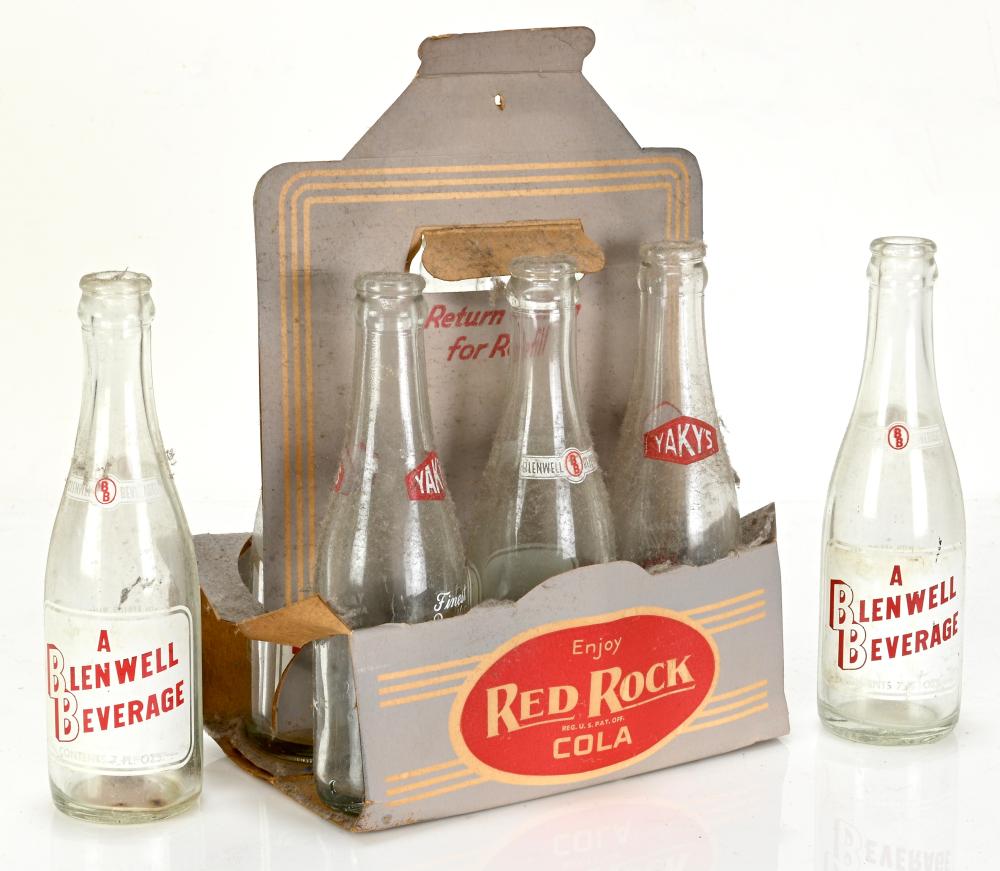 |
Vintage Red Rock Cola 6 Pack Bottle Carrier ACL Soda BottlesSource blocked; provenance matched | Mebane Antique Auction | 2024-10-19 | 381 | USD 20 (buyer’s-premium treatment unknown) |
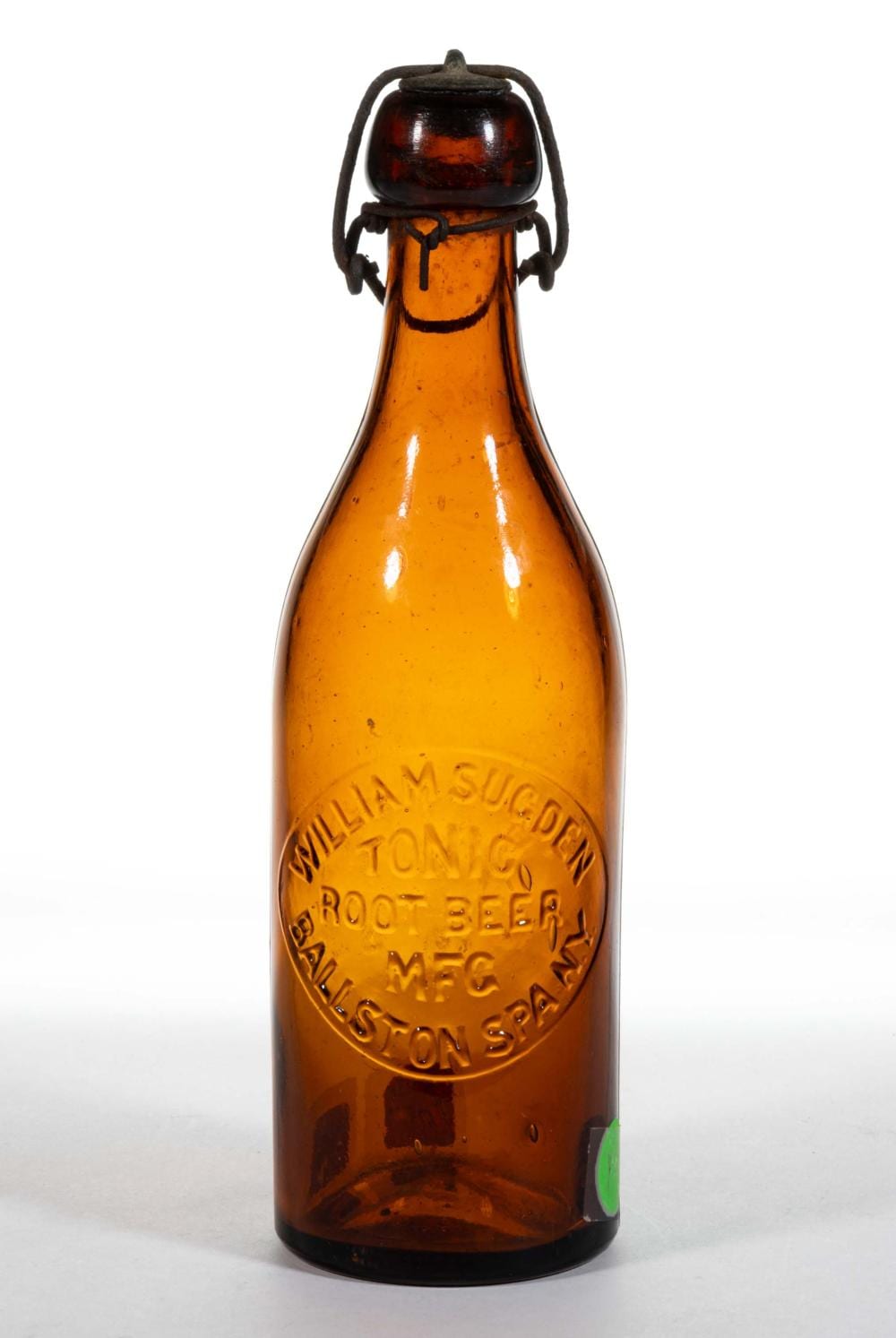 |
WILLIAM SUGDEN TONIC ROOT BEER, BALLSTON SPA, NEW YORK BLOB SODA BOTTLESource blocked; provenance matched | Jeffrey S. Evans & Associates | 2024-02-09 | 317 | USD 522 (buyer’s-premium treatment unknown) |
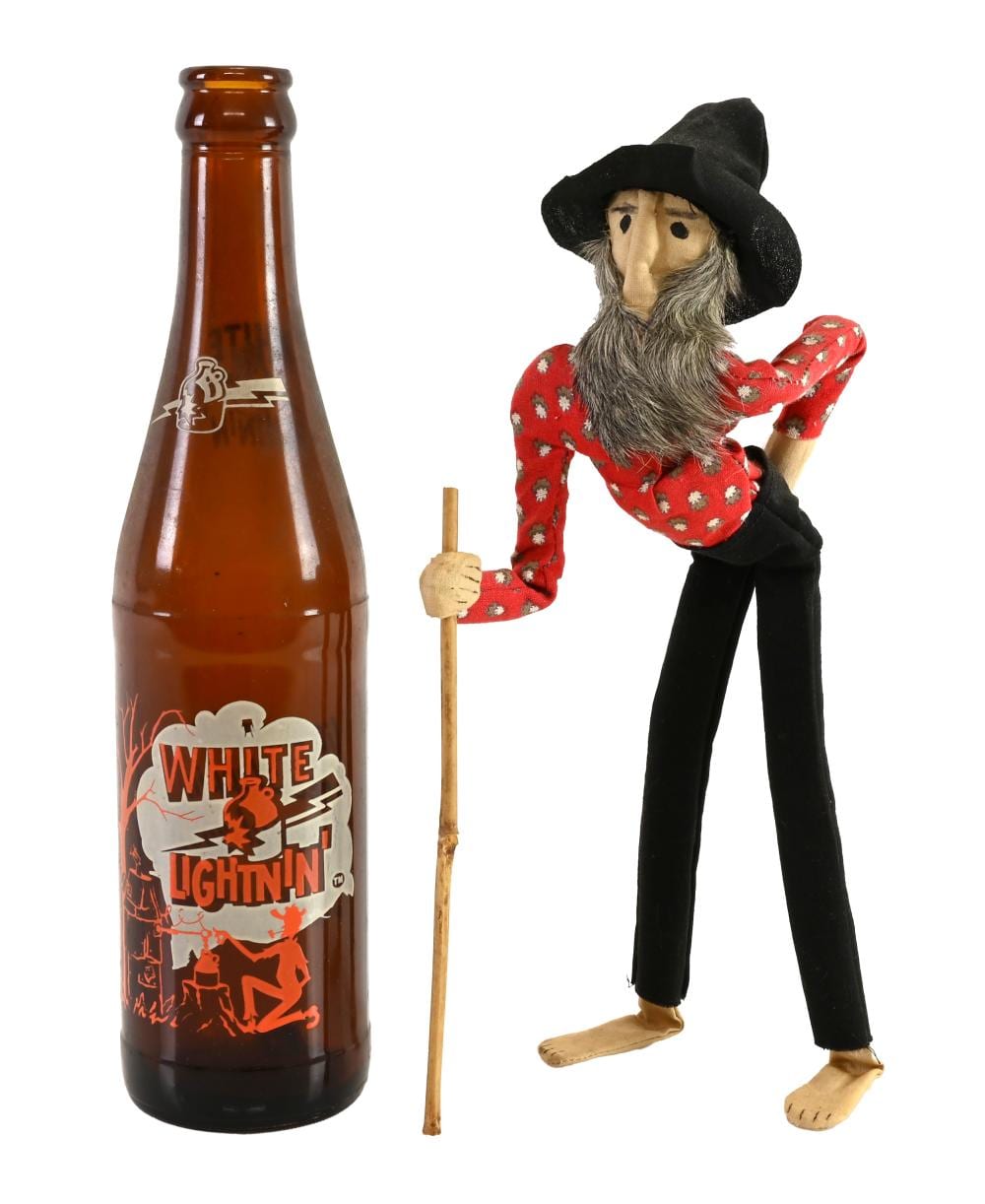 |
Very Rare White Lightnin ACL Amber Soda Bottle With Hillbilly DollSource blocked; provenance matched | Mebane Antique Auction | 2025-08-01 | 281 | USD 1,700 (buyer’s-premium treatment unknown) |
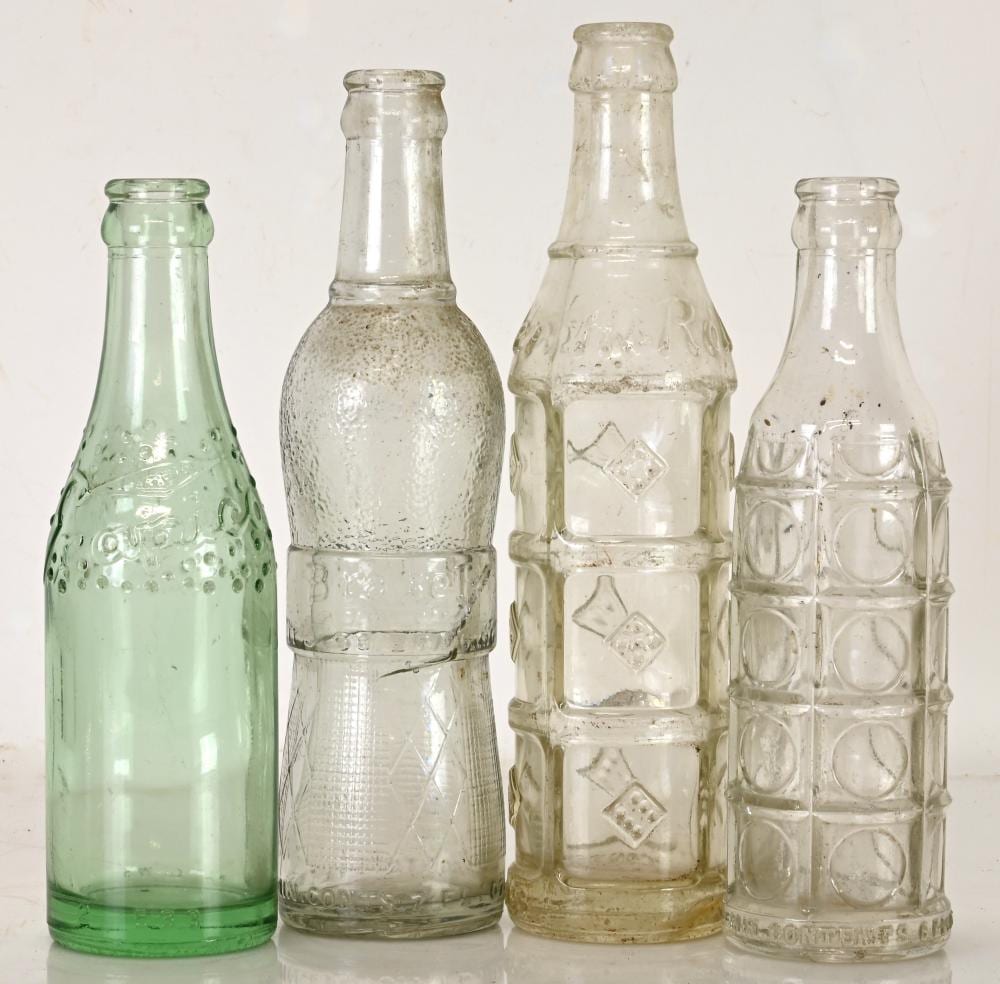 |
Vintage North Carolina Soda Pop Bottle CollectionSource blocked; provenance matched | Mebane Antique Auction | 2025-07-31 | 477 | USD 15 (buyer’s-premium treatment unknown) |
How these auction records were verified
Each row retains its exact source URL, lot identity, retrieval time, access result, and immutable record hash. Live source access was blocked; the exact record matched Appraisily's immutable pipeline provenance. Inspect the public comparable provenance record.
Disclosure: prices are shown as reported by auction houses and are provided for appraisal context. Learn more in our editorial policy.
Antique Soda Bottles Value: appraisal and value basics
Antique Soda Bottles Value research should start with identification, condition, provenance, and item-specific market evidence. Use this guide to compare the signals that matter before paying for a formal appraisal or deciding whether to sell.
Vintage soda bottles represent a fascinating intersection of Americana, industrial history, and collecting passion. Whether they’re colorful ACL (Applied Color Label) specimens from the mid-20th century or rare 19th-century Hutchinson-style bottles, these fizzy relics tell the story of America’s love affair with carbonated beverages while potentially carrying significant monetary value.
But how do you determine if that dusty old bottle from your grandparents’ basement is worth a value that must be established from current, topic-matched sales or a value that must be established from current, topic-matched sales? This comprehensive guide will walk you through the factors that influence antique soda bottle values, how to identify potentially valuable specimens, current market prices, and where to sell your treasured finds.
What Makes Old Soda Bottles Valuable?
Age and Rarity
Generally, older bottles tend to be more valuable, especially those dating back to the late 19th and early 20th centuries. Pre-1910 bottles, particularly those from small local bottlers that operated for only brief periods, can command premium prices.
Production Method and Design
The manufacturing process used to create the bottle significantly impacts its value:
- Hand-blown bottles (pre-1910): These earliest specimens feature pontil marks on the bottom and often contain bubbles or irregularities in the glass.
- Embossed bottles: Features raised lettering or designs molded directly into the glass during manufacturing.
- ACL (Applied Color Label) bottles: Starting in the 1930s, these feature painted labels fired onto the glass.
- Hutchinson-style bottles: Used from 1879-1912 with a distinctive internal stopper mechanism.
Geographic Origin
Bottles from certain regions can demand higher prices. Hawaiian, Alaskan, and Texas bottles often command premium prices due to collector interest in these regions. Bottles from small towns or those that commemorate specific events can also be particularly valuable.
Condition
As with most collectibles, condition is paramount:
Condition Assessment Checklist
Factors that affect bottle value based on condition
- No chips, cracks, or flaking ACL paint
- Original closure or cap (if applicable)
- Strong, clear embossing or ACL design
- Minimal or no staining
- No case wear on embossing
Brand Recognition and Historical Significance
Bottles from iconic brands like Coca-Cola generally carry more value, especially limited editions or discontinued designs. Bottles associated with significant historical events or periods can also command premium prices.
Identifying Your Vintage Soda Bottles
Bottle Styles and Manufacturing Eras
Understanding when your bottle was made is the first step in identification:
Soda Bottle Manufacturing Timeline
- 1800-1880
Early Hand-Blown Era
Individually crafted bottles with pontil marks, irregular shapes, and often containing bubbles in the glass. These are quite rare and valuable.
- 1879-1912
Hutchinson Bottle Period
Featured a unique internal stopper system. These bottles had a narrow neck and special internal wire stopper that was pushed into the bottle to seal it.
- 1892-1910
Crown Top Introduction
The modern crown cap replaced Hutchinson stoppers. Early crown top bottles are highly collectible.
- 1910-1930
Machine-Made Revolution
Automated bottle making machines standardized production. Look for seams that run all the way to the top of the bottle lip.
- 1934-Present
ACL (Applied Color Label) Era
Painted labels fired onto the glass replaced embossing as the primary decoration method. Early ACL bottles (1934-1950s) are particularly collectible.
Reading Bottle Markings
Bottle markings provide valuable information about age and origin:
- Base markings: Often contain manufacturer codes, date codes, and plant numbers
- Embossed text: City names, bottler information, and brand identifiers
- Patent dates: “Pat.” followed by a date indicates when the bottle design was patented (not necessarily when it was made)
Color Significance
Bottle color can significantly impact value:
- Amber/Brown: Common for beer but unusual for soda - can command premium prices
- Cobalt Blue: Relatively rare and desirable
- Purple/Amethyst: Clear glass that has turned purple due to manganese in the glass formula being exposed to sunlight; typically pre-1920
- Aqua: Common in earlier bottles; natural result of iron in the glass formula
- Clear: Most common, especially for ACL bottles
Current Market Values
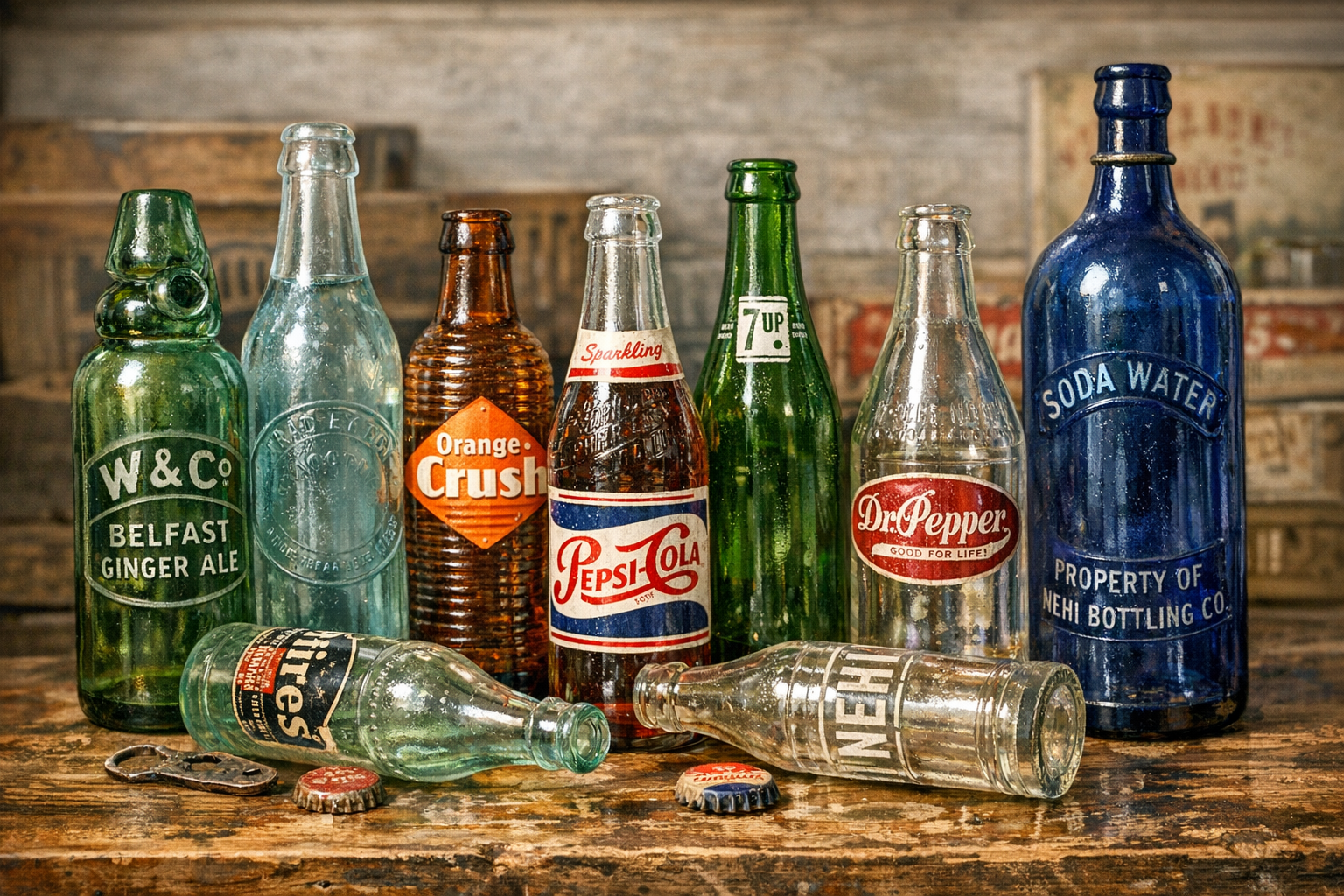
Common Price Ranges by Type
Vintage Soda Bottle Price Ranges
Current average market values (2023)
Regional Value Variations
Certain regions produce bottles with consistently higher values:
- Hawaii: Hawaiian soda bottles regularly command a value that must be established from current, topic-matched sales due to strong collector interest
- Alaska: Territorial Alaska bottles can fetch a value that must be established from current, topic-matched sales for rare examples
- Texas: Strong regional collector base drives higher values for Texas bottlers
- Small town bottlers: Bottles from very small local operations can command premiums based on rarity
Recent Notable Auction Results
| Category | Price | Notes |
|---|---|---|
| Common ACL Bottles (1950s-1970s) | a value that must be established from current, topic-matched sales | Widely available, condition dependent |
| Early ACL Bottles (1934-1950) | a value that must be established from current, topic-matched sales | Better examples from smaller bottlers |
| Embossed Crown Top (1900-1930) | a value that must be established from current, topic-matched sales | Local bottlers, good condition |
| Hutchinson Bottles (1879-1912) | a value that must be established from current, topic-matched sales+ | Rarity and condition dependent |
| Territorial Bottles (pre-statehood) | a value that must be established from current, topic-matched sales+ | Alaska, Hawaii, Southwest territories |
| Rare Colored Glass Sodas | a value that must be established from current, topic-matched sales+ | Cobalt blue, amber, or unique colors |
| Pre-1900 Blob Top Bottles | a value that must be established from current, topic-matched sales+ | Especially from small towns |
</tbody> </table>
Most Valuable Antique Soda Bottles
Early Coca-Cola Bottles
- Hutchinson-style Coca-Cola bottles (1890s-1910): a value that must be established from current, topic-matched sales+
- Straight-sided Coca-Cola bottles (1900-1915): a value that must be established from current, topic-matched sales depending on city
- Early contour/hobbleskirt bottles (1915-1920): a value that must be established from current, topic-matched sales
- Colored glass Coke bottles: a value that must be established from current, topic-matched sales+
Rare Regional Sodas
- Pre-statehood territorial bottles: Alaska, Hawaii, Arizona territorial bottles can fetch a value that must be established from current, topic-matched sales
- Small town bottlers: Bottles from operations that existed only briefly can command a value that must be established from current, topic-matched sales
- Unusually shaped bottles: Distinctive shapes like rocket bottles or figural designs typically sell for a value that must be established from current, topic-matched sales
Early Soda Innovations
- Original Hutchinson patent bottles: a value that must be established from current, topic-matched sales
- Blob-top soda bottles (pre-1900): a value that must be established from current, topic-matched sales
- First-generation ACL bottles (1934-1940): a value that must be established from current, topic-matched sales+
Where to Sell Vintage Soda Bottles
Online Marketplaces
- eBay: The largest marketplace for vintage bottles with the widest audience reach
- Etsy: Good for curated, higher-quality bottles with stronger presentation
- Facebook Marketplace/Groups: Dedicated bottle collecting groups can offer direct sales with no fees
- Ruby Lane: Higher-end antiques platform suitable for exceptional examples
Offline Sales Venues
- Bottle Shows & Collector Conventions: Direct access to serious collectors willing to pay premium prices
- Antique Malls & Shops: Often take a share but can display bottles to interested buyers
- Auction Houses: For extremely valuable specimens, specialized auction houses like American Bottle Auctions or Morphy Auctions offer expert marketing to high-end collectors
Specialist Bottle Dealers
Working with established bottle dealers can be advantageous for rare specimens, as they have established collector networks. Expect to receive a condition-specific range of retail value, but with immediate payment and no selling hassles.
Tips for Bottle Collectors
Collecting Strategy
- Specialize strategically: Focus on a specific category (ACL bottles, specific brand, geographic region) rather than collecting randomly
- Condition matters: Even common bottles in pristine condition can command premiums
- Documentation: Keep records of purchases, provenance, and historical information about your bottles
- Network with fellow collectors: Join clubs like the Federation of Historical Bottle Collectors to share knowledge and trading opportunities
Preservation Best Practices
- Display safely: Keep bottles out of direct sunlight to prevent color changes
- Cleaning: Use only mild soap and water; avoid harsh chemicals
- Handling: Always hold bottles by the body, not by the neck or applied features
- Storage: If not displaying, store in acid-free materials with padding between bottles
Attribution review Considerations
- Research thoroughly: Study reference books and online resources before major purchases
- Beware reproductions: Particularly common with valuable bottles like early Coca-Cola specimens
- Seller reputation: Buy from established dealers or collectors with positive feedback histories
- Get expert opinions: For potentially valuable specimens, consider professional attribution review
Common Questions About Vintage Soda Bottle Values
How can I tell how old my soda bottle is?
- Check for maker’s marks on the bottle bottom
- Look for patent dates (though these indicate design patent date, not manufacturing date)
- Examine the seams (bottles with seams extending through the lip are machine-made, post-1910)
- Research the brand and design online or in collector guides
- For ACL (painted label) bottles, research when the specific design was used
Are full, unopened vintage soda bottles worth more than empty ones?
- Some collectors prefer empty bottles for display and easier shipping
- Very old full bottles may have evaporated or compromised contents
- Extremely rare bottles might be more valuable empty to prevent accidental breakage
- For modern commemorative bottles (post-1960s), full bottles tend to command better prices
What are the most valuable vintage soda bottle brands to look for?
- Early Coca-Cola bottles (especially Hutchinson-style and straight-sided)
- Rare Mountain Dew bottles (particularly hillbilly character designs)
- Dr. Pepper (especially pre-1950s variants)
- Regional brands that operated briefly
- Moxie (particularly figural bottles)
- Clicquot Club (especially in unusual colors)
- Historic brands from the 1800s like Saratoga mineral water bottles
Should I clean my old soda bottles before selling them?
- Never use harsh chemicals, abrasives, or dishwashers
- For internal mineral deposits, use only distilled water and uncooked rice as a gentle agitator
- For ACL (painted label) bottles, avoid scrubbing which can damage the paint
- When in doubt, leave cleaning to experts - improper cleaning can drastically reduce value
- Some collectors prefer bottles with natural patina that shows their age
Where can I find price guides for vintage soda bottles?
- Specialized bottle collecting books like "Collecting Applied Color Label Soda Bottles" by Bill Porter
- Online auction archives like WorthPoint or past eBay sales (search "sold items")
- Bottle collector forums like AntiqueBottles.net
- Annual price guides published by bottle collecting organizations
- Specialty collector magazines like "Antique Bottle & Glass Collector"
What makes a Coca-Cola bottle valuable?
- Hutchinson-style Coca-Cola bottles (1890s-1910) are extremely valuable (a value that must be established from current, topic-matched sales)
- Straight-sided bottles (pre-1916) with city names can range from a value that must be established from current, topic-matched sales+
- Early contour/"hobbleskirt" bottles (1915-1920s) typically fetch a value that must be established from current, topic-matched sales
- Prototype or experimental designs command premium prices
- Foreign country Coca-Cola bottles, especially early examples
- Amber or other unusual colored Coke bottles
- Commemorative bottles with errors or limited distribution
Are plastic soda bottles ever valuable?
- First-generation plastic bottles from the early 1970s
- Promotional bottles for major events or with manufacturing errors
- Limited edition designs from popular brands
- Prototype bottles that never reached mass production
- Internationally-distributed variations not commonly found in the US
How do embossed bottles differ from ACL (Applied Color Label) bottles in value?
- Pre-1930s embossed bottles generally command higher prices due to age and craftsmanship
- Early ACL bottles (1934-1950) can be quite valuable, especially with rare designs or from small bottlers
- Common embossed bottles from 1900-1930 typically range from a value that must be established from current, topic-matched sales
- Common ACL bottles from the 1950s-1970s typically range from a value that must be established from current, topic-matched sales
- Rarity and condition matter more than the decoration method
- Some collectors specialize exclusively in either embossed or ACL bottles
External Resources for Bottle Collectors
Antique Bottles and Jars Price Guide
A comprehensive resource offering price estimates and descriptions for a wide variety of antique bottles, including soda specimens with detailed images.
Collectible Soda Bottles on eBay
Browse current listings of vintage soda bottles to get an understanding of current market prices and availability.
Federation of Historical Bottle Collectors
The leading organization for bottle collectors, offering resources, virtual museum exhibits, publications, and information about bottle shows nationwide.
Collectors Weekly - Antique Cola Bottles
Features articles on collecting history and trends, plus a regularly updated auction section showing recent sales prices.
Vintage Soda Bottles Guide by LoveToKnow
A comprehensive overview of vintage soda bottle collecting with identification tips and value information.
Bottle Collectors Forum on Reddit
Active community of bottle collectors sharing finds, asking for identifications, and discussing values of vintage specimens.
Conclusion: The Enduring Appeal of Vintage Soda Bottles
The world of antique and vintage soda bottle collecting offers something for everyone – from affordable nostalgic pieces to museum-quality rarities. While the majority of old pop bottles sell in the a market-dependent range, understanding the factors that elevate certain specimens to the hundreds or even thousands of dollars can help you make informed collecting or selling decisions.
Whether you’re motivated by market context, historical interest, or simply the aesthetic appeal of these colorful pieces of Americana, the vintage soda bottle market continues to bubble with activity. By focusing on condition, rarity, and provenance, you can build a collection that brings both joy and potential financial returns.
Remember that the most valuable aspect of any collection is often the knowledge gained and connections made along the way. By joining collector communities, attending bottle shows, and studying the rich history behind these everyday objects, you’ll enhance both your collecting experience and your ability to identify those special bottles that might be hidden treasures.
Free instant estimate
Not sure if your antique bottle is worth appraising? Let us take a look.
Upload a photo, tell us what you know, and get a free first read. If a full appraisal makes sense, we will say so.
Free. No card needed. Takes about two minutes.
Choose your next step
Use the path that matches the decision you need to make about the item.
Not sure it is worth appraising?
Start with a lower-friction screen to understand the likely category, evidence, and next step.
Upload photos for a free first lookWant proof before paying?
See how a signed report documents photos, comparable evidence, condition notes, and value conclusions.
View signed report sampleNeed a signed report?
Use this for insurance, estate, donation, resale, or documented value decisions.
Need documentation now? Start signed appraisalNeed local or specialist help?
Compare directory options when the work needs in-person review or a specialist near you.
Find local specialistsSee what the report looks like
Sample reports show how photos, comparable evidence, condition notes, and a value conclusion are documented.
Get old pop bottles appraised
Upload photos of the bottle, logo, embossing, base, neck, cap, label, glass color, chips, staining, and condition notes.
- Expert report with photos and market context
- Fast turnaround
- Fixed, upfront pricing
No obligation. Secure upload.
Continue your valuation journey
Find the right local specialist
Compare antique and art appraisers by location and specialty in one directory.
Antique & art specialists
Browse the Antique & Art Appraisers Directory
Choose a local specialist when the assignment needs in-person inspection or a specific credential.
Machine-readable summaries
Use these machine-friendly references for AI and crawler discovery of Appraisily content.
Ready for pricing guidance?
Start a secure online appraisal
Upload images and details. Certified specialists respond within 24 hours.
Upload photos for a free first look View signed report sample