Antique chairs represent a fascinating intersection of art, history, and craftsmanship. Whether you’ve inherited family heirlooms, discovered a potential treasure at an estate sale, or are building a collection, understanding the value of antique chairs requires specialized knowledge. In this comprehensive guide, we’ll explore everything you need to know about identifying, authenticating, and determining the value of antique chairs in today’s market.
Understanding Antique Chair Values
Antique chairs can range from relatively affordable examples priced at a value that must be established from current, topic-matched sales to museum-quality masterpieces worth tens of thousands. Understanding the market requires both general knowledge of furniture history and specifics about individual styles and makers.
Several key factors contribute to an antique chair’s value:
- Age: Generally, older chairs command higher prices, with pre-1700 examples being especially valuable
- Maker/Designer: Chairs by renowned cabinetmakers or designers often fetch premium prices
- Rarity: Unusual or limited production pieces typically have greater value
- Condition: Original finishes, minimal restoration, and structural integrity significantly impact value
- Provenance: Documented history, especially famous ownership, can dramatically increase value
How to Identify Antique Chair Styles
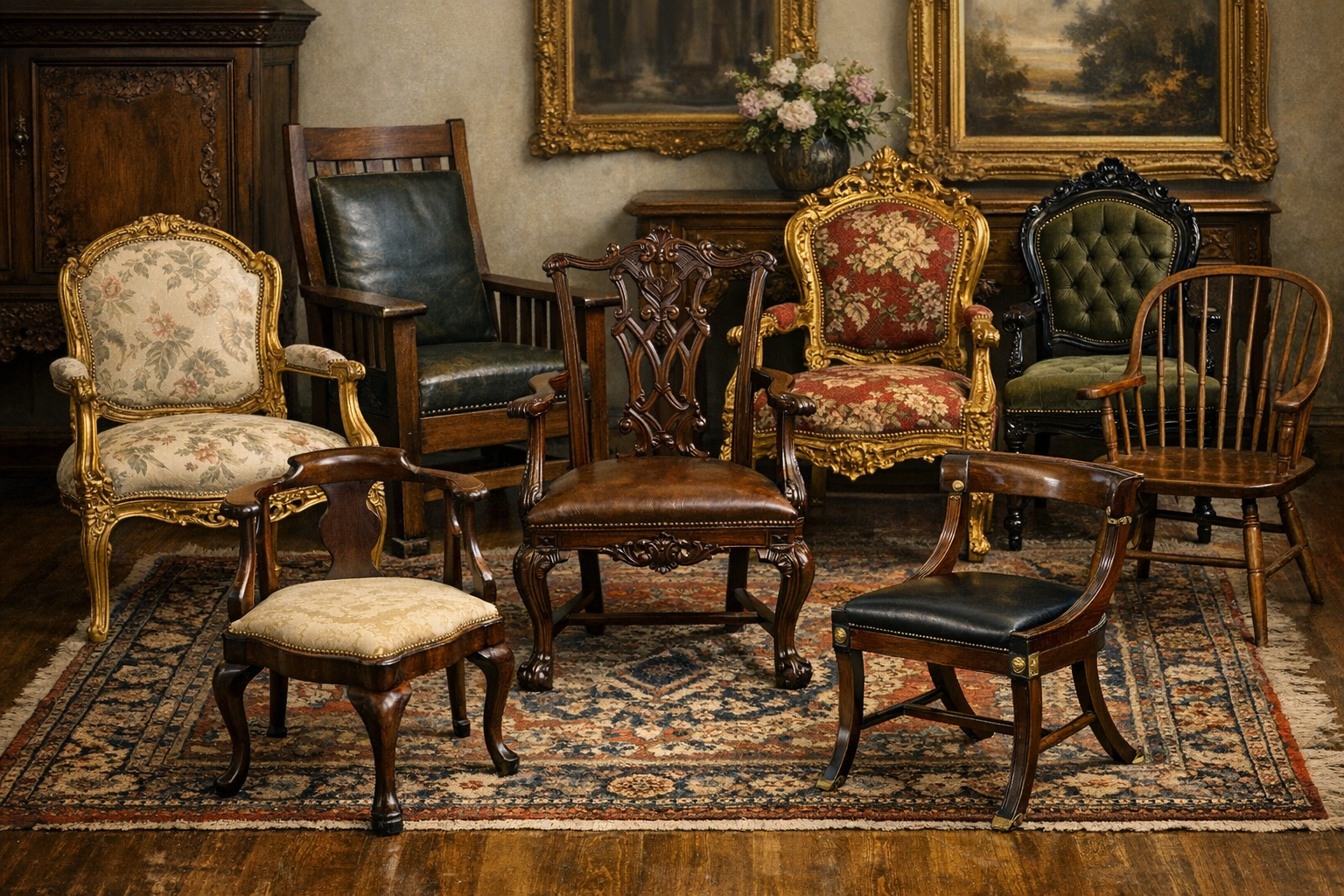
Major Antique Chair Style Periods
- 1600-1700
William and Mary
Characterized by turned legs, carved crests, and cane or leather seats. Values range from a value that must be established from current, topic-matched sales depending on condition and provenance.
- 1700-1760
Queen Anne
Features graceful cabriole legs, fiddle-shaped backs, and shell carvings. Quality examples typically sell for a value that must be established from current, topic-matched sales.
- 1750-1790
Chippendale
Known for elaborate carving, ribbon-back designs, and ball-and-claw feet. Documented pieces command a value that must be established from current, topic-matched sales.
- 1780-1830
Federal/Sheraton/Hepplewhite
Distinguished by straight lines, rectangular backs, and delicate proportions. Values range from a value that must be established from current, topic-matched sales.
- 1830-1900
Victorian
Various revival styles featuring heavy ornamentation and elaborate carving. Pricing varies widely from a value that must be established from current, topic-matched sales.
- 1880-1920
Arts & Crafts/Mission
Simple, rectilinear designs with emphasis on craftsmanship. Good examples sell for a value that must be established from current, topic-matched sales.
When examining an antique chair, pay careful attention to these key identifying features:
- Chair Back Design: The shape and decoration of the back often indicates the style period
- Leg Style: Ball-and-claw, cabriole, turned, or tapered legs help identify different periods
- Joinery Methods: Hand-cut dovetails, mortise-and-tenon joints, and wooden pegs indicate age
- Wood Type: Mahogany, walnut, oak, rosewood, and maple were commonly used in different periods
- Ornamentation: Carving styles, inlay techniques, and decorative motifs vary by period
Determining Originality
Originality Assessment Checklist
Use these criteria to help determine if a chair is genuinely antique
- Consistent patina and wear patterns matching the purported age
- Construction methods appropriate for the time period
- Evidence of hand tools rather than machine manufacturing
- Wood aging consistent throughout (no newer replacement parts)
- Proportions and design details accurate to the period
- Appropriate materials for the era (no anachronistic elements)
- Signs of repairs consistent with age and use
Expert attribution review considers:
- Construction Methods: Machine-cut precision typically indicates newer pieces, while slight irregularities suggest handcrafting
- Wood Aging: Genuine antiques show consistent aging throughout, including undersides and hidden areas
- Hardware: Original hardware shows appropriate wear and oxidation; replacement hardware is a red flag
- Finish: Original finishes develop a distinctive patina over time that’s difficult to replicate
- Proportions: Period-appropriate dimensions and design elements are crucial for originality
According to experts at Fireside Antiques, documented period chairs often retain subtle maker’s marks or regional characteristics that reproductions typically miss.
Factors That Influence Antique Chair Values
Value Factors for Antique Chairs
How different elements impact pricing in the current market
Beyond these factors, market trends significantly impact values. As noted by Paolo Moschino’s comprehensive guide, current design trends influence which antique chair styles command premium prices at any given time.
For example, mid-century modern chairs have seen dramatic value increases in recent years, while heavily ornate Victorian pieces have experienced more modest appreciation.
Current Market Values by Style
| Category | Price | Notes |
|---|---|---|
| Original Finish | a condition-specific range premium | Original surface treatments significantly enhance value |
| Complete Set | a condition-specific range premium over individual pieces | Matching sets of dining chairs command higher prices |
| Documented Provenance | a condition-specific range premium | Varies based on historical significance of previous owners |
| Original Upholstery | a condition-specific range premium | Rare but highly valued by serious collectors |
| Designer Attribution | a condition-specific range premium | Documented pieces by famous designers command significant premiums |
</tbody> </table>
According to data from 1stDibs, these current value ranges represent average retail prices for quality examples:
- Windsor Chairs: a value that must be established from current, topic-matched sales (with rare examples exceeding a value that must be established from current, topic-matched sales)
- Ladder-Back Chairs: a value that must be established from current, topic-matched sales for individual chairs
- Queen Anne: a value that must be established from current, topic-matched sales for side chairs; a value that must be established from current, topic-matched sales for armchairs
- Chippendale: a value that must be established from current, topic-matched sales (with exceptional examples exceeding a value that must be established from current, topic-matched sales)
- Federal/Sheraton/Hepplewhite: a value that must be established from current, topic-matched sales per chair
- Victorian: a value that must be established from current, topic-matched sales (highly variable based on specific style and quality)
- Arts & Crafts/Mission: a value that must be established from current, topic-matched sales (with signed examples by known makers commanding premium prices)
- Art Deco: a value that must be established from current, topic-matched sales per chair
- Mid-Century Modern: a value that must be established from current, topic-matched sales (with designer pieces reaching much higher)
As reported on Reddit discussions, market values for antique chairs have fluctuated significantly in recent years, with many traditional styles experiencing decreased demand while designer and mid-century pieces have appreciated.
How to Research Your Antique Chair
To research your antique chair:
- Document Details: Take clear photographs from multiple angles, measure dimensions, and note all distinctive features
- Identify the Style: Use reference books or online resources to determine the period and style
- Check for Marks: Look for maker’s marks, labels, or stamps (often found underneath the seat or on the chair frame)
- Research Market Evidence: Check auction results, dealer inventories, and online marketplaces for similar examples
- Consult Experts: For valuable pieces, consider professional appraisal services
Online resources like Mearto can provide preliminary value estimates, while auction databases offer valuable data on recent sales of comparable pieces.
Valuable Research Resources
Fireside Antiques Seating Collection
Excellent reference for high-quality antique chairs with detailed descriptions and pricing.
1stDibs Rare Antique Chairs
Marketplace featuring premium antique chairs with detailed listings and asking prices.
Mearto Chair Valuation Guide
Platform offering preliminary appraisals and valuation guidance for antique chairs.
Paolo Moschino's Antique Chair Guide
Comprehensive guide to identifying, dating, and valuing antique chairs.
LoveToKnow Antique Chair Value Guide
Detailed value guide with specific price ranges for different chair types.
Value My Stuff Antique Furniture Blog
Professional insights on appraising antique furniture including chairs.
Selling Antique Chairs: Best Practices
Different selling options offer varying advantages:
- Auction Houses: Best for rare, high-value pieces; expect a condition-specific range commission but potential for competitive bidding
- Antique Dealers: Offer immediate payment but typically at wholesale prices (a condition-specific range of retail)
- Online Marketplaces: Provide wide exposure but require shipping logistics and may involve fees
- Specialty Furniture Consignment: Good middle ground with typical a condition-specific range commission
- Direct to Collectors: Potentially highest returns but requires networking and marketing
Before selling, consider investing in professional cleaning or conservative restoration for damaged pieces, but avoid over-restoration which can decrease value for serious collectors.
Tips for Buyers and Collectors
Consider these tips when buying antique chairs:
- Buy What You Love: Personal appreciation should guide collecting, regardless of market trends
- Prioritize Condition: Structural integrity is crucial; cosmetic issues are less problematic
- Examine Thoroughly: Check for repairs, replacements, and structural stability
- Request Documentation: Ask for any available provenance, receipts, or attribution review
- Consider Usability: Determine if the chair will be decorative or functional in your space
- Start with Affordable Pieces: Begin with more accessible examples while developing knowledge
- Focus on Learning: Visit museums, attend auctions, and study reference materials
- Develop Relationships: Connect with reputable dealers who can guide your collecting journey
As your knowledge grows, you’ll develop confidence in spotting both exceptional values and overpriced examples in the marketplace.
Common Questions About Antique Chair Values
How do I know if my old chair is valuable?
- Age: Chairs over 100 years old have greater potential value
- Maker: Look for manufacturer’s marks or signatures
- Condition: Original finishes and minimal damage increase value
- Design: Distinctive styles or unusual features enhance worth
- Construction: Hand-crafted details and quality materials suggest higher value
How can I find out how much my antique furniture is worth?
- Professional appraisal: The most accurate method, providing detailed valuation
- Auction house consultation: Many offer free preliminary evaluations
- Antique dealer assessment: Typically provide wholesale values (what they would pay)
- Online valuation services: Sites like Mearto offer preliminary estimates
- Research market evidence: Check auction results and dealer inventories
- Reference books and price guides: Provide general value ranges
- Antique shows and forums: Connect with experts who may offer insights
How to appraise an antique chair?
- Rarity: Assess how uncommon the piece is in the current market
- Aesthetics: Evaluate the design quality and visual appeal
- Desirability: Determine market demand among collectors and designers
- Originality: Verify the chair is an original period piece
- Condition: Examine for damage, repairs, and original components
- Provenance: Consider documented history of ownership
- Maker: Identify any attribution to known craftsmen or manufacturers
How to find the value of a chair?
- Identify the style and approximate age
- Take clear photographs from multiple angles
- Note all dimensions (height, width, depth, seat height)
- Document any maker’s marks, labels, or distinctive features
- Research comparable examples through:
- Online marketplaces like 1stDibs or eBay
- Auction results databases
- Antique dealer websites
- Price guides and reference books
- Consider condition factors that affect value
- Consult with a professional appraiser for valuable pieces
What makes an antique chair valuable?
- Age: Generally, older chairs (especially pre-1800) command higher prices
- Maker/Designer: Attribution to known craftsmen dramatically increases value
- Rarity: Unusual designs or limited production examples are more valuable
- Condition: Original finishes, minimal repairs, and structural integrity
- Provenance: Documented history, especially notable previous ownership
- Historical Significance: Connection to important historical events or figures
- Aesthetic Quality: Superior design and craftsmanship
- Material Quality: Use of premium woods and materials
- Completeness: All original components present
- Market Demand: Current collector and decorator interest
What are the most valuable antique chair styles?
- American Chippendale: Especially Philadelphia examples, can exceed a value that must be established from current, topic-matched sales
- Queen Anne: Fine examples from 1710-1750, particularly wing chairs, a value that must be established from current, topic-matched sales
- Federal Period: Signed pieces by notable makers like Duncan Phyfe, a value that must be established from current, topic-matched sales
- Louis XV/XVI French: Original gilt and finish, a value that must be established from current, topic-matched sales
- George III English: Especially Thomas Chippendale designs, a value that must be established from current, topic-matched sales
- Ming Dynasty Chinese: Huanghuali wood examples, a value that must be established from current, topic-matched sales+
- Arts & Crafts: Signed Gustav Stickley or Greene & Greene, a value that must be established from current, topic-matched sales
- Mid-Century Modern: Designer pieces by Eames, Wegner, Nakashima, a value that must be established from current, topic-matched sales
Conclusion
Determining the value of antique chairs requires a blend of historical knowledge, market awareness, and attention to detail. While general guidelines provide a starting point, each piece must be evaluated individually based on its unique characteristics and current market conditions.
Whether you’re a collector, seller, or simply curious about a family heirloom, developing familiarity with different styles, construction methods, and value factors will help you make informed decisions. For particularly valuable or rare examples, consulting with professional appraisers remains the most reliable way to establish accurate valuations.
As with all antiques, the market continues to evolve with changing tastes and design trends. Staying informed through reputable resources and dealer relationships ensures you maintain current knowledge of antique chair values in today’s dynamic marketplace.
What similar items actually sold for
To help ground this guide in real market activity, here are recent example auction comps from Appraisily’s internal database. These matched sales are market context only, not an object estimate or identification, and they do not guarantee a price for your specific chairs.
Shown USD range: USD 20-USD 3,200. Median of these 9 USD examples: USD 125.
| Comparable | What sold | Auction house | Date | Lot | Source-reported amount |
|---|---|---|---|---|---|
 |
(10) DANISH ROSEWOOD DINING CHAIRS BY SAXSource blocked; provenance matched | Westport Auction | 2024-11-07 | 79 | USD 900 (buyer’s-premium treatment unknown) |
 |
PAIR OF ANTIQUE SIDE CHAIRSSource blocked; provenance matched | Selkirk Auctioneers & Appraisers | 2020-10-26 | 78 | USD 25 (buyer’s-premium treatment unknown) |
 |
French Antique Bobbin Corner ChairSource blocked; provenance matched | Rivich Auction | 2025-11-30 | 256 | USD 150 (buyer’s-premium treatment unknown) |
 |
A SET OF SEVEN GEORGE III POLYCHROME PAINTED DINING CHAIRS, IN THE MANNER OF GILLOWS, CIRCA 1810Source blocked; provenance matched | Dreweatts 1759 Fine Sales | 2022-09-08 | 655 | GBP 3,200 (buyer’s-premium treatment unknown) |
 |
Antique Round Oak Table & 6 ChairsSource blocked; provenance matched | The Auction Barn | 2025-11-16 | 39 | USD 125 (buyer’s-premium treatment unknown) |
 |
Georgian Antique Mahogany Hepplewhite Style Elbow/Carver Chair. Early 19thc. Height 36 inches.Source blocked; provenance matched | Cooper Barrington LLP | 2018-04-21 | 376 | GBP 26 (buyer’s-premium treatment unknown) |
 |
French Dining Table and a Set of Twelve Dining ChairsSource blocked; provenance matched | A.B.Levy’s Palm Beach | 2024-11-21 | 208 | USD 3,200 (buyer’s-premium treatment unknown) |
 |
Pair Antique French Side ChairsSource blocked; provenance matched | Roland Auctions NY | 2020-09-12 | 67 | USD 75 (buyer’s-premium treatment unknown) |
 |
ANTIQUE HEAVILY CARVED WOOD JAPANESE CHAIRSource blocked; provenance matched | Echoes Antiques & Auction Gallery | 2020-07-21 | 82 | USD 225 (buyer’s-premium treatment unknown) |
 |
ANTIQUE EMPIRE SLIP SEAT CHAIRSSource blocked; provenance matched | Dennis Auction Service | 2025-11-21 | 1226 | USD 25 (buyer’s-premium treatment unknown) |
 |
SIX CHAIRS D. JOSÉSource blocked; provenance matched | Renascimento | 2015-02-24 | 371 | EUR 900 (buyer’s-premium treatment unknown) |
 |
Pair Antique Hitchcock Side ChairsSource blocked; provenance matched | Greenwich Auction | 2019-02-10 | 835 | USD 20 (buyer’s-premium treatment unknown) |
How these auction records were verified
Each row retains its exact source URL, lot identity, retrieval time, access result, and immutable record hash. Live source access was blocked; the exact record matched Appraisily's immutable pipeline provenance. Inspect the public comparable provenance record.
Disclosure: prices are shown as reported by auction houses and are provided for appraisal context. Learn more in our editorial policy.
Free instant estimate
Not sure if your item is worth appraising? Let us take a look.
Upload a photo, tell us what you know, and get a free first read. If a full appraisal makes sense, we will say so.
Free. No card needed. Takes about two minutes.
Choose your next step
Use the path that matches the decision you need to make about the item.
Not sure it is worth appraising?
Start with a lower-friction screen to understand the likely category, evidence, and next step.
Upload photos for a free first lookWant proof before paying?
See how a signed report documents photos, comparable evidence, condition notes, and value conclusions.
View signed report sampleNeed a signed report?
Use this for insurance, estate, donation, resale, or documented value decisions.
Need documentation now? Start signed appraisalNeed local or specialist help?
Compare directory options when the work needs in-person review or a specialist near you.
Find local specialistsSee what the report looks like
Sample reports show how photos, comparable evidence, condition notes, and a value conclusion are documented.
Get an antique chair appraised
Upload photos of the chair, underside, joinery, wood, surface, upholstery, repairs, dimensions, and condition notes.
- Expert report with photos and market context
- Fast turnaround
- Fixed, upfront pricing
No obligation. Secure upload.
Continue your valuation journey
Find the right local specialist
Compare antique and art appraisers by location and specialty in one directory.
Antique & art specialists
Browse the Antique & Art Appraisers Directory
Choose a local specialist when the assignment needs in-person inspection or a specific credential.
Machine-readable summaries
Use these machine-friendly references for AI and crawler discovery of Appraisily content.
Ready for pricing guidance?
Start a secure online appraisal
Upload images and details. Certified specialists respond within 24 hours.
Upload photos for a free first look View signed report sample