Antique safe value checklist before pricing
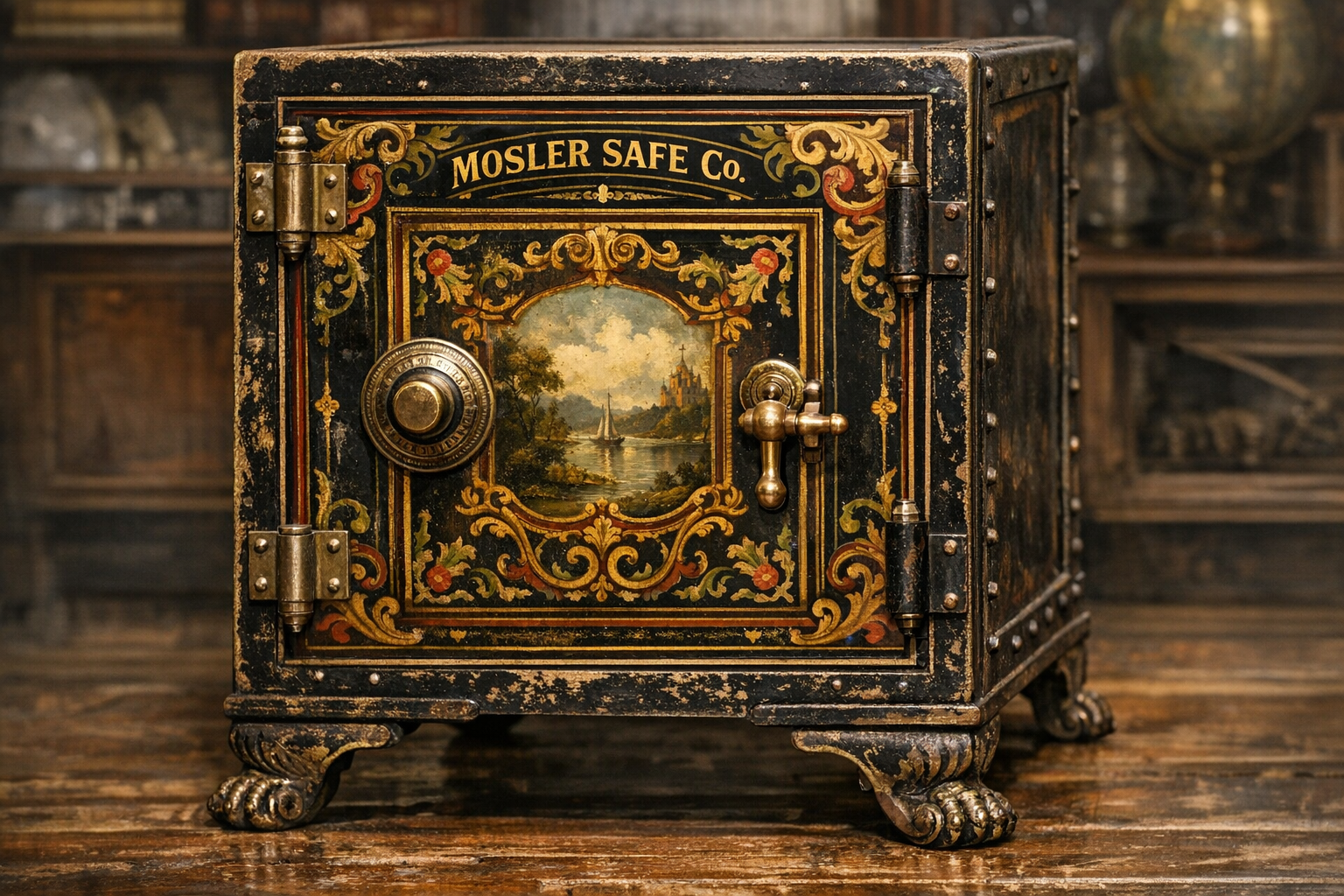
Start valuation with the maker mark, serial or job number, lock type, handle and hinge hardware, original paint, gold leaf or decals, interior fittings, dimensions, weight, working condition, restoration history, and moving constraints. A compact decorated safe with original finish and working lock may be easier to sell than a larger vault door with higher transport costs.
For brand-specific evidence, compare this page with our Diebold safe identification guide, old safes value guide, and antique padlock identification guide. Avoid drilling, stripping paint, or disturbing fire insulation until asbestos and lockwork risk are understood.
Introduction to Antique Safes
Antique safes have captivated collectors and interior designers alike with their robust construction, intricate lock mechanisms, and often elaborate decorative elements. From the ornate Victorian-era floor models to compact desktop safes, these historical security devices can command significant value in today’s market, depending on their maker, condition, rarity, and aesthetic appeal.
In this comprehensive guide, we’ll explore how to identify valuable antique safes, understand their historical context, and determine their current market value. Whether you’ve inherited a family heirloom, discovered an old safe in a building renovation, or are actively collecting these historical treasures, this article will provide you with the knowledge needed to appreciate and accurately assess their worth.
Antique Safe Market at a Glance
Historical Context of Antique Safes
The history of safes stretches back thousands of years, but the antique safes most commonly found in today’s market originate from the 19th and early 20th centuries. This period saw significant advances in metallurgy, lock mechanisms, and fire protection as industrialization created both greater wealth to protect and improved manufacturing capabilities.
Evolution of Antique Safe Technology
- 1800-1850
Early Iron Safes
The early 19th century saw the first mass-produced iron safes, often with simple key locks and minimal fire protection. These early safes were primarily large boxes made of riveted iron plates.
- 1850-1880
Combination Lock Era
Combination locks began replacing key mechanisms, offering improved security. Manufacturers like Diebold and Mosler emerged as industry leaders, adding decorative elements to their safes.
- 1880-1917
Golden Age of Safe Production
This period saw ornate designs featuring hand-painted details, brass hardware, and elaborate lock mechanisms. Safes became status symbols for businesses and wealthy individuals.
- 1917-1940
Modernization Period
Safe manufacturers transitioned from water-cement insulation to asbestos for improved fire protection. Designs became more streamlined with art deco influences.
A critical development in safe technology occurred around 1917 when manufacturers began using different materials for fire insulation. As noted by industry experts at Safe and Vault Store:
“Most safes made before 1917 were insulated with plain water and cement. Over time, these materials would dry out, significantly reducing any fire protection properties the safe once had.”
This historical context helps explain why certain features, such as original combination mechanisms, decorative painting, or specific manufacturer nameplates, can dramatically affect an antique safe’s value today.
Identifying Valuable Antique Safes
Prominent Safe Manufacturers
The maker of an antique safe significantly impacts its value. Some of the most prestigious and collectible manufacturers include:
Mosler Safe Company - Founded in 1867 in Cincinnati, Ohio, Mosler safes are highly regarded for their quality and innovative security features. Their safes protected valuables in banks and government facilities across America.
Diebold, Inc. - Established in 1859, Diebold safes are known for their durability and craftsmanship. The company survives today as part of Diebold Nixdorf.
Yale Safe & Lock Company - Founded by Linus Yale Jr., who pioneered modern pin tumbler locks, Yale safes from the late 19th century are particularly valuable.
Cary Safe Company - Operating out of Buffalo, NY from the late 19th century, Cary safes are recognizable by their ornate designs and quality construction.
Hall’s Safe and Lock Company - Joseph L. Hall founded this company in 1867, producing safes known for both security features and decorative elements.
York Safe and Lock Company - Founded in 1882 in York, PA, these safes are known for their solid construction and were widely used by banks.
Victor Safe & Lock Company - Operating from Cincinnati from 1880-1920, Victor safes feature distinctive styling and quality engineering.
Identifying Markings and Labels
When examining an antique safe, always look for:
- Manufacturer’s Nameplate - Usually prominently displayed on the front door or inside the safe
- Patent Dates - Often included on the nameplate, helping to establish the safe’s age
- Serial Numbers - May be found on the back of the door or on the nameplate
- Safe Agent Labels - Some safes include labels from dealers rather than manufacturers
These identifying features can help establish originality, age, and potentially increase value for collectors seeking specific makers or models.
Identification Checklist for Antique Safes
Use this checklist to thoroughly document your antique safe's identifying features
- Locate and photograph manufacturer's nameplate
- Record all patent dates and serial numbers
- Measure dimensions (height, width, depth)
- Note lock type (key, combination, time lock)
- Document decorative elements (paintings, gilt work)
- Check for original interior components
Factors Affecting Antique Safe Value
Condition Assessment
The physical condition of an antique safe is perhaps the most significant factor affecting its value. Key elements to evaluate include:
Exterior Condition - Check for rust, significant dents, or damage to decorative elements. Original paint and finishes command premium prices.
Working Mechanism - A safe with a functioning original lock mechanism is worth significantly more than one that’s been compromised or damaged.
Interior Integrity - Original interior components such as drawers, compartments, and document holders add considerable value.
Restoration Quality - Professionally restored safes can maintain good value if the work respects the original design and materials. Poor-quality repairs or modifications may reduce value.
Rarity and Desirability
Several factors make certain antique safes particularly desirable to collectors:
Unusual Features - Time locks, multiple combination dials, or elaborate locking bolt work can increase value.
Decorative Elements - Hand-painted scenes, gold leaf detailing, or ornate brass hardware make a safe more collectible.
Historical Significance - Safes with documented provenance from notable businesses, banks, or historical events command premium prices.
Size and Practicality - While massive bank safes may be impressive, their size limits the market. Medium-sized floor safes or decorative cabinet safes often have broader appeal and practical use as furniture.
Original Components
The presence of original components significantly affects value:
Original Keys - For key-operated safes, having the original keys is extremely valuable.
Combination Records - Documentation of the original combination or working combination mechanism greatly enhances value.
Manufacturer Documentation - Original manuals, sales receipts, or manufacturer literature can substantially increase a safe’s worth.
Value Factors Impact on Antique Safe Prices
How different factors can affect the market value of antique safes
Current Market Values for Antique Safes
Market Value Ranges by Type
The antique safe market encompasses several distinct categories, each with its own value range:
Current Market Value Ranges for Antique Safes
Average prices based on recent sales data (2023)
| Category | Price | Notes |
|---|---|---|
| Original Finish & Paint | varies by maker, condition, and market | Pristine original finishes command significant premiums |
| Working Original Lock | varies by maker, condition, and market | Functioning original mechanisms dramatically increase value |
| Decorative Elements | varies by maker, condition, and market | Hand-painted scenes or gold detailing can double value |
| Documented Provenance | varies by maker, condition, and market | Historical significance can multiply value |
| Size & Practicality | Varies | Medium-sized safes often most marketable |
Notable Recent Sales
Examining recent auction results provides insight into the current market for premium antique safes:
| Category | Price | Notes |
|---|---|---|
| Floor Safes (Pre-1900) | strong collector prices | Higher values for ornate details and working condition |
| Cabinet/Jewelry Safes | maker- and condition-dependent prices | Decorative examples command premium prices |
| Fire Safes (1880-1920) | maker- and condition-dependent prices | Value depends on maker and condition |
| Bank Vault Doors | strong collector prices | Size and transportation challenges limit market |
| Cash/Deposit Boxes | maker- and condition-dependent prices | Smaller size makes these more accessible to collectors |
Value by Manufacturer
Certain manufacturers consistently command higher prices in the collectible safe market:
Mosler Safe Co. - Among the most valuable, with ornate models in good condition selling for maker- and condition-dependent prices depending on size and features.
Diebold - Well-preserved floor safes typically range from maker- and condition-dependent prices with exceptional examples commanding more.
Yale - Particularly valuable for their innovative lock mechanisms, with prices ranging from maker- and condition-dependent prices for floor models.
Cary Safe Co. - Decorative examples can sell for maker- and condition-dependent prices with higher prices for larger models with original finishes.
Hall’s Safe & Lock Co. - Typically range from maker- and condition-dependent prices depending on condition and size.
According to an expert appraiser from JustAnswer, “York Safe and Lock Company safes from the early 20th or late 19th century currently hold a market value of maker- and condition-dependent prices.” This provides a useful benchmark for comparing other manufacturers’ values.
Buying and Selling Antique Safes
Best Marketplaces for Antique Safes
When looking to buy or sell antique safes, several platforms specialize in or frequently feature these items:
eBay - Offers a broad market reach with dedicated categories for antique safes and still banks. As of our research, eBay had hundreds of listings ranging from small tabletop models to impressive floor safes.
1stDibs - A premium marketplace featuring higher-end antique safes, often curated by professional dealers. The site currently lists nearly 1,900 antique safe options.
Specialty Auction Houses - Firms specializing in industrial antiques or bank memorabilia occasionally feature significant safe collections.
Facebook Marketplace & Craigslist - Local platforms where safes are frequently listed, often at lower prices due to the challenges of shipping these heavy items.
Antique Shows & Fairs - In-person events where dealers may showcase smaller antique safes and security devices.
Transportation and Logistical Considerations
A unique challenge with antique safes is their substantial weight and shipping difficulties:
Weight Assessment - Floor safes can weigh 500-2,000+ pounds, requiring specialized equipment for moving.
Local Sales Premium - Due to shipping challenges, local sales often command better prices for both buyers and sellers.
Professional Moving Services - Specialized safe movers should be employed for large models to prevent damage and injury.
Access Considerations - Measure doorways, hallways, and floor load capacities before purchasing a large antique safe.
Restoration Considerations
When contemplating restoration of an antique safe:
Original vs. Restored - For high-end collectible safes, original unrestored condition often commands premium prices among serious collectors.
Professional Restoration - If restoration is necessary, use specialists familiar with antique safe mechanisms and finishes.
Combination Recovery - Professional locksmiths specializing in antique safes can often recover combinations without damaging the mechanism.
Hazardous Materials - Be aware that safes manufactured between 1840-1970s may contain asbestos fire insulation, requiring professional handling during restoration.
As noted by Hoogerhyde Safe & Lock: “John Scott seems to have been the first manufacturer to switch to asbestos for insulation, around 1840 or so.” This historical context is important for safe handling during restoration.
Safety and Practical Considerations
Hazardous Materials Awareness
A critical safety consideration with antique safes is the potential presence of hazardous materials:
Asbestos Insulation - Many safes manufactured between approximately 1840 and the 1970s contain asbestos in their fire-resistant insulation. This is particularly common in safes advertised as “fireproof.”
Lead Paint - Older painted safes may contain lead-based paint, which can be hazardous if disturbed during restoration.
Professional Assessment - Before drilling, cutting, or extensively restoring an antique safe, have it professionally evaluated for hazardous materials.
Functional Limitations
While beautiful and historic, antique safes have practical limitations compared to modern security devices:
Limited Protection - Antique safes generally offer minimal security against modern tools and techniques.
Fire Protection Degradation - As noted by Safe and Vault Store, “If it was made before 1917, it never had some of the protection we consider necessary today! Most safes made before 1917 were insulated with plain water and cement.”
Access Challenges - Lost combinations can be difficult to recover, often requiring specialized locksmith services.
Insurance Considerations - Most insurance companies will not recognize antique safes as adequate security for valuable items.
Decorative vs. Functional Use
Most collectors and buyers today value antique safes primarily for:
- Decorative Appeal - As conversation pieces and unique furniture items
- Historical Interest - As artifacts of industrial design and security technology
- Market Context - As collectible items that may appreciate in value
For practical security needs, modern safes offer superior protection, fire resistance, and reliability.
Common Questions About Antique Safe Values
How much is an antique York safe and lock Company safe worth?
Factors that can increase the value of a York safe include:
- Original paint and decorative elements
- Working original lock mechanisms
- Complete interior components
- Historical documentation or provenance
Do old safes contain concrete as insulation?
This concrete insulation has several implications for antique safe collectors:
- The concrete often dries out over decades, reducing or eliminating any fire-protective properties
- The concrete adds substantial weight to the safe, creating transportation challenges
- When completely dried out, the concrete may crumble inside the walls, creating a distinctive rattling sound
When did safe manufacturers start using asbestos in safes?
By the early 20th century (circa 1917-1920), many major safe manufacturers had transitioned from concrete-water mixtures to asbestos-based insulation for superior fire resistance. Asbestos continued to be used in safe construction until the 1970s, when its health hazards became widely recognized.
This historical information is important for collectors and restorers, as it means most antique safes from the late 19th and early 20th centuries may contain asbestos, requiring careful handling during restoration or repairs.Can a locksmith open an antique safe?
When seeking assistance with an antique safe, consider these factors:
- Look for a locksmith with specific experience with antique or vintage safes
- Be prepared to provide any information about the safe’s manufacturer and age
- Understand that opening methods vary based on the lock type (key, combination, time lock)
- Expect to pay a premium for this specialized service
What are the most valuable antique safe brands?
- Mosler Safe Company - Particularly models from 1867-1920 with decorative elements
- Diebold - Especially bank-grade safes with original finishes
- Yale Safe & Lock Company - Known for innovative lock mechanisms
- Cary Safe Company - Recognized for ornate designs and quality construction
- Hall’s Safe and Lock Company - Valued for both security features and artistic elements
Other notable valuable brands include Victor Safe & Lock Company, York Safe and Lock Company, and Barnes Safe & Lock Company.
For each of these manufacturers, value depends significantly on condition, originality, decorative features, and size. The most valuable examples typically date from the "golden age" of safe production (1880-1917) when craftsmanship and decorative elements reached their peak.Are antique floor safes worth any money?
Factors that increase floor safe values include:
- Original painted decorations or decals
- Working original combination mechanisms
- Intricate bolt work and door design
- Historical provenance or documentation
- Manageable size (extremely large safes can be less marketable)
How can I determine if my antique safe contains asbestos?
-
Manufacturing date: Safes made between approximately 1840-1970s frequently contain asbestos
-
Fire-resistant claims: If advertised as "fireproof," especially from the early 20th century, asbestos is likely present
-
Construction: Double-walled safes with insulation between walls typically used asbestos after 1900
-
Manufacturer: Research your safe’s brand and model to find specific information
If you suspect asbestos and need to confirm, contact:
- A professional asbestos testing service
- A safe restoration specialist with experience in antique models
- An industrial hygienist for proper sampling
What affects the value of an antique safe the most?
-
Condition: Working original mechanisms and well-preserved exteriors can double or triple value compared to damaged examples
-
Manufacturer: Premium makers like Mosler, Diebold, and Yale typically command higher prices than lesser-known brands
-
Age and Rarity: Unusual models, especially from the 19th century, typically fetch premium prices
-
Decorative Elements: Hand-painted scenes, gold leaf detailing, or ornate hardware dramatically increase value
-
Provenance: Documented history, especially from notable businesses or historical contexts, can significantly enhance value
-
Completeness: Original keys, combination records, and interior components substantially increase value
-
Size and Practicality: Medium-sized safes often have broader market appeal than extremely large models
Conclusion: The Enduring Appeal of Antique Safes
Antique safes represent a fascinating intersection of industrial history, security technology, and decorative arts. Their substantial construction and often ornate designs speak to an era when security devices were meant to be not only functional but also impressive statements of craftsmanship and status.
For collectors, these impressive pieces offer tangible connections to banking history, the evolution of security technology, and the artistic sensibilities of the industrial age. For interior designers and homeowners, antique safes provide unique statement pieces that combine historical significance with striking visual appeal.
While values vary widely based on manufacturer, condition, size, and decorative elements, the market for quality antique safes remains strong. The most desirable examples – those with original finishes, working mechanisms, and striking visual details – continue to appreciate in value as their numbers diminish and interest in industrial antiques grows.
Whether you’re assessing an inherited piece, considering a purchase, or simply appreciating these historical artifacts, understanding the factors that contribute to antique safe values provides deeper appreciation for these enduring symbols of security and craftsmanship.
External Resources for Antique Safe Enthusiasts
Antique Safes & Still Banks on eBay
Browse current listings of antique safes for sale, with prices providing a snapshot of the current market.
Vintage and Antique Safes at Collectors Weekly
Explore auction results and currently available antique safes with detailed descriptions and images.
Antique Safes on 1stDibs
Premium dealer listings of high-end antique safes with detailed information on provenance and condition.
History of Safes
Comprehensive overview of safe history, including technological developments and materials used in different eras.
Antique Safes With Asbestos Fire Insulation
Important safety information about asbestos use in antique safe construction and handling considerations.
Unlocking Your Antique Safe
Professional advice on accessing locked antique safes without damaging their mechanisms or value.
r/Safes Community on Reddit
Active community of safe enthusiasts sharing identification help, valuation questions, and restoration advice.
What similar items actually sold for
To help ground this guide in real market activity, here are recent example auction comps from Appraisily’s internal database. These are educational comparables (not a guarantee of price for your specific item).
Shown USD range: USD 275-USD 800. Median of these 3 USD examples: USD 400.
| Image | Description | Auction house | Date | Lot | Reported price realized |
|---|---|---|---|---|---|
 |
AN AMERICAN ANTIQUE FLOOR SAFE, from the Safari | O'Gallerie | 2014-01-21 | 516 | USD 275 |
 |
An Antique J.L Kelly (Melbourne) Steel Safe | Kerleys Auctions | 2023-01-15 | 386 | AUD 440 |
| Antique Diminutive Iron Safe | Kaminski Auctions | 2026-03-07 | 76 | USD 800 | |
| Rare Antique 19th Century French Cast Iron Safe | World Auction Gallery | 2025-03-16 | 438 | USD 400 | |
| AN ANTIQUE METAL SAFE (43CMH X 73CM W X 43CM D) | Leonard Joel | 2026-02-05 | 1078 | AUD 360 | |
| - ANTIQUE IRON SAFE France, 18th century | Capitolium Art | 2025-04-08 | 18 | EUR 400 |
Disclosure: prices are shown as reported by auction houses and are provided for appraisal context. Learn more in our editorial policy.
Free instant estimate
Not sure if your item is worth appraising? Let us take a look.
Upload a photo, tell us what you know, and get a free first read. If a full appraisal makes sense, we will say so.
Free. No card needed. Takes about two minutes.
Choose your next step
Use the path that matches the decision you need to make about the item.
Not sure it is worth appraising?
Start with a lower-friction screen to understand the likely category, evidence, and next step.
Upload photos for a free first lookWant proof before paying?
See how a signed report documents photos, comparable evidence, condition notes, and value conclusions.
View signed report sampleNeed a signed report?
Use this for insurance, estate, donation, resale, or documented value decisions.
Need documentation now? Start signed appraisalNeed local or specialist help?
Compare directory options when the work needs in-person review or a specialist near you.
Find local specialistsSee what the report looks like
Sample reports show how photos, comparable evidence, condition notes, and a value conclusion are documented.
Get an antique safe appraised
Upload photos of the safe, maker marks, lock, handle, hinges, paint, interior, dimensions, working condition, and restoration notes.
- Expert report with photos and market context
- Fast turnaround
- Fixed, upfront pricing
No obligation. Secure upload.
Continue your valuation journey
Find the right local specialist
Compare antique and art appraisers by location and specialty in one directory.
Antique & art specialists
Browse the Antique & Art Appraisers Directory
Choose a local specialist when the assignment needs in-person inspection or a specific credential.
Machine-readable summaries
Use these machine-friendly references for AI and crawler discovery of Appraisily content.
Ready for pricing guidance?
Start a secure online appraisal
Upload images and details. Certified specialists respond within 24 hours.
Upload photos for a free first look View signed report sample