Unlocking the Worth of History How to Determine Your Antique Parlor Stoves Value: appraisal and value basics
Unlocking the Worth of History How to Determine Your Antique Parlor Stoves Value research should start with identification, condition, provenance, and item-specific market evidence. Use this guide to compare the signals that matter before paying for a formal appraisal or deciding whether to sell.
Antique parlor stove appraisal checklist
Antique parlor stoves are more than cast iron heaters; they’re sculptural artifacts of the 19th and early 20th centuries. Determining what yours is worth requires more than a quick glance at age or maker’s name. It’s a balance of design, completeness, condition, rarity, and what today’s buyers actually pay—plus the realities of shipping and restoration. This guide gives you a structured way to evaluate your stove like an appraiser.
What Counts As A Parlor Stove?
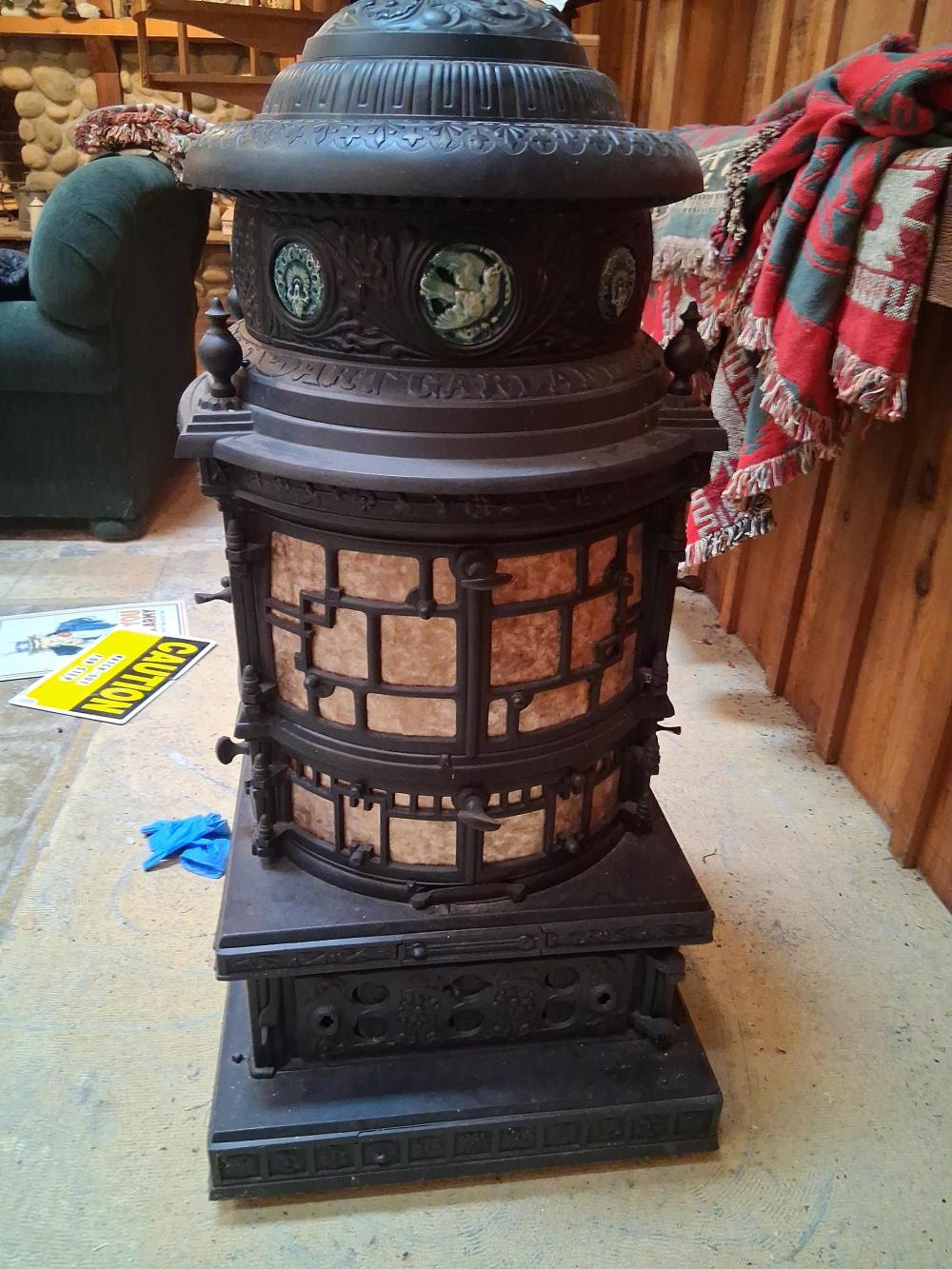
A parlor stove is a freestanding, room-heating stove designed to look as good as it works. Most date from about 1860–1915, though production and styles vary by region. Common types you’ll encounter:
- Cylinder parlor stoves: Tall, often with mica (isinglass) windows and nickel-plated trim.
- Base burners: Premium, highly efficient coal stoves with complex internal flue systems, elaborate ornaments, and heavy nickel; the aristocrats of the category.
- Box/parlor heaters: Squat or rectangular forms, sometimes with tile panels, less elaborate but still decorative.
- Oak stoves: Round or barrel-shaped wood or coal stoves, often with urn finials and foot rails.
Typical materials and finishes:
- Cast iron body casting, sometimes with sheet-iron panels.
- Nickel-plated trim, finials, galleries, door frames, hinges.
- Mica windows that glow when the stove is burning.
- Decorative elements like “skirt” bases, urns, pierced galleries, and raised motifs.
Representative makers and marks you may see:
- Round Oak (Dowagiac), Glenwood, Garland, Peninsular, Estate, Favorite, Jewel, Crawford, Florence, Quaker, Great Western, Barstow, Herald, Andes, Clarion, National.
- Look for cast-in logos, door badges, patent dates on feed doors or back plates, and catalog numbers inside doors or under the ash pan.
Dating clues:
- Earlier stoves (1860s–1880s) tend toward heavier castings and intricate Victorian ornament.
- Later models (1890s–1910s) often emphasize efficiency, more mica, and larger nickel panels.
- Patent dates commonly predate actual manufacture by several years; use them as an upper bound, not a precise year.
The Big Value Drivers
Value is rarely about just one factor. Appraisers weigh the following together:
- Maker and model desirability
- Base burners and high-end cylinder stoves from prestigious makers command premiums.
- Named or cataloged models with ornate trim, complex flues, or unusual features are more collectible.
- Design complexity and ornament
- More nickel, more mica, more pierce-work, fancier finials, and elaborate skirts typically mean higher value.
- Tiled or majolica-paneled examples can be exceptional.
- Size and presence
- Tall cylinders and imposing base burners outdraw small parlor heaters for display appeal.
- Big isn’t always better if decorative detail is lacking, but “showpiece scale” helps.
- Fuel type and functionality
- Coal-burning base burners are top-tier for collectors, especially if complete internally (magazine, grates, baffles).
- Wood-only parlor heaters can be less valuable unless especially ornate.
- Condition and completeness
- Cracks, warping, missing parts, loose doors, damaged finials, pitted nickel—all reduce value.
- Completeness is critical: original ash pans, grates, internal baffles, firepots, handle hardware, and decorative trim.
- Originality vs restored appeal
- Clean original surfaces and intact nickel can outperform mediocre restorations.
- Professional, sympathetic restorations add value on higher-end stoves; crude repainting or over-polishing can hurt.
- Rarity and regional demand
- Some brands/models are common in one region and scarce elsewhere; scarcity and local nostalgia affect prices.
- Certain patterns or unusual features (e.g., revolving grates, double heaters, or patented airwash systems) are rarer.
- Market timing and logistics
- Peak demand is late fall to mid-winter; prices often dip in spring/summer.
- Freight costs and the headache of moving 200–500 lb of iron suppress distant bidding and favor local sales.
Typical value bands (very general, assuming North American markets):
- Common small parlor heaters needing work: a value that must be established from current, topic-matched sales.
- Mid-grade cylinder stoves with modest nickel, decent condition: a value that must be established from current, topic-matched sales unrestored; a value that must be established from current, topic-matched sales nicely restored.
- Good oak or cylinder stoves with strong trim and mica: a value that must be established from current, topic-matched sales depending on completeness and shine.
- High-end base burners and ornate showpieces: a value that must be established from current, topic-matched sales+; exceptional rarities or pristine restorations can exceed a value that must be established from current, topic-matched sales.
Condition And Completeness: How To Grade Like An Appraiser
Start with a systematic inspection, inside and out.
Structure and castings
- Look for cracks at stress points: around doors, hinge bosses, base skirt corners, the firepot, and flue collars.
- Check for repairs: brazed seams (golden/coppery lines), welded beads, or stitched metal. Good repairs can stabilize; bad ones lower value.
- Warping or out-of-round cylinders suggest severe overfire—hard to fix and value-reducing.
Nickel and finish
- Nickel plating: Is it intact, flaking, heavily pitted, or polished thin? Replating is costly but can transform value on high-end stoves.
- Painted surfaces: Look for uniform high-heat finish. Amateur rattle-can jobs with drips or blasting that erased casting detail reduce value.
- Surface rust: Light “bloom” is common; deep pitting or scale is not.
Doors, windows, and movement
- All doors should open smoothly, latch firmly, and seal against air leaks.
- Mica (isinglass) should be present and not charred; replacements are readily available and acceptable in restoration.
- Original knobs, escutcheons, and hinges matter—repro hardware is OK but should be disclosed.
Internal parts and functionality
- Firepot integrity: No cracks or serious loss.
- Grate systems: Complete, rotate or dump freely; missing or broken grates are expensive.
- Baffles, internal flues, magazines (in base burners): Crucial for both operation and value.
- Ash pan present and sized correctly.
Completeness checklist (high-impact items)
- Finial(s)/urns and galleries
- Door glass/mica frames and panels
- Skirt/base wraps and foot rails
- Grate/magazine/baffles/firepot
- Ash pan, dampers, draft controls, cleanout covers
- Original maker badges and medallions
Simple condition-grade language you can use:
- Excellent original: Clean, complete, minimal wear, good nickel.
- Professionally restored: Correct parts and finishes, sharp details, sound mechanics.
- Good: Mostly complete, some wear or minor repairs, usable as display.
- Fair/Project: Missing parts, cracks, poor prior restoration; best for parts or serious rebuild.
Restoration Vs Originality: Where Value Is Won (Or Lost)
Restoration can amplify or erode value depending on quality, cost, and the stove’s tier.
When restoration adds value
- On ornate, high-demand models, professional work (proper disassembly, crack repair, correct fasteners, crisp sandblasting, accurate stove black or heat-resistant enamel, new mica, and quality nickel replating) often pays.
- Restoring mechanical integrity—true doors, straightened frames, functional grates—converts display pieces into “ready to fire” showstoppers.
When to go light
- On more common models, a careful conservation approach—cleaning, stabilizing rust, re-mica, fresh graphite polish—preserves originality without overspending.
- Leave honest surface age if the castings and nickel present well; patina can be a selling point.
Red flags that hurt value
- Over-blasting that softens crisp ornament or rounded casting edges.
- Non-period colors or glossy enamels inappropriate for the model.
- Heavy grinding marks or sloppy welds visible on decorative surfaces.
- Nickel harshly buffed through detail, or mixed shine levels on adjacent parts.
Cost reality (for planning)
- Disassembly and cleaning: a value that must be established from current, topic-matched sales depending on complexity.
- Crack repair and metal work: a value that must be established from current, topic-matched sales+ per location.
- Mica sets: a value that must be established from current, topic-matched sales.
- Grates and internal parts: Varies widely; originals may be scarce, repros a value that must be established from current, topic-matched sales+ pieces.
- Nickel replating: a value that must be established from current, topic-matched sales+ depending on quantity/size. A full professional restoration can easily run a value that must be established from current, topic-matched sales+, justified mainly on higher-end stoves.
Pricing Reality: Market evidence, Seasonality, And Logistics
Market evidence (market evidence)
- Match by type, maker, model, ornament level, size, and condition. One missing finial or a cracked firepot can shift value hundreds of dollars.
- Focus on actual sold prices—not ask prices—to anchor your estimate.
- Note restoration status in market evidence; unrestored-to-restored spreads can be 2–4x on premium models.
Seasonality and regional demand
- Prices often peak as temperatures drop. Listing in late fall can improve outcomes.
- Coal country and regions with strong local makers can show higher demand for specific brands or types.
Shipping and the “local buyer” effect
- Freight for a 300–500 lb stove is costly and complicated. Expect a value that must be established from current, topic-matched sales+ curb-to-curb, more with crating or stairs.
- Local pickup reduces buyer pool constraints and can lift prices, particularly for large base burners.
- Sellers who offer professional handling and clear weight/dimensions attract stronger bidders.
Documentation and provenance
- Catalog pages, period ads, patent cards, or known-history provenance add confidence and value.
- Retained stove shop tags, badges, and serial or pattern numbers help verify identity and support pricing.
Build Your Estimate: A Simple Framework
Use a structured approach to avoid bias.
Step 1: Identify and document
- Record maker, model or pattern number, patent dates, measurements (height, footprint), and fuel type.
- Photograph 360 degrees plus close-ups of doors, grates, badges, and any damage.
Step 2: Grade condition and completeness
- Assign a condition label (Excellent original, Professionally restored, Good, Fair/Project).
- List missing or reproduction parts and tally “high-impact” items from the completeness checklist.
Step 3: Determine tier
- Common parlor heater, mid-grade cylinder/oak, or high-end base burner? Place it in a peer group.
Step 4: Pull market evidence
- Gather at least three recent sales of similar models in similar condition. Note differences and adjust mentally for missing parts/restoration.
Step 5: Adjust for market frictions
- Seasonal timing (add a condition-specific range in peak season, reduce similarly off-season).
- Shipping complexity (deduct if buyer must invest in freight; add if your logistics are turnkey).
Step 6: Set a range, not a single number
- Present a conservative-to-optimistic range reflecting market evidence and your adjustments. Example: a value that must be established from current, topic-matched sales local pickup in winter; a value that must be established from current, topic-matched sales off-season or if missing ash pan.
Example walk-through
- Tall cylinder parlor stove, Glenwood-type, coal, strong ornament, 3 mica panels, a category-dependent amount original nickel, missing ash pan, intact grates, one brazed door corner, no cracks in firepot.
- Tier: mid-to-upper cylinder stove.
- Condition: Good original; mostly complete, one notable repair, one missing utility part.
- Market evidence: Similar models sold at a value that must be established from current, topic-matched sales a value that must be established from current, topic-matched sales and a value that must be established from current, topic-matched sales depending on nickel and completeness.
- Adjustments: Missing ash pan (−a value that must be established from current, topic-matched sales to −a value that must be established from current, topic-matched sales), brazed door (−a value that must be established from current, topic-matched sales), seasonality (neutral), local pickup (+ modest).
- Estimate: a value that must be established from current, topic-matched sales skewing toward higher end if you source a correct ash pan and polish nickel.
Practical checklist (print-worthy)
- Identify maker, model, and fuel type; measure height and footprint.
- Photograph 360°, inside firebox, grates, and all badges.
- Inspect for cracks, warping, and previous repairs.
- Verify completeness: finials, galleries, doors, ash pan, grates, firepot, baffles, handles, mica.
- Test door fit and grate movement; note air control function.
- Evaluate finish: nickel plating, paint/graphite, rust, pitting.
- Decide conservation vs professional restoration based on model tier.
- Research three item-specific market evidence and note restoration status.
- Factor seasonality and freight into your asking price.
- Present your stove honestly with a condition grade and parts notes.
FAQ (short)
Q: Does a working stove bring more money than a display-only piece? A: Usually, yes—especially for base burners and cylinder stoves. Functionality implies completeness and mechanical integrity. However, pristine original finish can sometimes out-value a roughly “made to burn” restoration on mid-tier models.
Q: Should I replate the nickel before selling? A: Only if the stove is a higher-end model and the plating will significantly elevate its appeal. On common stoves, the cost of replating can exceed the price bump. Clean and present original nickel honestly; avoid over-buffing.
Q: How much do cracks reduce value? A: Hairline, well-placed cracks with professional repair may reduce value modestly (often a condition-specific range depending on visibility). Structural cracks in the firepot, base, or door frames can be a condition-specific range hits—or deal-breakers—if they affect safety or use.
Q: Do reproduction parts hurt the value? A: Quality repros used to make a stove complete are acceptable, especially for internal parts and mica. Repro decorative finials or galleries should be disclosed; a correct original still commands a premium.
Q: Are wood-burning parlor stoves less valuable than coal base burners? A: Generally yes. Coal base burners were top-of-the-line and are heavily collected. That said, an ornate wood-burning parlor stove with strong design and nickel can outprice a plain coal heater.
Final thought Approaching your antique parlor stove like an appraiser—identify, grade, compare, and adjust for market realities—will produce a defensible value range. In a category where fit, finish, and completeness reign, the details you document are the details that sell.