
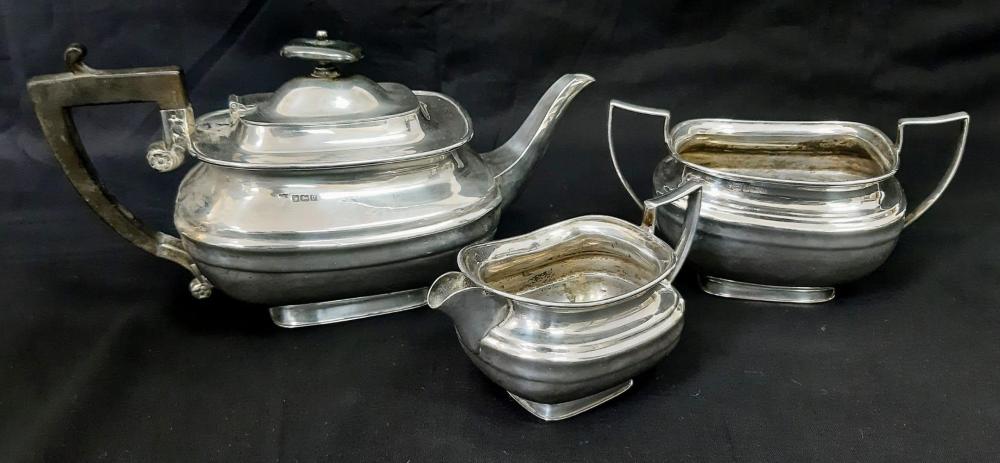
You are not asking the wrong question when you ask, “How much is this worth?” You are asking the right question too late if you ask it from one photo and no context.
The practical mistake is expecting one silver price and one answer. Silver teapots are sold through different buyer lanes, and each lane applies a different trust bar. A cleanly documented sterling teapot with strong maker evidence can be priced as a collectible piece of design and utility. A loose teapot with uncertain marks, missing partner pieces, or obvious amateur repair can move to repair-driven discounting quickly even if it is heavy.
This guide is built so you can produce a better decision quickly: identify what can push value up, what can cut it, and how much confidence each signal has before you commit to selling, insuring, or commissioning an appraisal.
Fast value framework: prove your case before choosing a price
- Document origin first: maker marks, assay marks, monograms, and any provenance.
- Verify form and fit: teapot geometry, lid, spout, and pairability with related pieces.
- Audit condition honestly: wear, repairs, and finishing quality matter more than surface shine.
- Build completion and context: set pieces, matching sets, and historical fit for demand.
- Separate two value models: melt-floor versus market expectation.
Use this order each time you evaluate a piece. It prevents overpaying for assumptions and underpricing for certainty gaps.
Hallmarks are your first trust signal, not your final price
Silver hallmarks answer three questions fast: material standard, maker or studio context, and often period. They are not enough on their own, but they change whether a buyer applies confidence or caution.
What to photograph first
- Base and underside marks, including shielded or inner-labeled locations.
- Maker / trade / retailer marks and repeated symbols across pieces.
- Any monogram, crest, or initials that link the object to a specific patronage context.
- Date-letter systems where present, and signs that confirm era consistency.
For silver teapots, provenance clarity and mark readability are often the difference between “collectible lot” and “metal with questions.” When marks are missing or conflicting, assume buyers will discount for risk unless you can prove origin and care in other ways.
Form and set completeness usually outrank color and shine
Teapots are not priced by beauty alone. Buyers evaluate completeness and ergonomics because those qualities affect use and confidence. A full set often behaves differently than a single object, even if the teapot itself is the best-preserved piece.
Why shape and proportions still matter
Teapot form tells whether construction matches period practice. A modern replacement in a vintage shell, mismatched lid geometry, or asymmetry in the spout/lug relationship can push value down through the uncertainty channel, not through immediate damage valuation.
Completeness is not optional
If an article came as a service, a complete warm set often commands better confidence than a lone teapot. Missing sugar bowl, creamer, or lid support can be acceptable in ordinary household contexts; for valuation it is usually a meaningful discount unless the item is sold with an explicit “single-piece” rationale.
In practice, buyers translate completeness into two outcomes: higher bid confidence for matched sets, and faster decisioning for singles if the single is artistically documented.
Repairs: where value either stabilizes or collapses
Repairs are not automatically a penalty. They are a penalty only if they create doubt. Professional correction may preserve or even increase practical useability. Amateur structural corrections with inconsistent blending often do the opposite.
Read repair risk in layers
Think in three layers:
- Mechanical repair: seams, joints, and bent seams from stress. Buyers adjust for this as a service cost risk.
- Finish repair: repolish or over-buffing may reduce patina depth and historical crispness.
- Replacement elements: handles, lids, spouts, or components that do not match metallurgy and patina language can be seen as modern rework.
That is why some valuation literature notes very wide penalty bands for poor repair quality. Strong language in a guide can read as harsh; in practice the rule is simple: the less your buyer can verify the origin of the repair, the more they price for uncertainty.
Melt value vs market value: use both, but don’t confuse them
These are different numbers with different meanings.
What melt value answers
Melt value is an exit floor tied to purity and weight. For sterling silver, buyers use it as a liquidation reference. It can be surprisingly helpful when condition is unclear, but it should never be your destination number unless your plan is pure scrap disposal.
What market value answers
Market value is what buyers pay when they trust maker evidence, condition, and condition-management confidence. The same piece can be acceptable for scrap, but still weak as a market object.
Use a two-band workflow:
- Floor: estimate conservative metal-backed value after condition risk.
- Opportunity: estimate market value if provenance and repair history are clean.
- Target lane: decide whether sale, consign, private buyer, donation valuation, or signed report is most realistic.
The practical effect is fewer wrong decisions. You can still target a top-number scenario, but you enter it with a clear fallback.
Free instant estimate
Tell us your silver teapot and get a realistic starting range.
Share the details and one strong photo. We will guide you to the best first next step based on completeness, marks, and repair risk.
Free. No card needed. Takes about two minutes.
Choose the right lane before you price a specific number
Most valuation failures happen when owners force one number across all lanes. Use this lane matrix.
Lane 1: Direct sale or auction
Use this for objects with complete provenance, strong mark visibility, and lower repair uncertainty. Auction buyers reward rarity and clear attribution but penalize uncertain condition.
Lane 2: Private sale or dealer buyout
Use this when timing matters and your item has reasonable documentation. Dealers absorb some risk but they discount uncertainty more than informed private sellers.
Lane 3: Signed formal report (insurance, legal, estate transfer)
Use this when the same item has external use in insurance, donation, inheritance, or estate workflows. The report outcome matters more than final sale speed.
Do not confuse lane choice with value ceiling. Lane choice controls what evidence you need now and how quickly the outcome resolves.
Your practical next-step checklist
- Photograph every mark, the lid seat, spout joint, and underside.
- Document each repair with close-up images and honest dates.
- List the set status: full set, partial set, or single-piece context.
- Record metal-specific clues (stamps, signatures, monograms) with location notes.
- Collect comparable sale references from the same seller type and same era.
- Set lane-specific price bands before you send anything public.
If any box is incomplete, keep your value range conservative. It is easier to raise confidence than to defend an overconfident anchor.
Four common valuation mistakes and how to avoid them
- Using one “headline” number before evidence is complete.
- Overweighting metal weight while underweighting provenance and repair quality.
- Assuming completeness means quality; partial sets can still sell well if documented properly.
- Ignoring lane context and pitching a private-sale number to auction buyers.
Long-tail search variations
- What does a silver teapot’s hallmark tell you about value?
- Can partial silver tea services still get a premium price?
- How do repairs affect antique silver value in practice?
- Do missing handles and lids reduce sterling teapot value?
- Which sterling silver marks are most important for buyers?
- How much does a teapot melt value help in planning a sale?
- What is a safe way to price an unverified silver teapot?
These variations map to this article’s sequence: marks, form, condition, and lane selection.
References and related resources
- How to read silver hallmarks for confidence in age and assay standards: How to Spot Sterling Silver Hallmarks Fast
- Related guide for service forms and valuation framing: Unlocking the Secrets of Antique Silver Teapots
- Condition-and-repair context for kitchenware: Silver Soldered Teapot Value: Comprehensive Guide
- Auction lane context and evidence priorities: Silver Fish Serving Knife: Hallmarks & Value Guide
For policy and methodology behind cited outcomes, see our editorial policy.
Need a faster starting point?
Get a free instant estimate
Upload photos and get a practical starting lane and range.
Upload photos for a free first look View signed report sampleNote: We couldn’t find enough auction records that directly match Silver Teapot Value Guide: Hallmarks, Form, Repairs, and Melt vs. Market to publish a defensible price table. If you are valuing a specific item, include its maker, model, material, photos, and condition so the search can be narrowed.
What similar items actually sold for
The current auction search does not contain at least three clean, directly matched sales for Silver Teapot Value Guide: Hallmarks, Form, Repairs, and Melt vs. Market yet. If you’re valuing a specific item, use the free estimate flow so the search can be narrowed by maker, material, photos, and condition.
| Image | Description | Auction house | Date | Lot | Reported price realized |
|---|---|---|---|---|---|
| No relevant auction comps found for this topic right now. | |||||
Disclosure: prices are shown as reported by auction houses and are provided for appraisal context. Learn more in our editorial policy.
Choose your next step
Use the path that matches the decision you need to make about the item.
Not sure it is worth appraising?
Start with a lower-friction screen to understand the likely category, evidence, and next step.
Upload photos for a free first lookWant proof before paying?
See how a signed report documents photos, comparable evidence, condition notes, and value conclusions.
View signed report sampleNeed a signed report?
Use this for insurance, estate, donation, resale, or documented value decisions.
Need documentation now? Start signed appraisalNeed local or specialist help?
Compare directory options when the work needs in-person review or a specialist near you.
Find local specialistsSee what the report looks like
Sample reports show how photos, comparable evidence, condition notes, and a value conclusion are documented.