
Start with what you can touch: the paper itself
When a seller says an item is “old” or “vintage,” your first job is not to get excited about a charming image. Your first job is a two-minute reality check. Originals often age in visible, cumulative ways that reproductions sometimes mimic but usually do not sustain over repeated handling.
- Paper structure: Many reproductions use a modern bright finish. True period items from this niche often feel thinner or uneven in hand and can show localized oxidation.
- Surface bloom: Originals may show micro-cracking, slight edge feathering, and tonal transitions that look uneven at close angles.
- Color response: Old pigments tend to lose contrast differently across neighboring blocks. Reproductions with modern inks can be very uniform.
If the item is a postcard with very fresh color, unnaturally smooth card stock, and crisp machine gloss over an entire block, pause before you commit money. That does not prove it is fake, but it often means the piece entered the market through a later press run.
Read printing and registration clues before comparing price
Postcard and ephemera reproduction risk sits in the printing detail. Instead of trusting one visual cue, layer your checks:
- Registration and registration drift: Old printing often misaligns at tiny scales in ways that look hand-finished, especially when colors overlap in older lithographic titles.
- Line hardness: In many reproduction blocks, line edges stay too perfect under magnification, while authentic period runs can look slightly softened with age.
- Back text rhythm: Fonts, leading, and micro-spacing on the back can be dead giveaway signals. Genuine postal-era marks often show compositional inconsistency tied to the printing press chain.
- Wear around folds: Real ephemera from use usually has controlled, local wear patterns near folds, not uniform wear across full swaths.
Use a macro-capable phone lens or low-power magnifier when reviewing photos before bidding. If all edges look “new,” you should not treat “old” as “original.”
Backstory checks: backs, cancellations, provenance, and edits
A strong authenticity check is not front-only. Always move to the reverse and metadata:
- Postal marks and cancellations: For mail-era cards, real postal marks usually align with the claimed era and style. Reproductions often include generic or edited-looking marks.
- Handwriting and pen behavior: The pressure, ink bleed, and baseline consistency in notes can be useful. Inconsistencies do not prove fraud, but they should escalate your scrutiny.
- Mounting and corner condition: Originals that sat in albums or boxes often have pressure points and edge folds at corners where sleeves or clipping occurred.
- Provenance crumbs: A previous owner note, estate note, or storage history does not prove value, but it does reduce uncertainty when corroborated by other signals.
If backstory and visual evidence contradict each other, treat valuation as conditional until you can inspect a comparable original of close date and format.
Use a 90-second decision flow to avoid overpaying
When you are scanning a lot quickly, a simple sequence helps prevent expensive mistakes:
- Separate the item by era and origin cues (postcard style, poster art family, paper construction).
- Check paper and printing feel side-by-side from several angles under natural light.
- Read the back for period-specific marks, handwriting style, and structural damage.
- Flag mismatched clues (for example: “period front + modern back text” or “vintage back + perfect uniform surface”).
- Only then estimate value bands, and only if confident run at least three comparable examples.
This sequence does two things: it protects you from excitement-driven pricing, and it gives a clear rationale to yourself or your spouse when deciding whether to move on quickly.
Free instant estimate
Not sure if your item is worth appraising? Let us take a look.
Upload a photo, tell us what you know, and get a free first read. If a full appraisal makes sense, we will say so.
Free. No card needed. Takes about two minutes.
How to decide when to walk away
In this category, the strongest mistakes are emotional purchases backed by weak evidence. Walk away when:
- The seller cannot identify the format, issue, or source beyond one story.
- All photos show only one angle, no back shot, and no scale reference.
- The item is priced very high but has no condition detail and no provenance note.
- Multiple cues conflict (new paper with period-claims, modern inks with old-era writing style).
If two of these appear together and price seems aggressive, your default move should be to defer. A deferral with a free estimate avoids expensive regret.
Use comps as your price proof, not your promise
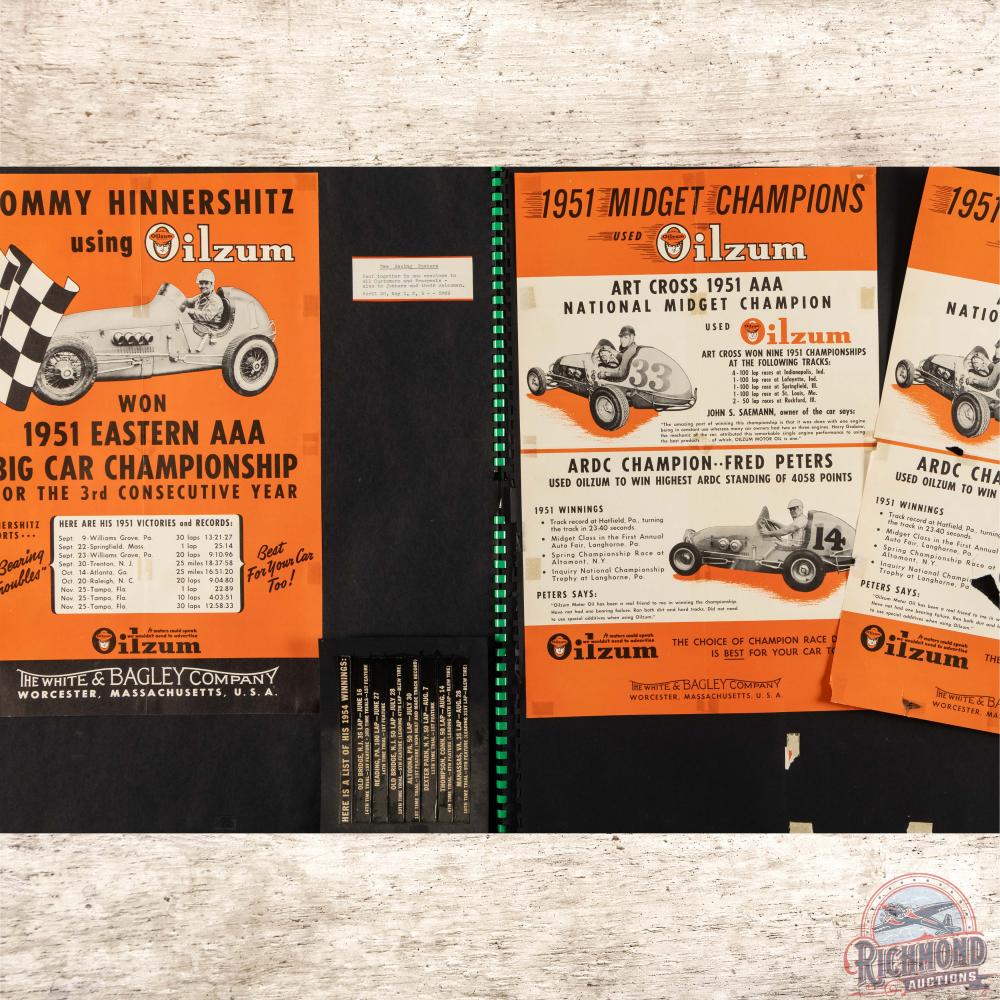
Market value for paper ephemera is driven by rarity, period, condition, and buyer confidence. It is not driven by wishful thinking. Internal comps for this topic show meaningful variation across nearby classes: examples include 1952 Oilzum Motor Oil Important Paper Ephemera Lot listed around USD 250–275 in recent internal snapshots, while other paper-based lots appear around USD 13000+ only when category and condition were clearly different.
That mismatch is exactly why comps are useful. They force you to compare apples to apples:
- Match object type first: postcards vs books vs autographed letters are not the same class.
- Match condition tiers: near-fine cards can support a premium; routine wear can cut expected value materially.
- Match source quality: auction lots with strong documentation carry stronger comparability than broad market chatter.
- Then set a floor and ceiling: one weak example should not shift your entire decision.
For general users, this article page is strongest when it gives you a confidence band first, and an action next. If you are considering purchase now, run your own quick comparison against three verified examples before you pay.
Note: We couldn’t find enough auction records that directly match Postcards and Paper Ephemera vs Reproductions: Marks and Age to publish a defensible price table. If you are valuing a specific item, include its maker, model, material, photos, and condition so the search can be narrowed.
What similar items actually sold for
The current auction search does not contain at least three clean, directly matched sales for Postcards and Paper Ephemera vs Reproductions: Marks and Age yet. If you’re valuing a specific item, use the free estimate flow so the search can be narrowed by maker, material, photos, and condition.
| Image | Description | Auction house | Date | Lot | Reported price realized |
|---|---|---|---|---|---|
| No relevant auction comps found for this topic right now. | |||||
Disclosure: prices are shown as reported by auction houses and are provided for appraisal context. Learn more in our editorial policy.
What happens when a small doubt becomes a bigger one
A realistic example: a buyer finds a lot of three vintage-style cards in a store clearance bin for a low price. The fronts look old, but the backs are too uniform and the same type appears too clean in every item. The buyer uses a 90-second check, sees multiple red flags, and pauses. A quick comparison set later finds comparable originals with stronger paper aging and dated cancellations. That pause saves time and money because it changes the decision from “buy now and test later” to “test before committing.”
This matters because the difference between a clean reproduction and a credible original can be small in photos and huge in cost. The safe path is always the same: tighten the signals first, then commit with a documented valuation frame.
Frequently asked questions
Q: Can I rely on one photo to identify whether a postcard is original?
Usually not. Use front, back, and edge shots. One angle may hide print quality clues, fold stress points, or back signatures.
Q: Are reproductions always cheaper than originals?
Not always. Some reproductions sell well when sold as decorative or thematic items. The question is whether the seller is presenting it as an original collectible or an inspired reproduction.
Q: If I find mixed signals, should I still buy?
Only with a strict condition: clear return rights and a valuation review path. If the item is borderline, the risk-adjusted decision may be to pass.
Q: Which is more important: paper quality or provenance?
Neither alone. Paper quality is an authentication signal; provenance is an accountability signal. You need both for a robust decision.
Q: Can I use the auction comparison approach for small private sales?
Yes, but with care. Auctions produce transparent snapshots. Private transactions need an extra discount for condition claims and description style.
Reference links and context
Search variations to explore
- How to tell if a postcard is a reproduction?
- Vintage ephemera authenticity checklist before buying
- Postcard repro paper quality signs
- How much can old postcards be worth
- How to spot fake cancellation marks on postcards
- Reproduction vs original paper collectibles guide
- Paper ephemera with no provenance what to do
- How to price used postcards before bidding