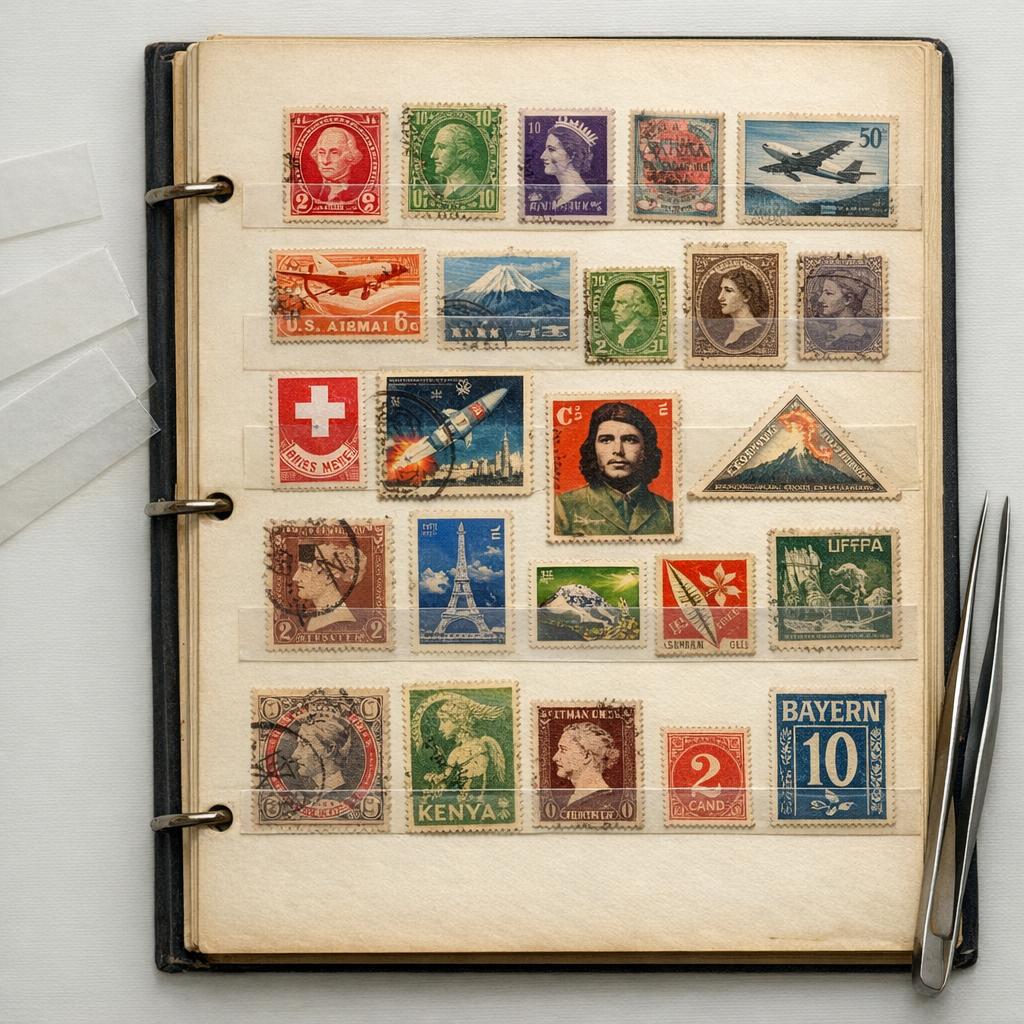
Old Stamps Value: appraisal and value basics
Old Stamps Value research should start with identification, condition, provenance, and recent comparable sales. Use this guide to compare the signals that matter before paying for a formal appraisal or deciding whether to sell.
How old stamp value actually works
Old stamps are one of the easiest collectibles to overestimate. A tiny printed image can still be worth very little if it is common, damaged, heavily hinged, or pulled from a large accumulation with no standout issue. The market usually pays for a mix of three things: a desirable country or issue, a collectible era, and a condition story that collectors can trust.
That is why a loose handful of common used singles often sells for a few dollars, while a sorted album, a scarce parcel issue, or a specialist cover lot can jump into the hundreds or thousands. This guide shows where that gap comes from and how to spot it quickly before you spend time or money on a formal appraisal.
What similar items actually sold for
To help ground this guide in real market activity, here are recent example auction comps from Appraisily’s internal database. These are educational comparables (not a guarantee of price for your specific item).
Shown USD range: USD 250-USD 1,700. Median of these 3 USD examples: USD 750.
| Image | Description | Auction house | Date | Lot | Reported price realized |
|---|---|---|---|---|---|
 |
LARGE COLLECTION OF POSTAL STAMPS AND COVERS | White's Auctions | 2023-01-22 | 217 | USD 1,700 |
| VINTAGE US & FOREIGN STAMPS, FIRST DAY COVERS | White's Auctions | 2025-04-27 | 131 | USD 250 | |
| Stamps. Foreign Countries: largely old-time ranges to about 1950 | Dominic Winter Auctions | 2024-05-22 | 409 | GBP 650 | |
| German States Postage Stamps: OLDENBURG | Blackwell Auctions LLC | 2025-11-15 | 370 | USD 750 |
Disclosure: prices are shown as reported by auction houses and are provided for appraisal context. Learn more in our editorial policy.
Two-step intake
Get the right appraisal for your situation
Tell us the country, era, and condition notes you already have. We route your photos and notes to the right specialist, then send you into checkout to reserve the appraisal slot.
Secure intake. Routed to the right specialist. Checkout only if you decide to proceed.
Country, era, and condition: the three levers that move price
Country matters because some postal systems produced genuinely scarcer material, while others printed huge quantities that flood the market today. Era matters because early issues often have small surviving populations, more variety, and more collector demand. Condition matters because stamp collectors are notoriously strict: tears, thins, toning, blunt perforations, bad centering, and heavy hinge marks can drag a stamp far below an otherwise similar example.
- Country: Classic British Commonwealth, Greenland, and revenue issues can outperform a random world mix.
- Era: Pre-1900 and early 20th century material is often stronger than modern common issues.
- Condition: Mint never hinged, sound perfs, and clean gum usually beat hinged, thinned, or creased examples.
- Format: Singles, blocks, plate blocks, covers, and postal-history groups trade in different lanes.
Why loose common stamps stay low-value
Most loose common stamps stay low because the supply is enormous and the identifying details are weak. If you cannot point to a scarce country, a desirable issue, a premium variety, or a high-grade condition story, the buyer is usually paying for sorting labor rather than collectible rarity. That is why inherited shoebox lots so often land in the low end of the market.
There is nothing wrong with common material, but the value is usually concentrated in a few better pieces. The best next step is to separate the lot into four buckets: singles worth checking, used stamps for country sorting, cover and postal-history items, and damaged or duplicate filler. The second and third buckets are the ones that often hide surprise value.
Condition checklist before you price anything
- Check the back for hinge remnants, thin spots, stains, and regumming.
- Inspect perforations for tears, short perfs, clipped edges, and repairs.
- Hold the stamp to light for watermarks, paper faults, or cleaning.
- Compare centering and margins against another example of the same issue.
- Look for overprints, cancellations, and certificates on better pieces.
When a stamp checks all five boxes, the value story gets stronger fast. When it fails two or three, even a scarce issue can lose most of its premium.
Identification gallery
Use these close-ups as a quick reminder of the details that matter most when you are sorting a mixed box or preparing photos for an appraisal.
Special cases worth separating from ordinary loose stamps
Some material deserves its own pile because it behaves differently in the market:
- Plate blocks: Collectors pay for completeness and position.
- Revenue stamps: Embossing, completeness, and historical use often matter more than face value.
- Covers and postal history: Route, date, destination, and markings can drive the result.
- Airmail and first-day material: They sell on the specialty market, not the bargain-bin market.
If your box contains any of those, keep them together and photograph both sides before you start sorting. That can save hours of reassembly later.
Choose your next step
Use the path that matches the decision you need to make about the item.
Not sure it is worth appraising?
Start with a lower-friction screen to understand the likely category, evidence, and next step.
Upload photos for a free first lookWant proof before paying?
See how a signed report documents photos, comparable evidence, condition notes, and value conclusions.
View signed report sampleNeed a signed report?
Use this for insurance, estate, donation, resale, or documented value decisions.
Need documentation now? Start signed appraisalNeed local or specialist help?
Compare directory options when the work needs in-person review or a specialist near you.
Find local specialistsSee what the report looks like
Sample reports show how photos, comparable evidence, condition notes, and a value conclusion are documented.
Want a stamped, defensible value range?
Send photos of the front, back, hinges, and any certificates. We can help you sort the keeper pieces from the low-value fillers and turn the rest into a practical market range.
- Country, era, and condition review
- Useful for selling, insuring, or estate planning
- Fast online intake with secure checkout
If you only need a quick range, include clear photos and a few notes about the country or album.
Search variations collectors ask
Readers also search for:
- What are old stamps worth by country?
- Are loose used stamps worth anything?
- How much is a British Commonwealth stamp album worth?
- Do mint never hinged stamps sell for more?
- What makes Greenland parcel stamps valuable?
- Why do covers sometimes beat loose singles?
- Are revenue stamps collectible or just paperwork?
- How do I price a 1930s stamp collection?
- What raises a plate block stamp value?
- Should I have a mixed stamp lot appraised?
Each question is answered in the guide above.
References and sourcing
Comparable sales in this guide come from Appraisily-owned auction research and public auction records. The market examples above are real realized prices, but they are not guarantees: stamp values change with country demand, grade, completeness, and whether the lot is a single, album, cover, or specialist issue.
For our editorial and valuation standards, see Editorial policy.