Old Key Identifier: appraisal and value basics
Old Key Identifier research should start with identification, condition, provenance, and recent comparable sales. Use this guide to compare the signals that matter before paying for a formal appraisal or deciding whether to sell.
Introduction to Antique Key Identification
Have you found an old key and wondered about its age, purpose, or value? Antique keys are fascinating artifacts that offer insights into the history of security and craftsmanship. From intricate skeleton keys to sturdy padlock keys, each type tells a story about its era and usage.
Today’s modern keys bear little resemblance to their historical counterparts. Whether you’re a collector, historian, or simply curious about a found object, identifying old keys can be both challenging and rewarding. This comprehensive guide will help you understand the different types of antique keys, their historical context, and how to determine their value.
The Fascinating World of Antique Keys
The word “key,” derived from the Old English word meaning “serving to open or explain,” has always held both practical and symbolic significance. Beyond their practical function of securing valuable possessions, keys have symbolized authority, access, and knowledge throughout human history.
From ornate medieval chamberlain’s keys to simple Victorian cabinet keys, these small metal artifacts offer fascinating insights into the evolution of security technology and decorative metalwork. As collectibles, they’re prized for their historical significance, craftsmanship, and aesthetic appeal.
Key Facts About Antique Keys
200+
Years of collectible key history spanning the 18th-20th centuries
$5-$500
Typical price range for collectible antique keys depending on rarity and condition
7+
Distinct categories of antique keys, each with unique identification characteristics
Understanding Skeleton Keys vs. Other Antique Key Types
One of the most common misconceptions about old keys is that all antique keys are “skeleton keys.” However, this term has a specific meaning in the world of locks and keys.
What Is a Skeleton Key?
According to the Anderson Lock blog, a skeleton key can be identified by three main components:
- A bow (the handle portion)
- A narrow shank or shaft
- A flat extension near the bottom of the shaft (the bit)
However, not all bit keys (those with a flat extension at the end) are skeleton keys. A true skeleton key has ward cuts in strategic positions that allow it to bypass the wards in a variety of similar locks. This is where the name comes from—the key has been “reduced to its skeleton” by removing material that would otherwise prevent it from working in different locks.
Other common antique key types include:
- Bit Keys - Keys with a flat extension (bit) at the end that interact with the internal mechanism of warded locks
- Barrel Keys - Hollow-ended keys used for lever tumbler locks
- Cabinet Keys - Small keys typically used for furniture
- Clock Keys - Specialized keys for winding clocks
- Padlock Keys - Often more substantial and simpler in design
- Mortise Lock Keys - Used for door locks that fit into a mortise or recess in the door edge
- Watchman Clock Keys - Special keys used with security time clocks
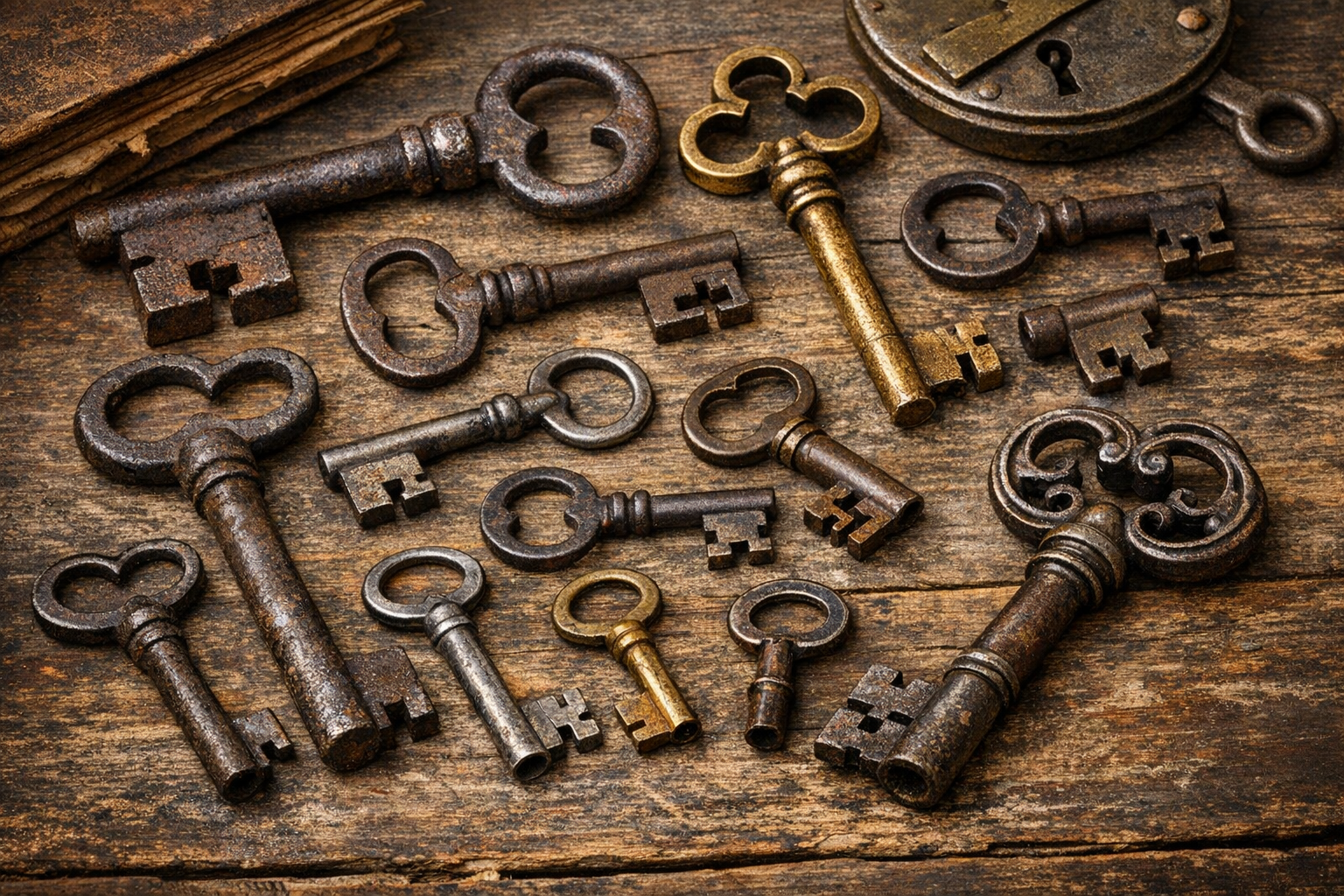
Key Identification: Physical Characteristics
To properly identify an old key, you’ll need to carefully examine its physical characteristics. Here’s a systematic approach to help you determine what type of key you have.
Key Components and Terminology
- Bow - The handle portion of the key that you grip
- Shank/Stem - The straight portion extending from the bow
- Bit - The flat extension at the end of the key with cuts that interact with the lock
- Ward Cuts - Notches cut into the bit that allow the key to bypass wards in the lock
- Shoulder - The point where the shank meets the bit
- Barrel - A hollow tube at the end of some keys
The shape of these components can tell you a lot about the key’s purpose and age. For example, highly ornate bows often indicate ceremonial or high-status keys, while simpler designs typically suggest utilitarian purposes.
Key Identification Checklist
Use this checklist to examine your antique key's physical characteristics
- Measure the key's total length
- Note the shape and design of the bow
- Examine the bit configuration and ward cuts
- Check for manufacturer's marks or numbers
- Determine the material (brass, iron, steel, etc.)
- Look for signs of hand-forging vs. machine manufacturing
- Assess the overall condition and patina
Dating Antique Keys Through Historical Context
One of the most fascinating aspects of key identification is determining its age. The design, manufacturing techniques, and materials used can all provide clues about when a key was made.
Evolution of Key Design and Manufacturing
- Pre-1800s
Hand-Forged Era
Keys were individually crafted by blacksmiths. Look for hammer marks, irregular shapes, and crude detailing. Materials were typically iron or brass.
- 1800-1850
Early Industrial Period
Manufacturing became more standardized, though still with substantial handwork. Keys show more regular shapes but may still have file marks. Brass became more common for better quality keys.
- 1850-1900
Victorian Era
Mass production techniques emerged. Keys show high consistency in shape and size within their types. Decorative elements were popular, especially in door and cabinet keys.
- 1900-1940
Early Modern Period
More complex internal lock mechanisms developed. Keys became less ornate and more standardized. Steel became the dominant material.
- Post-1940
Modern Era
Traditional bit and barrel keys began to be replaced by cylinder locks and flat keys. Vintage keys from this period are typically less valuable to collectors.
According to SlideShare’s skeleton key guide, genuine antique keys can be distinguished from modern reproductions by looking at manufacturing marks, material composition, and wear patterns consistent with age.
Common Types of Antique Keys and Their Identification
Let’s examine the most common types of antique keys you might encounter and how to identify them.
Skeleton Keys and Bit Keys
According to the reuseaction.com identification guide, bit keys can be categorized by:
- Bit Pattern - The specific configuration of cuts determines which wards the key can bypass
- Bow Design - From simple loops to ornate patterns that can help identify the manufacturer or period
- Size and Proportion - Large keys (4-8 inches) were typically for doors, medium keys (2-4 inches) for cabinets or interior doors, and small keys (1-2 inches) for furniture
The Hayden Safe & Lock guide to skeleton keys notes that antique master keys often feature more complex bit patterns that allowed them to operate multiple locks in a series.
Barrel and Lever Lock Keys
Identifying characteristics include:
- Hollow tubular end
- Various notch patterns on the end of the barrel
- Typically shorter than bit keys
- Often used for furniture, cabinets, and smaller doors
Specialized and Unusual Keys
According to a Reddit lockpicking discussion, watchman clock keys are a fascinating specialized type. Security guards would carry time clocks and use these distinctive keys to record their presence at checkpoints throughout a facility.
Other specialized antique keys include:
- Clock Winding Keys - Generally T-shaped or with square-ended bits
- Railroad Switch Keys - Often stamped with railroad company names
- Handcuff Keys - Small with distinctive bit patterns
- Safe Deposit Keys - Usually with complex bit patterns and often include identification numbers
Antique Key Value Ranges
Approximate market values based on key type and condition (2023)
Materials and Manufacturing Techniques
The material composition of an antique key can provide valuable clues about its age, purpose, and value. Understanding manufacturing methods also helps with accurate identification.
Common Key Materials
Iron - Common in older keys (pre-1850s), especially for larger door keys. Usually shows significant rust or oxidation.
Brass - Popular from the mid-19th century onward, especially for better quality and decorative keys. Develops a distinctive patina over time.
Bronze - Less common but used for higher-quality keys, especially in earlier periods.
Steel - Became more common in the late 19th and early 20th centuries as manufacturing techniques improved.
Nickel-plated - Many keys from the late 19th and early 20th centuries were plated with nickel for improved appearance and corrosion resistance. As noted in The Old Crank’s phonograph key guide, some vintage keys show remnants of their original nickel plating.
Manufacturing Techniques
Hand-forged Keys (pre-1850s):
- Irregular shapes and dimensions
- Hammer marks visible
- File marks on the bit cuts
- Variable thickness in the shank
Early Machine-made Keys (1850s-1900):
- More consistent dimensions
- May still show file marks on the bit cuts
- Often feature decorative elements on the bow
Mass-produced Keys (post-1900):
- Highly consistent dimensions
- Uniform cutting patterns
- Less ornate in most cases
- May include manufacturer marks or numbers
The Value of Antique Keys: Collectibility Factors
If you’re interested in the potential value of your antique keys, several factors influence their worth in today’s collector market.
What Makes Antique Keys Valuable
Age - Generally, older keys (pre-1850) command higher prices due to their rarity and historical significance.
Rarity - Uncommon designs, specialized purposes, or keys from famous lockmakers are more valuable.
Condition - Keys in excellent condition with minimal rust, intact bits, and clear details are worth more.
Decorative Appeal - Ornate bow designs, particularly those with figural elements, increase value significantly.
Historical Significance - Keys from notable buildings, associated with historical events, or from significant lock manufacturers command premium prices.
Provenance - Documented history of ownership or use can substantially increase value.
According to Collectors Weekly, the most valuable antique keys are those that combine rarity, age, aesthetic appeal, and good condition. Sets of matching keys can also command premium prices, especially when paired with their original locks.
The LoveToKnow guide to antique skeleton keys notes that even common skeleton keys typically sell for $5-$10 each, while rare or exceptional examples can fetch hundreds of dollars.
Looking at DEA Bathroom Machineries’ antique key offerings, we can see that even bulk lots of assorted keys have value to enthusiasts and decorators, with prices for individual special keys ranging from $10 to over $100 depending on type and quality.
| Category | Price | Notes |
|---|---|---|
| Common Victorian Skeleton Door Keys | $5-$30 | Value increases with decorative bows and good condition |
| Ornate Brass Cabinet Keys | $10-$50 | Sets command premium prices |
| Early Hand-Forged Iron Keys (pre-1850) | $50-$200 | Rarity and age drive higher values |
| Specialized Railroad Keys | $20-$100 | Value varies by railroad company and rarity |
| Rare or Unusual Keys | $100-$500+ | Unusual designs or historically significant pieces |
</tbody> </table>
Collecting and Preserving Antique Keys
For those interested in starting or expanding a key collection, there are several important considerations regarding acquisition, display, and preservation.
Building a Collection
Specialization - Consider focusing on a specific era, manufacturer, or type of key to build a cohesive collection.
Research - According to Antiquers.com’s forum on skeleton keys, successful collectors invest time in learning about key history and manufacturing techniques.
Acquisition Sources - Look beyond obvious sources:
- Antique shops and shows
- Online auction sites
- Estate sales
- Architectural salvage stores
- Locksmith shops (some keep old keys)
- Metal detecting finds
Documentation - Maintain records of each key’s origin, estimated age, and any known history.
Preservation and Display
For iron and steel keys:
- Gently remove loose rust with a soft brass brush
- Apply a light coat of museum-grade microcrystalline wax
- Store in a low-humidity environment
- Avoid handling with bare hands (use cotton gloves)
For brass and bronze keys:
- Clean gently with a mild soap if necessary
- Do not polish away the natural patina, which collectors value
- Store away from materials that accelerate corrosion
Display options include:
- Shadow boxes with felt backing
- Custom frames with secure mounting
- Glass-topped display cases
- Decorative key racks for wall mounting
The Symbolic and Cultural Significance of Keys
Beyond their practical function, keys have held powerful symbolic meaning throughout human history.
Keys in Symbolism and Culture
According to MillysMarvels’ exploration of key symbolism, keys represent:
- Secret Knowledge - In many cultures, keys symbolize hidden wisdom or esoteric knowledge
- Protection and Security - Keys represent safety and the power to protect valuables
- Transition and Passage - Keys mark thresholds between different states or places
- Freedom and Liberation - Keys can represent freedom from constraints
- Authority and Control - The power to grant or deny access
This rich symbolism has made keys popular in jewelry, art, and decorative objects throughout history. Many collectors are drawn to keys not just for their historical significance but also for their powerful symbolic resonance.
External Resources for Key Identification and Collection
LoveToKnow Antique Skeleton Key Guide
Comprehensive identification guide with information on determining if your key is a skeleton key, what materials it's made from, and its potential value.
ReUse Action Skeleton Key Identification Page
Visual resource for identifying different types of skeleton keys and their components, particularly useful for architectural salvage.
Hayden Safe & Lock's Guide to Antique Keys
Professional locksmith perspective on identifying antique skeleton keys and master keys with insights into lock mechanisms.
The Old Crank's Phonograph Cabinet Key Chart
Specialized guide focusing on the identification of keys used in antique phonograph cabinets, with detailed measurements and photographs.
Collectors Weekly Antique Keys Section
Articles and resources about antique key collecting, with information about market trends and notable collections.
Anderson Lock's Blog on Collecting Antique Keys
Professional insights into key collecting with information on authentication and identification from security experts.
Common Questions About Antique Key Identification
Frequently Asked Questions About Antique Keys
How can I tell if my key is genuinely antique?
What is the difference between a skeleton key and a bit key?
Are antique skeleton keys illegal to own or use?
How can I determine what my antique key was used for?
What makes some antique keys more valuable than others?
How should I clean and preserve my antique keys?
What is the spiritual or symbolic meaning of antique keys?
Where can I find antique keys to start a collection?
Conclusion: The Enduring Appeal of Antique Keys
Antique keys continue to captivate collectors, historians, and decorators with their blend of practical function, historical significance, and symbolic power. Whether you’ve discovered a single old key or are building a dedicated collection, understanding the identification, history, and value of these fascinating artifacts opens a window into our shared past.
From simple utilitarian designs to elaborate decorative pieces, each key tells a story of its era, its maker, and the lock it was designed to operate. The wear patterns, materials, and craftsmanship evident in antique keys provide tangible connections to the people who created and used them.
As you develop your expertise in identifying old keys, you’ll gain not just knowledge about specific objects but a deeper appreciation for the evolution of security technology and decorative metalwork through the centuries. Whether your interest is primarily historical, aesthetic, or investment-focused, the world of antique keys offers rich rewards for those willing to look closely at these small but significant artifacts.
Choose your next step
Use the path that matches the decision you need to make about the item.
Need a signed report?
Use this for insurance, estate, donation, resale, or documented value decisions.
Start a signed reportNot sure it is worth appraising?
Start with a lower-friction screen to understand the likely category, evidence, and next step.
Use the free screenerNeed local or specialist help?
Compare directory options when the work needs in-person review or a specialist near you.
Find local specialistsSee what the report looks like
Sample reports show how photos, comparable evidence, condition notes, and a value conclusion are documented.
Get this old key identified
Upload photos of both sides, bow shape, bit pattern, shank or barrel, maker marks, metal, patina, wear, repairs, and any lock or furniture context.
- Expert report with photos and comps
- Fast turnaround
- Fixed, upfront pricing
No obligation. Secure upload.
Continue your valuation journey
Choose the next best step after reading this guide
Our directories connect thousands of readers with the right appraiser every month. Pick the experience that fits your item.
Antique specialists
Browse the Antique Appraiser Directory
Search 300+ vetted experts by location, specialty, and response time. Perfect for heirlooms, Americana, and estate items.
Modern & fine art
Browse the Art Appraisers Directory
Compare fine art, contemporary, and design appraisers by city and specialty in our public directory.
Machine-readable summaries
Use these machine-friendly references for AI and crawler discovery of Appraisily content.
Ready for pricing guidance?
Start a secure online appraisal
Upload images and details. Certified specialists respond within 24 hours.
Start antique appraisal