Louis Icart Le Sofa appraisal and value basics
Louis Icart Le Sofa value depends on whether the sheet is a hand-pulled etching, drypoint, aquatint, later lithograph, or decorative reproduction. Start with the plate mark, pencil signature, paper, margins, condition, and recent auction comps before deciding whether to sell or insure it.

Collectors searching for The Sofa by Louis Icart (often described as “circa 1937”) usually have one of two things: a legitimate vintage-era print after Icart’s original composition, or a later decorative reproduction with a printed-in-plate signature.
This guide shows how to authenticate what you own, how condition and coloring change the market, and how to set a realistic value range for insurance, resale, or consignment.
Free photo check
Check signature, plate mark, and print process before pricing it
Upload the full sheet, margins, signature, plate mark, back, frame labels, and close-ups under angled light. The free screener can flag whether your Icart image looks like an original etching, later lithograph, or decorative reproduction.
Start with a free screener. Use a signed report only when you need insurance, estate, donation, resale, or formal collection documentation.
Quick value range: what most Louis Icart “The Sofa” prints sell for
Because multiple editions and reproduction types exist, value depends less on the title and more on process + edition evidence + condition. As a practical starting point:
- Decorative reprint (printed-in-plate signature, no pencil signature/number): often $100–$500.
- Hand-signed and numbered edition (pencil signature in margin, good paper/print quality): often $600–$2,500+.
- Hand-colored examples: can add a premium if color appears original and attractive (not later hobby tinting).
If your example matches the common “signed in plate” profile mentioned in the legacy WordPress appraisal, it typically trades as a decorative print rather than a high-end fine-print edition.
Who was Louis Icart—and why collectors chase his prints
Louis Icart (1888–1950) is strongly associated with Art Deco-era illustration and printmaking. His imagery—fashionable interiors, elegant figures, and playful sophistication—has kept his name active in the decorative and collector markets.
For appraisal, your goal is not only to confirm the image is “after Icart,” but to determine what kind of print you have (original print process versus photomechanical reproduction) and whether it carries edition evidence buyers pay premiums for.
Is it an etching, lithograph, or reproduction? Fast inspection tests
- Plate mark: Side-light the sheet. A shallow embossed rectangle suggests intaglio (etching/aquatint).
- Loupe check: Halftone rosettes usually indicate offset reproduction; micro-spray dots suggest inkjet/giclée.
- Signature type: Pencil signature in the margin is different from a printed signature inside the image (“signed in plate”).
These tests matter because a hand-pulled print from a plate or stone is generally valued higher than a later photomechanical print, even if the image matches.
Authentication checklist (what appraisers photograph first)

- Full sheet and margins: capture the entire paper, not just the image area.
- Plate mark / embossing: take an angled shot with raking light.
- Signature + numbering: closeups of the lower margin (pencil vs printed).
- Publisher/copyright line: include any text near the margin that may date the edition.
- Paper clues: watermarks, laid lines, or very bright modern paper.
- Coloring: document whether color appears hand-applied or mechanically screened.
Condition issues that can cut value in half
- Mat burn and overall toning (acidic matting and light exposure).
- Foxing (humidity-related brown spotting).
- Water staining (tidelines, rippling, surface distortion).
- Trimming (missing margins can remove edition evidence).
If you suspect hidden damage, photograph the back of the sheet. Appraisers can often identify poor mounting boards or long-term moisture from the reverse.
How to sell a Louis Icart print
- Describe accurately: state “signed in plate” vs “pencil signed” clearly.
- Choose venue by tier: decorative reprints do well on broad marketplaces; signed editions often do better via consignment or specialist sales.
- Pack like paper art: rigid support, corner protection, and moisture barrier—especially if shipping framed.
What similar items actually sold for
Real auction sales of items like your louis icart. Open a sale to see the original listing.
Shown USD range: USD 100-USD 950. Median of these 8 USD examples: USD 250.
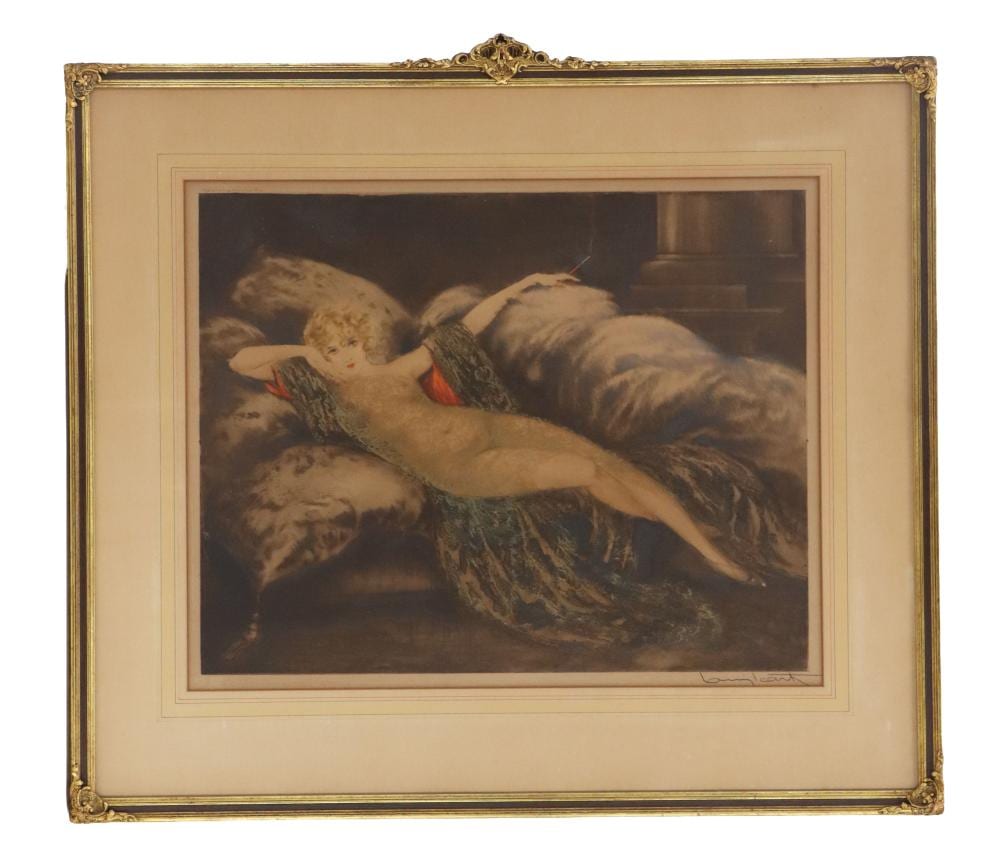
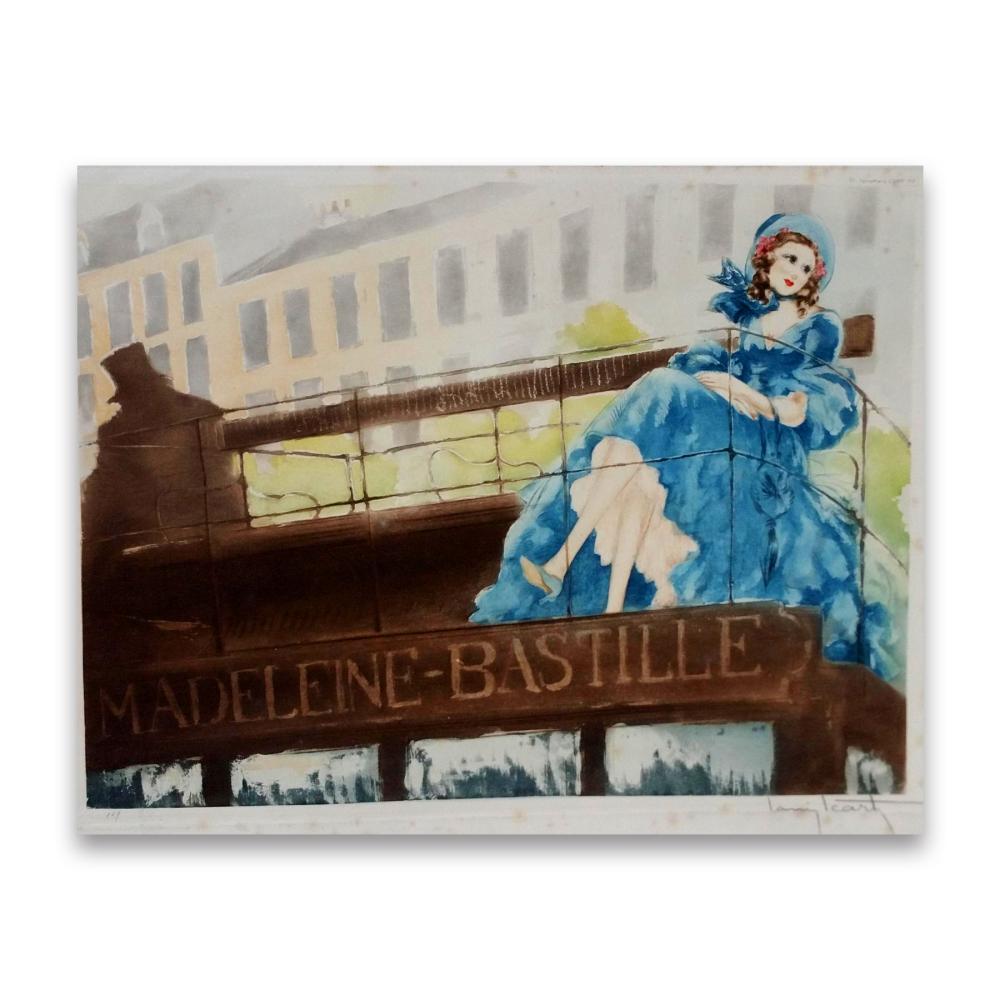
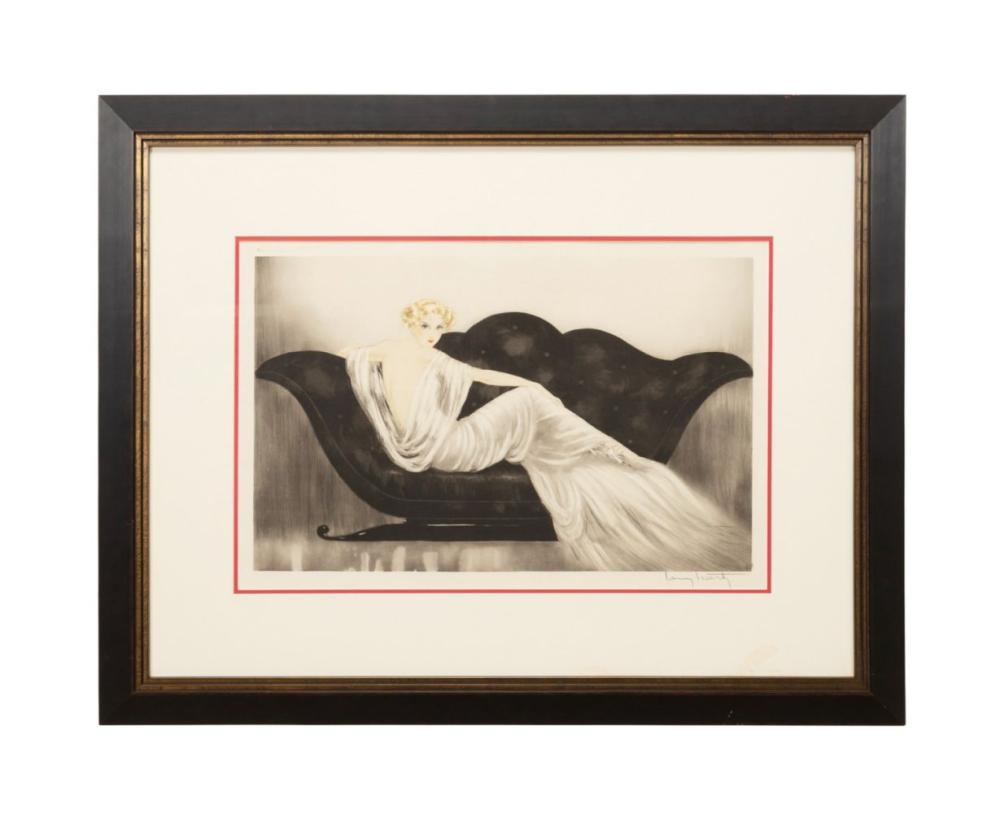
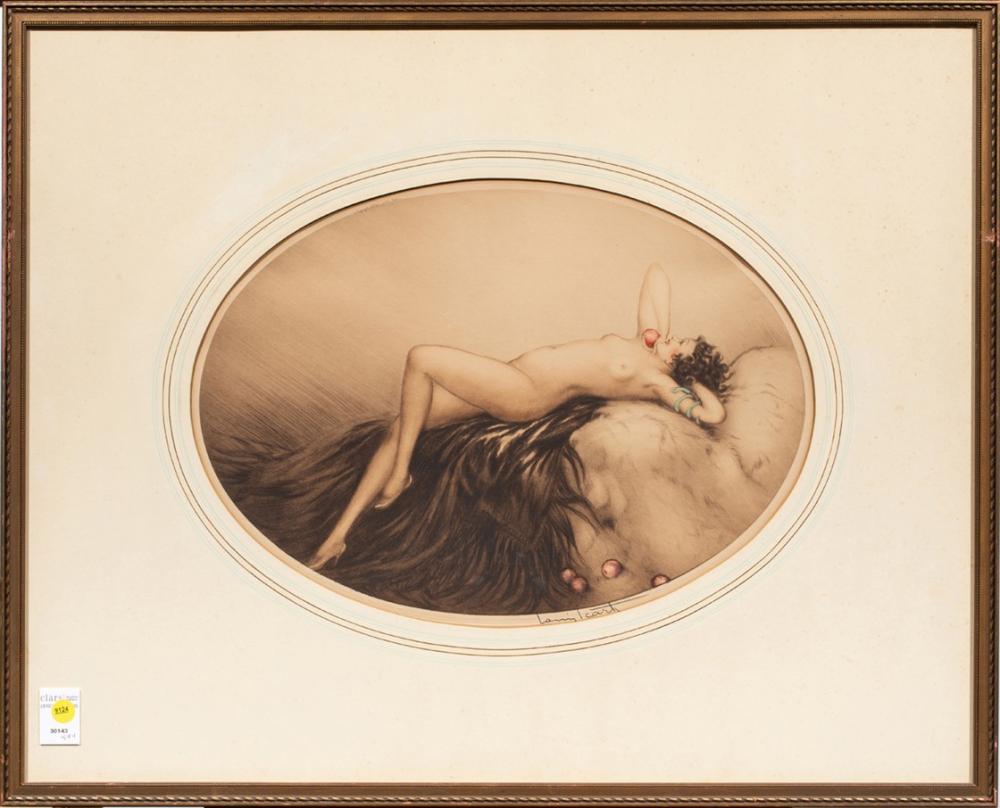
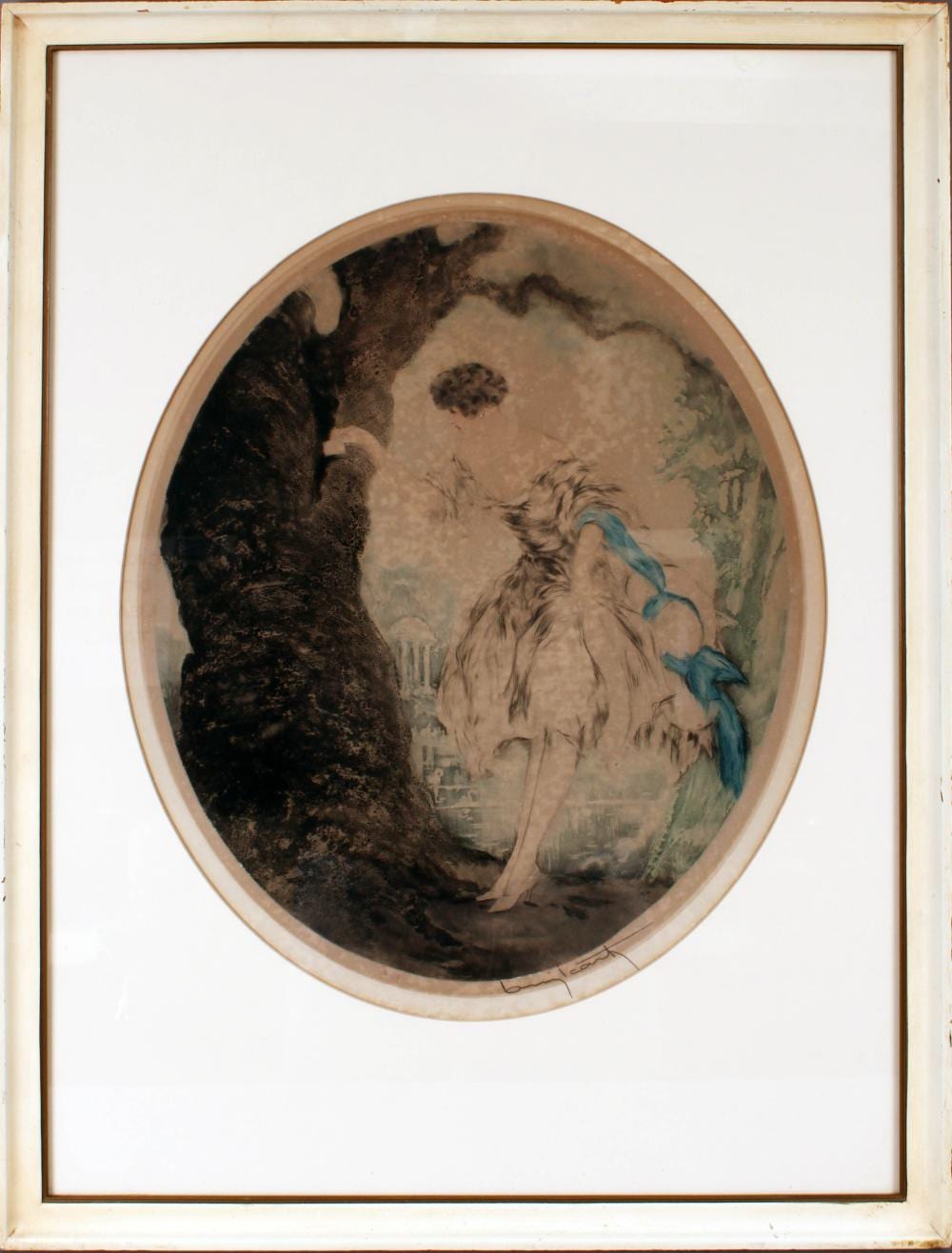
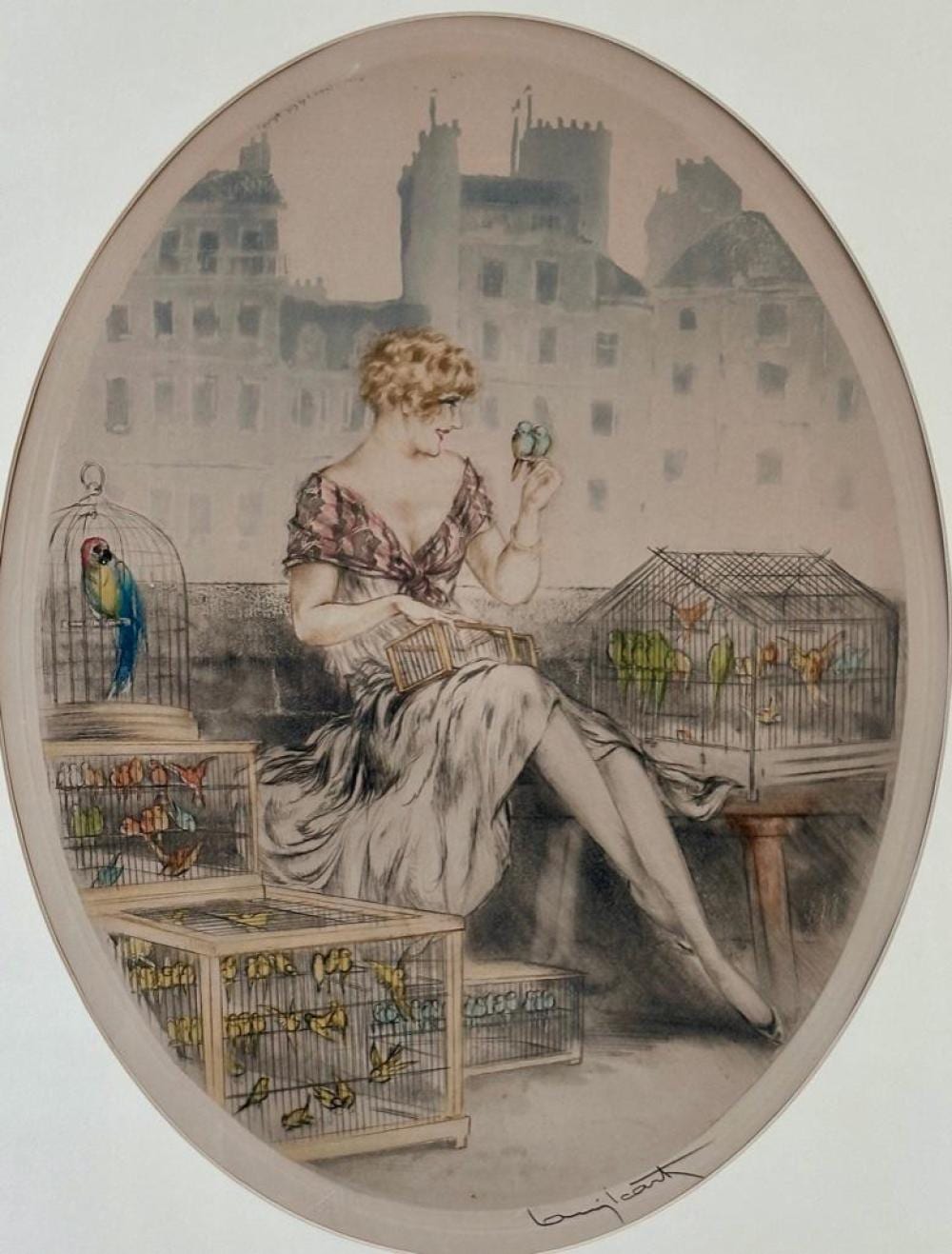
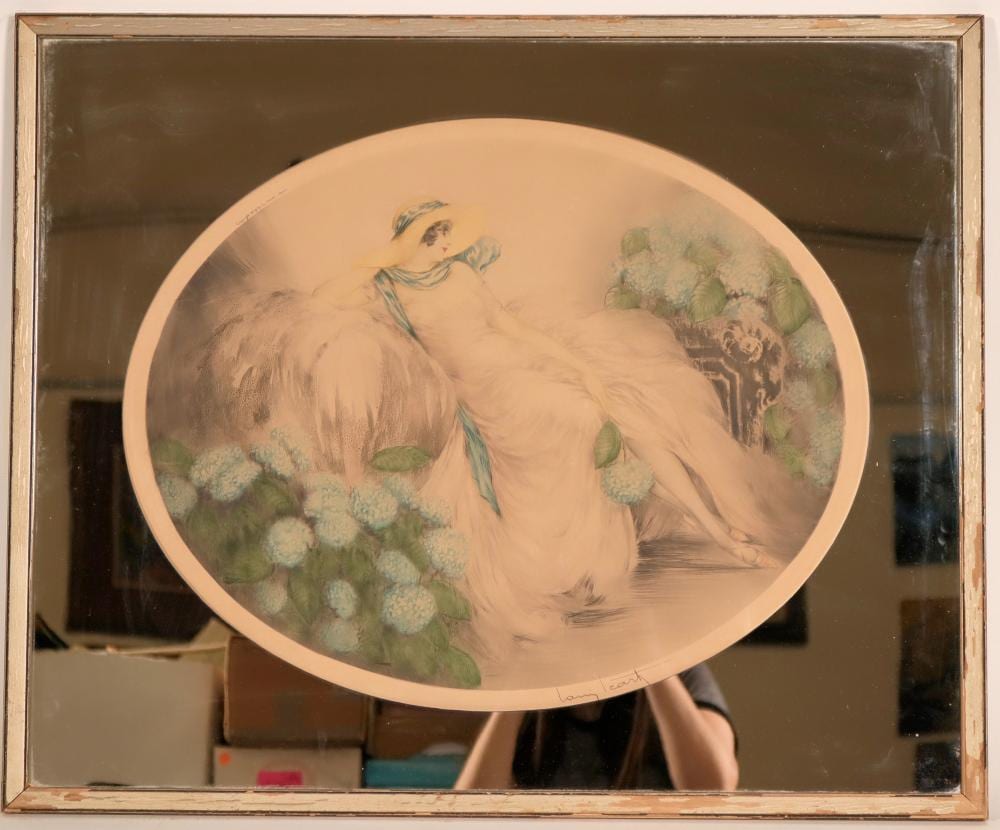
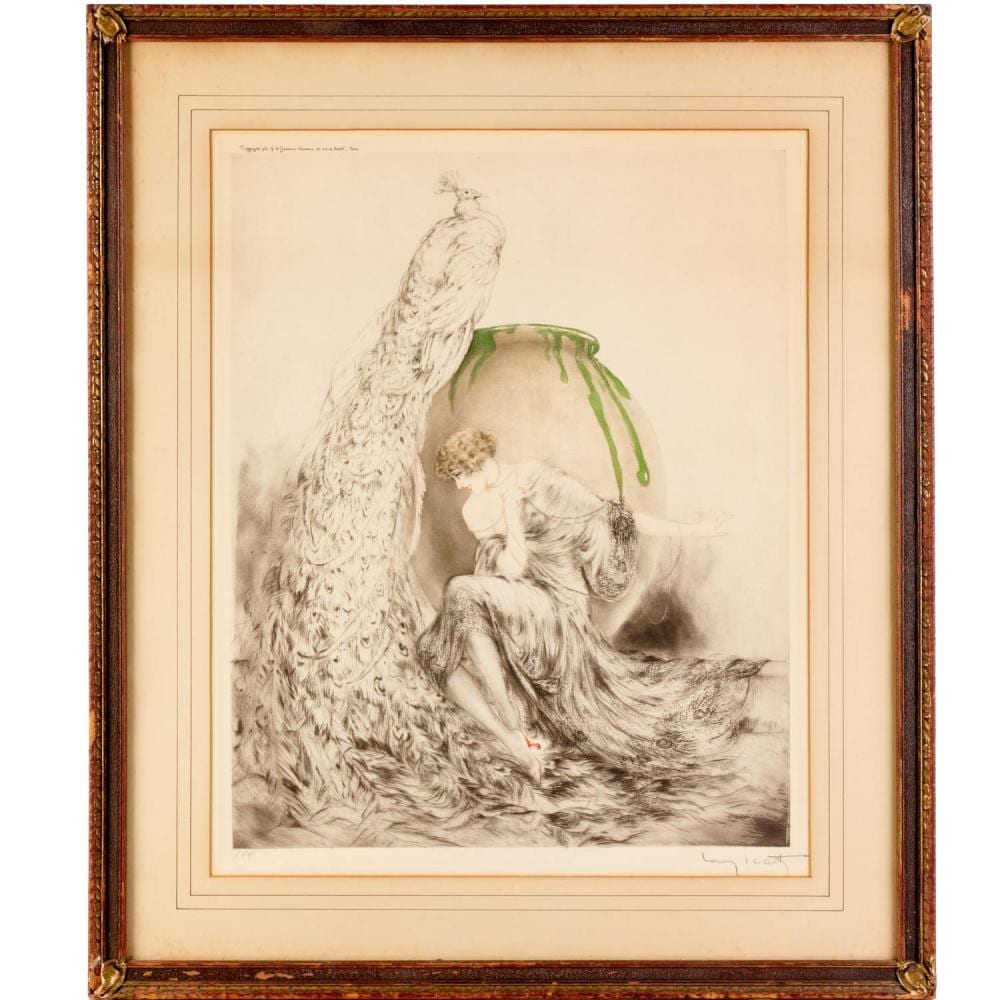
How these auction records were verified
These sales are market context, not an object estimate.
Each row retains its exact source URL, lot identity, retrieval time, access result, and immutable record hash. Live source access was blocked; the exact record matched Appraisily's immutable pipeline provenance. Inspect the public comparable provenance record.
Search variations collectors ask
Readers often Google:
- is Louis Icart “The Sofa” signed in plate or pencil
- how to tell if an Icart print is a reprint
- Louis Icart The Sofa hand colored print value
- what does plate mark mean on an etching
- how to date a Louis Icart lithograph
- best way to photograph prints for appraisal
- should I unframe a vintage print for selling
- insurance appraisal for vintage French Art Deco prints
Each question is answered in the authentication and condition sections above.