
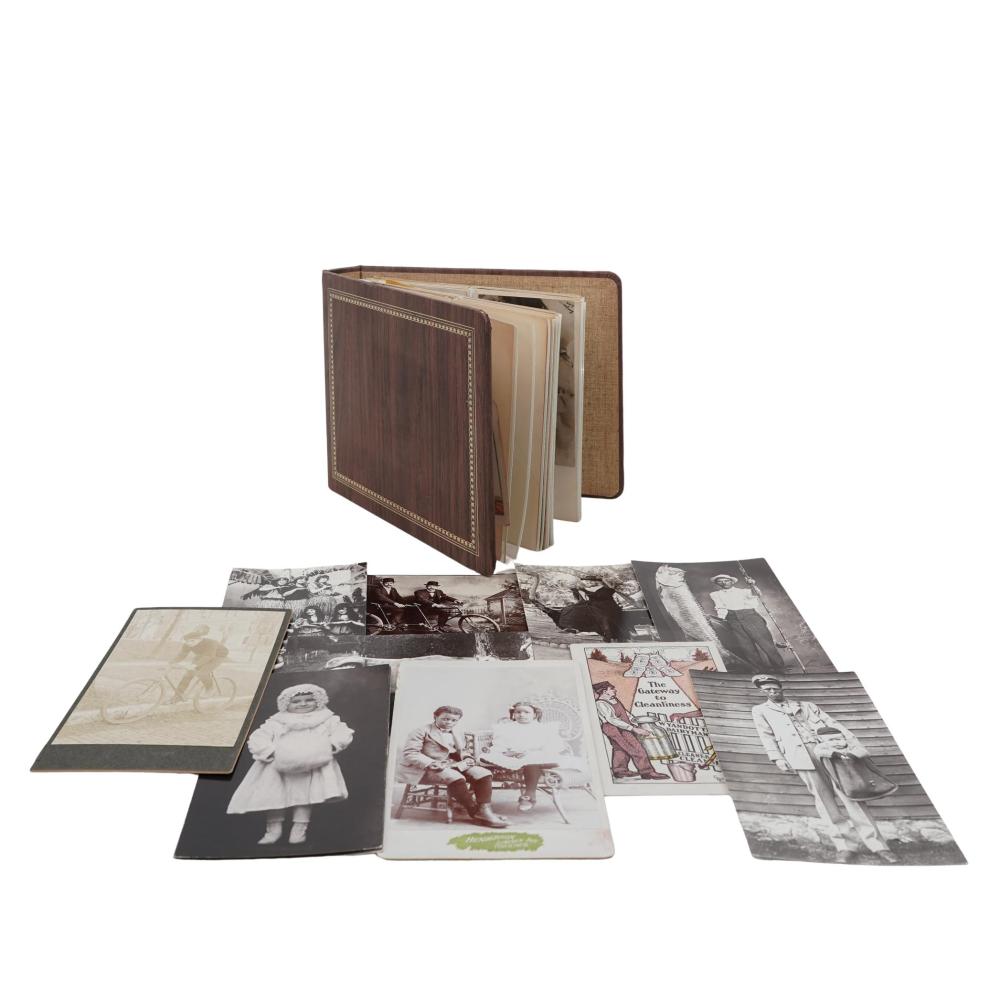
Postcards and paper ephemera identification basics
Start with both sides of the object: publisher marks, postmarks, paper texture, printing method, captions, handwriting, stamps, edges, and condition. Reproductions and later restrikes can look convincing in a single front photo.
Start with a fast visual pass (10 minutes, not ten hours)
Most identification mistakes happen because people start with price guesswork before confirming what they own. A sound method is to split identification into three layers: what the object physically is, how it was made, and how that physical structure maps to documented eras.
For postcards and paper ephemera, this is especially important because many variants look similar on first glance. Two items may share a design style but be decades apart in age, production method, and authenticity risk. You should capture these baseline facts before judging worth:
- Front/back marks: issuer labels, machine registration marks, linework, color register.
- Paper and print clues: fiber quality, fiber opacity, ink behavior, and edge finish.
- Postal and handling history: postmark clarity, stamp box position, and mounting or trimming signs.

How to read marks that matter
Marks are the fastest entry point. But not every mark is equal: some are decorative, others are identity markers. For identification confidence you should separate decorative marks from production marks.
Issuer, publisher, and maker traces
Many historic cards have back impressions that indicate publisher, distributor, or service route. Look for repeated text blocks, machine alignment marks, and typefaces that stay consistent within a period. If a card’s typography abruptly changes across similar surfaces on the same item, treat it as an alert.
Cancellation and hand-written clues
Postmarks, date stamps, and cancellation codes are often better than catalog memory when dating. A clear cancellation with period-correct datestamps can support an otherwise uncertain front design. If a postmark appears overpainted, blurred inconsistently, or font-mismatched with known service eras, consider restoration or misattribution risk.
Plate marks and layout logic
Print registration and die marks can indicate production tooling. Genuine older printing often leaves subtle registration imperfections in ways that modern reproduction presses and digital workflows handle differently. Don’t overread tiny defects; combine several clues before concluding counterfeit risk.
First-action checklist before any valuation statement
Pause valuation. Use this checklist exactly in this order:
- Photograph both faces in natural light, with a close-up of backstamps and edges.
- Record any visible text as written, including stamps, registration codes, and serial fragments.
- Describe paper feel: stiff, flexible, glossy, matte, or fibrous.
- Check for edge consistency, especially if the piece was trimmed or re-cut.
- Store notes with date, storage condition, and where you acquired it.
That note-taking step is what turns a visual opinion into a defensible one.
Free instant estimate
Not sure if your item is worth appraising? Let us take a look.
Upload a photo, tell us what you know, and get a free first read. If a full appraisal makes sense, we will say so.
Free. No card needed. Takes about two minutes.
Paper, ink, and construction clues (the part most people skip)
Paper ephemera is not just decorative. The substrate is an age fingerprint. Even when front art is identical, paper structure changes across decades in ways that are hard to fake.
Track these material clues in one pass:
- Fiber appearance: older machine and rag paper often shows fiber texture visible under strong side light.
- Coating behavior: matte finishes can look modern but may still sit on older stock if surfaced later.
- Ink behavior: vintage letterpress and lithographic inks often sit with micro-setoff patterns where edges spread differently under oblique light.
- Edge integrity: a clean edge with consistent wear can mean professional die-cut history; random feathered edges can also indicate later cutting.
Don’t use a single “old paper smell” heuristic. Smell is not reliable for identification and can be distorted by storage, climate, or previous handling media.
Age clues that scale from beginner-safe to expert-useful
Ageing is easier when you compare layers of evidence. Good guides avoid any one magic date stamp and instead use a weighted set.
Typography and line discipline
Type style changes with eras and production systems. A small mismatch in line alignment can mean a reprint stage, photo transfer pass, or modern recreation. Compare with multiple known cards from the same alleged period, not just one known benchmark.
Postal standards and destination text
Postcards and mail ephemera are often dateable from address fields, stamp box style, and cancellation format. The most reliable approach is to capture the whole envelope of evidence: ink density, frame size, and service language.
Color shifts and weathering consistency
Real aging tends to spread consistently across similar pigment areas. A bright, fresh center against uniform edges can be a sign of selective treatment rather than natural aging. That does not automatically mean fake; some ephemera legitimately had repairs.
Authentication workflow: how to separate original from overworked variants
At this stage avoid two traps: overconfidence and panic. You can still identify suspicious conditions even without deep expertise.
- Cross-layer mismatch: period style on front, modern text on back, or inconsistent postmark aging.
- Edge and fold behavior: older pieces usually show usage wear patterns tied to how cards were carried, viewed, and stored.
- Retouch and recolor signs: glossy patches in one region, unnatural color saturation, or flat, repetitive restoration texture.
- Serial number and lot claims: claims without documentation should be treated as marketing language, not provenance.
If you spot several red flags together, escalate. That escalation should always happen before resale messaging.
Condition grading logic for paper ephemera
In practical valuation work, buyers respond best to condition language that is structured. Use this sequence:
- Visual clarity: how complete is the printed face?
- Structural support: do folds, seams, or corners hold with minimal loss?
- Environmental injury: water marks, foxing, rusting ink, and stains.
- Paper body: puncture, tearing, and brittleness.
Minor cosmetic wear does not equal low value, but severe environmental damage usually limits preservation options. High-quality documentation, measured photos, and close light shots help buyers understand condition without repeated questions.
Decision workflow: buy, sell, insure, or archive
Once you map marks, materials, age clues, and condition, keep your conclusion tied to intent:
- Collecting: prioritize provenance, motif rarity, and completeness over resale projection.
- Insurance: document damage, handling history, and storage evidence with date-stamped photos.
- Donation: prove donor timeline and chain of custody through consistent notes.
- Sale: compare only comparable categories; avoid cross-category value extrapolation.
Avoid forcing an item into a single identity. A “postcard” with mixed provenance, modern retouching, and unclear marks may still be meaningful historically, but not necessarily highest-value in market terms.
Common mistakes that sink accurate identification
These are the mistakes we see most:
- Confusing aesthetic age with production age: a vintage look can be a modern recreation.
- Using a single signal only: no single clue is authoritative.
- Ignoring local handling history: sunlight, humidity, and storage can mimic old damage patterns.
- Chasing only catalog listings: category fit matters more than headline name.
- Undervaluing documentation: uncertain identity is best handled as “needs expert review” rather than overconfident labeling.
If you want to avoid the long-tail of mistakes, treat identification as hypothesis-first: collect evidence, assign probability, then decide action thresholds.
Long-term care that protects both item and evidence quality
Storage is part of identification because poor care can erase clues. For paper ephemera, prioritize stability over aesthetics:
- Use low-light, stable-temperature storage; avoid direct sunlight.
- Use archival folders and interleaving for loose ephemera where possible.
- Keep a date log for handling events, especially humidity incidents.
- Photograph every significant condition shift once per season or before transport.
This reduces false impressions and improves the confidence of future valuation updates.
Note: We couldn’t find enough auction records that directly match How to Identify Postcards and Paper Ephemera: Marks, Paper and Age Clues to publish a defensible price table. If you are valuing a specific item, include its maker, model, material, photos, and condition so the search can be narrowed.
What similar items actually sold for
The current auction search does not contain at least three clean, directly matched sales for How to Identify Postcards and Paper Ephemera: Marks, Paper and Age Clues yet. If you’re valuing a specific item, use the free estimate flow so the search can be narrowed by maker, material, photos, and condition.
| Image | Description | Auction house | Date | Lot | Reported price realized |
|---|---|---|---|---|---|
| No relevant auction comps found for this topic right now. | |||||
Disclosure: prices are shown as reported by auction houses and are provided for appraisal context. Learn more in our editorial policy.
People also ask (related searches)
- What marks on postcards show original print runs?
- How can I date old greeting cards with missing postmarks?
- Real-photo postcard vs lithograph: what is the first visual check?
- How can paper texture reveal if a card was restored?
- How do I verify if a collectible card is a reissue?
- What are the biggest paper ephemera authenticity mistakes?
- How do I identify a card made before the modern postcard standard?
- Which paper ephemera clues raise authenticity risk first?
- How to read canceled versus decorative postmarks on vintage mail cards?
FAQ
Which mark is most important to check first?
Start with a full item profile first: edges, backmarks, and any postmark pattern. Then cross-check paper and ink together.
Can paper feel alone prove age?
No. Paper texture is important but should be combined with print and handling clues before you claim period certainty.
What should I do if I suspect retouching?
Document every clue with macro photos and stop making a value statement. A specialist can confirm whether restoration was cosmetic or structural.
Can I buy a postcard and still be misled?
Yes, especially when markings are mixed. Treat unfamiliar cards as a research lead, not a proven market object, until verification is complete.