Use this ring appraisal guide to document metal, gemstones, hallmarks, setting, measurements, condition, repairs, lab reports, provenance, insurance needs, and market evidence.
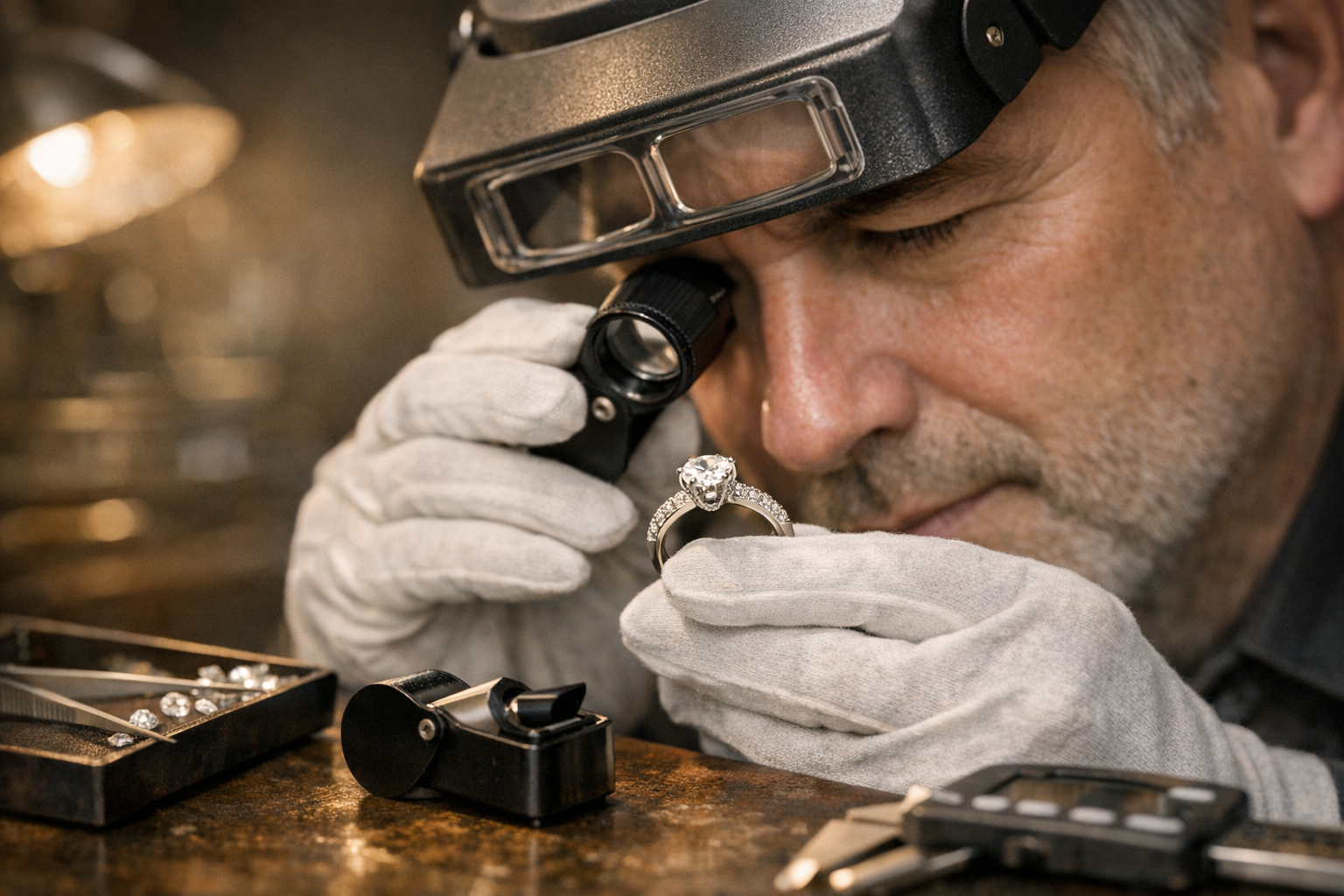
Ring appraisal context image for checking metal, gemstone, hallmarks, setting, measurements, condition, and documentation.
Editorial policyBy Appraisily Editorial TeamLast updated November 9, 2023
Turn this research into action
Get a price-ready appraisal for your item
Answer three quick questions and we route you to the right specialist. Delivery timing is confirmed after the required item information is received.
Secure Stripe checkout · Full refund if we can’t help
Upload ring photos, hallmarks, gemstone close-ups, setting, side profile, measurements, condition issues, receipts, and lab reports so a jewelry specialist can review value signals.
Ring appraisal depends on metal, gemstone identity and quality, hallmarks, setting style, measurements, condition, repairs, lab reports, provenance, replacement purpose, and current market evidence.
Understanding Ring Appraisals
A ring appraisal is a professional assessment that determines the monetary value of your jewelry. Whether you have an engagement ring, family heirloom, or estate piece, getting it professionally appraised provides documentation of its worth for insurance, estate planning, or resale purposes.
When you get a ring appraised, a certified expert examines your piece in detail, evaluating components such as the metal content, gemstone quality, craftsmanship, and overall condition. This comprehensive assessment results in an official document that serves as proof of the item’s value.
There are several reasons why you might need a ring appraisal:
Insurance coverage: Most insurance companies require an appraisal to properly insure valuable jewelry
Estate planning: For accurate valuation of assets to be inherited
Divorce proceedings: For fair division of assets
Resale purposes: To establish a reasonable asking price
Tax purposes: For donation deductions or estate taxes
Personal knowledge: Simply to understand what you own
The appraisal process differs from a simple evaluation you might receive when shopping for jewelry. A proper appraisal is more thorough, documented, and performed by a qualified professional with specific credentials.
What similar items actually sold for
To help ground this guide in real market activity, here are recent example auction comps from Appraisily’s internal database. These matched sales are market context only, not an object estimate or identification, and they do not guarantee a price for your specific diamond ring.
Shown USD range: USD 750-USD 3,600. Median of these 6 USD examples: USD 1,950.
Source-reported amounts. Buyer’s-premium treatment is stated in each row when known; otherwise it is unknown. Native currencies are not normalized.
Each row retains its exact source URL, lot identity, retrieval time, access result, and immutable record hash. Live source access was blocked; the exact record matched Appraisily's immutable pipeline provenance. Inspect the public comparable provenance record.
Disclosure: prices are shown as reported by auction houses and are provided for appraisal context. Learn more in our editorial policy.
Free instant estimate
Not sure if your item is worth appraising? Let us take a look.
Upload a photo, tell us what you know, and get a free first read. If a full appraisal makes sense, we will say so.
Free. No card needed. Takes about two minutes.
Choose your next step
Use the path that matches the decision you need to make about the item.
Not sure it is worth appraising?
Start with a lower-friction screen to understand the likely category, evidence, and next step.
Upload ring photos, hallmarks, gemstone close-ups, setting, side profile, measurements, condition issues, receipts, and lab reports so a jewelry specialist can review value signals.