Vintage Rolex Authentication Guide: appraisal basics
Vintage Rolex authentication depends on matching the reference, serial range, case, dial printing, hands, lume, movement, bracelet, clasp, service history, and seller documents against period-correct details.
The 8-Point Authentication Checklist
After the 2022 peak in pre-owned Rolex prices, the secondary market cooled significantly through 2025 and into 2026. Buyers now have more negotiating power—but counterfeiters have also flooded secondary channels with increasingly sophisticated fakes. Modern "superclone" movements can pass basic sweep-second tests, and clone ETA movements now mimic the feel of genuine Rolex calibers well enough to fool casual inspection. The old advice—"just check if it sweeps smoothly"—is no longer sufficient.
What follows is the same eight-check workflow that professional dealers and auction-house intake teams use before they commit to a purchase. Work through these in order. If any single check fails, walk away or demand a professional inspection before proceeding.
1. Serial & Reference Numbers
Every genuine Rolex carries two sets of identifying numbers. The serial number (unique to each watch) and the reference number (identifying the model) are engraved between the lugs—serial at 6 o'clock, reference at 12 o'clock. On models produced after roughly 2005, Rolex also laser-etches the serial number on the inner rehaut (the flange ring between the dial and crystal).
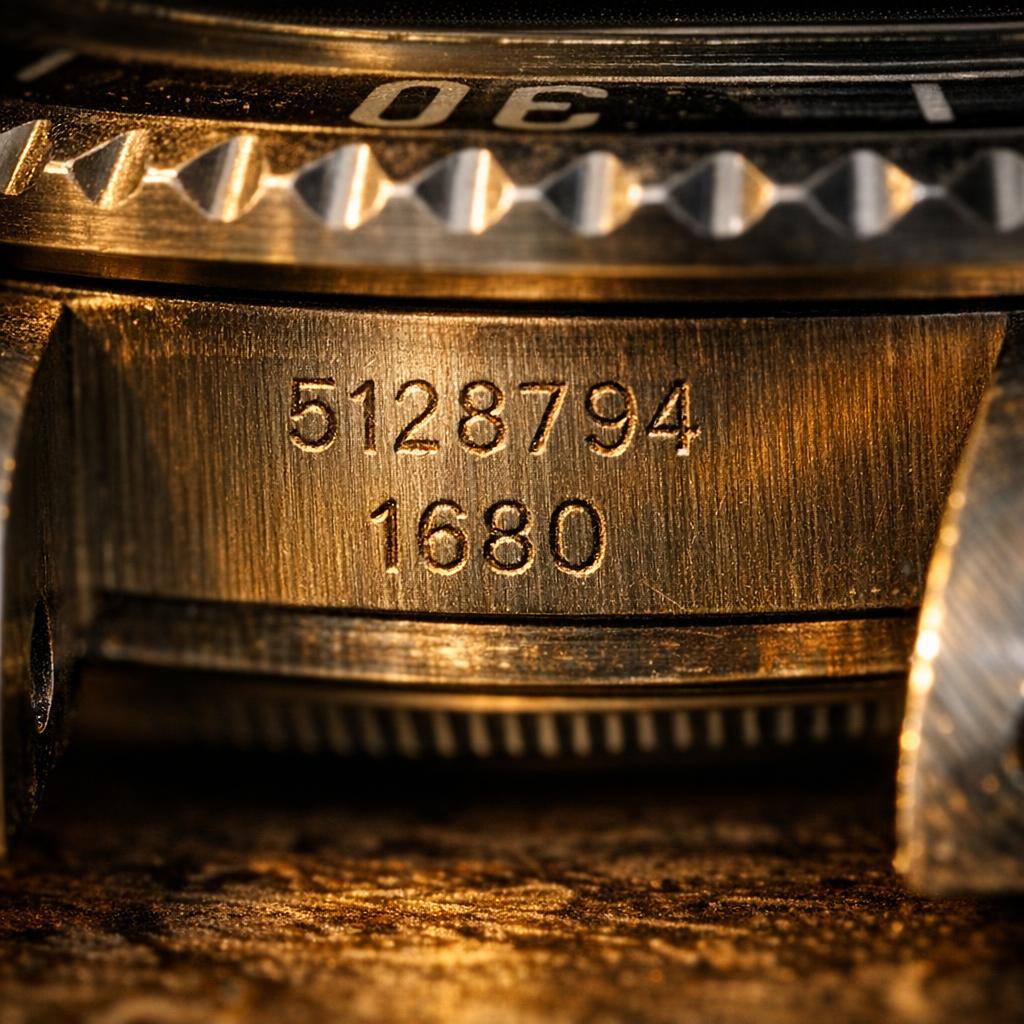
What to check: The engraving should be deep, crisp, and evenly spaced. Counterfeiters often use shallow acid etching or poorly aligned dot-peen marking that looks fuzzy under magnification. Use a 10× loupe or your phone's macro camera mode.
Serial number dating: Pre-1987 Rolex watches used sequential serial numbers that map to production years. A serial in the 1–2 million range, for example, indicates a watch produced in the mid-1960s. Reference charts are widely available—cross-check the serial against the claimed age. After 2010, Rolex randomized serial numbers, so post-2010 dating relies on paperwork and movement inspection rather than the serial alone.
Red flag: A "vintage" serial number that corresponds to a production date inconsistent with the watch's features (e.g., a Submariner dial on a case dated to the era before Submariners existed).
2. Case Construction & Engravings
Vintage Rolex Oyster cases are solid—front-loading, screw-down casebacks with no exhibition windows. No vintage Rolex ever shipped with a display caseback until the modern era (and even then, only on specific Cellini and some Day-Date models). If the watch you're inspecting has a clear caseback showing the movement, it is not a genuine vintage Oyster.
What to check: The caseback should be solid stainless steel or precious metal, with Rolex branding (Rolex Oyster Perpetual, model designation, material stamp) deeply and cleanly stamped—not laser-etched or printed. On the case sides between the lugs, look for the "ORIGINAL ROLEX DESIGN" text on the rehaut, which should be crisp and evenly spaced.
Red flag: Exhibition caseback on a claimed vintage Submariner, GMT-Master, or Daytona. Shallow, fuzzy, or misaligned caseback stamping. Missing "ORIGINAL ROLEX DESIGN" rehaut text on a model that should have it.
3. Dial Printing & Typography
The dial is where counterfeiters most often reveal themselves. Rolex's dial printing quality is exceptionally consistent—fonts are precise, paint is evenly applied, and lume plots are perfectly aligned.
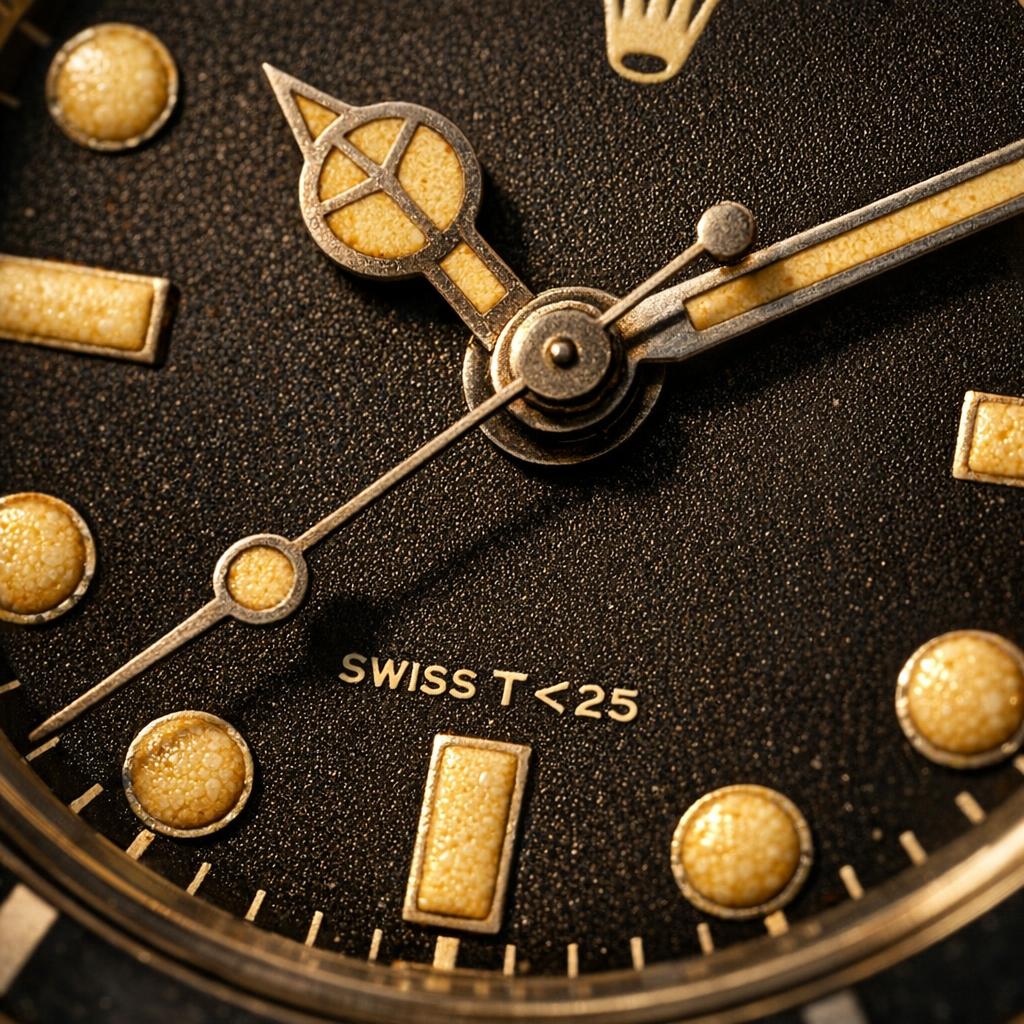
What to check:
- Tritium patina: Vintage Rolex watches produced before the mid-1990s used tritium-based luminous material. Over 20–40+ years, tritium ages from white to a warm cream or honey color. If a dial claimed to be from the 1970s has bright white lume on the hands and markers, the lume has been replaced (which reduces value) or the dial itself is not original.
- Dial text: The "SWISS," "SWISS T<25," or "SWISS MADE" text at 6 o'clock should be razor-sharp under magnification. Blurry, bleeding, or uneven lettering is a counterfeit tell.
- Font weight consistency: Rolex uses specific typefaces for model names (e.g., "SUBMARINER," "DAYTONA") that maintain consistent stroke weight. Counterfeit dials often have slightly thickened or thinned letters.
Red flag: Spelling errors ("Oyster Perpetual" misspelled), misaligned text blocks, or lume color that doesn't match the claimed age of the watch.
4. Cyclops Lens & Date Window
The Rolex cyclops lens over the date window is one of the brand's most recognizable features—and one of the hardest for counterfeiters to get right. A genuine Rolex cyclops provides approximately 2.5× magnification of the date wheel.
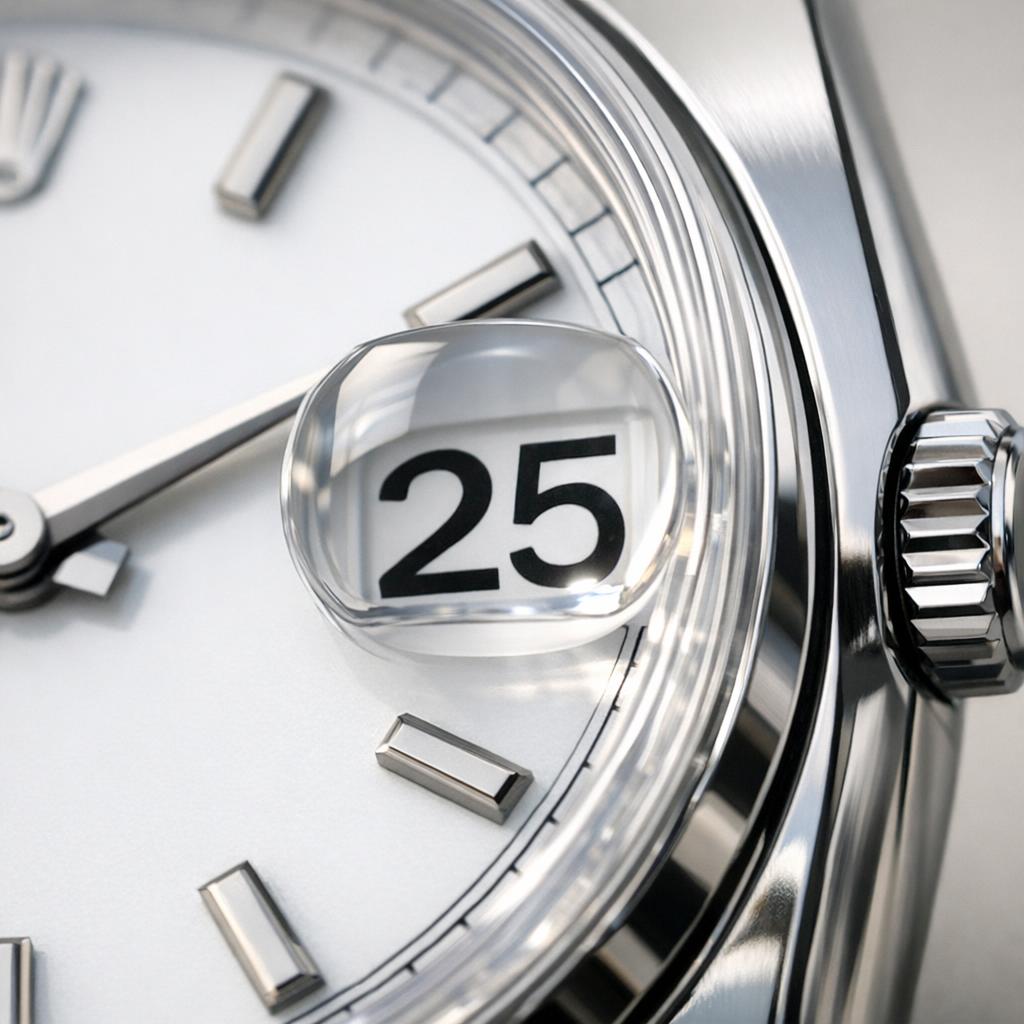
What to check: Look at the date straight-on. The number should appear large enough to nearly fill the date window. On a fake, the date often appears only slightly enlarged. The cyclops should also be centered perfectly over the date—if it's shifted left, right, up, or down, the crystal is likely aftermarket or counterfeit.
Red flag: Weak magnification (less than 2×), off-center cyclops, or a date wheel that doesn't snap crisply to center when advancing through dates.
5. Crown Tube & Winding Stem
The winding crown is a critical authentication point that many guides overlook. Rolex uses a screw-down Twinlock or Triplock crown system, and the quality of the coronet emblem on the crown cap is a reliable tell.
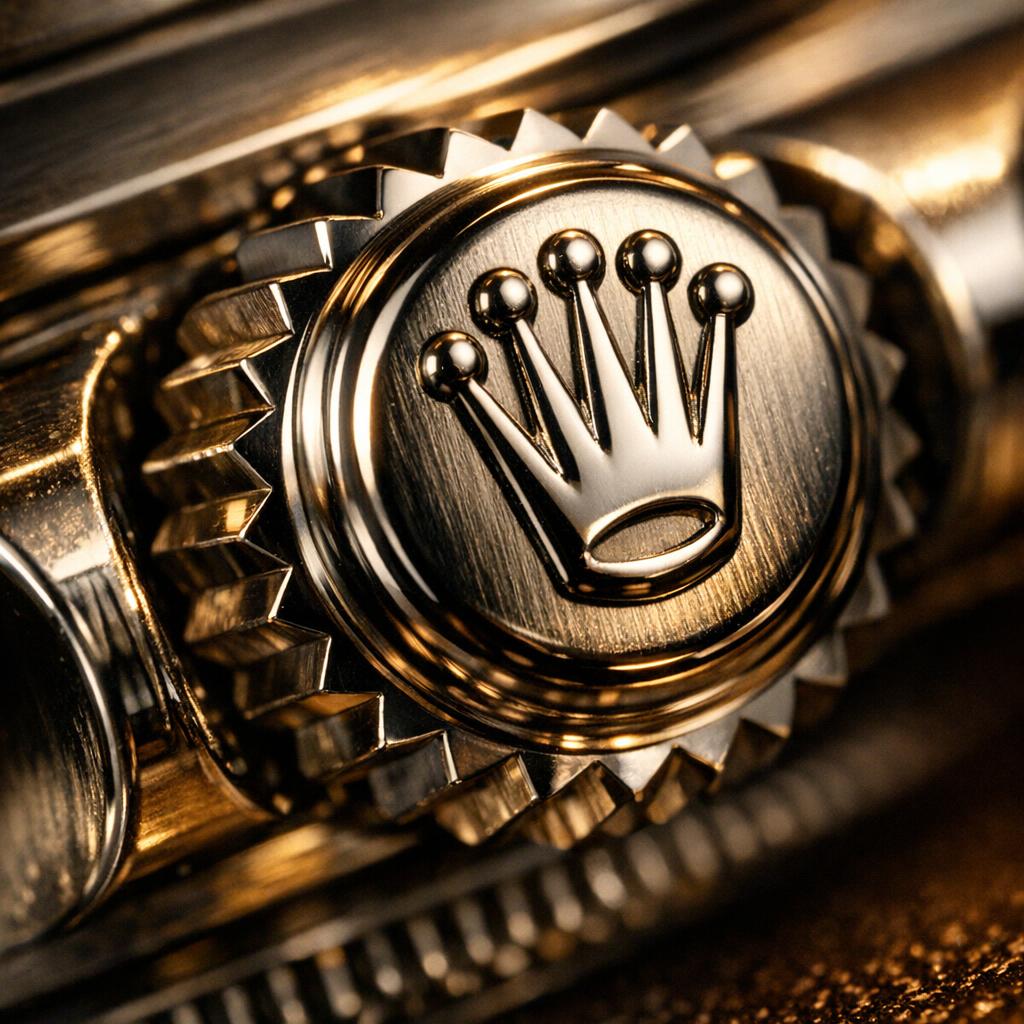
What to check: The coronet should be deeply stamped (not printed), with clean edges and visible detail. Unscrew the crown—it should thread smoothly with consistent resistance. A crown that cross-threads, feels gritty, or won't screw down fully may have a damaged or replaced crown tube. Also check the gasket area: on a 20+ year-old Oyster, the original rubber gasket is almost certainly degraded and should have been replaced during service.
Red flag: A printed or flat coronet, a crown that won't screw down smoothly, or visible corrosion around the crown tube (indicating water intrusion and possible movement damage).
6. Movement & Sweep Test
For decades, the "smooth sweep" test was the go-to Rolex authentication check. Genuine Rolex movements operate at 28,800 vibrations per hour (8 ticks per second), producing a near-continuous sweep. Most cheap fakes used quartz movements (one tick per second) or low-beat mechanicals (6 ticks per second) that stutter visibly.
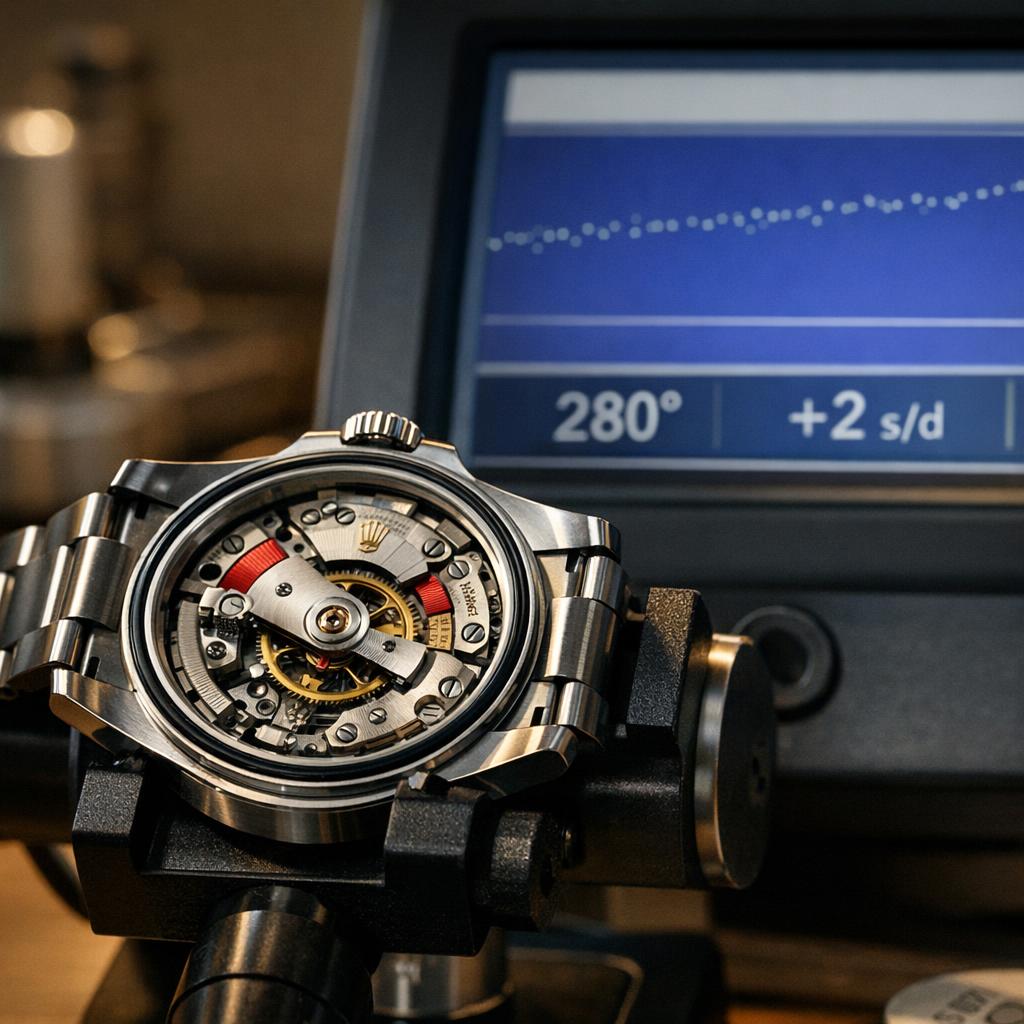
Why this test no longer suffices: Modern superclone movements—particularly the Asian clone versions of the Rolex 3135 and 4130 calibers—also run at 28,800 vph and produce a sweep visually indistinguishable from genuine. The sweep test can rule out the cheapest fakes, but it cannot confirm authenticity on its own.
What a professional inspection adds: A qualified watchmaker will open the caseback and inspect the movement under magnification. Genuine Rolex movements have distinctive finishing: perlage on the base plate, specific screw placements, and the Rolex crown stamp on the rotor. A timing machine will reveal amplitude (should be 270°–310° for a healthy movement), rate accuracy (within −2/+2 seconds per day for a modern Rolex), and beat error. These are nearly impossible to fake convincingly.
7. Bracelet & Clasp Details
Rolex bracelets are engineered to tolerances that counterfeit manufacturers rarely match. The fit and finish of the bracelet, end links, and clasp provide multiple authentication checkpoints.
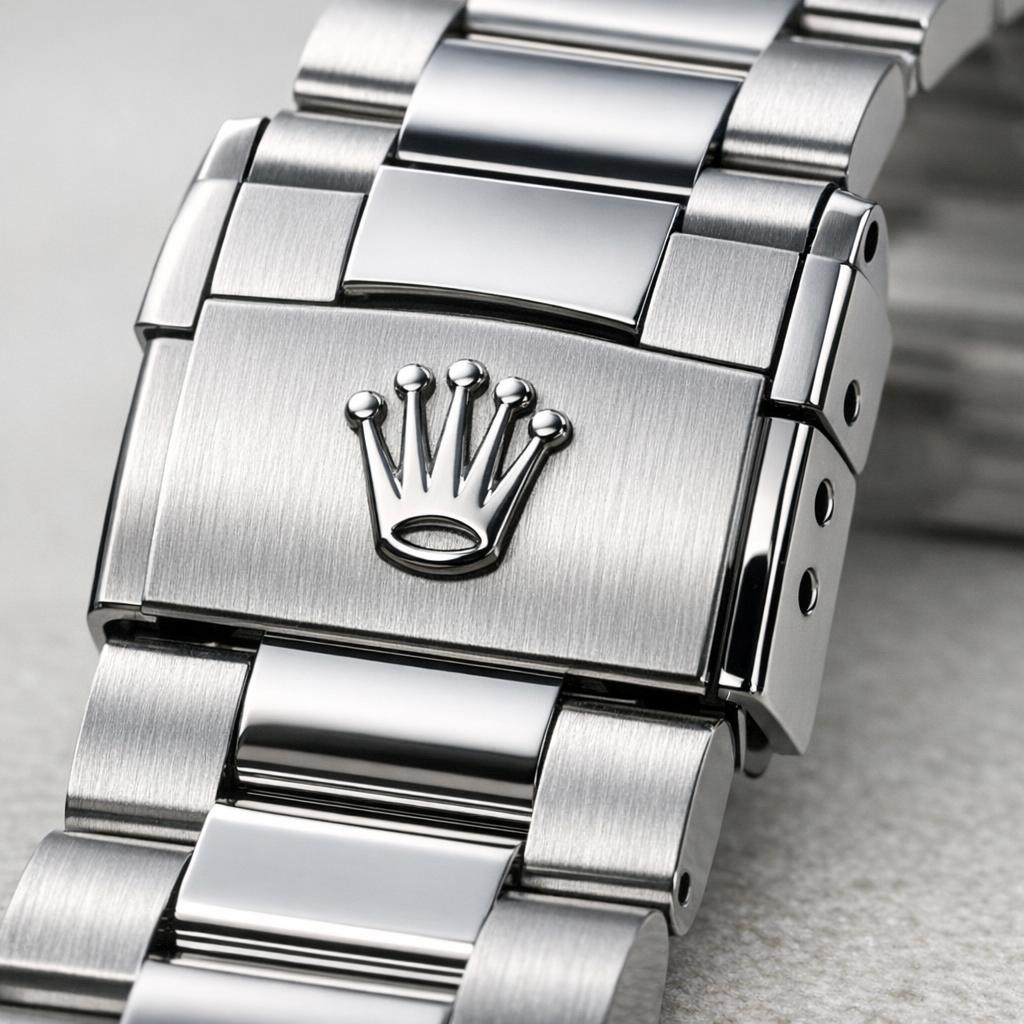
What to check:
- End-link fit: Solid end links should fit snugly against the case lugs with minimal lateral wiggle. Hollow or poorly fitted end links suggest an aftermarket or counterfeit bracelet.
- Clasp stamping: The Rolex coronet on the inside of the clasp should be deeply stamped, not etched or printed. On vintage pieces, some wear is expected, but the outline should remain legible.
- Micro-adjust system: Genuine Rolex clasps have precisely spaced micro-adjust holes. Counterfeit clasps often have unevenly spaced or crudely drilled holes.
8. Weight, Feel & Craftsmanship
Rolex uses 904L stainless steel (Oystersteel), which is denser and more corrosion-resistant than the 316L steel used by most other watchmakers. A genuine Rolex feels substantial—heavier than most fakes of similar size.
What to check: Pick up the watch. Does it feel dense and solid, or light and hollow? Run the bezel (on a Submariner or GMT-Master): it should click with precise 120-position detents (on modern models) or smooth unidirectional rotation (on vintage). The action should feel engineered, not loose or rattly. Inspect the finishing: brushed surfaces should have consistent linear grain, and polished surfaces should be mirror-smooth with sharp, defined edges between brushed and polished zones.
Red flag: A watch that feels surprisingly light, a bezel that rattles or has dead spots, or finishing that looks rough or inconsistent under magnification.
What the Market Looks Like Right Now
The pre-owned Rolex market has shifted dramatically since its 2022 peak. References like the Submariner 5513, GMT-Master 1675, and Daytona 6263 that traded at record premiums are now available at 20–40% lower prices. This is good news for buyers—but it also means more watches are changing hands through private sellers, online marketplaces, and auction houses where authentication responsibility falls on the buyer.
Recent auction results from Phillips, Christie's, and Subcollectibles underscored a consistent pattern: watches with documented provenance, original boxes and papers, and third-party authentication documentation consistently realize 15–30% higher prices than unverified examples. In a softening market, authentication paperwork has become a pricing lever, not just a safety measure.
A well-documented vintage Submariner with matching serial/reference numbers, original dial, and service history can still command five-figure prices at auction. Conversely, the same reference with a replacement dial, polished case, and no paperwork may sell for half that amount. The difference often comes down to authentication confidence.
What similar items actually sold for
To help ground this guide in real market activity, here are recent example auction comps from Appraisily’s internal database. These are educational comparables (not a guarantee of price for your specific item).
Shown EUR range: EUR 7,400-EUR 95,000. Median of these 3 EUR examples: EUR 12,000.
| Image | Description | Auction house | Date | Lot | Reported price realized |
|---|---|---|---|---|---|
 |
Watches - ROLEX Submariner. Movimento con calibro … | Nomisma Aste | 2024-12-13 | 20 | EUR 12,000 |
 |
Watches - ROLEX Submariner - Movimento a carica au… | Nomisma Aste | 2024-12-13 | 22 | EUR 7,400 |
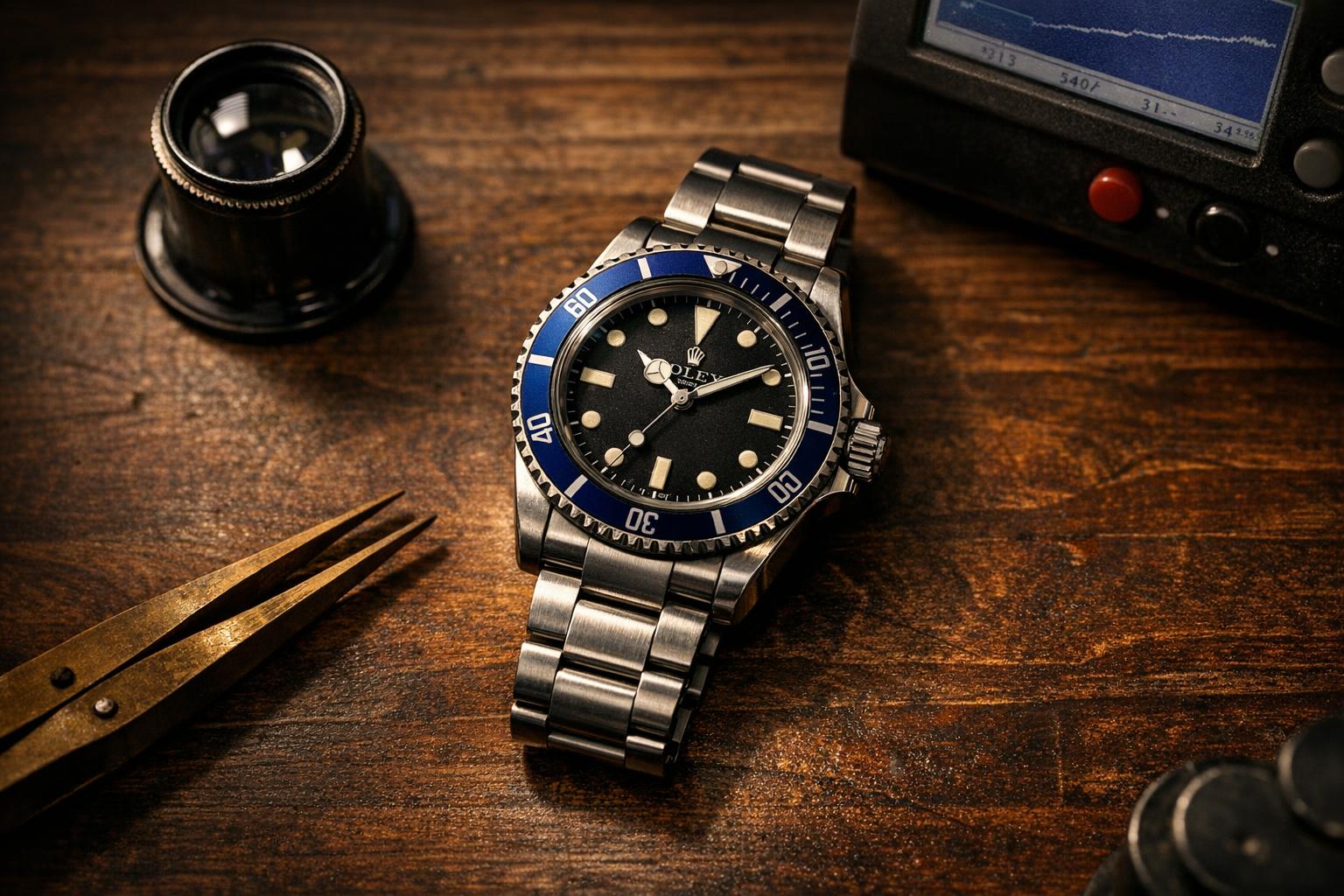 |
Scarce Vintage Rolex Watches Store Clock, circa 1980s | Rafael Osona Auctions | 2023-12-02 | 124A | USD 1,000 |
|
GOLD ROLEX & LONGINES LADIES WATCHES | Americana Auctions | 2024-12-08 | 99 | USD 900 |
|
Rolex. Extremely Rare and Sought After, Early Example of Pre-Daytona, Wristwatch in Steel, Black Underline Dial, Reference 6238, Published in “100 Superlative Rolex Watches” of John Goldberger | Monaco Legend Auctions | 2024-10-20 | 236 | EUR 95,000 |
Disclosure: prices are shown as reported by auction houses and are provided for appraisal context. Learn more in our editorial policy.
Free instant estimate
Not sure if your item is worth appraising? Let us take a look.
Upload a photo, tell us what you know, and get a free first read. If a full appraisal makes sense, we will say so.
Free. No card needed. Takes about two minutes.
The Most Counterfeited References—Specific Tells
Three vintage Rolex references account for the majority of authentication cases that cross professional dealers' desks. Knowing their specific tells saves time and money.
Submariner 5513 (1962–1989)
The 5513 is arguably the most faked Rolex in history. Produced over a 27-year span with multiple dial and bezel variations, it offers counterfeiters ample cover. Key tells:
- Chapter ring printing: The minute track on the chapter ring should be printed with sharp, even dots. On fakes, the dots often bleed together or appear irregular in size.
- Bezel insert font: The "SUBMARINER" text on the aluminum bezel insert has a specific font weight and spacing that varies by production year. Cross-reference with known examples from the claimed era.
- Crown guard shape: Early 5513s (pre-1970s) had no crown guards. Later models developed progressively thicker guards. A "vintage" 5513 with chunky crown guards but an early serial number is a Frankenwatch or fake.
Daytona 6263 (1971–1988)
The "Sigma" Daytona is one of the most valuable vintage chronographs in the world—and one of the most counterfeited. Key tells:
- Pump pushers vs. screw-down: The 6263 uses screw-down chronograph pushers. Earlier 6239 models used pump (snap-down) pushers. A 6263-dial watch with pump pushers has been Frankenwatched or misidentified.
- Dial printing spacing: The "DAYTONA" text above 6 o'clock and the "OYSTER" text below the 12 o'clock marker have very specific letter spacing. On fakes, the spacing is often slightly too wide or too narrow compared to period-correct examples.
Datejust 1601 (1959–1977)
The 1601 is the most produced Datejust reference, making it both common and commonly faked. Key tells:
- Fluted bezel machining: Genuine Rolex fluted bezels are machined from white gold with precise, uniform grooves. Counterfeit bezels often have uneven groove depth or are plated rather than solid gold.
- Jubilee end links: The five-piece-link Jubilee bracelet on a 1601 should have solid, precisely fitted end links. Hollow or loose-fitting end links indicate an aftermarket bracelet.
When DIY Checks Aren't Enough
The eight-check workflow above will catch the vast majority of fakes in the wild. But there are scenarios where even a careful DIY inspection is insufficient:
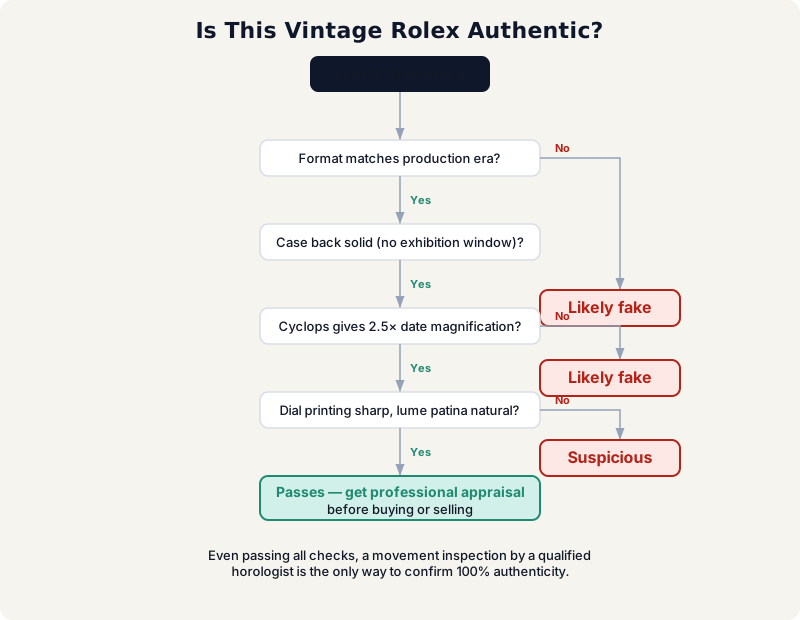
- High-value purchases: If you're spending five figures or more on a vintage Daytona, GMT-Master, or early Submariner, a professional movement inspection is non-negotiable. The cost ($100–$300) is negligible compared to the risk.
- Insurance or estate documentation: If you need the watch appraised for insurance replacement, estate tax, or charitable donation, the IRS and insurance carriers require a qualified, independent appraisal—not a self-conducted inspection.
- Suspicious service history: A watch with undocumented "recent service" may have had its movement swapped with a non-ROLEX caliber. Only a watchmaker who opens the caseback can verify the movement matches the reference.
- Pressure testing: Even if the watch passes all visual checks, a degraded gasket can mean the Oyster seal is compromised. A professional pressure test confirms water resistance.
A qualified horologist or certified watchmaker will perform a movement disassembly, timing machine analysis, pressure test, and case dimension verification. The resulting documentation serves as both authentication proof and a baseline condition report for insurance or resale.
Get a documented Rolex appraisal
Our network of certified horologists and jewelry appraisers provides written valuations for insurance, sale, donation, or peace of mind. Start your intake in minutes.
- Certified, independent appraisers
- Written documentation accepted by insurers and the IRS
- Fast turnaround—quotes in under 24 hours
Free to start. No obligation.
Search variations collectors ask
Readers often search for related questions. Each is covered in the guide above:
- How to tell if a vintage Rolex is real or fake
- Rolex serial number chart and year lookup
- How to check Rolex cyclops magnification at home
- Vintage Rolex dial markings and what they mean
- Rolex movement authentication steps
- How much does a Rolex appraisal cost
- Most faked Rolex models and how to spot them
- Pre-owned Rolex buying checklist for beginners
Each question is answered in the authentication guide above.
References & Sourcing
Auction comps referenced in this article are sourced from publicly documented sales at Phillips, Christie's, Subcollectibles, and the Appraisily valuer-agent database. Market observations are drawn from published dealer interviews, auction-house catalogs, and horological journals. This article does not reproduce proprietary price databases or auction-house buyer's premium calculations.
For our full editorial standards, reviewer credentials, and corrections policy, see our editorial policy.
Reviewed by: Appraisily horology advisory panel—certified watchmakers and jewelry appraisers with GIA, CW21, and NAJA credentials.
Published: Appraisily Editorial Team, April 2026.