Bicentennial Quarter Value Guide: value basics
Bicentennial quarter value depends on mint mark, silver or clad status, proof or circulation strike, grade, luster, surface originality, cleaning, and whether any error claim is documented and genuine.
Introduction to Bicentennial Quarters
While most Bicentennial quarters in circulation are worth their face value of 25 cents, certain varieties, mint marks, errors, and exceptional conditions can significantly increase their value—with the rarest examples fetching up to $19,000. This comprehensive guide will help you understand what makes these quarters valuable and how to identify potential treasures in your collection.
Bicentennial Quarter Timeline
- 1973
Design Competition
The US Mint held a design competition for the reverse sides of the quarter, half dollar, and dollar coins to commemorate the nation's bicentennial.
- 1975
Production Begins
The Mint began producing Bicentennial quarters with the dual date 1776-1976, temporarily suspending the production of standard 1975 quarters.
- 1976
Continued Production
Production continued through 1976, with over 1.6 billion Bicentennial quarters eventually released into circulation.
- 1975-1976
Special Silver Sets
The San Francisco Mint produced 40% silver proof and uncirculated versions for collectors.
Bicentennial Quarter Design
The obverse (front) of the Bicentennial quarter maintains the traditional portrait of George Washington designed by John Flanagan, but with the dual date “1776-1976” replacing the standard single year.
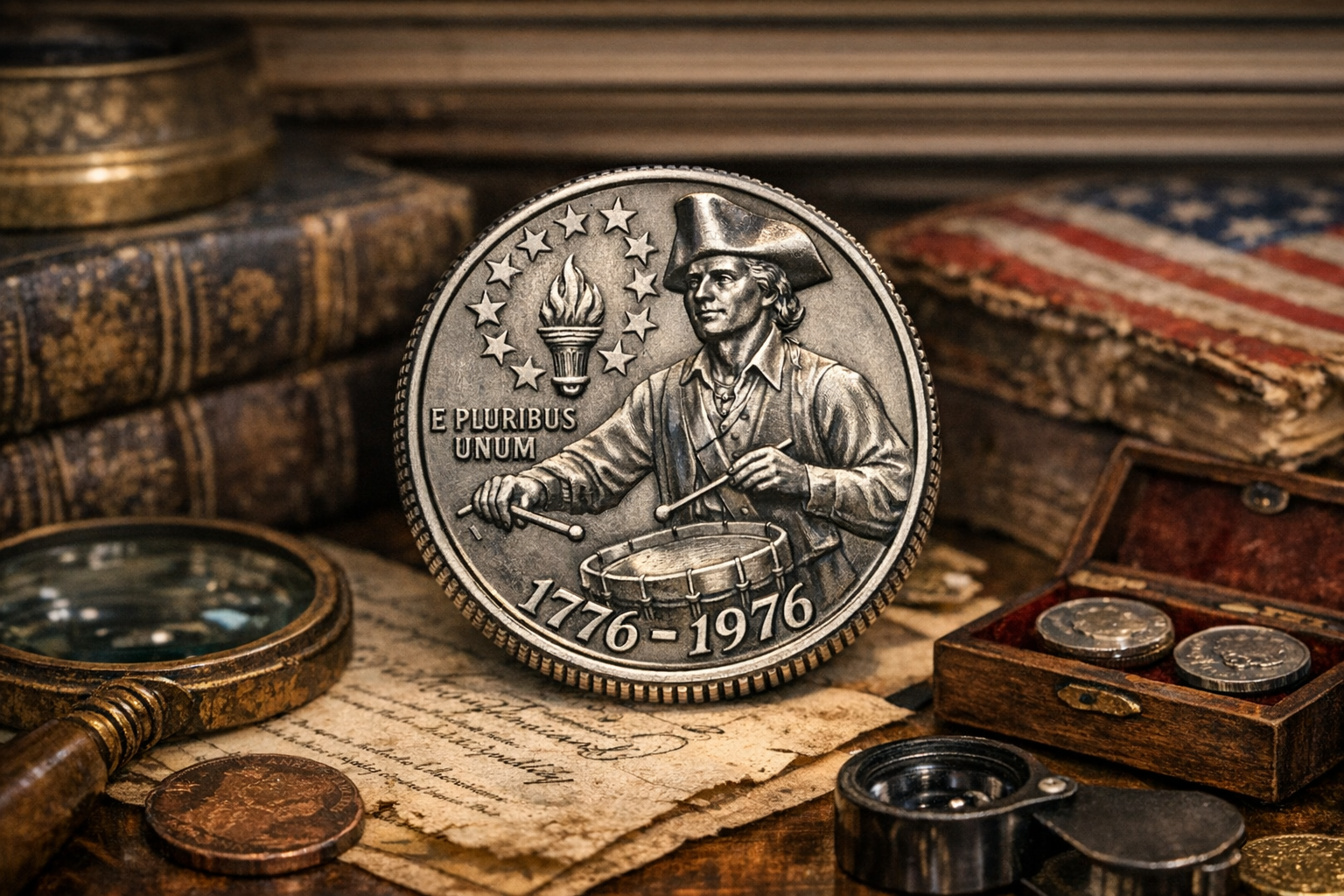
The reverse (back) features Jack L. Ahr’s Colonial drummer boy design, which won the design competition. It includes:
- A Colonial drummer facing left
- 13 stars representing the original colonies
- The inscription “UNITED STATES OF AMERICA” along the top
- “QUARTER DOLLAR” along the bottom
- The national motto “E PLURIBUS UNUM” above the drummer
Mint marks on Bicentennial quarters can be found on the obverse side, just below Washington’s hair tie:
- No mint mark: Philadelphia Mint
- “D”: Denver Mint
- “S”: San Francisco Mint (primarily for collector sets)
Bicentennial Quarter Types and Values
Bicentennial Quarter Value Chart
Current market values based on type and condition (2023)
Regular Clad Issues
The vast majority of Bicentennial quarters found in circulation are what collectors call “clad” coins—composed of copper-nickel outer layers bonded to a pure copper core. These were minted in enormous quantities:
- Philadelphia Mint (no mint mark): 809,784,016 coins
- Denver Mint (D mint mark): 860,118,839 coins
In circulated condition, these regular clad quarters are typically worth only their face value of 25 cents. Even in uncirculated condition (MS63), they typically sell for just $1-$3, though gem uncirculated specimens (MS65 or better) can fetch $5-$20.
Silver Varieties
The San Francisco Mint produced special 40% silver versions for collectors:
- Uncirculated Silver: 4,908,319 coins
- Proof Silver: 4,149,730 coins
These silver versions were not released into circulation but were sold directly to collectors in special Mint sets. Today, the 40% silver Bicentennial quarters have a value of:
- $5-$10 in circulated condition
- $15-$30 in average uncirculated condition
- $50-$300+ for high-grade specimens (MS69 or PR69)
A 1976-S silver proof Bicentennial quarter in perfect MS70 or PR70 condition can sell for $1,000 or more to the right collector.
Valuable Bicentennial Quarter Errors
Double Die Errors
One of the most valuable Bicentennial quarter errors is the double die variety, where parts of the design appear doubled due to multiple impressions from the die during minting. The most prominent double die errors can be seen in:
- The lettering around the edge
- Washington’s profile
- The drummer boy figure
- The stars on the reverse
Double die Bicentennial quarters in uncirculated condition can sell for $100-$300, with exceptional specimens reaching $1,000 or more.
Off-Center Strikes
Off-center strikes occur when the coin blank is not properly centered during the striking process. Depending on the severity:
- 5-10% off-center: $25-$50
- 20-30% off-center: $100-$200
- 50% or more off-center (with date still visible): $300-$800+
Missing Clad Layer
Some Bicentennial quarters were struck with a missing outer layer, exposing the copper core. These “missing clad layer” errors can be worth $100-$300 depending on the extent and condition of the error.
Wrong Planchet Errors
In rare cases, Bicentennial quarters were struck on planchets (coin blanks) intended for other denominations:
- Struck on dime planchet: $300-$500
- Struck on nickel planchet: $400-$800
- Struck on penny planchet: $500-$1,000
The $19,000+ Bicentennial Quarter
The most valuable Bicentennial quarter error reported was a coin struck on a silver planchet intended for a Canadian quarter. This extremely rare error coin sold for over $19,000 at auction, demonstrating how dramatically errors can increase a coin’s value.
How to Identify Valuable Bicentennial Quarter Errors
Check for these characteristics that might indicate your Bicentennial quarter is worth more than face value:
- Doubling in the lettering or images (use a magnifying glass)
- Off-center strike where design is not centered on the coin
- Wrong color/metal visible (indicating wrong planchet or missing clad layer)
- Unusual weight (differs from standard 5.67 grams)
- Die cracks or cuds (raised lines or bumps)
- 'S' mint mark (indicating potential silver content)
Identifying Silver Bicentennial Quarters
The most reliable ways to identify a silver Bicentennial quarter include:
Check the mint mark: All silver Bicentennial quarters have an “S” mint mark from the San Francisco Mint. However, not all S-mint quarters are silver, as San Francisco also produced clad proof quarters.
Look at the edge: Silver Bicentennial quarters won’t show the copper core visible on the edge of clad quarters. The edge of a silver quarter will have a solid silver-white appearance.
Weigh the coin: Silver Bicentennial quarters weigh approximately 5.75 grams, slightly more than the 5.67 grams of standard clad quarters.
Check the packaging: Most silver Bicentennial quarters were sold in special packaging as part of mint or proof sets. Finding one in original government packaging is a good indicator of its silver content.
Use a magnet: Neither silver nor clad quarters will stick to a magnet, but this test can help eliminate counterfeit coins made of steel or other magnetic metals.
Factors Affecting Bicentennial Quarter Value
1. Condition (Grade)
Coin condition is perhaps the most significant value factor for standard (non-error) Bicentennial quarters:
- Circulated: Shows wear from being used in commerce. Most circulated Bicentennial quarters are worth face value.
- Uncirculated (MS60-MS64): No wear but may have contact marks, bag marks, or less-than-perfect luster.
- Gem Uncirculated (MS65-MS69): Exceptional specimens with excellent luster and minimal imperfections.
- Perfect (MS70): Theoretically flawless under 5x magnification. Extremely rare for Bicentennial quarters.
For proof coins, similar grades apply but are designated with “PR” or “PF” rather than “MS” (e.g., PR70 instead of MS70).
2. Mint Mark
As discussed earlier, the mint mark plays a crucial role in determining value:
- No mint mark (Philadelphia): Lowest premium
- D (Denver): Similar value to Philadelphia coins
- S (San Francisco): Highest premium, especially for silver versions
3. Composition
- Clad (copper-nickel): Standard composition, lowest value
- 40% Silver: Higher intrinsic metal value plus collector premium
4. Special Varieties and Errors
Errors and varieties dramatically increase value, with some rare Bicentennial quarter errors worth thousands of times face value.
5. Original Packaging
Bicentennial quarters still in original government packaging (mint sets, proof sets, or special commemorative packaging) often command higher prices than loose coins of the same grade.
Where to Sell Valuable Bicentennial Quarters
Professional Grading Services
For potentially valuable Bicentennial quarters, especially errors or high-grade specimens, professional grading is often worthwhile:
- PCGS (Professional Coin Grading Service): www.pcgs.com
- NGC (Numismatic Guaranty Corporation): www.ngccoin.com
These services authenticate, grade, and encapsulate your coin in a tamper-evident holder, often increasing its marketability and value.
Selling Options
Once your valuable Bicentennial quarter has been authenticated and/or graded:
Coin Dealers: Local coin shops can offer immediate payment, though usually at wholesale prices.
Coin Shows: Larger coin shows attract numerous dealers, potentially resulting in competitive offers.
Online Marketplaces:
- eBay
- Heritage Auctions (ha.com)
- Great Collections (greatcollections.com)
Collector Forums: Sites like CoinTalk or the PCGS and NGC forums allow direct sales to collectors.
Auction Houses: For extremely valuable errors (like the $19,000 specimen), major auction houses may be appropriate.
Collecting Bicentennial Quarters
Basic Collection
A starter collection of Bicentennial quarters might include:
- Philadelphia (no mint mark) business strike
- Denver (D) business strike
- San Francisco (S) clad proof
This basic set can be assembled for under $10 and is a great entry point for new collectors.
Intermediate Collection
An intermediate collector might expand to include:
- Philadelphia and Denver in uncirculated condition
- San Francisco clad proof
- San Francisco 40% silver uncirculated
- San Francisco 40% silver proof
This expanded set could cost $50-$100 depending on the grades.
Advanced Collection
Serious collectors might pursue:
- High-grade examples (MS67+ or PR69+) of all varieties
- Original government packaging
- Notable error varieties
- Complete “year sets” with all denominations (quarter, half dollar, and dollar)
Such advanced collections can range from hundreds to thousands of dollars depending on the grades and rarities included.
Common Questions About Bicentennial Quarter Values
How do I know if my Bicentennial quarter is rare?
- Check for the "S" mint mark below Washington’s hair tie, which indicates a San Francisco Mint coin that could be silver.
- Examine the edge – a solid silver appearance (no copper showing) suggests a silver version.
- Look for errors like double dies, off-center strikes, or wrong planchets using a magnifying glass.
- Weigh the coin – silver versions weigh slightly more (5.75g) than standard clad quarters (5.67g).
- Assess the condition – uncirculated coins with no wear or marks are more valuable.
How much is a 1776 to 1976 D quarter worth today?
How much is a Bicentennial quarter with no mint mark worth?
Where is the mint mark on a Bicentennial quarter?
- No mint mark indicates the coin was made at the Philadelphia Mint
- "D" indicates the Denver Mint
- "S" indicates the San Francisco Mint
How much is a 1776 to 1976 drummer boy quarter worth?
- Regular clad quarters (no mint mark or D) in circulated condition: Face value (25¢)
- Uncirculated regular quarters: $1-$20 depending on grade
- San Francisco (S) clad proofs: $3-$30 depending on grade
- San Francisco (S) 40% silver versions: $5-$300+ depending on grade and type
- Error varieties: $25 to $19,000+ depending on the error and condition
Can Bicentennial quarters be worth millions?
What Bicentennial quarter errors should I look for?
- Double die errors: Look for doubling in the lettering, Washington’s profile, or the drummer boy design
- Off-center strikes: Where the design is not centered on the coin
- Missing clad layer: Exposing the copper core partially or completely
- Wrong planchet errors: Struck on blanks intended for other denominations (will have incorrect size/weight)
- Die cracks and cuds: Raised lines or bumps caused by damaged dies
- Broadstrikes: Coins struck without collar, appearing larger and thinner than normal
How can I tell if my Bicentennial quarter is silver?
-
Check for the "S" mint mark below Washington’s ponytail. All silver Bicentennial quarters were minted in San Francisco, though not all S-mint quarters are silver.
-
Examine the edge of the coin. Silver quarters will have a solid silver-colored edge with no copper showing through. Regular clad quarters will show a copper stripe along the edge.
-
Weigh the coin if possible. Silver Bicentennial quarters weigh approximately 5.75 grams, slightly more than the 5.67 grams of standard clad quarters.
-
Consider the coin’s origin. Silver quarters were only sold in special mint sets and proof sets, not released for circulation. Finding one in pocket change would be extremely unlikely.
Conclusion: Are Bicentennial Quarters Worth Collecting?
For the average person finding Bicentennial quarters in pocket change, most specimens are worth only face value. However, the possibility of discovering valuable errors or high-grade examples makes examining these quarters worthwhile, and their historical significance adds interest beyond monetary value.
For collectors, Bicentennial quarters offer a fascinating and accessible entry point to numismatics. The variety of mint marks, compositions, and potential errors provides collecting challenges for enthusiasts at all levels, from beginners to advanced numismatists.
Whether you’re an experienced collector or someone who just found an interesting quarter in your change, understanding the factors that contribute to Bicentennial quarter values can help you make informed decisions about these distinctive American coins.
External Resources for Bicentennial Quarter Collectors
SD Bullion - Bicentennial Quarters Value Chart
Detailed value chart and information about Bicentennial quarters, including mintage figures and design history.
Coin Value Checker - Rare Bicentennial Quarter Coins
Comprehensive guide to the most valuable Bicentennial quarter varieties and what makes them special.
NGC Coin Explorer - Washington Quarters 1776-1976
Official NGC price guide and historical information for Bicentennial quarters.
The Silver Picker - How Much are 1976 Bicentennial Quarters Worth?
Expert analysis of Bicentennial quarter values in various conditions and grades.
Benzinga - Investing in the 1776-1976 Bicentennial Quarter
Market analysis and investment potential of Bicentennial quarters for collectors.
USA Coin Book - 1776-1976 Quarter Values
Up-to-date price guide and historical auction data for Bicentennial quarters.
Choose your next step
Use the path that matches the decision you need to make about the item.
Need a signed report?
Use this for insurance, estate, donation, resale, or documented value decisions.
Start a signed reportNot sure it is worth appraising?
Start with a lower-friction screen to understand the likely category, evidence, and next step.
Use the free screenerNeed local or specialist help?
Compare directory options when the work needs in-person review or a specialist near you.
Find art appraisersSee what the report looks like
Sample reports show how photos, comparable evidence, condition notes, and a value conclusion are documented.
Get a coin appraisal
Upload obverse, reverse, edge, mint mark, surface, and close-up error photos so a coin specialist can review grade and variety signals.
- Expert report with photos and comps
- Fast turnaround
- Fixed, upfront pricing
No obligation. Secure upload.
Continue your valuation journey
Choose the next best step after reading this guide
Our directories connect thousands of readers with the right appraiser every month. Pick the experience that fits your item.
Antique specialists
Browse the Antique Appraiser Directory
Search 300+ vetted experts by location, specialty, and response time. Perfect for heirlooms, Americana, and estate items.
Modern & fine art
Browse the Art Appraisers Directory
Compare fine art, contemporary, and design appraisers by city and specialty in our public directory.
Machine-readable summaries
Use these machine-friendly references for AI and crawler discovery of Appraisily content.
Ready for pricing guidance?
Start a secure online appraisal
Upload images and details. Certified specialists respond within 24 hours.
Get a coin appraisal