
Rookwood Pottery Value Guide: value basics
Rookwood pottery value depends on the flame mark, date code, artist cipher, glaze line, form, size, subject, color, condition, restoration, rarity, and current collector demand.
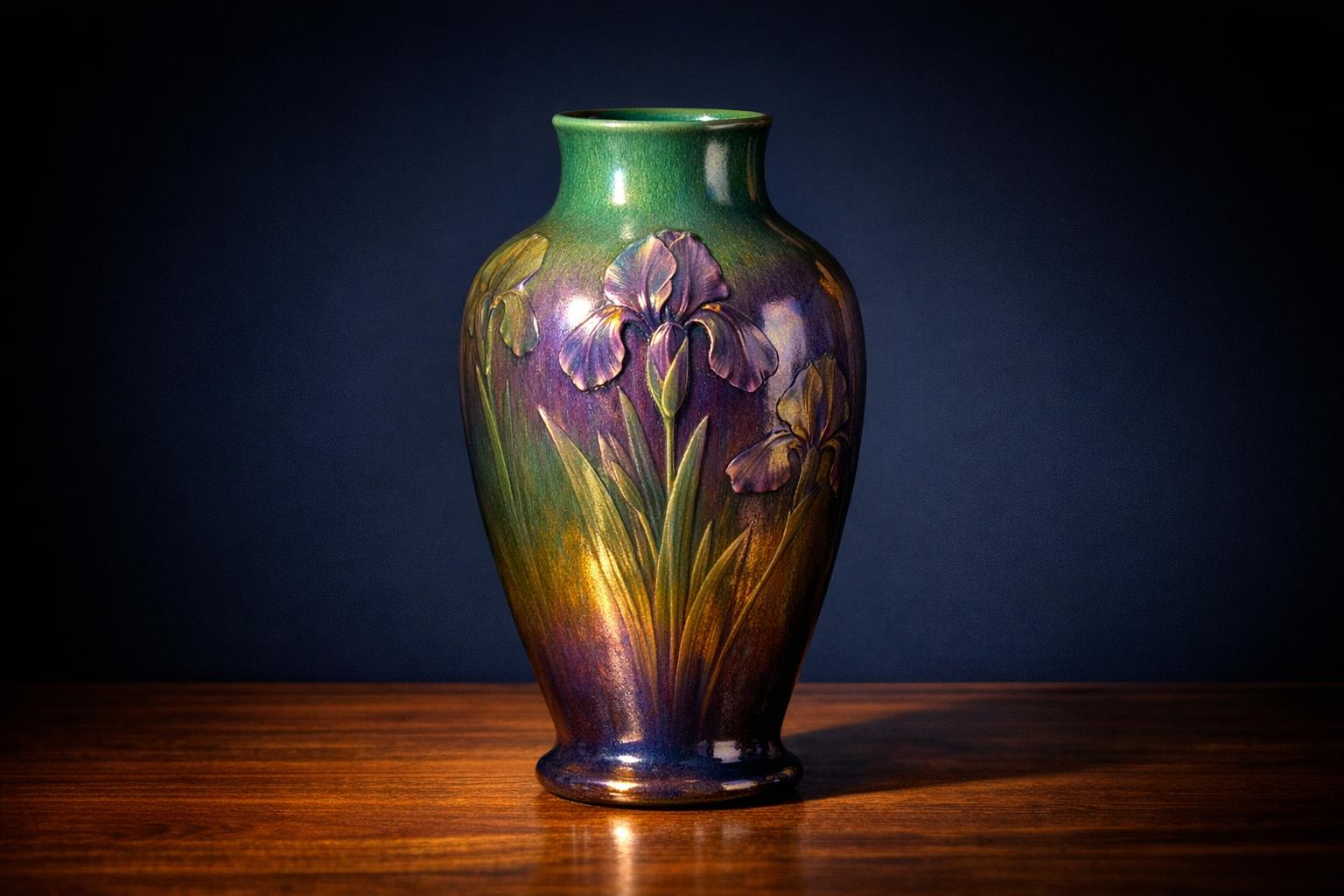
Rookwood Pottery was one of America's most celebrated art pottery manufacturers, operating in Cincinnati from 1880 to 1967. During those 87 years, the firm produced everything from mass-produced vases to one-of-a-kind scenic masterpieces — and the secondary market reflects that enormous range. Today, a small Rookwood candlestick in fair condition might sell for $50 to $100, while a rare Kataro Shirayamadani scenic vase with documented provenance cleared $350,000 at Cincinnati Art Galleries, the highest price ever recorded for a Rookwood piece at auction.
Understanding where your piece falls in that spectrum requires reading six value drivers: the artist's mark (or absence of one), the date cipher, the glaze type, the form's rarity, the physical condition, and any provenance documentation. Below, we break down each factor and give realistic price ranges so you can assess your piece with confidence.
What Determines Rookwood Pottery Value? Six Key Factors
Every Rookwood piece carries a set of identifiers on its base that trained eyes read like a fingerprint. These marks tell you who made it, when it was fired, and whether the glaze places it in a premium category. Here are the six factors that move prices most:
- Artist attribution. Pieces signed or ciphered to a known Rookwood artist — Kataro Shirayamadani, Matthew A. McDonald, Lenore Asbury, Sara Sax, or Laura A. Fry — routinely command two to ten times the price of anonymous production ware. The artist's cipher or monogram appears on the base alongside the Rookwood logo.
- Date marks. Rookwood used a system of Roman numeral and flame ciphers to denote the year of production. Pieces from the early "golden period" (1880s–1910s) tend to carry the strongest premiums, especially if they predate the company's shift toward higher-volume production in the 1920s.
- Glaze type. Standard glossy glazes are the baseline. Iris glaze (a shimmering, iridescent finish), Vellum glaze (a soft matte surface), and scenic ware (hand-painted landscapes) each carry significant premiums — often two to five times the price of comparable standard-glaze pieces.
- Form rarity. Mass-produced shapes (common vase forms, candlesticks, small bowls) appear frequently at estate sales and fetch modest sums. Unusual forms — large jardinières, specialized figural pieces, one-of-a-kind experimental glazes — appear rarely and attract specialist bidders.
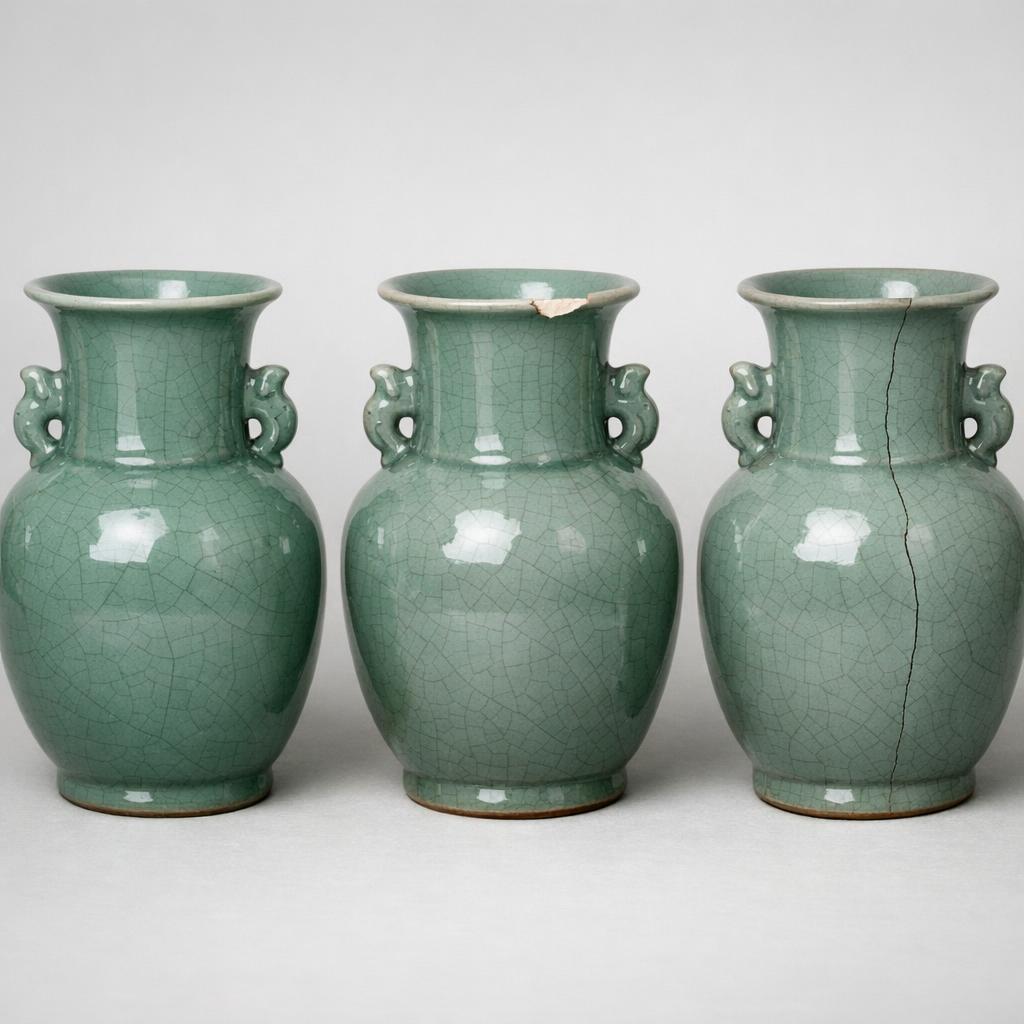
- Condition. This is the single most powerful price variable. A chip, hairline crack, restoration, or significant glaze wear can reduce a piece's value by 40% to 70% compared to a mint example. We detail condition tiers below.
- Provenance. Original receipts, exhibition labels, or documented ownership history from a notable collection can add 10% to 30% to realized prices, particularly at auction houses that cater to ceramics specialists.
Realistic Price Ranges by Condition
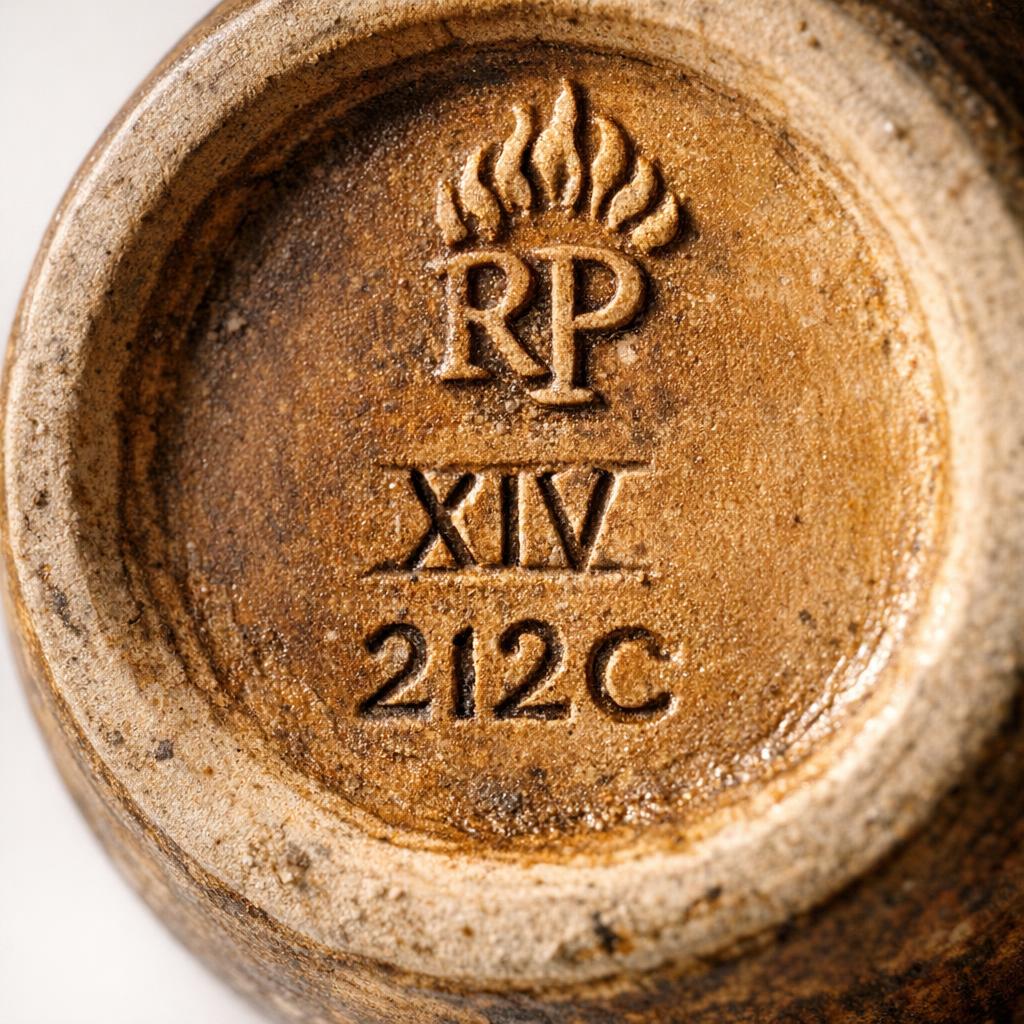
Condition is where textbook values meet the real market. Two identical Rookwood vases — same artist, same year, same glaze — can differ in price by a factor of three or more depending on what a buyer sees when they hold the piece. Here is a practical framework grounded in recent auction results and dealer listings:
| Condition Grade | What to Look For | Production Ware | Artist-Signed Piece | Scenic / Iris Glaze |
|---|---|---|---|---|
| Excellent (Mint) | No chips, cracks, repairs, or glaze wear. Sharp, bright marks on the base. | $200 – $600 | $1,500 – $8,000 | $3,000 – $15,000+ |
| Good | Minor glaze crazing or tiny base nibs. No visible damage to the body. | $100 – $300 | $800 – $4,000 | $1,500 – $7,000 |
| Fair | Small chip on rim or foot, light hairline crack, or minor restoration. | $50 – $150 | $400 – $1,500 | $500 – $2,500 |
| Poor | Significant cracks, multiple chips, heavy restoration, or glaze loss on decoration. | $25 – $75 | $150 – $600 | $200 – $800 |
These ranges reflect what buyers actually pay, not insurance or retail replacement values. If you're selling, expect to realize 30% to 50% less than the figures above after auction commissions (typically 15% to 25% buyer's premium plus seller fees), shipping, and any necessary restoration documentation. A vase that sells for $2,000 at hammer might net the consignor $1,400 to $1,500 after all costs.
Collector groups and dealer forums consistently confirm these bands. In early 2026, a Facebook collector group priced a realistic range for an 1885 Rookwood vase at $525 to $850 — squarely in the "good" condition tier for production ware. A 1946 piece in good condition was valued at $100 to $800 depending on the artist, shape number, and glaze.
Free instant estimate
Not sure if your item is worth appraising? Let us take a look.
Upload a photo, tell us what you know, and get a free first read. If a full appraisal makes sense, we will say so.
Free. No card needed. Takes about two minutes.
Decoding Rookwood Marks & Artist Ciphers
The base of every authentic Rookwood piece carries a set of marks that serve as its identity card. If you can read them, you can narrow down the value range significantly.
The Rookwood Logo
From 1880 to 1882, pieces bore a simple monogram of intertwined "R" and "P" letters. In 1882, the company adopted its iconic flame mark — a stylized R with flames — which remained in use (with variations) through the firm's closure in 1967. The flame mark itself evolved: early versions are sharper and more detailed, while later impressions (1930s onward) are more stylized and sometimes less crisp. A sharp, well-defined flame mark on the base is a positive signal; a fuzzy or doubled impression may indicate heavy use of the mold or, in rare cases, a reproduction.
Date Ciphers
Beginning in 1886, Rookwood added a date cipher — a set of Roman numerals and symbols — to indicate the year of production. The system uses a cumulative count: each year added one mark to the cipher. For example, 1886 carries one mark, 1887 carries two, and so on. By 1900, the cipher had grown complex enough that specialists maintain reference charts. Pieces from the 1880s and 1890s — the firm's artistic peak — carry the fewest cipher marks and are generally the most desirable.
Shape Numbers
Every Rookwood form has a shape number stamped or incised into the base. These numbers correspond to internal factory records that identify the form's designer, approximate size, and production run volume. Shape numbers in the low hundreds often correspond to early, rarer forms. Higher numbers (1,000+) typically indicate later, more widely produced shapes. Cross-referencing your shape number against published Rookwood shape guides (available through major auction houses and ceramics reference libraries) can confirm whether your piece is a scarce early form or a common later production.
Artist Ciphers
The most valuable marks are artist ciphers — individual monograms, initials, or symbols that identify the decorator or modeler. Known Rookwood artists whose ciphers command significant premiums include:
- Kataro Shirayamadani (1865–1948): Japanese-born artist whose scenic vases are the most valuable Rookwood pieces ever made. His signed works have realized up to $350,000 at auction.
- Matthew A. McDonald (1864–1937): Known for carved and sculptural forms, particularly animal figures and deeply textured vase surfaces. His pieces regularly achieve $5,000 to $20,000.
- Lenore Asbury (active 1890s–1930s): Her floral and botanical decorations on iris glaze grounds are highly sought after. A Lenore Asbury iris glaze vase sold for $3,000 at Heritage Auctions in October 2025.
- Sara Sax (1861–1946): Known for underglaze-decorated pieces with botanical themes, particularly her "bug and leaf" patterns.
- Laura A. Fry (1841–1911): One of Rookwood's earliest decorators; her pieces are rare and command strong premiums when ciphers are confirmed.
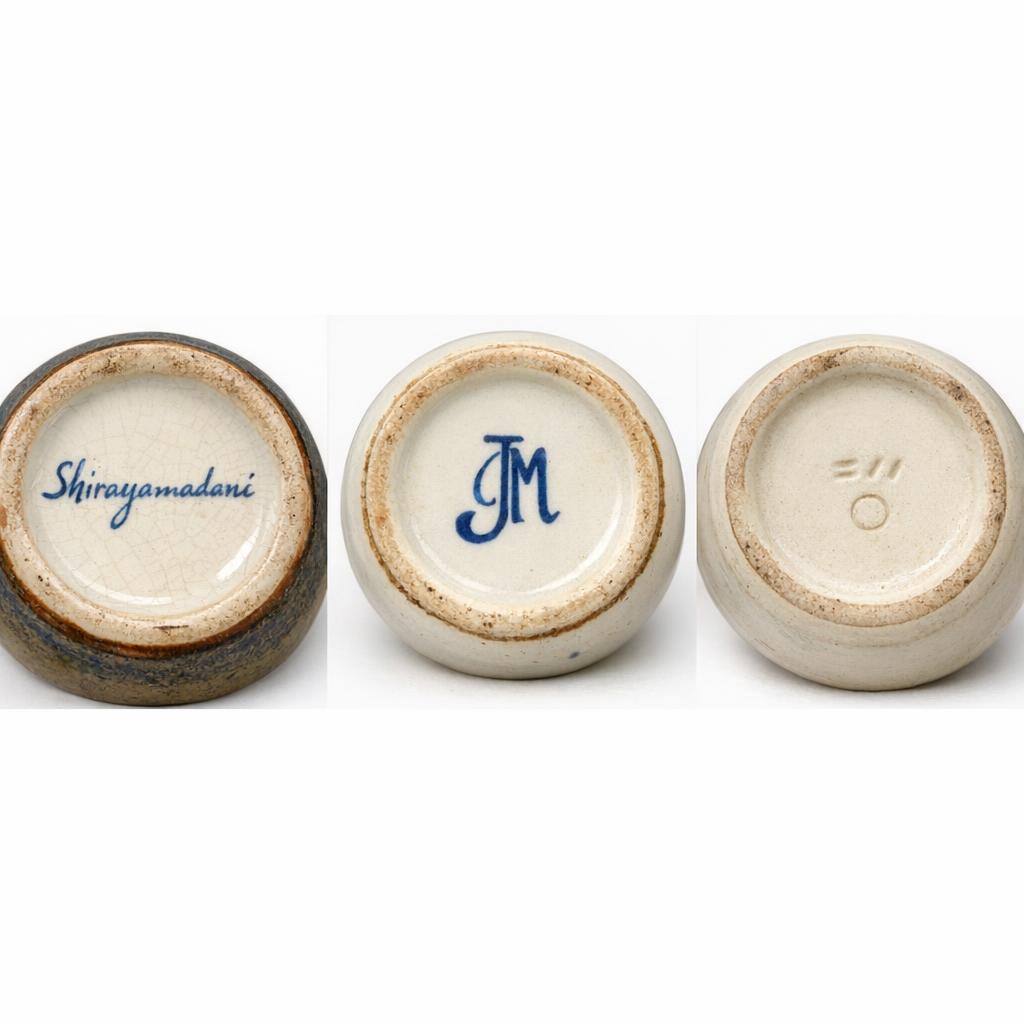
If your piece has no artist cipher — just the flame mark and date cipher — it's production ware. That doesn't mean it's valueless: a mint production vase in a desirable glaze can still fetch $200 to $600. But the absence of an artist signature places it in the lower tier of the market.
Glaze Types That Multiply Value
Rookwood experimented with dozens of glaze formulations over its 87-year history, but four categories dominate the secondary market today:
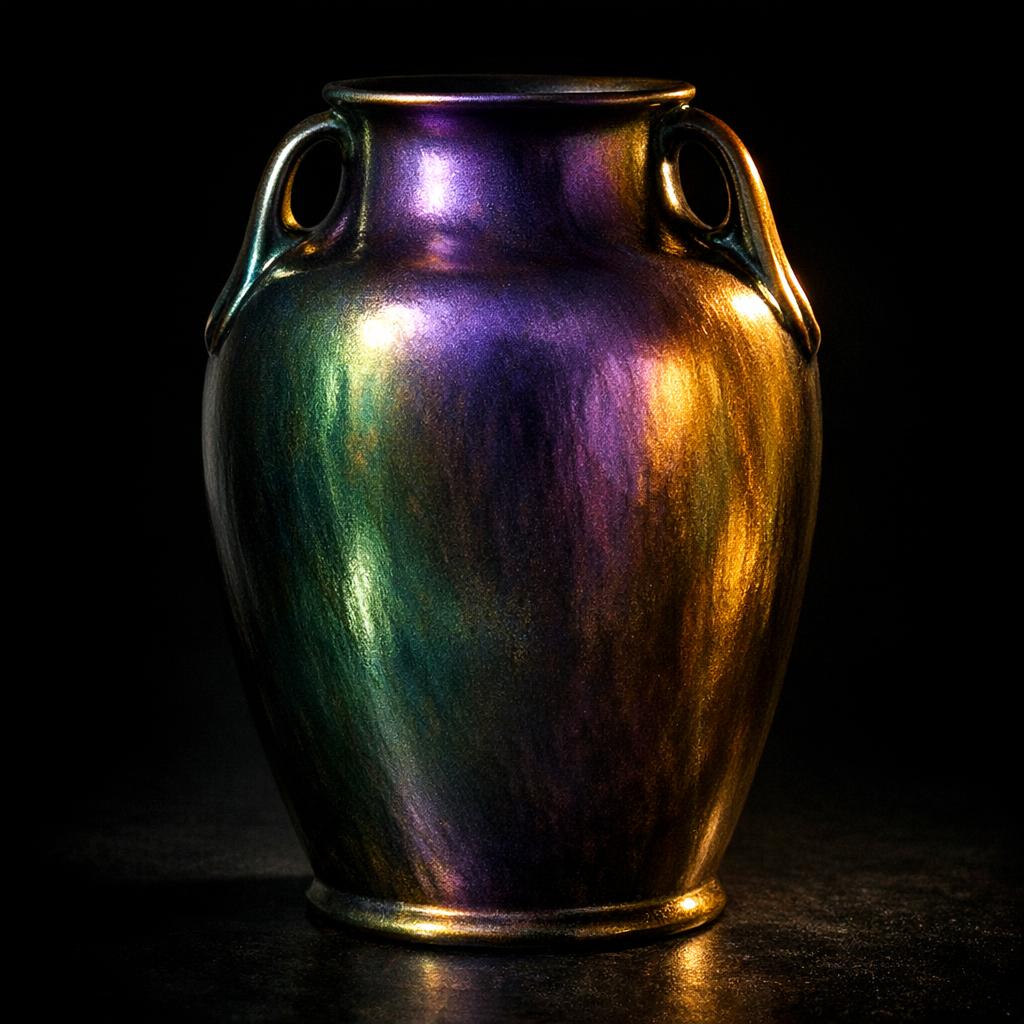
Iris Glaze
Iris glaze produces a shimmering, metallic iridescence that shifts color with the viewing angle — greens to purples to golds. Developed in the 1890s, it was one of Rookwood's most technically ambitious finishes and remains highly collectible. Iris glaze pieces routinely sell for two to five times the price of a comparable standard-glaze piece. An iris glaze vase by a known artist in good condition typically achieves $1,500 to $7,000 at auction; exceptional examples with scenic decoration push past $10,000.
Vellum Glaze
Introduced around 1904, Vellum glaze is a soft, matte or semi-matte finish that gives pieces a muted, velvety appearance. It was often paired with carved or incised decoration, where the matte surface emphasizes the texture. Vellum-glazed pieces by known artists typically achieve $800 to $5,000 depending on condition and form rarity. The matte surface can be harder to photograph well, so online listings sometimes undervalue Vellum pieces — a factor worth noting if you're selling through non-specialist channels.
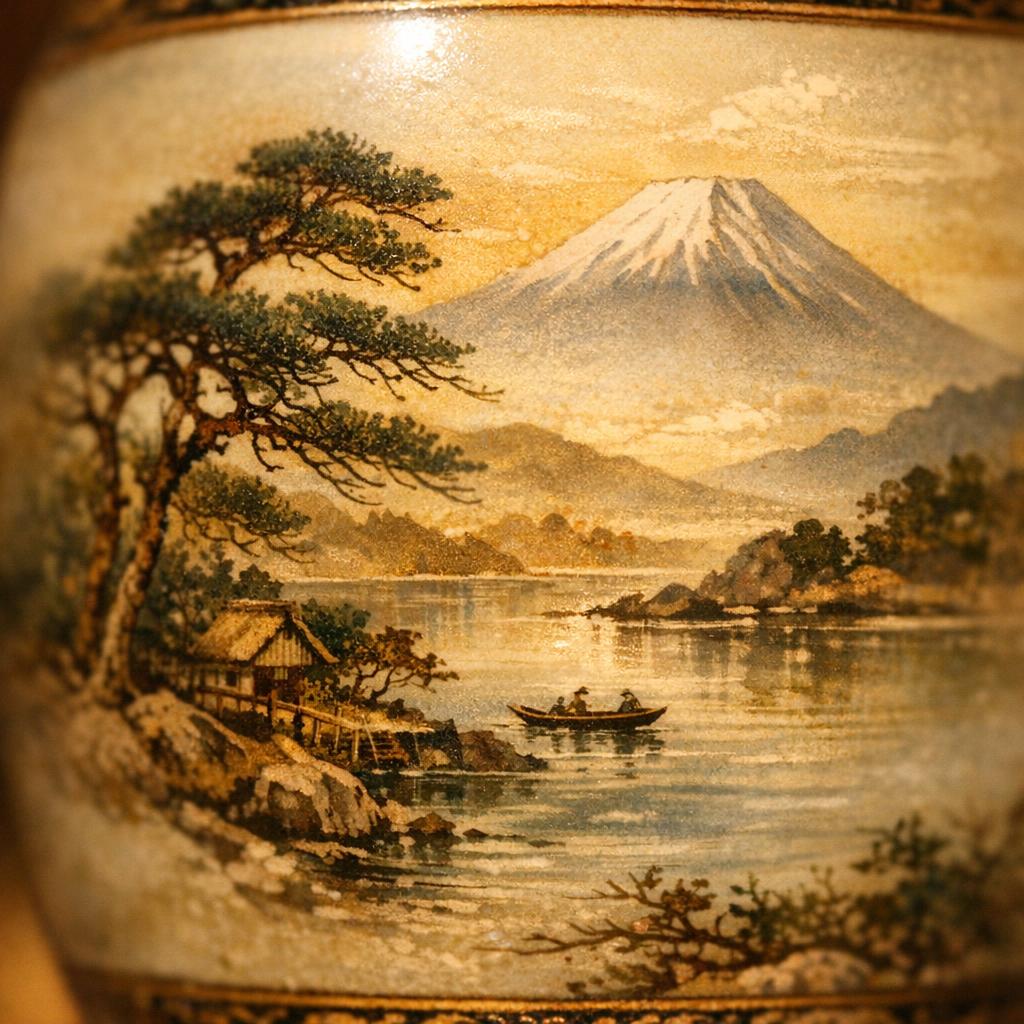
Scenic Ware
Scenic ware represents Rookwood's artistic apex: hand-painted landscape scenes, often with Japanese or European influences, applied to vase bodies by master decorators. Kataro Shirayamadani was the foremost scenic ware artist, and his works hold the auction record. Non-Shirayamadani scenic pieces by other named decorators still achieve $3,000 to $15,000 in good condition. The key is documented attribution — without a confirmed artist cipher, a scenic-decorated piece is harder to authenticate and will attract fewer serious bidders.
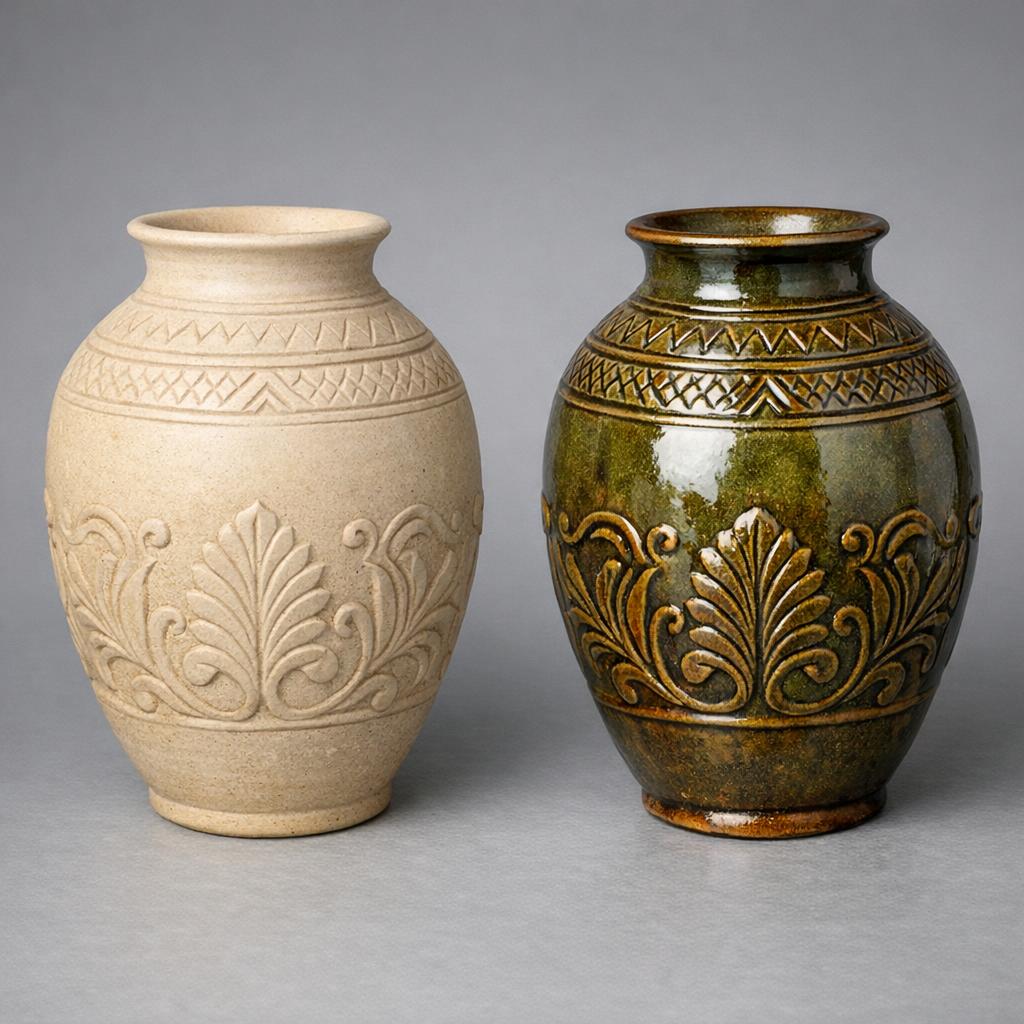
Standard Glaze
Standard glossy glaze covers the majority of Rookwood production — the pieces you'll most often find at estate sales, thrift stores, and general online marketplaces. Values here are modest: $50 to $600 for most forms in fair to good condition. However, even standard glaze pieces can surprise if the form is rare, the colors are unusual, or the condition is exceptional. A mint standard-glaze vase in a striking color (deep blue, rich green) can still achieve $400 to $800.
Where Rookwood Pottery Sells & What You'll Actually Get
The channel you choose to sell through dramatically affects your net proceeds. Here's how the main channels compare for Rookwood pottery:
| Channel | Typical Commission | Best For | Net to Seller (on $2,000 hammer) |
|---|---|---|---|
| Specialist auction house | 15–25% seller commission + buyer's premium | Artist-signed, scenic, or rare forms | $1,400 – $1,550 |
| Online auction (LiveAuctioneers, eBay) | 10–20% platform + payment fees | Mid-range production ware ($200–$2,000) | $1,500 – $1,750 |
| Antique dealer / shop | Dealer buys at 40–60% of retail | Quick sale, no marketing effort needed | $600 – $1,000 |
| Estate sale | 25–40% estate company commission | Whole-house liquidation, mixed-quality lots | $800 – $1,300 |
For pieces you believe are valuable — artist-signed, scenic, or iris glaze — a specialist ceramics auction is almost always the right choice. The auction house's marketing reaches serious collectors who will compete on price, and the realized hammer price is typically 30% to 50% above what a dealer would offer outright. For production ware in the $100 to $500 range, online platforms or estate sales are more cost-effective: the absolute dollar difference between channels is small enough that the convenience of a faster sale usually wins.
Recent Market Context: 2025–2026 Rookwood Sales
The Rookwood market remains active. A few recent results illustrate the current landscape:
- February 2026 — Caza Sikes auction (Cincinnati): A dedicated Rookwood and art pottery sale with $76,270 in total estimates across the catalog. This level of consignment volume indicates sustained collector demand and a healthy secondary market.
- October 2025 — Heritage Auctions: A Lenore Asbury-decorated iris glaze vase (Lot 79047, Auction 8226) sold for $3,000, confirming continued demand for mid-tier named artists at major houses.
- October 2025 — Toomey & Co.: Cataloged a Kataro Shirayamadani scenic vase with reference to his $350,000 auction record at Cincinnati Art Galleries — still the ceiling for Rookwood and a benchmark that anchors the top of the market.
- Estate sale and thrift data (2025–2026): House Digest reported that commonly thrifted Rookwood vases sell for $100 to $400, while PBS Antiques Roadshow appraiser David Rago has valued common Rookwood groups at $200 to $300 per piece. These figures set a realistic floor for anonymous production ware in good condition.
The spread between the $50 estate-sale candlestick and the $350,000 Shirayamadani masterpiece reflects Rookwood's dual identity: it was both a commercial pottery manufacturer and an art studio. Knowing which side your piece belongs to is the essence of accurate valuation.
How to Get a Documented Value for Your Rookwood Piece
If your piece appears to fall into the artist-signed, scenic, or premium glaze categories — or if you need a formal valuation for insurance, donation, or estate purposes — a documented appraisal is worth the investment. Here's why:
- Insurance coverage: A professional appraisal provides the documentation insurers require for full replacement value coverage. Without it, you may be underinsured by thousands of dollars.
- Tax deductions: For charitable donations of art pottery, the IRS requires a qualified appraisal for items valued over $5,000. A Rookwood scenic vase could easily exceed that threshold.
- Estate planning: Documented valuations prevent disputes among heirs and provide a clear basis for estate tax filings.
- Confidence in selling: Knowing the documented value range helps you set realistic reserve prices at auction and avoid accepting lowball offers from dealers who may know the market better than you do.
A professional appraisal typically costs $100 to $300 per item and includes photographs, condition notes, mark analysis, comparable sales references, and a stated value conclusion. For a piece that might be worth $3,000 to $15,000, that investment is small relative to the benefit of knowing exactly what you hold.
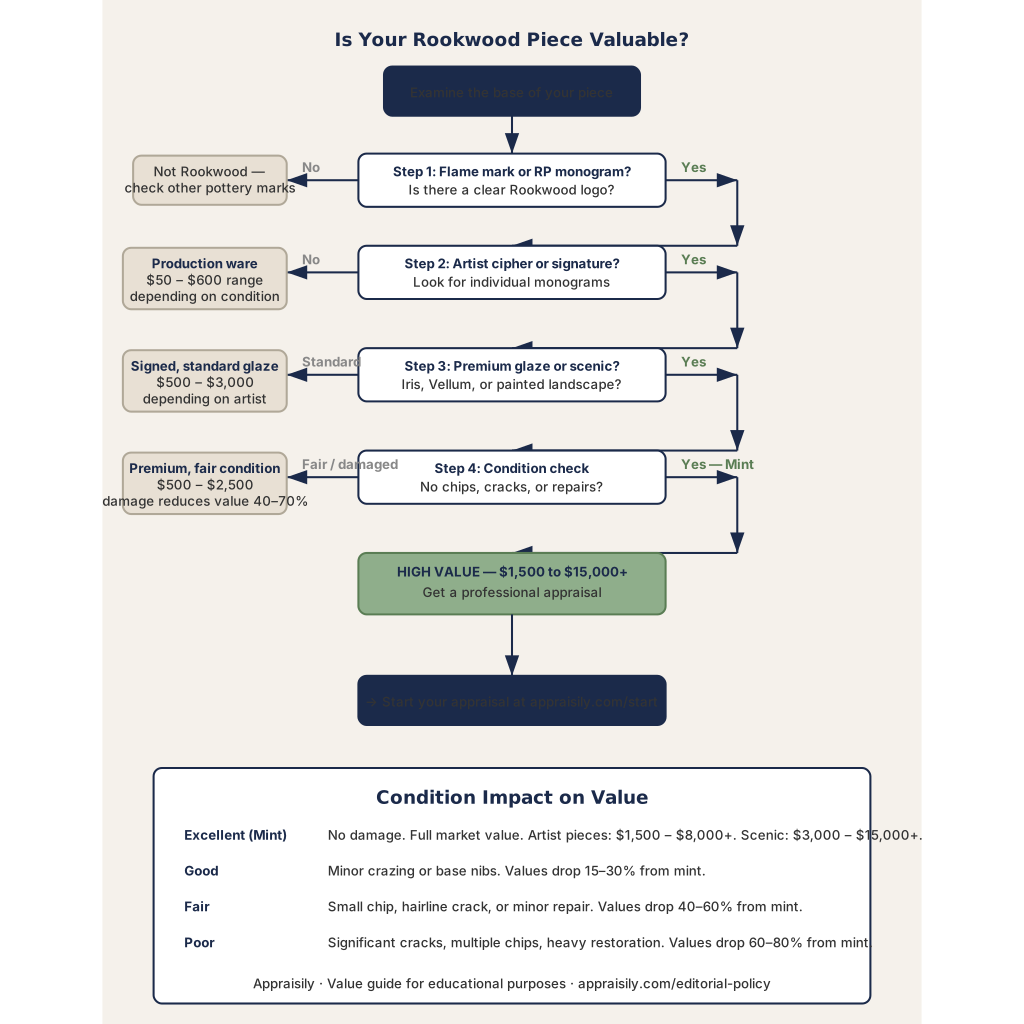
Start your appraisal — share photos of your piece's base marks, glaze, and any damage, and an experienced specialist will provide a documented value assessment within 24 hours.
What similar items actually sold for
To help ground this guide in real market activity, here are recent example auction comps from Appraisily’s internal database. These are educational comparables (not a guarantee of price for your specific item).
Shown USD range: USD 250-USD 1,200. Median of these 6 USD examples: USD 525.
| Image | Description | Auction house | Date | Lot | Reported price realized |
|---|---|---|---|---|---|
 |
ROOKWOOD POTTERY CO. 1883 EARTHENWARE PINE TREE VASE | Converse Auctions | 2024-02-16 | 149 | USD 290 |
 |
1918 Rookwood Pottery Porcelain Vase | Akiba Galleries | 2024-10-29 | 393 | USD 250 |
 |
Kataro Shirayamadani (1865-1948) for Rookwood Pottery Porcelain footed vase decorated with lilies, #2194 4 5/16"dia x 9 1/4"h | Toomey & Co. Auctioneers | 2020-09-13 | 792 | USD 552 |
 |
Kataro Shirayamadani (1865-1948) & Ruben Earl Menzel (1882-1971) for Rookwood Pottery porcelain Vellum glaze vase with prunus blosso... | Toomey & Co. Auctioneers | 2021-11-10 | 236 | USD 550 |
 |
Rookwood Pottery porcelain vase with embossed parrots, shape number 6088 6"dia x 10 7/8"h | Toomey & Co. Auctioneers | 2021-06-17 | 1081 | USD 500 |
 |
(13) Rookwood Pottery Ceramic Pieces | Sarasota Estate Auction | 2025-06-07 | 367 | USD 1,200 |
Disclosure: prices are shown as reported by auction houses and are provided for appraisal context. Learn more in our editorial policy.
Search Variations Collectors Ask
Readers often Google these questions — each is addressed in the valuation guide above:
- How much is Rookwood Pottery worth in 2026? — See our condition-based price ranges for current market values.
- What makes a Rookwood vase valuable? — Artist ciphers, iris glaze, early date marks, and mint condition drive prices up.
- How to tell if Rookwood Pottery is rare? — Check for artist signatures, scenic ware decoration, and early flame mark ciphers.
- Rookwood Pottery price guide by artist — Shirayamadani pieces reach $350,000; McDonald $5,000–$20,000; unsigned ware $50–$600.
- Is Rookwood Pottery a good investment? — Artist-signed scenic pieces have appreciated steadily; production ware is more for enjoyment than speculation.
- Where to sell Rookwood Pottery for best price? — Specialist ceramic auctions net 30–50% more than dealer buyouts for valuable pieces.
- How to read Rookwood date marks? — The flame mark and Roman numeral cipher on the base indicate the year of production.
- What is Rookwood iris glaze worth? — Iris glaze pieces typically sell for $1,500 to $7,000 by known artists, two to five times standard glaze values.