Antique Mantel Clock Buying Guide: Case, Dial, Movement, Maker, Condition and Places to Shop
Assess an antique mantel clock before buying by documenting case, dial, movement, maker marks, repairs, condition, completeness, and sale venue.
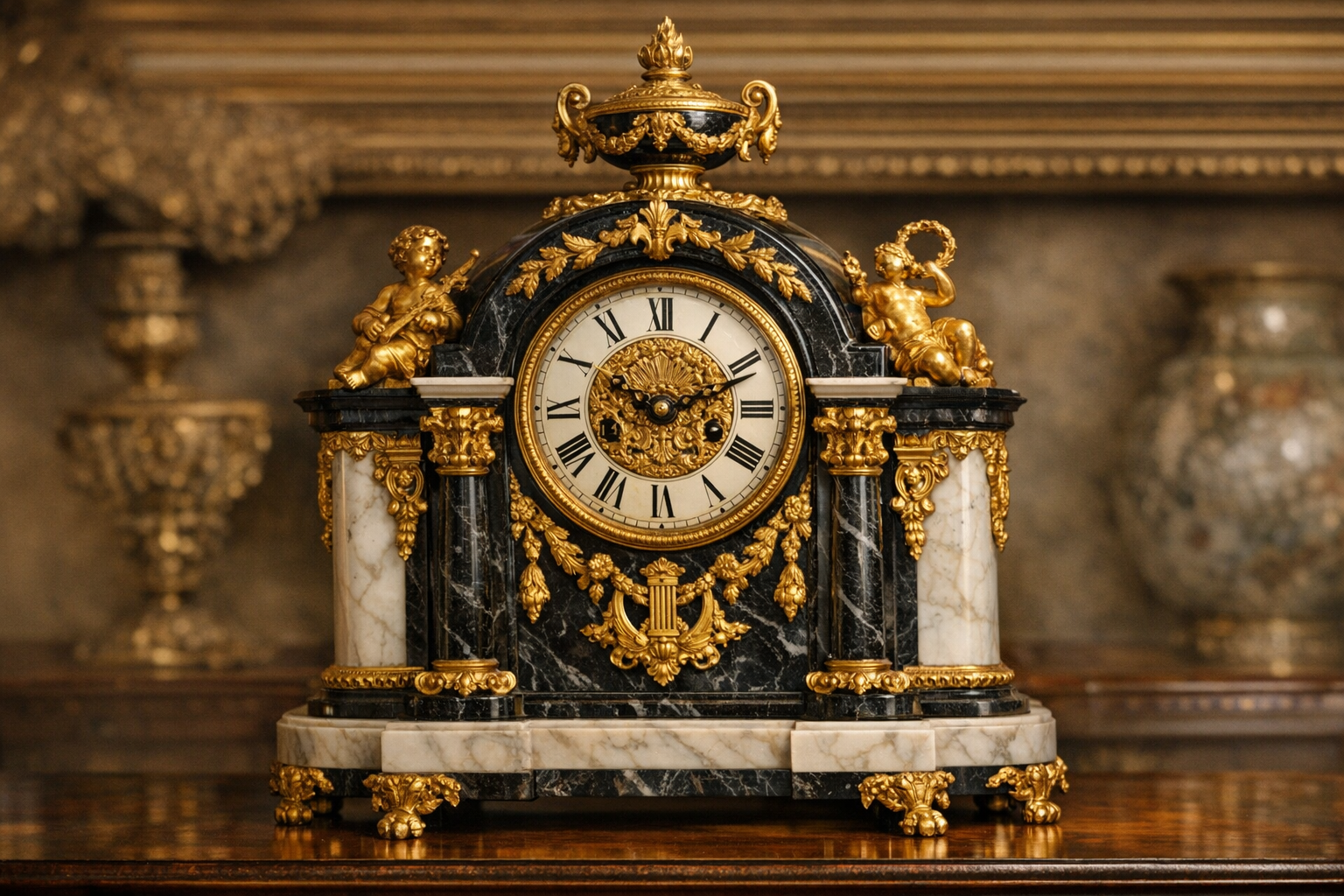
Antique mantel clock buying reference with case, dial, movement, maker marks, repairs, condition, completeness, and sale venue. Reference image; item-specific appraisal depends on submitted photos and documentation.Contextual appraisal image for documenting an antique mantel clock before purchase; not a claim about a specific sale.
Before buying an antique mantel clock, document the maker or retailer, movement, case material, dial, hands, pendulum, key, strike mechanism, repair history, and running condition.
The best purchase file separates a complete clock from one that only looks decorative. Missing movements, replaced cases, refinished surfaces, and costly repairs can change the practical value.
Start with identity
Look for maker marks on the dial, movement, backplate, paper label, or case. Photograph every mark before cleaning, and record dimensions because case size can affect placement and buyer demand.
Check originality and function
A clock with its original movement, pendulum, key, dial, hands, and case is easier to evaluate than one assembled from parts. Note whether it runs, strikes correctly, or needs specialist service.
Condition changes the buying decision
Cracks, veneer loss, replaced glass, refinishing, over-polishing, missing feet, and improvised repairs should be weighed against restoration cost and the buyer pool for that style.
No public market evidence are asserted here. Treat any value conclusion for antique mantel clock buying as evidence-dependent until the object, condition, provenance, and market context are reviewed.
Get a documented appraisal path
Upload clear photos and background details so Appraisily can review condition, identity, and market context before you rely on a value.
To help ground this guide in real market activity, here are recent example auction comps from Appraisily’s internal database. These matched sales are market context only, not an object estimate or identification, and they do not guarantee a price for your specific mantel clock.
Shown USD range: USD 28-USD 1,200. Median of these 8 USD examples: USD 145.
Source-reported amounts. Buyer’s-premium treatment is stated in each row when known; otherwise it is unknown. Native currencies are not normalized.
Each row retains its exact source URL, lot identity, retrieval time, access result, and immutable record hash. Inspect the public comparable provenance record.
Disclosure: prices are shown as reported by auction houses and are provided for appraisal context. Learn more in our editorial policy.
Free instant estimate
Not sure if your clock is worth appraising? Let us take a look.
Upload a photo, tell us what you know, and get a free first read. If a full appraisal makes sense, we will say so.
Free. No card needed. Takes about two minutes.
Choose your next step
Use the path that matches the decision you need to make about the item.
Not sure it is worth appraising?
Start with a lower-friction screen to understand the likely category, evidence, and next step.