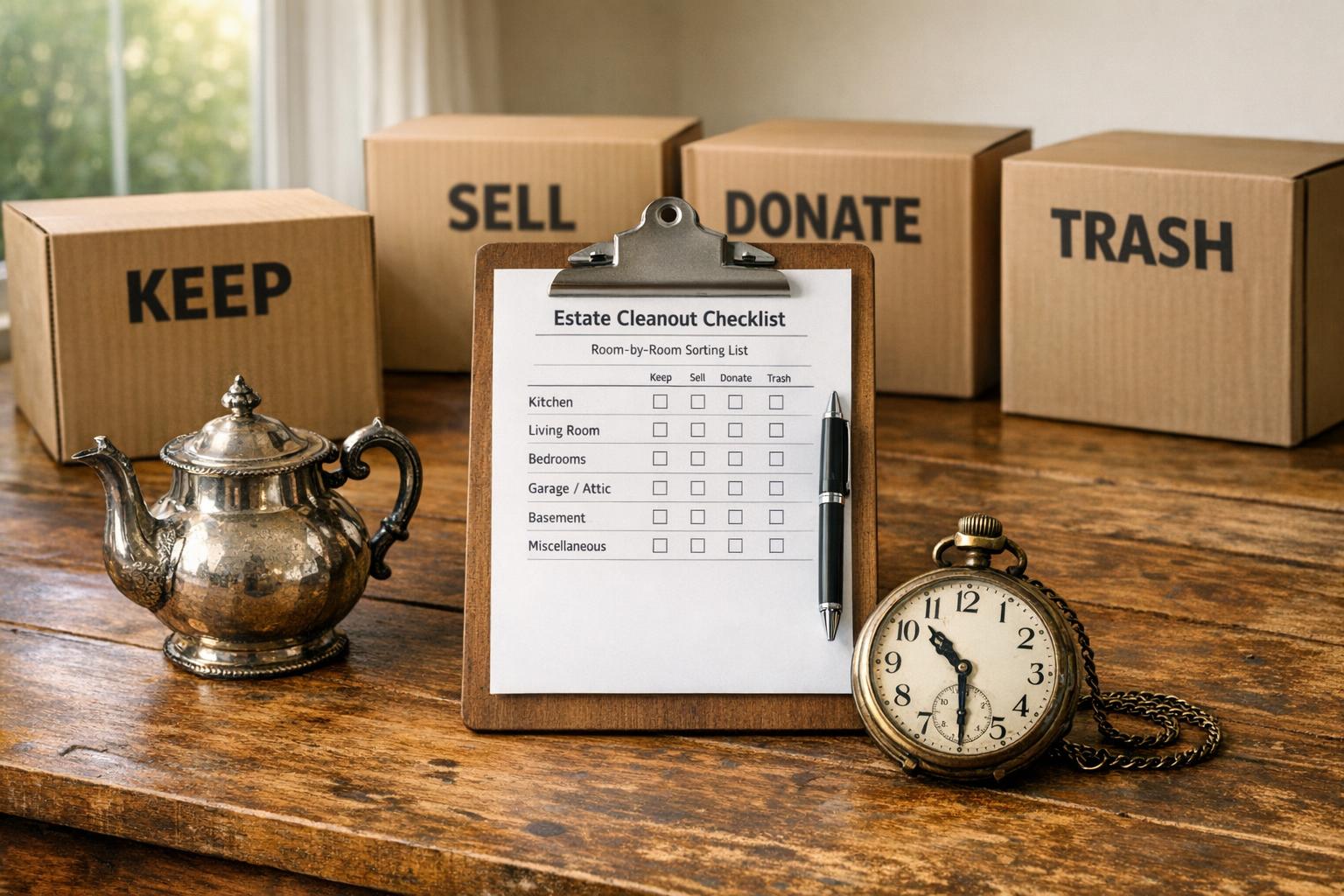
Estate Cleanout Template Before You Sell Donate or Throw It Away: appraisal and value basics
Estate Cleanout Template Before You Sell Donate or Throw It Away research should start with identification, condition, provenance, and recent comparable sales. Use this guide to compare the signals that matter before paying for a formal appraisal or deciding whether to sell.
Who This Template Is For
If you have been handed the keys to a home full of a lifetime's worth of belongings — whether through inheritance, downsizing, or relocation — this page gives you a printable estate cleanout template and a decision workflow that prevents the single most common regret: throwing away something valuable because nobody stopped to check first.
Vallot's Auction & Estate Services lists "throw things away" as the #1 mistake families make during an estate cleanout, and the one they regret most. A 2026 YouTube viral series on estate cleanout mistakes highlighted the same pattern: jewelry, coins, and historical documents being bagged for the dump without a second look.
Use the template below room by room. Every item gets logged into one of four columns: Keep, Sell, Donate, or Dispose. When in doubt, flag it for appraisal — Heritage Auctions closed 2025 with a record $2.15 billion in total sales, and demand for estate pieces remains strong into 2026.
The Estate Cleanout Template at a Glance
The template is a simple table you can print or replicate in a spreadsheet. Each row captures one item (or one lot of similar items). Each column answers a question the next person — or the IRS, or an heir — will eventually ask.
What Each Column Means
| Column | What to Write | Why It Matters |
|---|---|---|
| Item / Description | What is it? Note maker's marks, materials, era, and any identifying features. | Creates a searchable inventory; essential for insurance or probate documentation. |
| Condition | Excellent, Good, Fair, Poor — note damage, wear, or restoration. | Condition drives value. A cracked porcelain figurine sells for a fraction of an intact one. |
| Est. Value | Your best guess, or "TBD — needs appraisal" if uncertain. | Separates high-value items that warrant professional appraisal from everyday goods. |
| Location | Which room? Which box or shelf after sorting? | Prevents items from getting lost between rooms or storage units. |
| Action | K (Keep), S (Sell), D (Donate), T (Toss), or ? (Flag for appraisal). | Forces a decision. The "?" category is your safety net against accidental loss. |
| Notes | Provenance, family stories, previous appraisals, or concerns. | Context that an appraiser, auction house, or heir will need later. |
Quick Decision Tree for Every Item
Not every object deserves a line on your inventory sheet, but every uncertain object does. Use this flowchart when you pick something up and aren't sure what to do with it:
The critical branch is "Potentially valuable?" → YES → Sell or Appraise. This is where most cleanout losses happen: a silver teapot without visible hallmarks gets bagged with kitchen junk, or a painting signed by a listed artist goes to the thrift store because nobody recognized the name. If an object is old, well-made, or came from a collector's home, slow down and document it.
Room-by-Room Estate Cleanout Checklist
Work one room at a time. Do not jump between rooms — it fragments your inventory and makes it harder to spot patterns (e.g., a full set of silver service scattered across three cupboards). Below is what to look for in each area of the home.
Living Room & Family Room
- Furniture: Note wood type, maker's labels, upholstery condition. Mid-century modern pieces (Eames, Wegner reproductions) and antique solid-wood cabinets consistently sell well at auction.
- Art & Prints: Check the back of every framed piece for gallery labels, signatures, or edition numbers. Limited-edition prints can carry meaningful value even when the frame looks ordinary.
- Books: Look for first editions, signed copies, or complete sets. Leather-bound collections and rare titles belong in the "Sell/Appraise" column.
- Electronics: Vintage tube amplifiers, turntables, and mid-century radios attract niche buyers. Test what you can before listing as "Toss."
- Rugs & Textiles: Hand-knotted or silk rugs, even when worn, carry resale value. Note origin and approximate dimensions on your template.
Kitchen & Dining Room
- Silver & Flatware: Check for "Sterling," "925," or hallmarks on every piece. Even a single sterling spoon can be worth $20–$150+. Complete place settings multiply that significantly.
- China & Glassware: Note manufacturer stamps (Wedgwood, Royal Doulton, Waterford). Damaged pieces may still sell as replacements to collectors.
- Small Appliances: Vintage KitchenAid mixers, Le Creuset cookware, and cast iron pieces sell reliably on secondary markets.
- Bar Items: Crystal decanters, vintage barware sets, and unopened collectible spirits.
Bedrooms & Closets
- Jewelry: Check every jewelry box, including false-bottom compartments. Look for hallmarks, maker's stamps, and stone settings. The #1 most-thrown-away valuable category in estates.
- Watches: Mechanical and vintage watches (Rolex, Omega, Hamilton) retain strong auction demand. Note whether they wind and tick.
- Clothing: Fur coats, vintage designer pieces (Hermès, Chanel), and antique textiles should be professionally evaluated before donation.
- Linens: Handmade quilts, antique lace, and monogrammed sets can be sold to textile collectors or donated to museums.
Home Office & Study
- Documents: Wills, deeds, military discharge papers, historical letters, and genealogy records. Never toss documents without reading them first. Some carry historical or monetary value.
- Stamps & Coins: Collections kept in albums or jars. Even partial collections can be worth hundreds to thousands.
- Pens & Desk Accessories: Vintage fountain pens (Parker, Montblanc), brass desk sets, and inkwells sell steadily to collectors.
- Maps & Prints: Antique maps, particularly those pre-1900, are sought after by specialists.
Garage, Attic & Basement
- Tools: Vintage hand tools (Stanley, Disston), cast-iron toolboxes, and well-maintained power tools.
- Sports & Hobbies: Vintage fishing tackle, golf clubs, model train sets, and complete board games.
- Seasonal Items: Vintage Christmas ornaments, carnival glass, and holiday collectibles.
- Hazardous Materials: Paint, chemicals, asbestos-containing materials, and old batteries require professional disposal — mark as "Toss" with a hazardous waste note.
The Four-Box Sorting Method
Before entering each room, set up four clearly labeled containers or zones:
| Box | What Goes Here | Next Step |
|---|---|---|
| Keep | Sentimental items, family heirlooms, important documents, things the owner specifically asked heirs to retain. | Move to permanent storage or distribute to named heirs. |
| Sell | Anything with market value: antiques, jewelry, art, collectibles, quality furniture, and brand-name items. | Get appraisals for items over ~$200, then list via auction house, estate sale company, or online platform. |
| Donate | Usable clothing, furniture, housewares, books, and anything in good condition that isn't valuable enough to sell. | Request a dated receipt from the charity. Photograph items for IRS documentation if total deduction exceeds $500. |
| Dispose | Broken, hazardous, or truly worthless items. Also includes recyclables that can't be donated. | Schedule bulk pickup or hazardous waste drop-off. Recycle electronics, metals, and paper separately when possible. |
How to Spot Hidden Valuables Before They're Lost
The hardest part of an estate cleanout isn't the sorting — it's knowing what not to sort too quickly. Below are the categories most commonly misidentified as junk:
Jewelry & Coins
A 2026 viral video series on estate cleanout mistakes identified jewelry and coins as the most frequently thrown-away valuables. Look inside:
- Vacuum cleaner bags (people stash things inside)
- Old purses and wallet compartments
- Inside hollowed-out books or boxes
- Wrapped in tissue paper inside dresser drawers
- Pin cushions and sewing kits (rings stored on pins)
Documents & Ephemera
Old letters, military medals, stock certificates, and historical photographs carry both genealogical and collector value. The Appraisers Association of America notes that estate documentation sets (especially pre-1950) are increasingly sought by archives and museums.
Art & Decorative Objects
Paintings found in estate cleanouts range from mass-produced prints (retail: $20–$50) to original works by listed artists (retail: $2,000–$50,000+). The distinguishing factors:
- Signature: Look in corners and along the bottom edge. A legible name is your first research lead.
- Edition marks: "12/100" means a limited-edition print — more valuable than an open-edition poster.
- Medium: Oil on canvas commands more than giclée or offset lithograph.
- Provenance: Gallery labels, exhibition stickers, or handwritten notes on the back add both value and authenticity.
When and How to Sell Estate Items
Once your "Sell" box fills up, you need a route to market. The right channel depends on the item's value, category, and your timeline.
| Channel | Best For | Typical Fees | Timeline |
|---|---|---|---|
| Auction House | Antiques, art, jewelry, collectibles over $200 | 15–25% seller's premium | 2–8 weeks to sale date |
| Estate Sale Company | Whole-house contents, furniture, household | 30–40% of gross sales | 1–3 weeks to schedule |
| Online Marketplaces | Individual items you can photograph and list yourself | 5–15% platform fees + shipping | Days to weeks per item |
| Consignment Shop | Designer clothing, quality furniture, brand-name goods | 40–60% consignor split | Items sell within 60–90 days |
When to get a professional appraisal first: Any item you estimate at $500+, any piece with unclear provenance, and anything you plan to donate with a claimed deduction over $5,000 (IRS requires a qualified appraisal for non-cash charitable deductions exceeding this threshold).
Donating Estate Items — and Documenting It for Taxes
Donation is often the most emotionally satisfying disposition during an estate cleanout, and it can yield a meaningful tax deduction. But the IRS has specific documentation requirements that most executors don't know about until filing season.
IRS Donation Documentation Thresholds
| Deduction Amount | What You Need |
|---|---|
| Under $250 | Dated receipt from the charity showing what was donated. |
| $250–$500 | Acknowledgment letter from the charity (no goods or services received in exchange). |
| $500–$5,000 | IRS Form 8283, Section A. Detailed description, date acquired, and cost basis of donated property. |
| Over $5,000 | IRS Form 8283, Section B — requires a qualified appraisal from a certified appraiser. The charity must also sign the form. |
Use your estate cleanout template to photograph and list every donated item before it leaves the house. If your cumulative donation exceeds $500, those photos and your inventory sheet become essential evidence when completing Form 8283.
9 Estate Cleanout Mistakes to Avoid
Based on feedback from estate sale professionals, auction houses, and professional organizers, these are the most frequent and costly errors:
- Throwing things away before sorting. The #1 regret. Bag one room at a time and leave the bags until a second pass confirms nothing inside is valuable.
- Cleaning items before evaluating them. Cleaning can reduce patina value on antiques or erase identifying marks. Inspect first, clean only if you're keeping or selling.
- Moving things to a "temporary" storage unit. Temporary becomes permanent, and you pay monthly fees for items you'll never revisit. Decide during the cleanout, not after.
- Donating valuables without documentation. If it's worth selling, it's worth documenting. If you donate it instead, get a receipt and photograph it first.
- Not checking for hidden compartments. Secret drawer linings, false bottoms in jewelry boxes, and hollowed objects regularly contain coins, cash, or documents.
- Ignoring the garage and attic. Collectors often store their best pieces in climate-controlled spaces — but also hide valuable items in cardboard boxes that get forgotten for decades.
- Selling everything at one low-price estate sale. High-value items (art, jewelry, rare books) deserve targeted auction channels. Bundle the rest in a general sale.
- Skipping the professional appraisal for "maybe" items. If you're uncertain, the appraisal fee ($150–$400) is insurance against accidentally giving away or trashing something worth thousands.
- Not involving family early enough. Heirs who arrive after the cleanout starts often find their requests were already fulfilled by a donation truck. Communicate before the first box is taped shut.
Suggested Estate Cleanout Timeline
A full home cleanout typically takes 1–4 weeks depending on size, complexity, and the number of helpers. Here is a realistic schedule:
| Phase | Duration | Key Tasks |
|---|---|---|
| 1. Secure & Document | Days 1–2 | Change locks, secure valuables, photograph every room, locate the will and important documents. |
| 2. Sort Room by Room | Days 3–10 | Use the template above. One room per day. Fill the four boxes. Flag uncertain items. |
| 3. Appraise Flagged Items | Days 8–14 | Bring "?" items to a professional appraiser or submit photos through our intake below. |
| 4. Sell / Donate / Dispose | Days 10–21 | Schedule estate sale or auction, arrange donation pickups, book bulk trash removal. |
| 5. Final Walkthrough | Day 21+ | Confirm nothing was missed. Update the probate inventory. Hand over or list the property. |
When to Call a Professional Appraiser
The template gives you a structure to make 90% of decisions on your own. The remaining 10% — the items that sit in the "I'm not sure" zone — are where a professional appraiser earns their fee. Consider an appraisal when:
- An item appears to be pre-1950 and you can't find comparable prices online.
- You see a maker's mark, signature, or hallmark that you don't recognize.
- The item was part of a known collection (the owner was a documented collector of anything).
- You plan to donate and claim a tax deduction over $5,000 (IRS requirement).
- You need a formal valuation for probate court, insurance, or estate tax purposes.
- A family member disputes an item's value and you need an independent assessment.
Our team routes your photos and notes to a vetted specialist who can provide a written opinion — often within 24 hours — so you can sort with confidence rather than guessing.
Two-step intake
Share your estate cleanout items with an expert today
Not sure what's valuable? Send us photos of items you're uncertain about and we'll route them to the right specialist. Expect a written assessment and next steps in under 24 hours.
Secure intake. Routed to the right specialist. Checkout only if you decide to proceed.
Search variations readers often ask
People searching for help with estate cleanouts typically type these questions into Google. Each one is addressed in the checklist above:
- What is the best estate cleanout checklist template?
- How do I sort belongings when cleaning out a deceased estate?
- What should I not throw away during an estate cleanout?
- How to identify valuable items before donating them?
- Estate cleanout room-by-room guide printable
- How to document estate donations for tax deductions?
- What to do with unknown valuables found in an estate?
- When do I need an appraisal for donated estate items?
- How long does an estate home cleanout take?
- Four-box method for estate sale sorting
Each question is answered in the estate cleanout template and checklist above. Use the decision tree when you encounter an item you can't immediately categorize.
About this guide
We follow the Appraisily Editorial Policy for independence, sourcing, and corrections. If you spot an error or outdated figure, contact our editorial team.
Not sure what's worth keeping?
Send photos of any item from your cleanout and get a fast, written opinion from a certified appraiser — before you donate, list, or toss.
- 24-hour turnaround on most items
- Vetted ISA & ASA appraisers
- Written reports accepted for insurance and tax purposes
Free to submit · Appraisal slots from $149