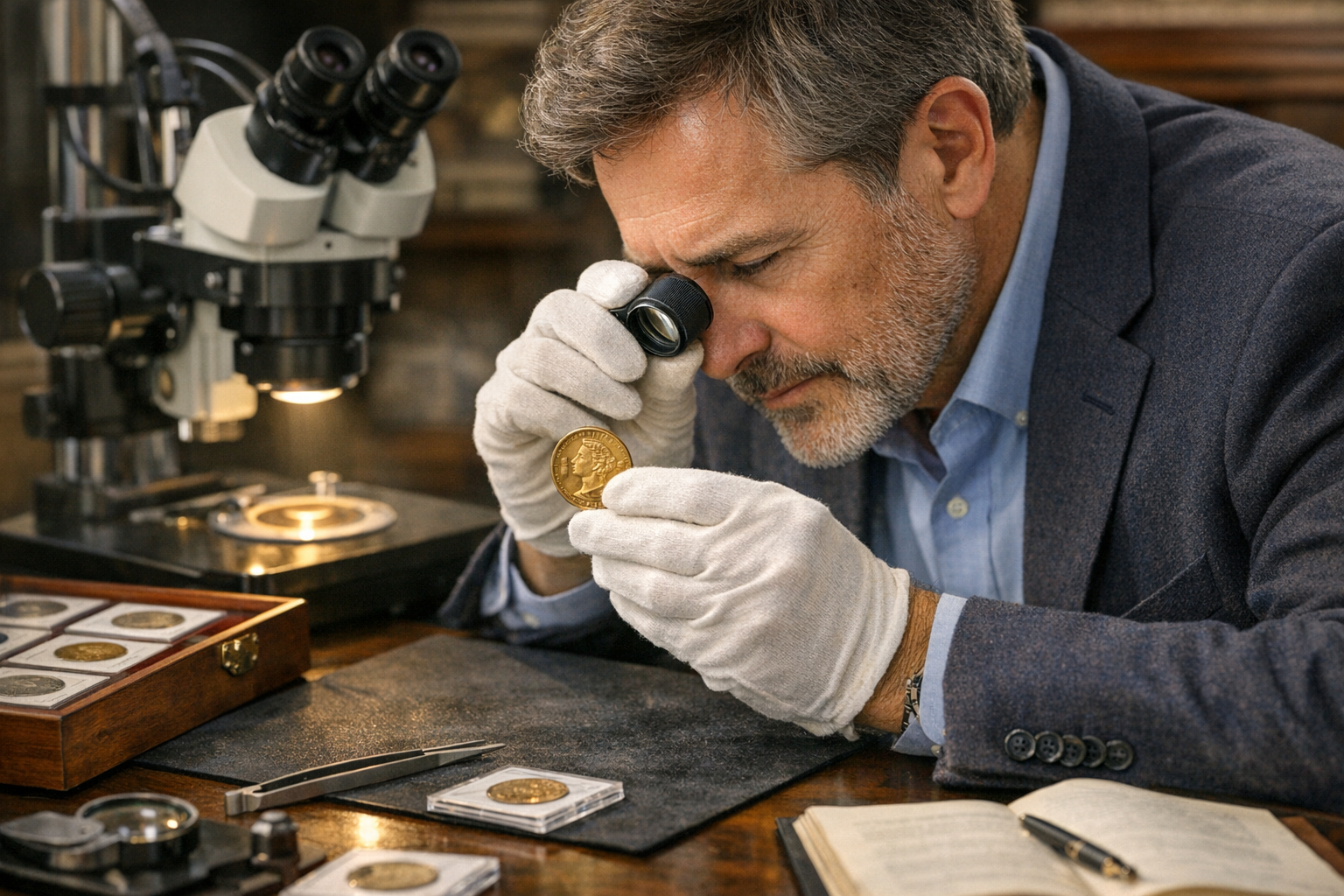
A rare coin appraisal is strongest when the appraiser can see the exact date, mintmark, condition, surfaces, certification status, and ownership context. Do not clean coins before review; original surfaces often carry real value.
Start with identification
Record country, denomination, date, mintmark, variety, metal, weight, and diameter. Small mintmark or variety details can change value more than age alone.
Condition and surfaces drive price
Grade, luster, strike, toning, cleaning, scratches, corrosion, and rim damage all affect value. A genuine but cleaned coin may sell far below a problem-free example.
Know when certification matters
Third-party grading can help for scarce, high-grade, counterfeited, or high-value coins. For common low-value coins, grading fees may exceed any market benefit.
Quick appraisal checklist
- Photograph both sides and the edge
- Record date, mintmark, denomination, and weight
- Do not clean or polish coins
- Keep holders, invoices, slabs, and provenance notes
- Compare sold coins by exact type, grade, and surface quality
Note: We couldn’t find relevant auction comps in our database for this topic right now. If you’re valuing a specific item, try searching by maker/model/material and we’ll expand coverage over time.
What similar items actually sold for
To help ground this guide in real market activity, here are recent example auction comps from Appraisily’s internal database. These matched sales are market context only, not an object estimate or identification, and they do not guarantee a price for your specific discovering the true value expert tips for your.
Shown USD range: USD 450-USD 287,500. Median of these 3 USD examples: USD 550.
How these auction records were verified
Each row retains its exact source URL, lot identity, retrieval time, access result, and immutable record hash. Inspect the public comparable provenance record.
Disclosure: prices are shown as reported by auction houses and are provided for appraisal context. Learn more in our editorial policy.
Free instant estimate
Not sure if your rare coin is worth appraising? Let us take a look.
Upload a photo, tell us what you know, and get a free first read. If a full appraisal makes sense, we will say so.
Free. No card needed. Takes about two minutes.
Choose your next step
Use the path that matches the decision you need to make about the item.
Not sure it is worth appraising?
Start with a lower-friction screen to understand the likely category, evidence, and next step.
Upload photos for a free first lookWant proof before paying?
See how a signed report documents photos, comparable evidence, condition notes, and value conclusions.
View signed report sampleNeed a signed report?
Use this for insurance, estate, donation, resale, or documented value decisions.
Need documentation now? Start signed appraisalNeed local or specialist help?
Compare directory options when the work needs in-person review or a specialist near you.
Find local specialistsSee what the report looks like
Sample reports show how photos, comparable evidence, condition notes, and a value conclusion are documented.
Need a documented value?
Upload clear photos, marks, measurements, condition notes, and any provenance so Appraisily can review the item against relevant market evidence.
Start coin appraisal