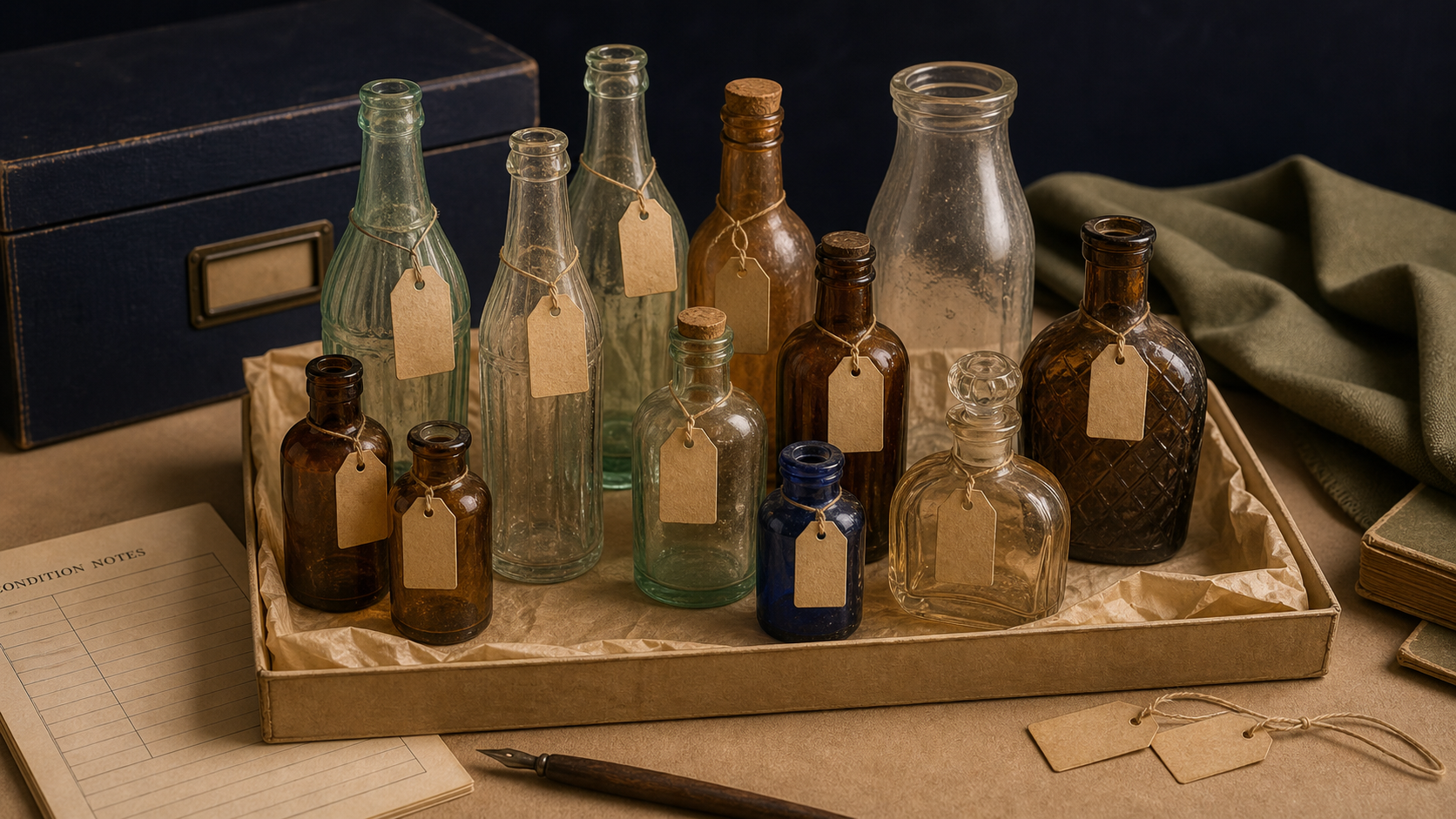
Antique bottle value comes from a mix of manufacture date, color, embossing, origin, form, rarity, and condition. The strongest estimates are built from physical clues and verified sold examples, not asking prices.
Date the bottle first
Mold seams, pontil marks, tooled lips, machine-made finishes, base marks, and maker codes help place a bottle in the right production period. Use several clues together.
Color and embossing can move value
Unusual colors, local druggist names, early mineral water forms, bitters, poisons, and strong embossing can increase interest. Common machine-made bottles usually need exceptional condition or a scarce variant.
Condition sets the market ceiling
Chips, cracks, bruises, glass sickness, staining, ground lips, and missing labels reduce value. Original labels and contents can help, but only when they are stable and documented.
Quick appraisal checklist
- Photograph full bottle, lip, base, embossing, and label
- Record height, color, closure type, and seam behavior
- Identify maker marks or patent dates
- Check for chips, cracks, stain, and glass sickness
- Use sold market evidence with the same form, color, and embossing
Choose your next step
Use the path that matches the decision you need to make about the item.
Need a signed report?
Use this for insurance, estate, donation, resale, or documented value decisions.
Start a signed reportNot sure it is worth appraising?
Start with a lower-friction screen to understand the likely category, evidence, and next step.
Use the free screenerNeed local or specialist help?
Compare directory options when the work needs in-person review or a specialist near you.
Find local specialistsSee what the report looks like
Sample reports show how photos, comparable evidence, condition notes, and a value conclusion are documented.
Need a documented value?
Upload clear photos, marks, measurements, condition notes, and any provenance so Appraisily can review the item against relevant market evidence.
Start bottle appraisal