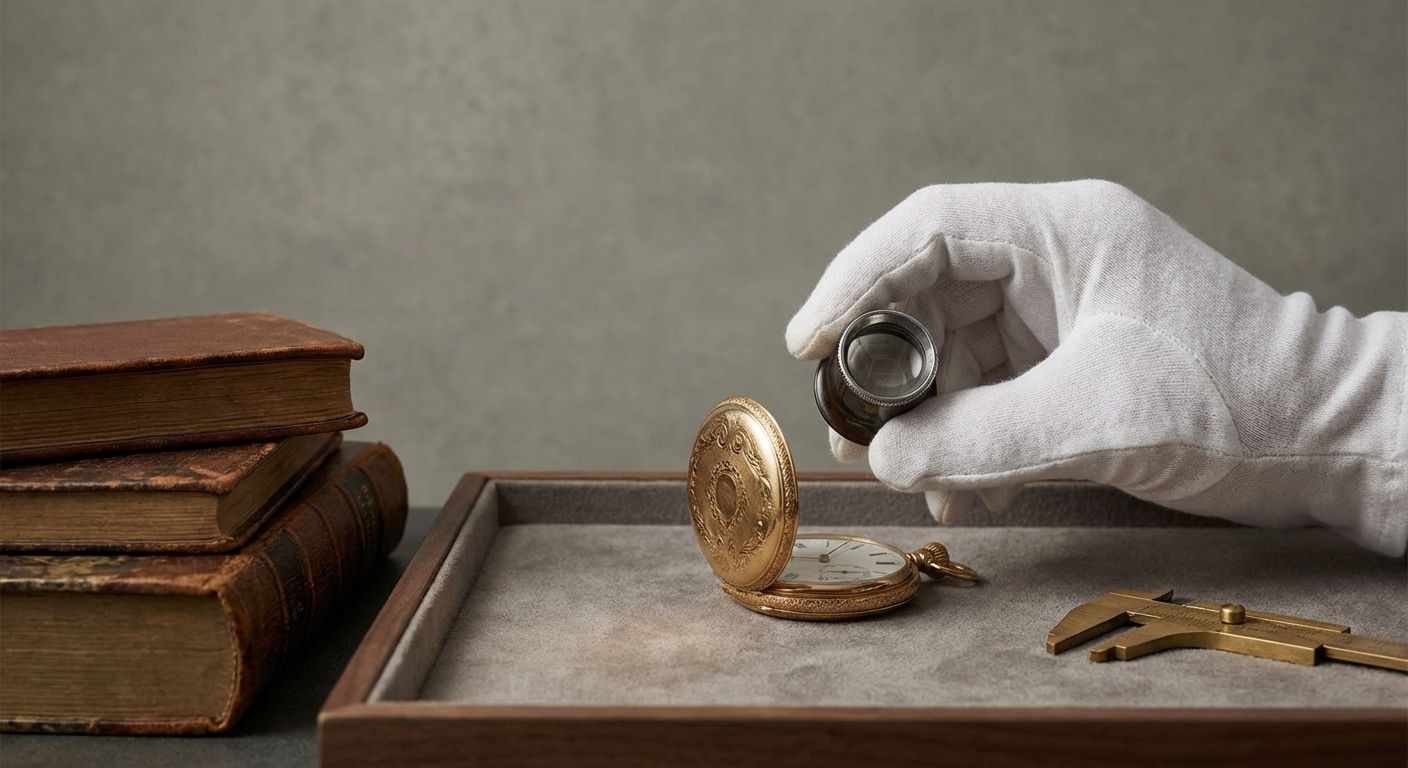
Open only what you can open safely
A pocket watch may need movement access for accurate identification, but forcing a case can damage hinges, crystals, or dust covers. Photograph what is safely visible and ask a specialist if stuck.
- Photograph dial, case front and back, bow, crown, inside case marks, movement, serial number, and chain.
- Record diameter, case metal marks, and whether it runs.
- Do not polish gold, silver, or gold-filled cases before review.
Movement and case both matter
Movement grade, jewel count, maker, serial number, complications, case metal, dial condition, and originality all affect value. A valuable movement in a worn or mismatched case needs careful explanation.
Service records can help, but recent service does not replace condition and market evidence.
Condition details
Hairlines in enamel dials, missing hands, replaced crystals, brassing, worn bow, dented case, and non-running movement can reduce value. Photograph defects clearly.
Chains, boxes, receipts, and family history should be documented separately.
When to get a written appraisal
Use a written appraisal for insurance, estate, donation, or significant sale planning. State whether you need replacement value or fair market value.
Need a value opinion on your antique pocket watch?
Upload clear photos, marks, dimensions, and condition notes. Appraisily can review the item remotely and tell you which details matter most.
Start watch appraisal


