

Spot the real difference before the checkout
That small garden bronze with gilded accents may look beautiful, but two statues can sit side by side and still land in very different valuation bands. Some buyers see this as a superficial label question, yet material and fabrication quality are often the first reason a piece sells for hundreds versus thousands. The distinction between bronze and spelter is not always obvious in photos, so the smart approach is to layer clues. If you treat one physical test as definitive, you usually miss the bigger story.
In this guide, we use comparison logic you can apply quickly to an unidentified sculpture: first, confirm what the metal is likely to be; next, test if it is authentic enough for your goal; then map that result into value strategy. The reason this matters is simple: the same design in real bronze can perform very differently from a heavily cast, repaired, or later polished spelter object in the same size class.
If your immediate goal is to decide whether to pay now, list now, or send for a specialist review, this workflow gives you a practical threshold for moving forward with fewer assumptions.
Run a 60-second side-by-side material check
This is not one silver-bullet test; it is a triage routine that helps you decide what to do next.
1) Compare weight and wall behavior
Heavier can hint toward bronze, but it is not reliable alone. Alloy chemistry, casting method, and internal cavity structure all affect mass. Use weight as a nudge, then validate with the next clues. If a piece feels soft and “thuddy” to the touch after a gentle tap and looks glassy in the seam lines, pause and verify provenance before leaning any value conclusion.
2) Listen for ring, but use a controlled tap only
Bronze may produce a cleaner ring. Spelter-like alloys can feel a bit more muted or inconsistent when tapped with controlled contact. The key is consistency: do this on a hidden non-decorative edge with a rounded tool and compare against another known object if possible. Do not assume a loud answer if the sculpture has heavy patina, cracks, or repairs; those conditions can change sound.
3) Read color changes and surface memory
Spelter surfaces can show quicker white-gray scratch behavior and more reactive patination in aggressive environments. Bronze often carries a controlled dark patina narrative with wear in specific, expected zones. Uniform “new-looking” coatings, painted surfaces, or recent waxing can mask this signal. Inconsistent color on hidden reverses often points to later treatment or patching.
4) Use seams and edges as identity clues
Spelter often reveals a different edge personality around seams, especially where the casting and finishing cycle was industrial or inconsistent. You are looking for seam logic, tool marks, and how the seams behave under magnification. Even a subtle seam can signal multiple reheats, repairs, or later filling that may reduce buyer confidence for premium collectors.
5) Read the base and mount first
Some buyers skip this and miss a major signal. Original mounts, stable patina transitions, and period-correct fixing marks can support a better provenance story. If the base feels modern, carries mismatched screws, or uses replacement inserts with wrong finish chemistry, the object often moves from “investment piece” to “decorative object.”
Use this section as your checkpoint before you do anything else. If the sculpture passes most of the checks but still leaves a high-value uncertainty, the right move is often a professional review rather than over-cleaning or over-trusting quick marketplace claims.
Quick rule: don’t finalize a purchase until the material test, mount provenance, and condition evidence point in the same direction.
Free instant estimate
Not sure if your sculpture is worth appraising? Let us take a look.
Upload a photo, tell us what you know, and get a free first read. If a full appraisal makes sense, we will say so.
Free. No card needed. Takes about two minutes.
How the bronze-versus-spelter decision changes value
Most readers treat this as a “material or no material” binary. In valuation, it is a confidence ladder. Bronze does not automatically mean expensive, and spelter does not automatically mean low-end. But the market consistently rewards objects with stronger, more convincing technical evidence.
In real buyer conversations, we usually see three value clusters:
- High-confidence bronze narratives: identifiable maker context, coherent patina, stable casting seams, and coherent provenance. These objects usually enter stronger resale conversations.
- Mixed-quality pieces with decorative intent: good looking, but uncertain manufacturing story. These move on utility or décor terms, and often with lower headline value.
- Restored, altered, or ambiguous spelter examples: high repair burden and weaker market confidence can shift valuation down unless historical or artistic relevance is exceptional.
That ladder is why material checks should always tie to context. A strong artistic theme, period-correct mount, and clear condition narrative can outrank raw metal classification in final pricing decisions.
Note: We found 7 relevant comps in our database for this topic right now. We’ll continue to expand coverage over time.
What similar items actually sold for
To help ground this guide in real market activity, here are recent example auction comps from Appraisily’s internal database. These matched sales are market context only, not an object estimate or identification, and they do not guarantee a price for your specific spelter sculpture.
Shown USD range: USD 15-USD 750. Median of these 13 USD examples: USD 125.
| Comparable | What sold | Auction house | Date | Lot | Source-reported amount |
|---|---|---|---|---|---|
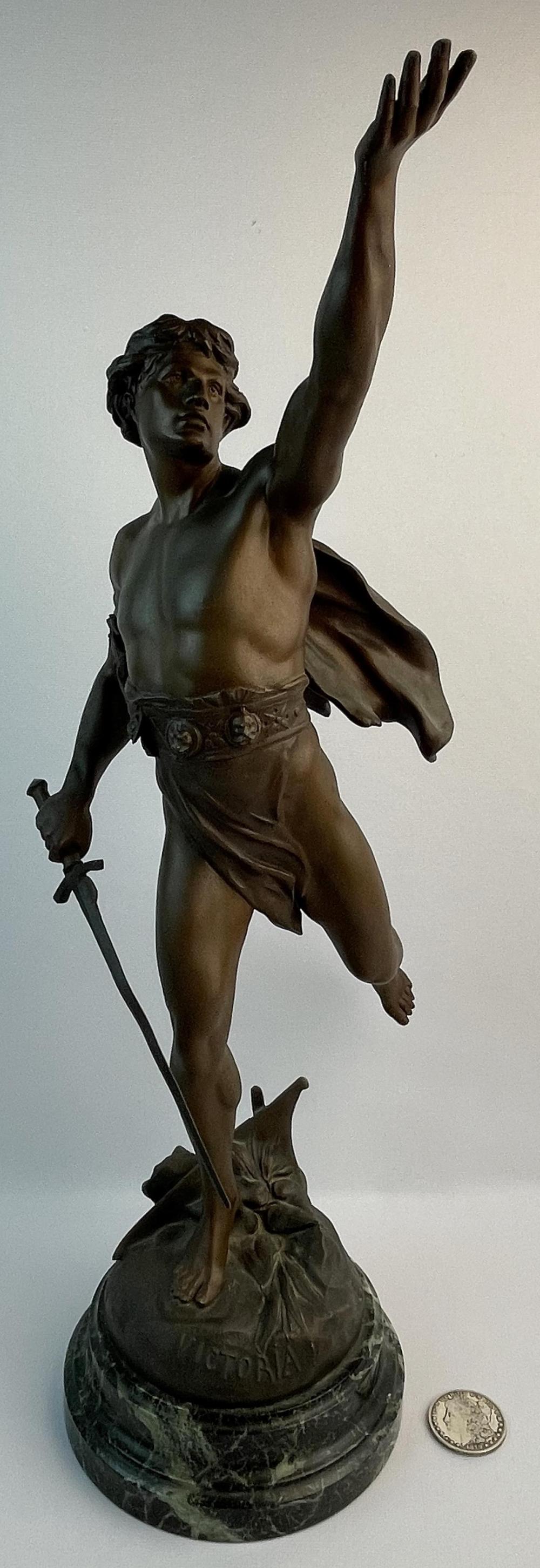 |
Antique c. 1900 French Bronze Spelter Sculpture "Victoria" Signed E. Picault | One Source Auctions | 2022-05-09 | 150 | USD 750 (buyer’s-premium treatment unknown) |
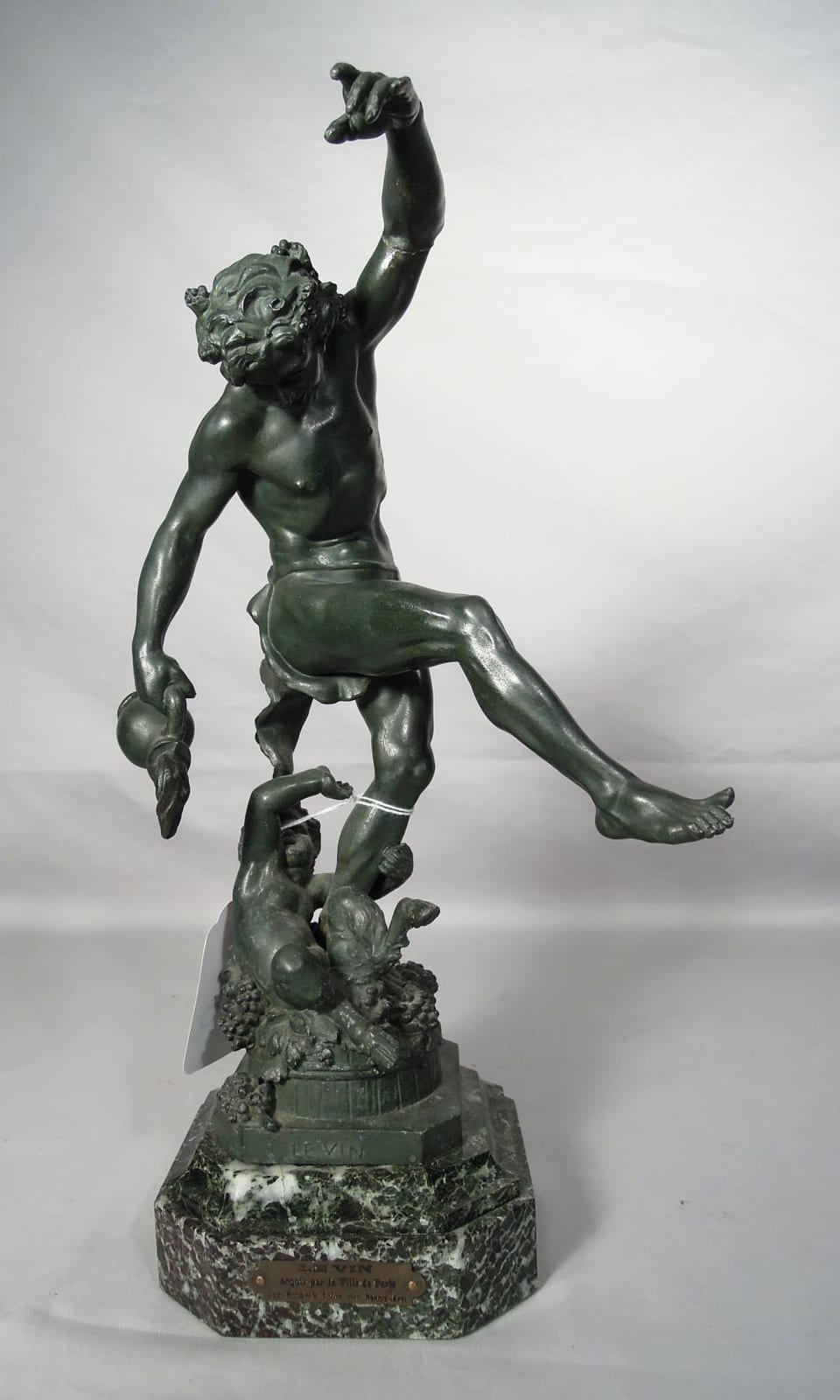 |
ANTIQUE SPELTER SCULPTURE "LE VIN" | Chamberlain Auction Gallery | 2021-03-20 | 166 | USD 125 (buyer’s-premium treatment unknown) |
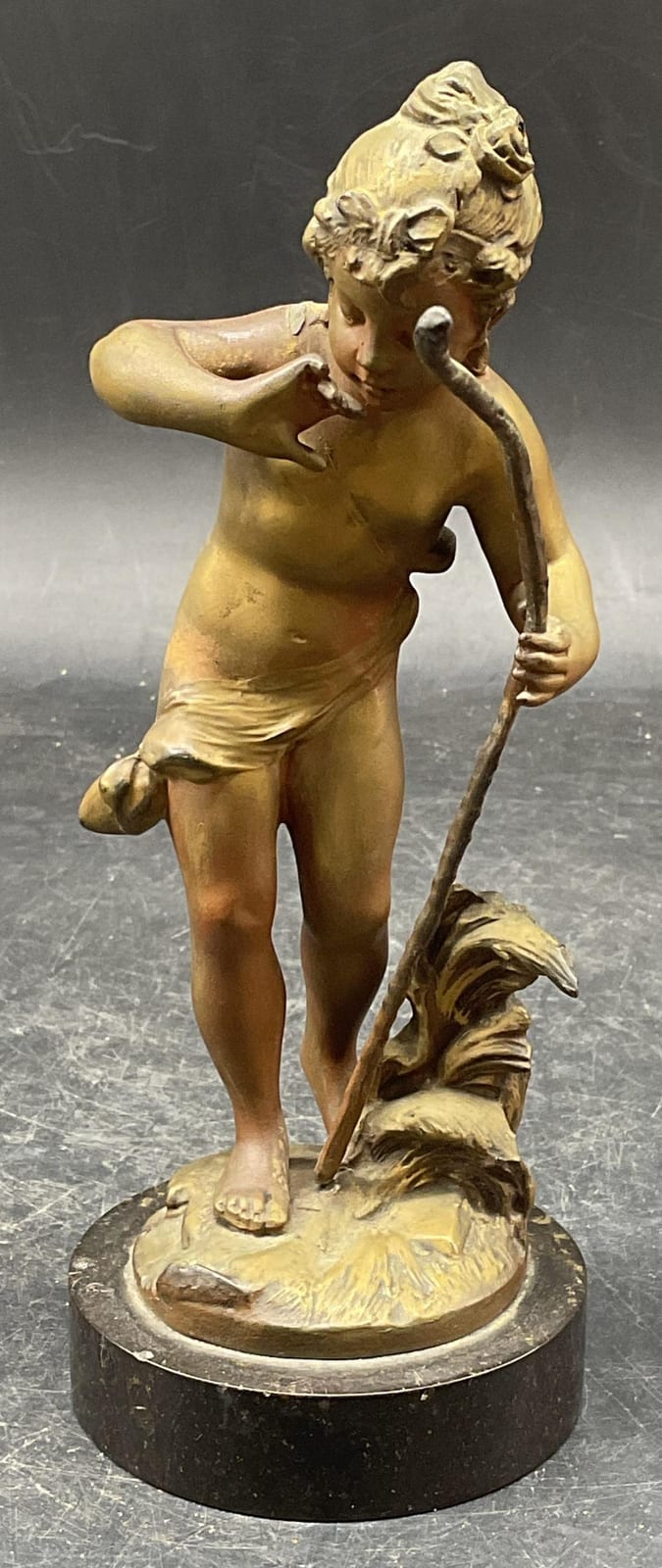 |
Antique Spelter Female Nude Sculpture | The Benefit Shop Foundation Inc. | 2026-05-13 | 203 | USD 15 (buyer’s-premium treatment unknown) |
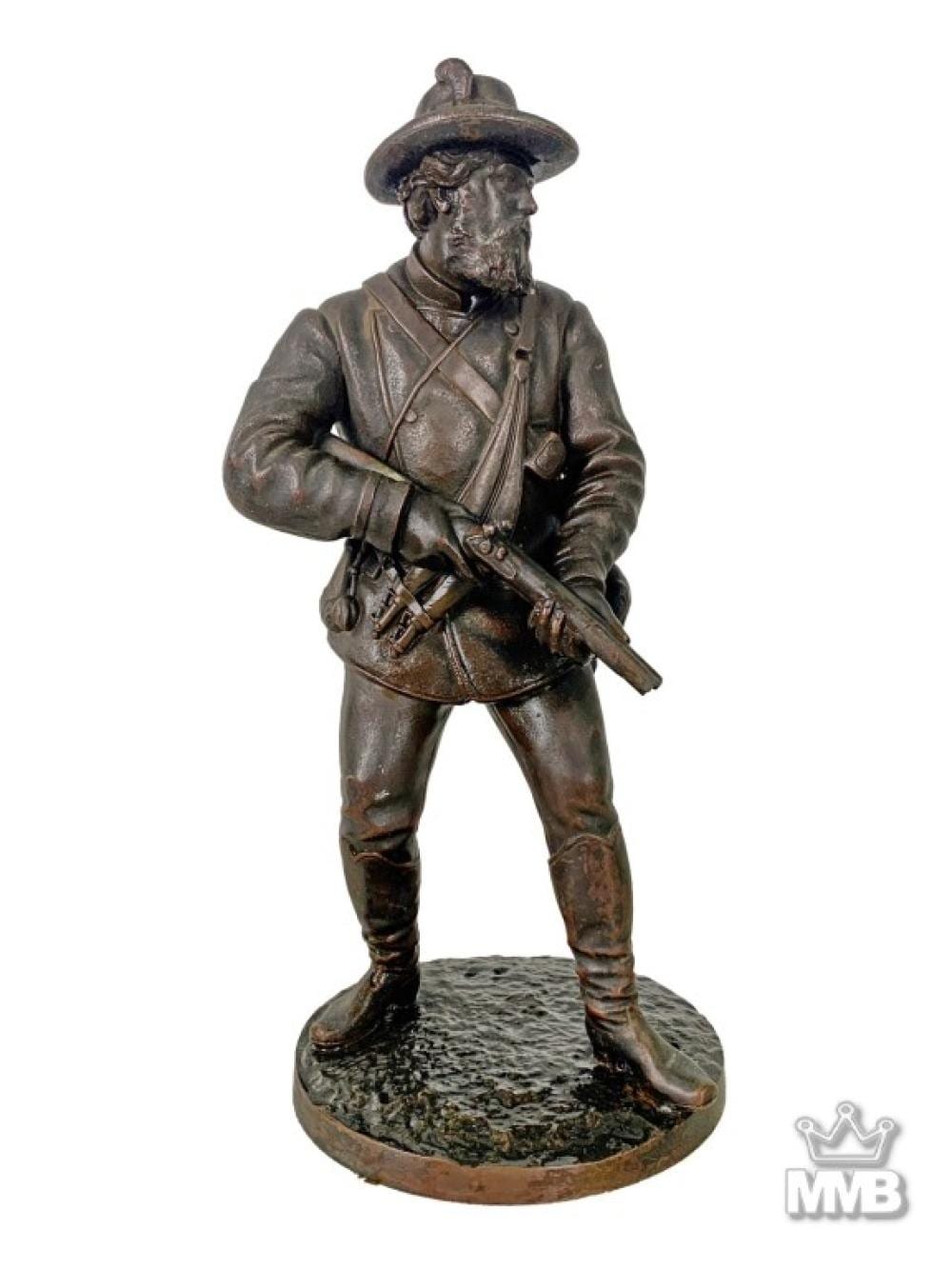 |
Antique French Spelter Armed Soldier Sculpture | MiddleManBrokers | 2025-10-09 | 228 | USD 50 (buyer’s-premium treatment unknown) |
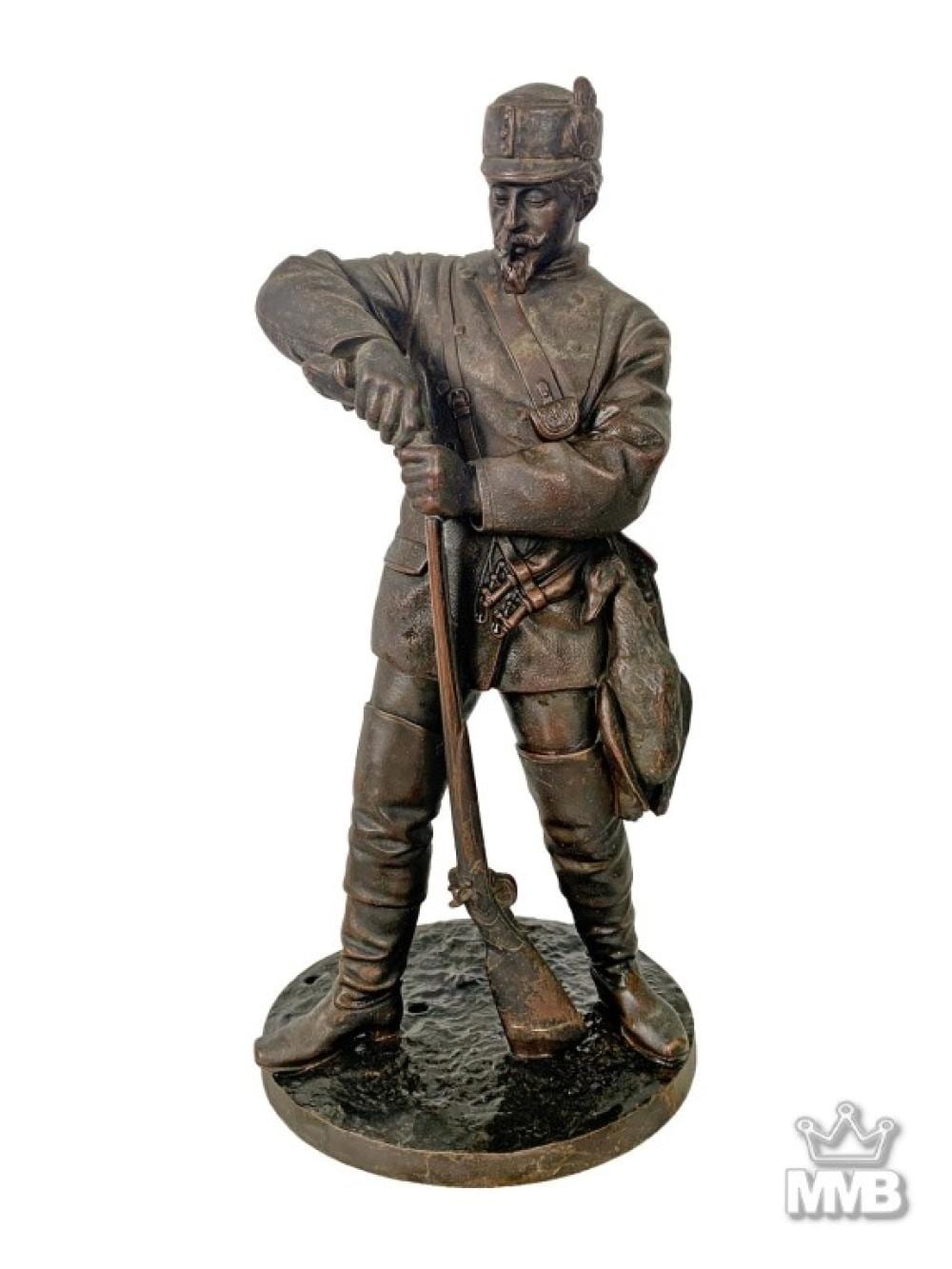 |
Antique French Spelter Armed Soldier Sculpture | MiddleManBrokers | 2025-10-09 | 227 | USD 25 (buyer’s-premium treatment unknown) |
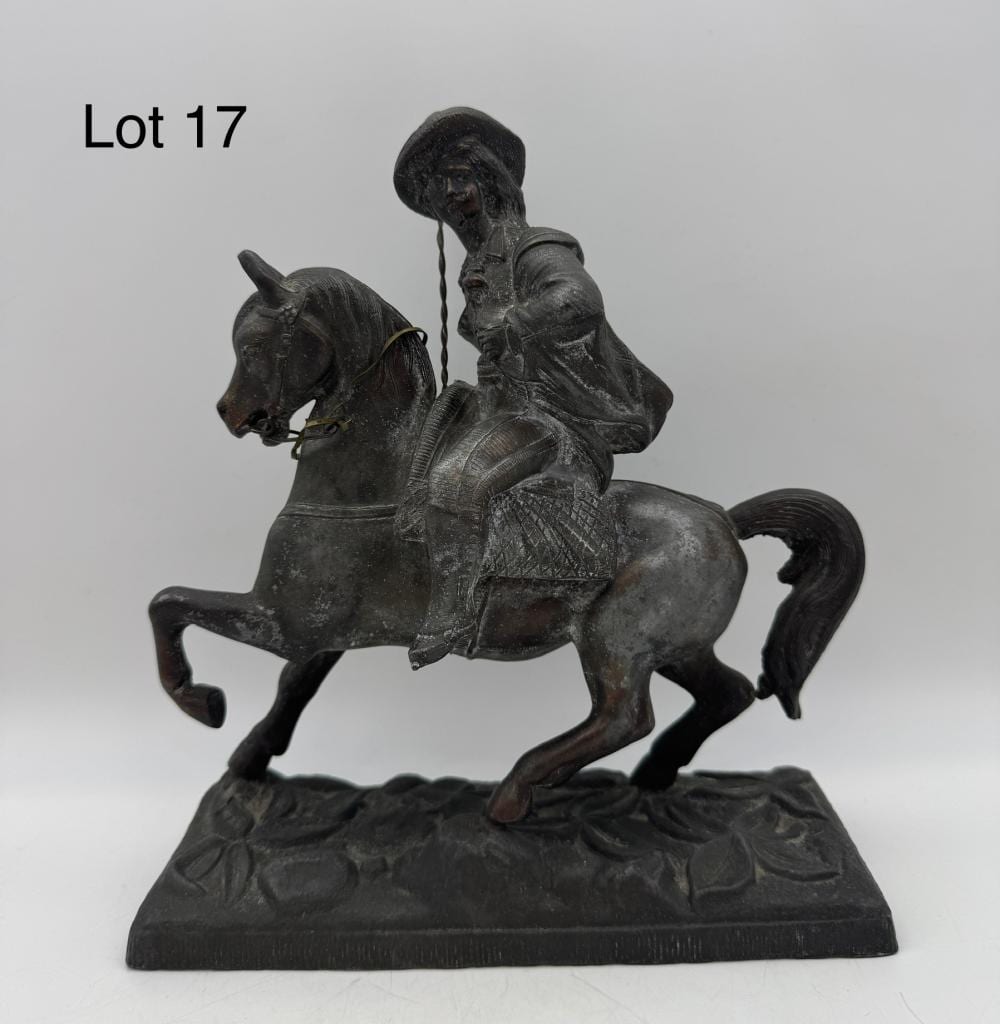 |
Antique Buffalo Bill Cody Spelter Sculpture | Embassy Auctions International | 2025-07-17 | 17 | USD 15 (buyer’s-premium treatment unknown) |
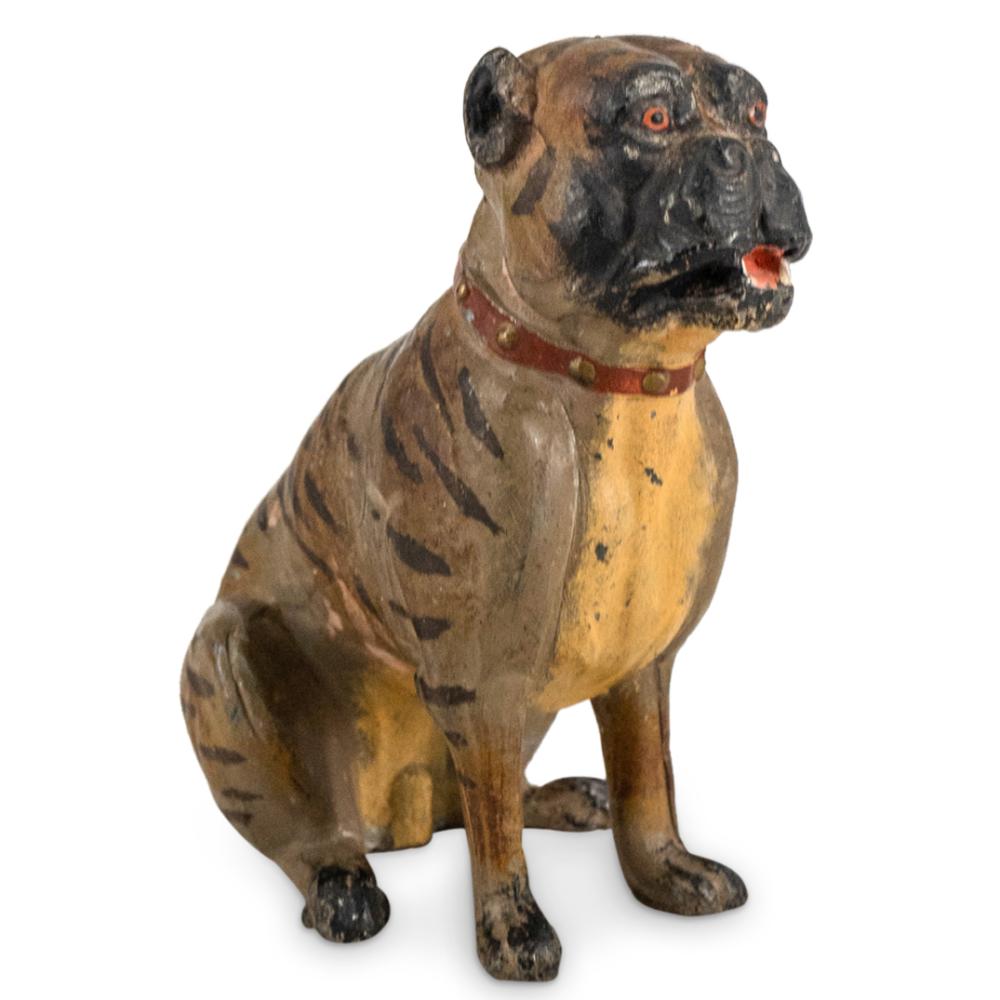 |
Antique Cold Painted Spelter Dog Sculpture | Akiba Galleries | 2023-10-30 | 195 | USD 50 (buyer’s-premium treatment unknown) |
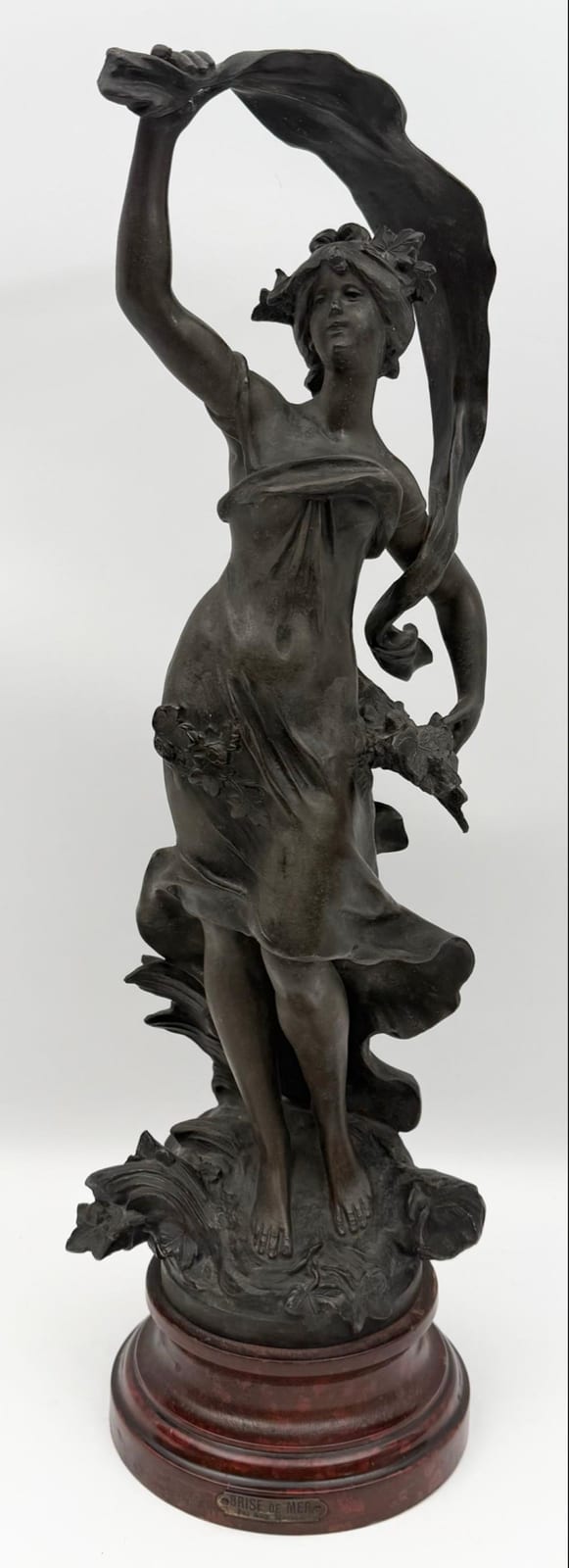 |
Antique Auguste Moreau "Brise De Mer" Spelter Sculpture | Kraft Auction Service | 2026-02-28 | 2373 | USD 250 (buyer’s-premium treatment unknown) |
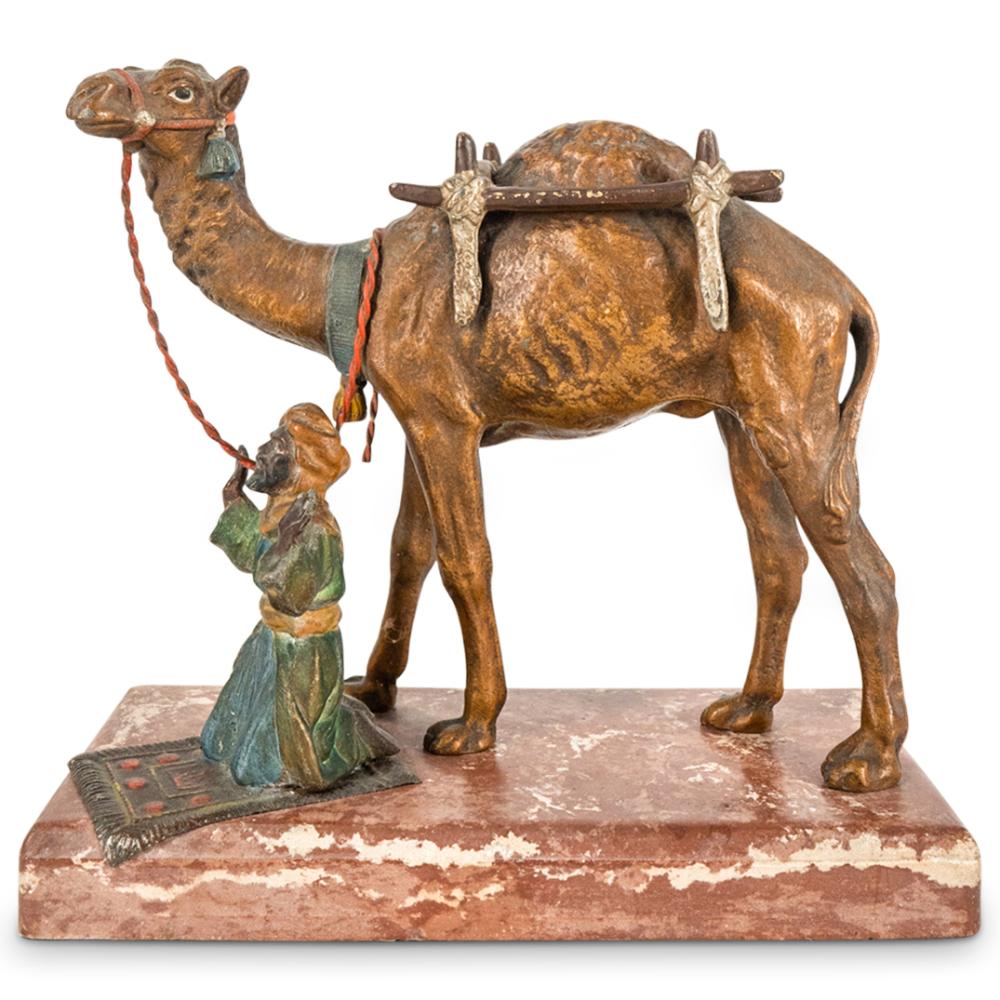 |
Antique Orientalist Cold Painted Spelter Sculpture | Akiba Galleries | 2023-10-30 | 196 | USD 100 (buyer’s-premium treatment unknown) |
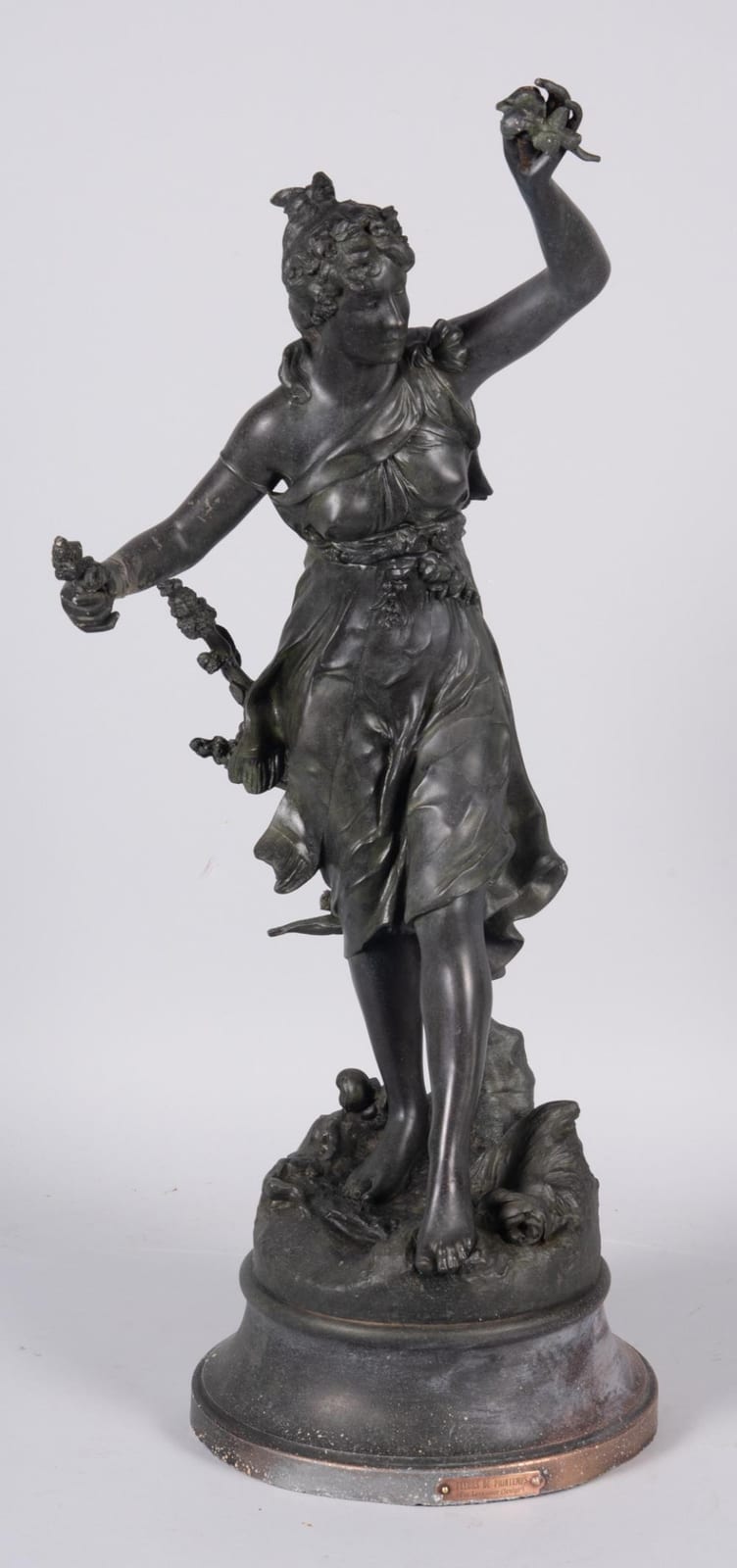 |
An Antique French Spelter Sculpture, Fleurs de Printemps | Link Auction Galleries | 2023-10-21 | 479 | USD 275 (buyer’s-premium treatment unknown) |
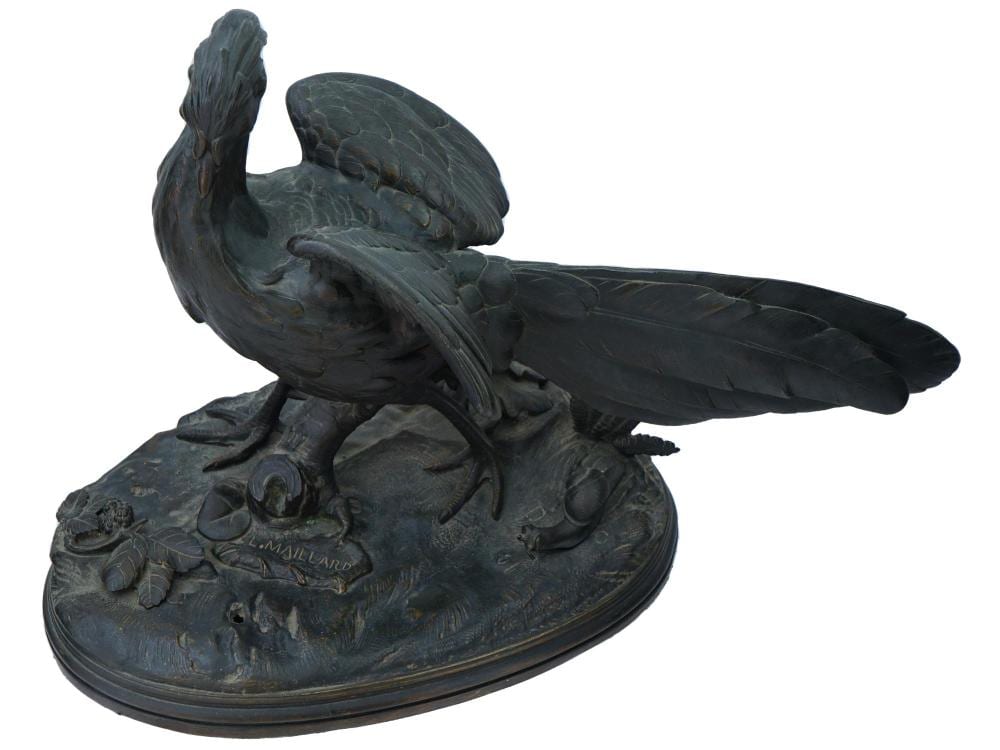 |
ANTIQUE FRENCH PHEASANT SPELTER SCULPTURE BY MAILLARD | Antique Arena Inc | 2024-03-16 | 220 | USD 125 (buyer’s-premium treatment unknown) |
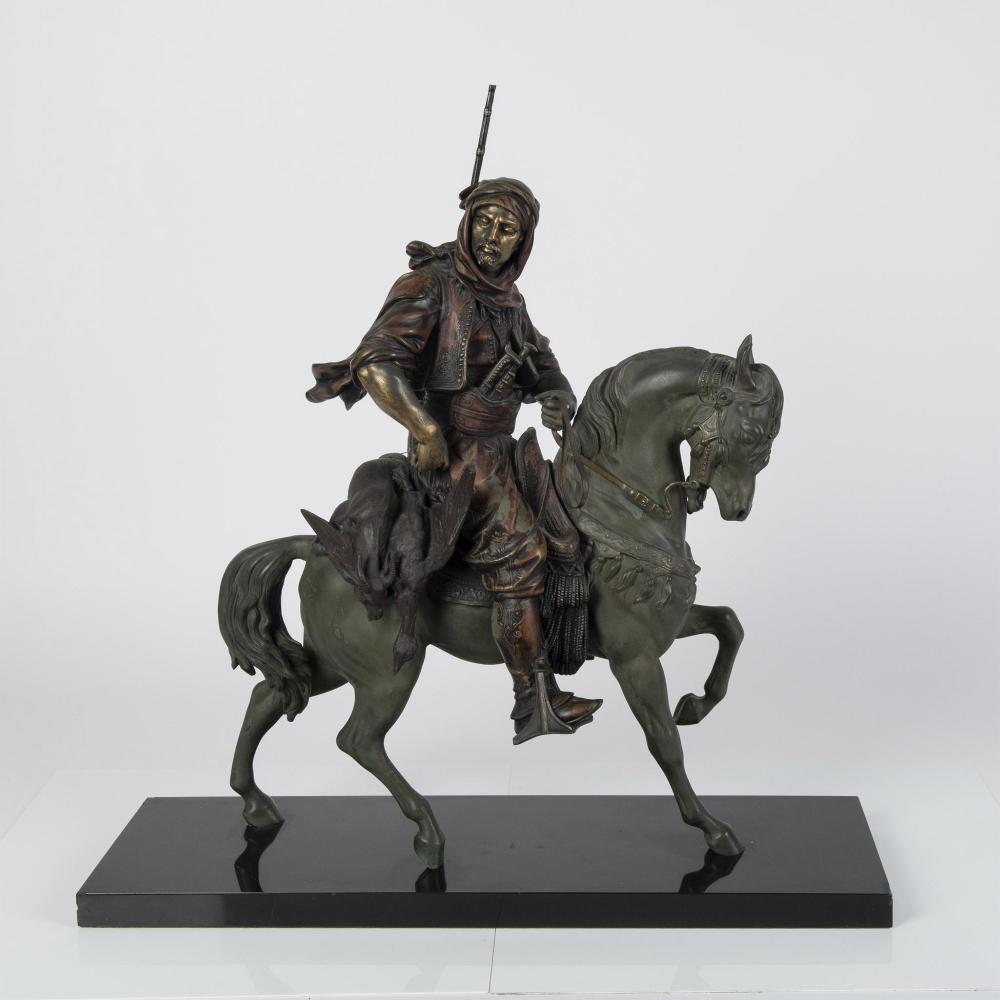 |
Guillemin & Barye (Aft.) Antique Painted Spelter Sculpture | Lion and Unicorn | 2024-11-17 | 456 | USD 170 (buyer’s-premium treatment unknown) |
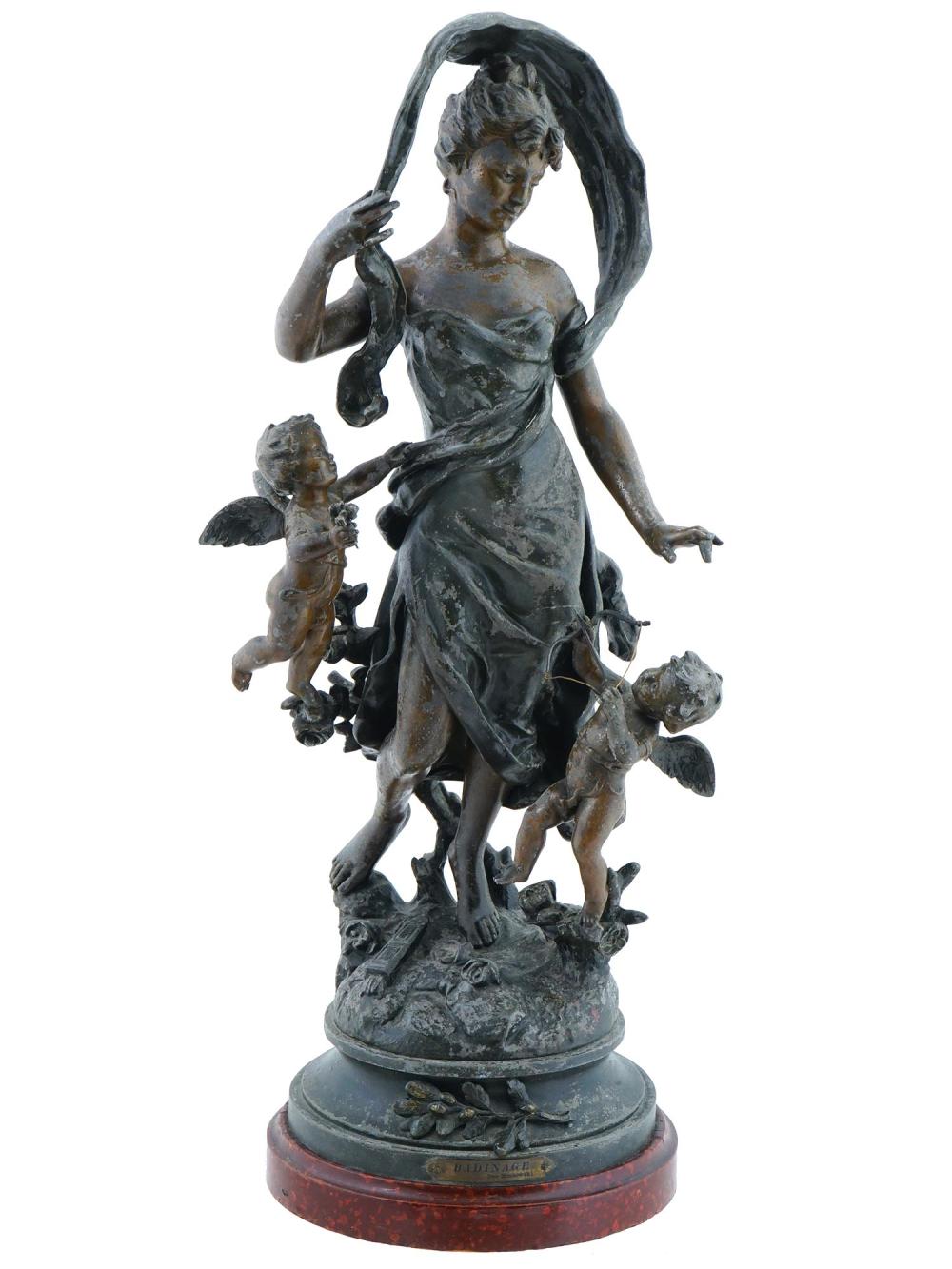 |
ANTIQUE POLISH SPELTER SCULPTURE BY HENRYK KOSSOWSKI | Antique Arena Inc | 2024-03-16 | 226 | USD 175 (buyer’s-premium treatment unknown) |
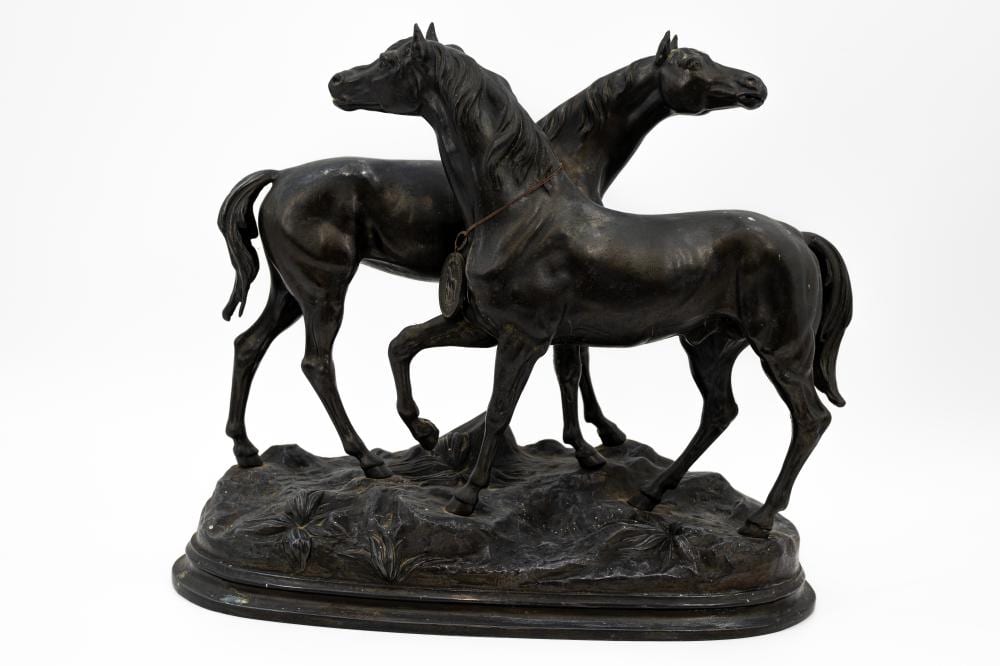 |
A LARGE AND ANTIQUE PATINATED SPELTER SCULPTURE OF TWO STANDING HORSES | Ostantix Auctions | 2026-02-25 | 473 | EUR 130 (buyer’s-premium treatment unknown) |
How these auction records were verified
Each row retains its exact source URL, lot identity, retrieval time, access result, and immutable record hash. Inspect the public comparable provenance record.
Disclosure: prices are shown as reported by auction houses and are provided for appraisal context. Learn more in our editorial policy.
Decision framework you can use in real listings
A practical example helps. Imagine a seller listing a French-style garden bronze for auction. The catalog description says bronze, but the underside has recent screws, the patina is uneven, and a few areas show white-gray wear tracks. Without a provenance note, the buyer likely applies a discount for verification risk. If the buyer values the piece for display only, that discount might be acceptable. If it is for consignment, the same risk can drop expected proceeds by a lot.
- If your goal is a quick private sale: get a free estimate and ask for top-risk adjustments before agreeing on reserve.
- If your goal is long-term value: focus on restoration history and maker signatures before discussing final asking levels.
- If your goal is insurance or legal valuation: skip the “it feels expensive” shortcut; use written appraisal and verified market records.
Stop making the most common mistakes
These errors cost people time and confidence:
- Overweighting one test. The loudest tap is not definitive if seam lines or patina history contradict it.
- Ignoring hidden mounting details. A modern replacement base can erase confidence faster than an imperfect finish.
- Assuming decorative polish raised value. Surface treatment can hide flaws and accelerate future maintenance cost.
- Using only listing photos. One good close-up cannot replace side and reverse photos with scale context.
- Skipping comps. Market context, especially educational comparables, changes your value range instantly.
References and next checks
- Westland London: how to spot bronze vs. spelter in antiques
- Shackleton Fox: identifying antique metals
- Bronze material overview (for baseline alloy context)
- Appraisily Editorial Policy
Use internal comps and verified provenance before making final decisions. If you are missing condition reports and maker marks, request a review before buying.
Search variations
Related search questions
- How to tell bronze vs spelter sculpture at a flea market
- Spelter sculpture value compared with true bronze
- Bronze sculpture market price signs of fake patina
- How to identify cast seam repairs on antique sculpture
- Bronze vs spelter sculpture crack pattern guide
- Is dark green patina always a sign of bronze
- Does weight determine bronze or spelter sculpture value
- What auction comps mean for bronze sculpture valuation
- Can a seller lie about bronze and be corrected fast
What to do next
If your piece shows mixed signals, use the free estimate first, then decide whether a full appraisal is justified. This gives you a documented route without overpaying for uncertainty. For high-risk pieces, request written provenance support and maker-mark documentation before final pricing decisions.
In this lane, confidence is currency. The clearer your material story and condition notes, the easier it is to argue for stronger outcomes.