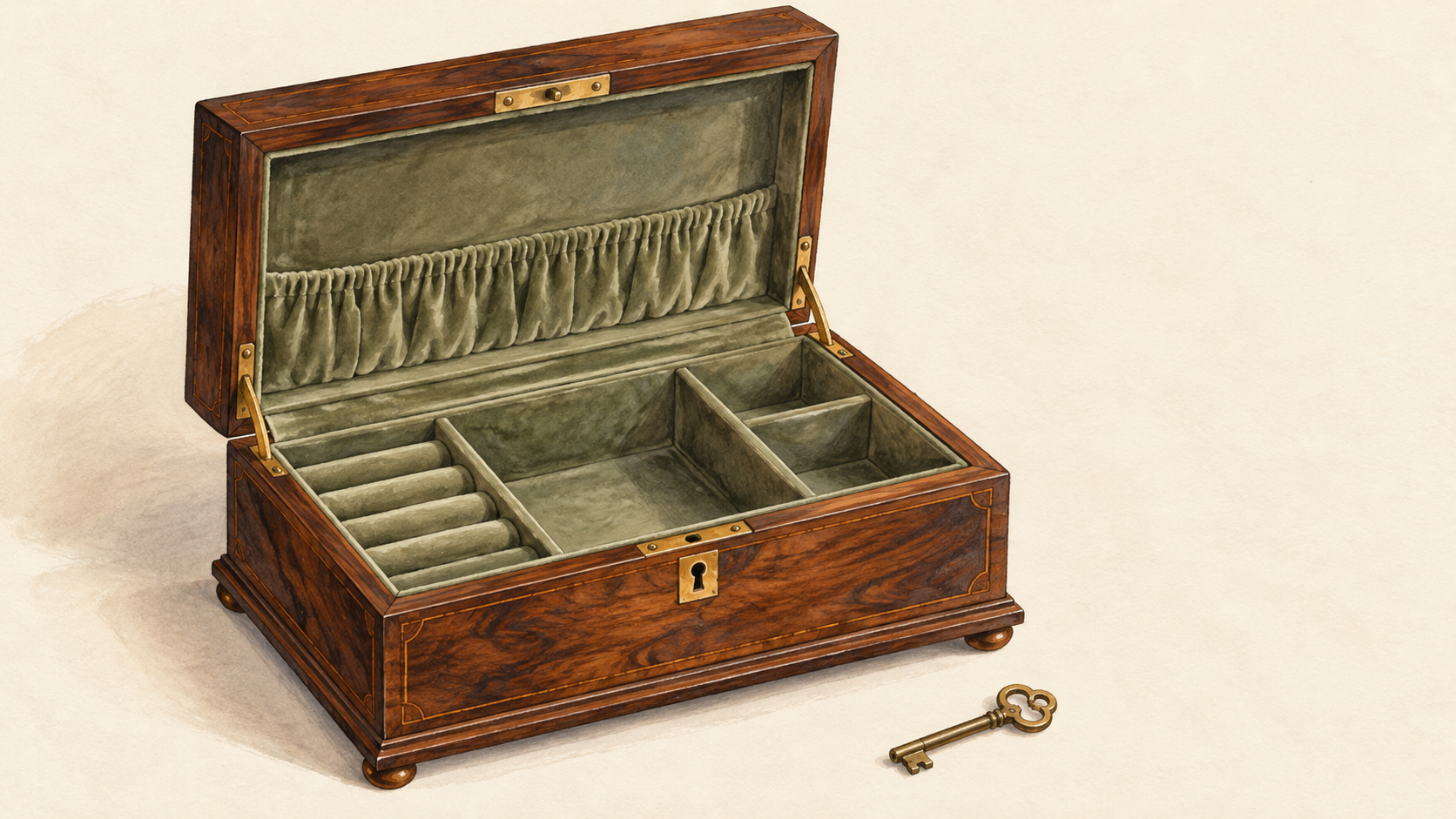
The short answer: record the box before you price it
An antique jewelry box appraisal starts with the object, not an age estimate. Photograph the whole box and its interior, measure it, then note the material, construction, hardware, lining, repairs, and any history. A named maker, real precious-metal content, unusually fine craftsmanship, or a documented provenance can move an antique item from decorative to appraisal-worthy; a pretty surface alone usually cannot.
- Whole form: front, back, sides, base, lid, scale, and dimensions.
- How it is made: wood, veneer, metal, stone, glass, joints, feet, lock, hinges, and tray.
- What is original: lining, key, fittings, finish, labels, and any visible repair.
Start with the whole box, then the evidence that changes value
Take the broad views first. A cropped close-up can make almost any old finish look impressive, while the full object reveals proportions, symmetry, feet, handles, lid alignment, and whether its interior belongs to the case. Include one image with a ruler and one of the base; a label or screw pattern can be more useful than another beauty shot.
Then work inward. Show the lock plate, hinges, key if present, tray, divisions, fabric, paper lining, and underside. Record what you see rather than assigning a date from one feature. A later lock, a newly relined interior, or missing feet can change how a collector reads originality. If the box contains jewelry, photograph the box empty as well: the jewelry and its container are often separate appraisal questions.
Write down height, width, depth, materials you can identify with confidence, and any family or purchase history. That record makes it easier to compare the box with an old jewelry box value guide without forcing a match based on color or style alone.
Separate material value, workmanship, and decorative appeal
Three boxes can be the same size and look equally old while belonging to different markets. A silver box may have metal value and a maker-led collector market. A hardwood or veneered box may depend on cabinetmaking, inlay, form, and condition. A gilded or ormolu-mounted example may be valued for the quality and completeness of its mounts, not simply its color.
- Material
- Silver, gold, glass, stone, tortoiseshell-like material, and exotic woods need closer identification. Material is one input, not a finished value.
- Workmanship
- Fine joinery, crisp inlay, fitted interiors, engraving, and complex mounts can matter when they are original and well executed.
- Maker and origin
- A traceable maker or retailer can narrow a comparison, but a stamp or label is a lead to document—not proof on its own.
If the box includes a gold mount or jewelry component, keep the metal question separate from the container’s age and design. Our guide to 14k versus 18k gold value explains why a confirmed fineness and weight matter before anyone calculates material value.
Read construction and condition as a single story
Condition is not a penalty box to check at the end. It helps explain the object. Look for a lid that sits square, hinges that operate cleanly, an original-looking lock plate, stable feet, and a lining that fits the construction. Note lifting veneer, splits, corrosion, warped panels, worn gilding, absent keys, replacement screws, and relining. Photograph repairs from far enough away to show where they sit on the box.
Do not assume that a polished surface is an improvement. On some pieces, aggressive refinishing or replacement hardware removes evidence a collector expects to see. On others, a careful restoration may be necessary for use. Describe the work honestly and compare like with like. For examples of how materials and fittings change the research question, compare a cloisonné trinket box and a crystal box with a sterling top.
Free first look
Not sure whether this antique item needs an appraisal?
Upload clear photos of the whole box, base, interior, and hardware before deciding whether you need a signed report. Results usually appear within a few minutes; complex items can take longer.
Upload a photo for a free first lookFree. No card needed. The photo upload usually takes about two minutes.
Use sold results as context, not a shortcut
Close auction results are most useful when the form, materials, condition, scale, and date of sale are visible. The selected records below span very different jewelry-box forms, so they show why a single “antique jewelry box value” is unreliable. A large antique German silver jewelry box sold by Antique Arena Inc on December 9, 2023, lot 291, carried a source-reported amount of US $850; that result is evidence for that particular silver box, not a promise for every old container.
When a written appraisal is useful
A free photo-based read is a sensible first step when you are sorting, researching, or deciding whether details warrant more effort. A written appraisal becomes more useful when the decision requires a documented value conclusion: insurance scheduling, estate work, donation, resale planning, or a question of ownership. Delivery timing is confirmed before work begins and depends on the item, scope, and documentation needed.
If you do need that documentation, a signed appraisal is a separate paid service. Keep the photographs, measurements, notes on repairs, and history you assembled here; they help an appraiser decide which evidence needs closer inspection.
More antique jewelry box questions
- How much is an antique jewelry box worth?
- What makes an old jewelry box valuable?
- How do I photograph a jewelry box for appraisal?
- Does a silver jewelry box have separate metal value?
- How do repairs affect an antique jewelry box?
- What does a fitted interior tell you about a jewelry box?
- Should I get a written appraisal for a family jewelry box?
Each question comes back to the same useful record: identify what the box is made of, what remains original, and which sold examples genuinely resemble it.
Sources and method
Auction results in this guide are sourced from the exact records shown in the comparable table. They are source-reported amounts and may use different buyer-premium treatment; read the table caption and linked record before comparing them. Read our editorial policy for how Appraisily handles evidence and uncertainty.


