Introduction to Antique Drinking Glasses
Learning to identify genuine antique glassware requires understanding key characteristics that distinguish different periods, styles, and makers. Whether you’re a seasoned collector or new to the world of vintage glass, these identification techniques will help you recognize valuable pieces and make informed decisions.
Antique Glassware Market Stats
Key Identification Features of Antique Drinking Glasses
Pontil Marks
One of the most reliable indicators of an early glass is the pontil mark. This feature appears as a rough area on the base where the glassblower’s pontil rod was attached during production. As explained by Roseberys auction house, “The first familiar feature to look for on early drinking vessels is the pontil mark, found at the centre of the base of a glass.” Modern glasses typically have smooth bases without this distinctive mark.
Glass Composition and Weight
Antique glasses often feel heavier and more substantial than their modern counterparts due to the higher lead content commonly used in older formulations. When tapped gently, genuine antique glassware typically produces a clear, resonant ring rather than a dull sound. This quality test can help identify potential documented pieces.
Stem Styles and Techniques
The stem of an antique drinking glass often reveals its age and origin:
- Plain stems: Common in early Georgian pieces (early 18th century)
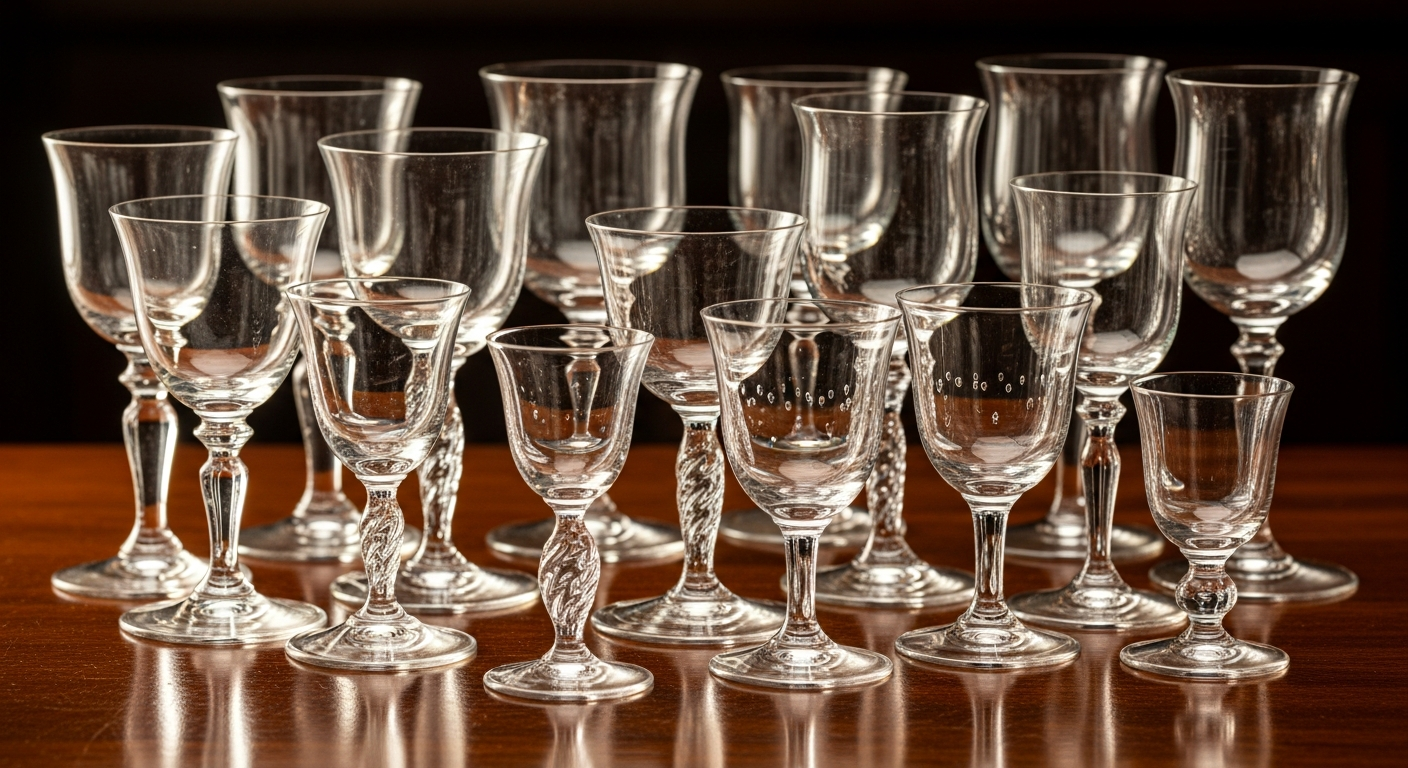
- Air twist stems: Popular from the 1740s, featuring air bubbles twisted to create intricate patterns
- Opaque twist stems: Developed in the 1750s with white or colored glass threads
- Facet-cut stems: More common in later Georgian and Victorian periods
According to Exhibit Antiques, “The Multiple-spiral air twist pattern is the most frequently found single series stem. Up to 12 threads of air are incorporated evenly into a uniform twist.”
Maker’s Marks and Signatures
While many early glasses weren’t signed, pieces from the late 19th century onward may bear maker’s marks. Look carefully at the base or the stem for engraved signatures, impressed marks, or acid-etched logos. These markings can significantly impact attribution review and valuation.
Evolution of Antique Drinking Glass Styles
- 1700-1750
Early Georgian Period
Simple, practical designs with plain stems, often featuring balustroids (hollow stems containing a bubble of air). Heavy lead glass becoming common with domed feet.
- 1750-1780
Mid-Georgian Period
Introduction of decorative air twist and opaque twist stems. Bowl shapes diversify for specific drinks (wine, ale, cordial). Engravings becoming more sophisticated.
- 1780-1830
Late Georgian/Regency Period
Cut glass techniques more prevalent. Stem designs become more ornate with facets and complex cutting. Introduction of colored glass accents.
- 1830-1900
Victorian Era
More elaborate designs with heavy cutting, engraving, and colored glass overlays. Mass production begins to influence glassmaking. Pressed glass emerges.
- 1920s-1930s
Depression Era
Colorful, machine-made pressed glass becomes popular. Distinctive patterns emerge as affordable alternatives to hand-crafted pieces.
- 1950s-1960s
Mid-Century Modern
Streamlined designs reflecting modernist aesthetics. Murano influences. Distinctive patterns from major manufacturers like Libbey and Anchor Hocking.
Georgian Glass Identification (1714-1830)
Air Twist Stems
Air twist stems are among the most distinctive Georgian glass features, appearing primarily from the 1740s onward. As described by Exhibit Antiques, these stems contain threads of air twisted to create intricate patterns:
- Single Series: A single air bubble twisted into a spiral
- Multiple Spiral: Multiple threads of air incorporated into uniform twist patterns
- Compound Series: Combination of multiple patterns within a single stem
The complexity and precision of the air twist often indicates the piece’s quality and rarity.
Plain Stem Identification
Early Georgian glasses often feature plain stems that exhibit several distinctive characteristics:
- Balustroid Stems: Hollow stems containing air bubbles (sometimes called “tears”)
- Heavy Bases: Solid, often domed feet with rough pontil marks
- Lead Content: High lead content producing a characteristic weight and ring when tapped
According to Hemswell Antiques, “These new antique wine glasses were known as balustroids, distinguishable by their hollow stem complete with bubble of air.”
Specialized Drinking Glass Types
Georgian glassmakers created specialized forms for different beverages:
- Wine Glasses: Typically with rounded bowls and graceful stems
- Ale Glasses: Taller with more cylindrical bowls
- Firing Glasses: Short, sturdy glasses with thick bases, designed to be “fired” (thumped) on the table
- Cordial Glasses: Small glasses for sweet, strong drinks with trumpet-shaped bowls
- Ratafia Glasses: Very small glasses for sweet liqueurs
Georgian Glass Attribution review Checklist
Check applicable items when examining potential Georgian glass
- Pontil mark visible on the base
- Glass has significant weight due to lead content
- Produces clear ring when gently tapped
- No modern machine-made mold seams
- Slight variations showing hand-craftsmanship
- Period-appropriate stem style (air twist, plain, etc.)
- Wear consistent with age (slight scratches, dulling)
- Glass color has slight grayish or yellowish tint
Victorian and Early 20th Century Glass
Cut Glass Patterns
Victorian glass often features elaborate cutting patterns:
- Hobnail: Raised diamond patterns
- Thumbprint: Deep oval impressions
- Strawberry Diamond: Combination of diamond cuts and raised points
- Russian Pattern: Deep V-shaped cuts forming star patterns
These complex patterns were created through skilled cutting techniques, though by the late Victorian era, pressed glass could imitate some cut patterns at lower cost.
Pressed Glass Identification
Pressed glass became increasingly popular in the Victorian era as mass production techniques evolved:
- Look for mold seams running vertically along the glass
- Patterns typically appear less sharp than hand-cut pieces
- Often lighter in weight than earlier lead glass
- May have a slightly cloudier appearance
According to Elle Decor, “Pressed Czech glass from later in the century can be identified by two vertical lines running from the top to bottom of the object, indicating where the mold pieces met.”
Depression Glass (1920s-1930s)
Depression glass represents an important category of collectible 20th century glassware:
- Machine-made, often with visible mold lines
- Available in distinctive colors (pink, green, amber, blue)
- Features standardized patterns (Cameo, Madrid, American Sweetheart)
- Usually thin-walled compared to earlier pieces
- Originally sold inexpensively or given away as promotions
As noted by The Outer Banks Candle Company, collectors should “keep your eyes peeled for rare depression glass colors, like pink,” as these command premium prices.
Value Ranges for Antique Drinking Glasses
Current market values based on period, condition, and rarity
| Category | Price | Notes |
|---|---|---|
| 18th Century Georgian Glass | a value that must be established from current, topic-matched sales+ | Highest values for rare air twists |
| Depression Era Glass (1920s-30s) | a value that must be established from current, topic-matched sales | Pink and green pieces command premiums |
| Mid-Century Patterns (1950s-60s) | a value that must be established from current, topic-matched sales | Complete sets worth significantly more |
</tbody> </table>
Specialized Collectors' Categories
Colored Glass
Colored antique drinking glasses often command premium prices due to their rarity and visual appeal:
- Cranberry Glass: Ruby-red glass made with gold chloride
- Bristol Blue: Deep cobalt blue glass, popular in the late 18th/early 19th century
- Vaseline Glass: Yellow-green glass containing uranium that glows under UV light
- Amethyst Glass: Purple glass that may have started as clear but changed color due to manganese exposure to sunlight
Engraved and Commemorative Glasses
Glasses engraved to commemorate specific events or featuring personalized decoration represent a specialized collecting area:
- Jacobite Glasses: 18th-century glasses with secretly engraved Jacobite symbols
- Royalty Commemorative Glasses: Celebrating coronations, jubilees, and royal events
- Masonic Glasses: Featuring Masonic symbols and imagery
- Marriage and Anniversary Glasses: Personalized with names and dates
These pieces often have historical significance that increases their collectibility beyond their physical attributes.
Regional Styles
Different regions developed distinctive glassmaking traditions:
- Venetian/Murano Glass: Known for delicate forms, advanced techniques, and colored glass
- Bohemian Glass: Famous for engraving, cutting, and colored glass overlays
- English Lead Crystal: Characterized by its weight, brilliant clarity, and fine cutting
- American Pattern Glass: Distinctive pressed patterns from American manufacturers
According to the Glass Encyclopaedia, regional variations provide important clues for identification and attribution review.
| Category | Price | Notes |
|---|---|---|
| Georgian Air Twist Stems | a value that must be established from current, topic-matched sales+ | Exceptional examples with rare patterns can exceed a value that must be established from current, topic-matched sales |
| Georgian Plain Stems | a value that must be established from current, topic-matched sales | Higher values for documented provenance |
| Victorian Cut Crystal | a value that must be established from current, topic-matched sales | Sets command premium prices |
| Victorian Pressed Glass | a value that must be established from current, topic-matched sales | Rare patterns or colors increase value |
| Depression Glass | a value that must be established from current, topic-matched sales | Pink and green pieces typically most valuable |
| Mid-Century Patterns | a value that must be established from current, topic-matched sales | Complete sets worth significantly more than individual pieces |
</tbody> </table>
Attribution review and Avoiding Reproductions
Common Reproduction Indicators
Watch for these telltale signs of reproductions:
- Too Perfect: Hand-blown antique glasses typically show slight irregularities
- Wrong Weight: Many reproductions lack the heft of documented lead glass
- Mold Marks: Machine-made seams not consistent with the purported period
- Artificially Aged: Deliberately applied wear or “patina” that doesn’t match natural aging patterns
- Incorrect Proportions: Reproductions often miss subtle details of period-appropriate proportions
According to Veranda, “Look to see if the glass has been signed or marked. Usually signatures are found on the underside of glass, but sometimes you can find one on the stem or even the bowl.”
Scientific Attribution review Methods
For valuable pieces, consider these attribution review techniques:
- UV Light Testing: Different glass formulations react differently under ultraviolet light
- Specific Gravity Testing: Measuring density can help identify glass composition
- X-Ray Fluorescence: Advanced testing can determine chemical composition
- Microscopic Examination: Professional evaluation of wear patterns, bubbles, and production marks
Working with Experts
For valuable or rare pieces, consult with:
- Specialized glass appraisers
- Auction house specialists
- Museum curators with glass expertise
- Reputable dealers with established credentials
Online forums like r/glasscollecting on Reddit can also provide community identification help for unusual pieces.
Maintaining and Displaying Your Collection
Storage Considerations
Protect your antique glassware with these storage practices:
- Store glasses upright, not inverted
- Use soft dividers between pieces to prevent contact
- Avoid extreme temperature fluctuations
- Keep away from direct sunlight to prevent discoloration
- Consider glass display cabinets with UV protection
- Install cabinet lighting that doesn’t generate excessive heat
Cleaning Antique Glass
Follow these best practices for cleaning:
- Wash by hand with mild soap and lukewarm (not hot) water
- Avoid soaking for extended periods
- Use soft cloths for drying to prevent scratches
- Never use abrasive cleaners or scrubbers
- Consider professional cleaning for valuable or delicate pieces
- Approach repairs cautiously, as improper restoration can decrease value
Display Strategies
Showcase your collection effectively:
- Group similar periods, styles, or colors together
- Use museum gel to secure glasses in earthquake-prone areas
- Consider custom lighting to highlight cut patterns and colors
- Rotate displays to minimize long-term light exposure
- Create informational cards or a digital catalog for your collection
- Consider a glass-fronted cabinet to minimize dust while allowing visibility
Common Questions About Antique Drinking Glasses
How can I identify documented Georgian drinking glasses?
What are the most valuable types of antique drinking glasses?
- Rare Georgian air twist stems in excellent condition
- Jacobite engraved glasses with political symbolism
- Early colored glass pieces, especially in unusual colors
- Documented glasses with royal or notable provenance
- Complete matched sets from significant periods
How can I tell if my Depression glass is documented?
- Machine-made with visible mold seams
- Distinctive colors including pink, green, amber, blue, and yellow
- Standardized patterns that can be identified in reference guides
- Thinner glass than earlier handmade pieces
- Small bubbles or imperfections in the glass
- Slight wear on the base consistent with age
What is a pontil mark and why is it important for identification?
- Early glasses (18th-early 19th century) typically show rough pontil marks
- By the mid-19th century, pontil marks were often ground down or polished
- Modern glasses generally have smooth bases without pontil marks
How can I determine the value of my antique glassware?
- Identify the period, style, and manufacturer if possible
- Assess the condition (chips, cracks, or repairs significantly reduce value)
- Research comparable recent auction results
- Consider rarity, provenance, and historical significance
- Consult reference guides for your specific type of glass
- For valuable pieces, seek professional appraisal from specialists
Is colored antique glass more valuable than clear glass?
- Rare or unusual colors
- Early examples of colored glass (18th-19th century)
- Colors with special characteristics (like uranium glass that fluoresces)
How do I identify patterns in antique glassware?
- Photograph your glass from multiple angles in good lighting
- Note any distinctive elements of the pattern (specific motifs, cutting style)
- Check reference books like "Collectible Glassware from the 40s, 50s, and 60s"
- Use online resources like Replacements.com’s pattern identification tool
- Share photos on collector forums like Reddit’s r/glasscollecting
- Compare your pattern to museum collections available online
- Consider using glass identification apps that compare your images to databases
What should I look for when buying antique drinking glasses?
- Condition: Examine carefully for chips, cracks, repairs, or excessive wear
- Originality: Research the period characteristics to avoid reproductions
- Completeness: Sets are typically more valuable than individual pieces
- Provenance: Documentation of history adds value and originality
- Rarity: Unusual patterns, colors, or forms command premium prices
- Seller reputation: Buy from established dealers with return policies
- Price comparisons: Research similar pieces that have sold recently
External Resources for Antique Glass Identification
Glass Encyclopaedia
Comprehensive glass identification guide covering many types of antique and vintage collectable glassware, with detailed galleries and information.
Replacements.com Pattern Identification
Extensive database for identifying patterns in antique and vintage glassware with search features and visual pattern matching.
Westland London Antique Glass Guide
Detailed guide on determining whether glass is antique, including studying patina, color, markings, patterns, and pontil marks.
Exhibit Antiques Georgian Glass Resources
Specialized information on identifying 18th century English plain stem drinking glasses and Georgian glassware.
Hemswell Antiques Collector's Guide
A collector's guide to antique drinking glasses covering various styles, periods, and identification techniques.
Reddit Glass Collecting Community
Active community of glass collectors sharing identification help, knowledge, and discoveries about antique and vintage glassware.
Veranda's Expert Guide to Antique Glass
Expert advice on identifying antique and vintage glassware, including key characteristics to examine and tips from professional appraisers.
Roseberys Auction House Glass Guide
Professional insights from auction experts on identifying and valuing 18th century drinking glasses.
Conclusion: Building Your Knowledge of Antique Drinking Glasses
As your knowledge grows, you’ll find that each antique drinking glass tells a story—of technological innovation, artistic trends, social customs, and the skilled artisans who created these enduring treasures. Whether you’re drawn to the elegant simplicity of Georgian stems, the ornate patterns of Victorian cut glass, or the cheerful colors of Depression glass, collecting antique drinking glasses offers a tangible connection to the past.
Remember that condition, rarity, and originality remain the key factors in determining value. Take time to educate yourself through reference materials, museum visits, and conversations with experienced collectors. Consider joining collector groups or online forums where you can share discoveries and learn from others’ expertise.
With patience and persistence, you’ll develop the confidence to identify valuable antique drinking glasses wherever you encounter them—whether in antique shops, estate sales, online auctions, or perhaps forgotten in your own family’s collection.
What current auction evidence can—and cannot—show
We did not find a verified, page-specific auction-comps set for this antique drinking glass that met the current exact-match and source-provenance standard.
That absence is evidence, not a zero-value conclusion. Asking prices, broad category ranges, and sales for materially different objects are not substitutes for matched realized sales. Use the identification and condition guidance in this article, then narrow a future search with exact marks, model or variant, dimensions, materials, condition, completeness, and provenance.
Free first look
Not sure whether this antique drinking glass needs an appraisal?
Photograph the whole piece, base mark, material or glaze, pattern, dimensions, repairs, chips, cracks, and any lid or matching parts. The photo-based Screener can help identify the likely category and visible evidence gaps before you pay for documentation.
Upload photos for a free first lookFree. No card needed. The photo upload usually takes about two minutes.
The free first read is a separate photo-based Screener, not this educational article. Results usually appear within a few minutes; complex items can take longer. From photographs of your antique drinking glass, it returns a preliminary category or identity read, visible evidence gaps, rough comparable market signals, and whether a human appraisal looks worthwhile; it is not a signed value conclusion. Material or construction can remain uncertain without direct examination, dimensions, provenance, or complete condition details. A written appraisal is useful when your antique drinking glass needs documented specialist support for insurance, tax, an estate, authentication, litigation, or a consequential sale, but you may not need one.
Choose your next step
Use the path that matches the decision you need to make about the item.
Not sure it is worth appraising?
Start with a lower-friction screen to understand the likely category, evidence, and next step.
Upload photos for a free first lookWant proof before paying?
See how a signed report documents photos, comparable evidence, condition notes, and value conclusions.
View signed report sampleNeed a signed report?
Use this for insurance, estate, donation, resale, or documented value decisions.
Need documentation now? Start signed appraisalNeed local or specialist help?
Compare directory options when the work needs in-person review or a specialist near you.
Find local specialistsSee what the report looks like
Sample reports show how photos, comparable evidence, condition notes, and a value conclusion are documented.
Get antique glassware appraised
Upload glassware photos, maker marks, pattern details, measurements, condition notes, set counts, and the report purpose.
- Expert report with photos and market context
- Fast turnaround
- Fixed, upfront pricing
No obligation. Secure upload.
Continue your valuation journey
Find the right local specialist
Compare antique and art appraisers by location and specialty in one directory.
Antique & art specialists
Browse the Antique & Art Appraisers Directory
Choose a local specialist when the assignment needs in-person inspection or a specific credential.
Machine-readable summaries
Use these machine-friendly references for AI and crawler discovery of Appraisily content.
Ready for pricing guidance?
Start a secure online appraisal
Upload images and details. Certified specialists respond within 24 hours.
Upload photos for a free first look View signed report sample