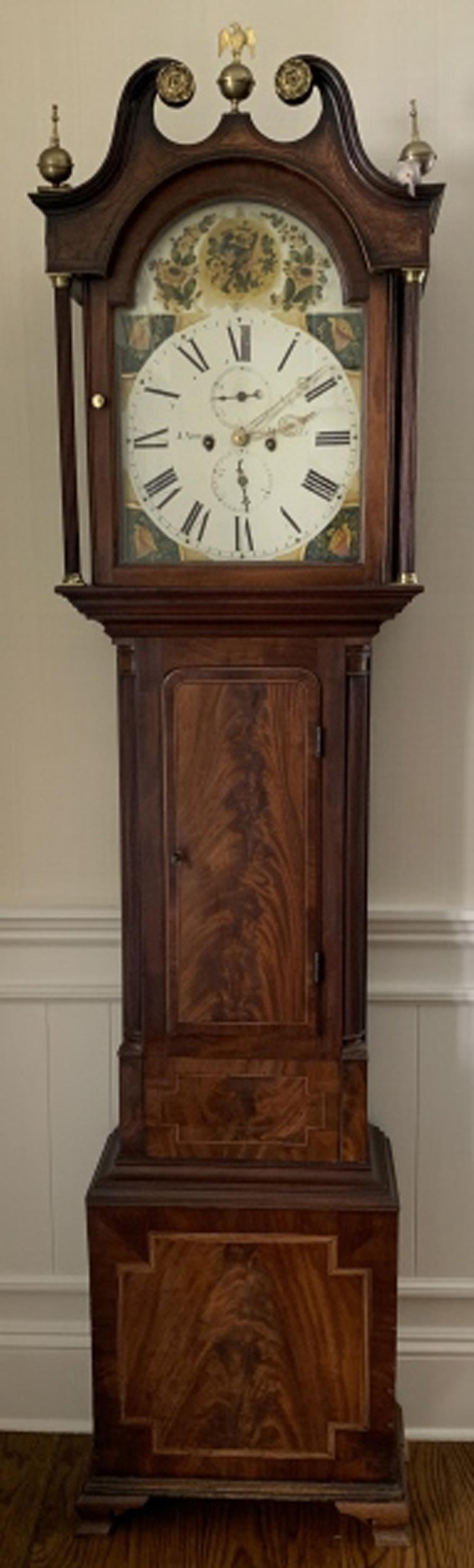
Antique clock value quick checks
Start with maker, movement type, case material, dial originality, hands, pendulum, weights or key, serial or maker marks, service history, replaced parts, running condition, veneer or case damage, provenance, and recent sold-comparable evidence. Compare related guides for antique clock values, mantel clock identification, and free clock appraisal before pricing a clock.
Antique clock pricing attracts a lot of confusion because collectors do not value these objects in a straight line. One buyer looks for a rare Grandad movement, another values a perfect enamel case, and a third is drawn by provenance. You cannot price a clock like a commodity index. You price a clock as a complete object: maker intent, craftsmanship, condition, and market mood all arrive together.
If you are planning to sell or insure an inheritance piece, the first step is to separate what you already know from what can be estimated. A safe first-pass process is to build three buckets before any discussion of numbers:
- Identity bucket: maker, type, country, period, movement family.
- Condition bucket: movement health, finish, case integrity, and signs of alteration.
- Demand bucket: how many active collectors care about this specific family right now.
This guide keeps the process practical so you can estimate a reasonable value range and avoid common pricing mistakes.
How collectors price antique clocks
Most people start with age. Age is real, but it is not the engine by itself. In watch and clock markets, age acts as a base filter: the earlier the object, the harder it is to replace, but age without condition rarely commands a premium. Maker attribution, especially for known specialists, can move value in larger jumps than year labels alone.
Main price drivers:
- Maker and school: clocks from recognized houses and established schools hold stronger floors. A clear silverplate finish alone does not confirm prestige without documentation.
- Movement quality: a complete, original movement with documented servicing history is usually valued much higher than a decorative case-only shell. Missing parts, modified mechanics, or rough repaints reduce predictability for buyers.
- Condition and originality: restorations can be positive for wearability, but they are deductions if they obscure original techniques, patina, or dial design. Honest conservation usually beats cosmetic reconstruction for value stability.
- Completeness: pendulums, key mechanisms, hands, and dials included as a matching set are worth more than fragmented pieces sold separately.
- Provenance and paperwork: ownership records and photographs from prior exhibitions, appraisals, or family estates improve confidence and reduce buyer risk.
- Collector segment and channel: dealer buyers, watch-curious collectors, and interior-design buyers often prioritize different traits in the same lot.
One practical reality in 2026 is that collectors in our category are paying more for clear service pathways than broad age claims. A buyer who knows how much effort is left to make a clock safe, legal, and wearable often pays a smoother premium than one looking for a “story only” object.
Read the object like an appraiser before reading a price
Start with provenance-like clues you can verify quickly. In a practical inspection, a clock that survives close handling will almost always outperform one that fails at this stage.
Movement-level clues
- Check whether the movement is complete, period-correct, and serviceable, not just present.
- Verify alignment between dial layout, escapement style, and gear geometry. Mismatched replacements are common in estate handling.
- Look for movement marks, serial patterns, and hidden screws that identify whether case and mechanism were born together.
Case and face clues
- Confirm if the patina has natural oxidation or heavy, modern retoning.
- Measure wood/metal joint wear near hinges and pivots.
- Check whether hands and dial numerals are replacement pieces and whether they are compatible with the mechanism width.
A good way to document this quickly is to write a condition map with 4 grades: original, fair, repaired, or replaced. Buyers and appraisers use this map faster than broad adjectives like “nice” or “very old.”
Use this as an anchor and then apply three filters before finalizing an expected value:
- Are the maker and movement details equally strong in both objects?
- Did the comparable need cosmetic intervention at time of sale?
- Was it sold in a private room, dealer lot, or broad public auction?
If any filter fails, do not linearly interpolate the price. Use a broader range and document why the adjustment exists.
Collector-ready valuation checklist
Use this before listing, insuring, or sending an item to appraisal:
- Identify type and family: mantle, bracket, wall, regulator, mantel-shelf, carriage, or mantel accessory clock.
- Verify movement status: complete, partial, or replaced. Photograph all major pivots and visible escapement marks.
- Record condition: case splits, glaze cracks, rust, missing weights, and water exposure signs.
- Confirm provenance: family archive, previous appraisals, photos, storage records.
- Match market evidence: filter by function, maker tier, and finish level before considering headline numbers.
- Build scenario values: conservative, fair-market, and optimal if sold to the right buyer segment.
- Choose channel: direct sale, auction, or appraisal-led marketplace strategy based on confidence.
This sequence helps keep the conversation from becoming emotional around a single number. A clock with imperfect details often has a predictable value, but only after the right segment sees it.
Common valuation mistakes that create avoidable discount
Collectors and sellers make mistakes in similar ways, usually from trying to speed up the process.
- Overfitting a single sold lot: copying one high-price line into all comparisons.
- Ignoring finish mismatch: polished pieces do not carry the same premium as period-correct patina.
- Assuming movement age equals value: a rare mechanism can still be commercially weak if incomplete or unstable.
- Skipping provenance: uncertain backstory often produces a “buyer fatigue” discount of a item-specific amount or more.
- Forgetting channel costs: shipping, restoration, attribution review, and sales fees directly reduce net value.
Each item in this list may sound familiar, but together they explain most valuation swings in private sales and estate handling.
Two-step intake
Get the right appraisal for your clock
Share a few details and we will route you to the right valuation path before you decide sell, insure, or consign.
Secure intake. Routed to the right specialist. Checkout only if you want to proceed.
This framework is intentionally conservative. It prevents chasing unrealistic price claims and helps align your next action (repair, list, consign, or hold).
Where to sell and how channel changes value
How you sell often matters as much as what you sell. Private sale, dealer route, auction house, and online venue each price a clock differently:
- Private sale: lower fees, slower certainty, stronger bargaining power for both sides when trust is high.
- Dealer route: best when urgency is high, but maker-specific premium depends heavily on representation and photography quality.
- Auction: can accelerate value discovery but broadens risk around buyer psychology, lot timing, and reserve setting.
- Online marketplace: best for niche clocks with niche visual appeal and easy logistics; often discount for verification gaps.
For any route, your best leverage item is an accurate condition memo plus clear documentation trail. Buyers pay for certainty, not mystery.
Short FAQ for owners
Do I need a full appraisal before I list?
If you are deciding a sale deadline, a short pre-appraisal from a qualified specialist is still usually a better first step. It prevents unrealistic reserve targets and gives you a stronger channel strategy.
Can a clock with a restored movement sell well?
Yes, if the restoration is documented and reversible. Buyers generally accept honest conservation more than guesswork. Hidden restoration often creates the bigger price risk.
What if I cannot identify the maker?
Use movement traits, maker marks, and photos of internals to establish a likely family. Even partial identification is useful when combined with condition and channel analysis.
Search variations readers ask
- How much is my antique clock worth with no paperwork?
- How to tell an documented 19th-century mantel clock from a replacement
- What does an antique clock appraisal actually include
- How condition and movement quality affect auction value
- Best way to price a mantel clock for estate sale
- Antique clock restoration impact on resale value
- How to avoid overpricing antique clocks online
References
Comparison tables and price context shown here are educational references from Appraisily’s internal valuation workflow and are not a sale confirm. For methodology and standards, see Editorial policy.