
French oak draw-leaf table: appraisal and value basics
French oak draw-leaf table research should start with identification, condition, provenance, and item-specific market evidence. Use this guide to compare the signals that matter before paying for a formal appraisal or deciding whether to sell.
Before you restore or sell: confirm the table and its value
Draw-leaf tables are frequently altered over time: later leaves, refinished tops, replaced hardware, and shortened legs can all change value. A quick appraisal helps you price it realistically and avoid irreversible restoration mistakes.
- 19th-century construction and originality checkpoints
- Condition issues that lower oak table values
- Pricing guidance backed by market comparables
Secure upload. No obligation.
A French 19th-century solid oak draw-leaf table is a classic "workhorse" antique: built to be used every day, but valuable enough that condition, originality, and quality of carving matter. Draw-leaf tables (sometimes called "pull-out leaf" tables) extend by sliding one leaf from each end on hidden runners — a design that became popular for dining rooms because the leaves store inside the table.
The table described here measures roughly 71" L x 42" W x 30" H and expands to about 111" with both leaves. That generous size is a plus for modern buyers. In most U.S. markets, a well-presented example in good structural condition typically falls into a a value that must be established from current, topic-matched sales retail/insurance-style range — with notable exceptions for documented makers, exceptional carving, or significant restoration needs.
How We Research Valuation Data
Our appraisal guides are based on auction results, dealer pricing data, and professional appraiser insights. We may earn a commission when you use our free professional appraisal service. Learn about our editorial standards.
Value snapshot (what the market usually pays)
For antique dining tables, the most important pricing question isn't "is it old?" — it's is it usable, stable, and attractive in a modern home? Draw-leaf tables can be perfect for that: everyday size when closed, large enough for entertaining when extended. Compare the construction questions with this guide to a Victorian oak table before treating a stylistic resemblance as an origin claim.
- Typical value band: a value that must be established from current, topic-matched sales (good condition, solid oak, functional leaves)
- Can be higher: documented maker, exceptional carving, original finish, strong provenance
- Can be lower: structural looseness, warped top, missing/stuck leaves, heavy refinishing
What is a draw-leaf table?
A draw-leaf table hides extension leaves under the main top. When you pull a leaf from one end, it rides on a "runner" (sometimes called a bearer) and supports itself. Many designs have one leaf on each side, so the table expands symmetrically. Compared with loose leaves or modern telescoping tables, draw leaves are simple and durable, but they do wear.
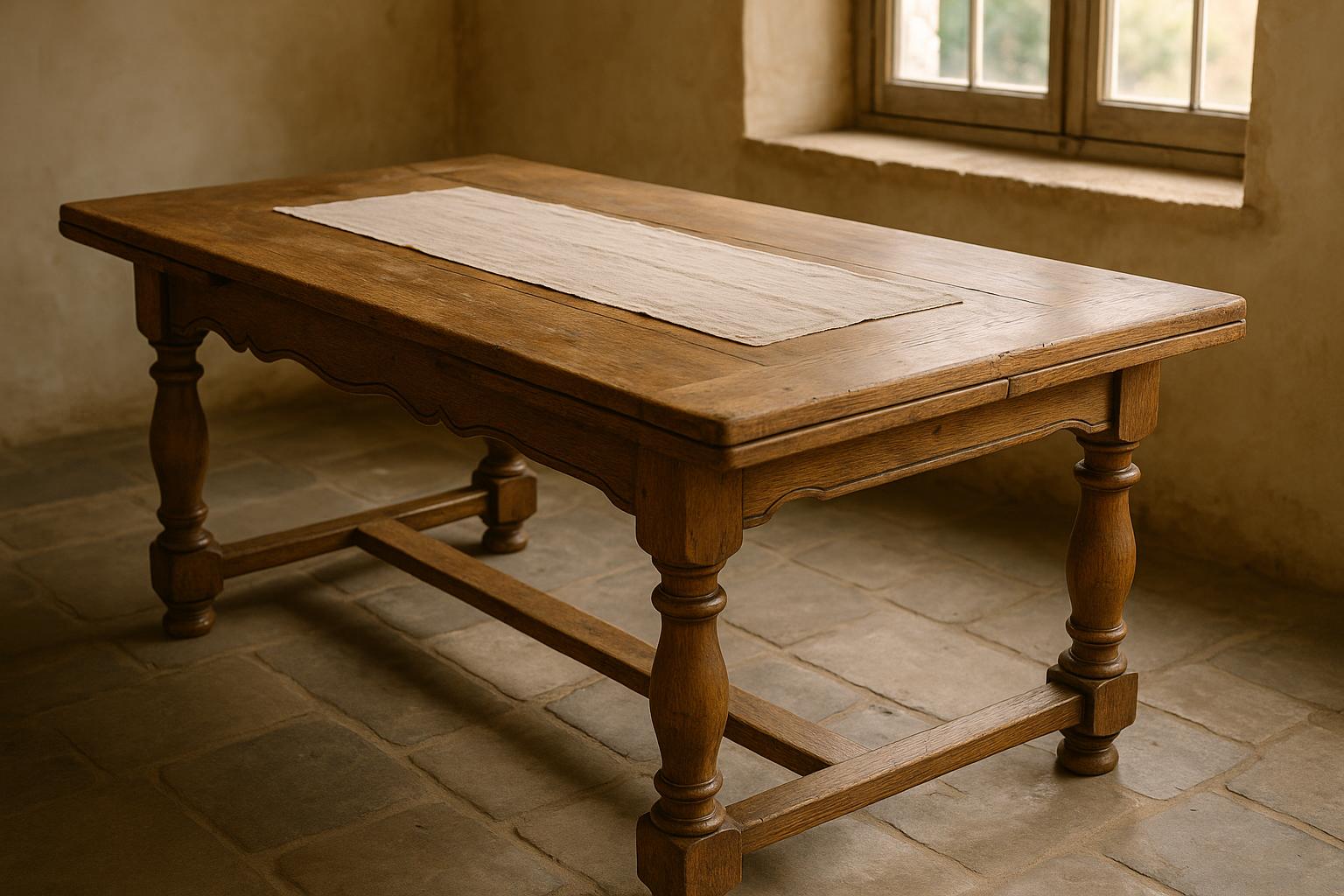
How to identify a French 19th-century oak draw-leaf table
The strongest identification comes from construction evidence in hidden areas. Even a beautiful table can be a later revival or a heavily altered survivor. These checks do the most to confirm age and originality.
1) Confirm it's solid oak (and not oak veneer)
- End grain: Oak shows open pores in end grain (you'll often see "straw-like" pores).
- Ray fleck: Quarter-sawn oak can show shimmering ray fleck on broad surfaces.
- Edges and underside: Veneered tops can reveal seams or a different core wood at edges.
2) Look for period joinery and tool marks
Late-19th-century French furniture commonly mixes hand and early machine work. You're looking for consistency: the same story told by the underside of the top, the apron joints, and the leaf runners.
- Apron-to-leg joints: mortise-and-tenon (often pegged) is a good sign.
- Runners/bearers: older runners show wear tracks, darkening, and repairs that make sense for use.
- Fasteners: some later screws are normal; a full set of shiny modern screws can indicate rebuild.
3) Style clues: French provincial vs. renaissance revival
Many French oak tables blend rustic provincial forms with Renaissance-revival elements: turned legs, carved stretchers, and heavier aprons. Regional workshops varied widely, so don't expect one "perfect" pattern. Instead, ask whether the carving quality matches the claimed age.
Condition checklist (what impacts value most)
For tables, structural stability and top condition drive value more than minor cosmetic wear. Before you price it, check these:
- Top flatness: cupping or twist (especially across the leaf seams) can be expensive to correct.
- Leaf fit: leaves should sit flush; sagging leaves often mean worn runners or broken supports.
- Joint tightness: gentle corner wobble usually means loose mortise-and-tenon joints.
- Finish history: heavy stripping and polyurethane can lower collector interest.
- Leg height: shortened legs are common; confirm it still sits at dining height.
Recent comparable sales (real-world anchors)
Auction prices vary by location and buyer pool, but they're useful anchors. The following examples come from our auction dataset and show a realistic spread for French country/primitive tables with similar function and age range.
| Auction | Date | Lot | Description | Hammer |
|---|---|---|---|---|
| Clars Auctions | 2021-02-21 | 6345 | French primitive harvest table, oak, breadboard ends, two 18" leaves | a value that must be established from current, topic-matched sales |
| Clars Auctions | 2021-03-21 | 7356 | French country work/harvest table, circa 1800, plank top | a value that must be established from current, topic-matched sales |
| Auctions at Showplace | 2025-01-09 | 122 | Louis Majorelle Art Nouveau dining table with extension leaves (designer tier) | a value that must be established from current, topic-matched sales |
Why your table can land at a value that must be established from current, topic-matched sales
The Clars tables above sold in the low four figures at auction. Your table's larger footprint (71" to 111") and the draw-leaf dining use case typically push it higher in retail settings, especially if the leaves work smoothly and the table presents well.
- solid, stable base with no persistent wobble
- leaves present and functional, with flush fit
- top has manageable wear (no major splits, no severe warping)
- finish is either original/aged or a tasteful older refinish (not thick modern gloss)
If the table needs structural work (runners rebuilt, joints re-glued, top flattened), values can drop quickly because repair costs often rival the price of buying a "ready to use" example.
Best ways to sell a large antique dining table
- Local sale (Marketplace / local dealer): fastest, but buyers factor in transport.
- Consignment: can net a better price for presentation, but fees apply and timelines vary.
- Auction: good when decorative value is high; shipping difficulty can reduce bidding.
For the best results, photograph the table in all three states (closed, one leaf, fully extended), plus close-ups of the underside, runner wear, and any repairs. The same documentation approach is useful when comparing a French Provincial-style tea table, although scale and use differ.
Frequently asked questions
How can I tell whether a draw-leaf table is antique?
Check the underside, runners, joinery, fasteners, wear patterns, and repair history together. No single stylistic detail proves a 19th-century date.
Does refinishing reduce an antique oak table's value?
It can reduce collector interest when an original surface is stripped or covered with a heavy modern finish. A careful older refinish may matter less than structural stability and presentation.
What photographs help with a table appraisal?
Photograph the item closed, with one leaf open, and fully extended, then add the underside, joinery, runners, hardware, repairs, damage, and a tape measure showing dimensions.
Are auction comparables the same as my table's value?
No. They document outcomes for particular lots in specific sales. Differences in dimensions, condition, construction, location, fees, and buyer demand can make the item perform differently.
Search variations buyers ask
These are common long-tail queries tied to French draw-leaf oak tables:
- how much is a French draw leaf table worth
- how to tell if a draw leaf table is antique
- solid oak draw leaf dining table value
- French provincial oak table appraisal
- what is a draw leaf table mechanism
- does refinishing an antique oak table reduce value
- how to fix a loose draw leaf table runner
- best way to sell a large antique dining table
Each question is addressed above (mechanism, attribution evidence, condition, market evidence, and selling options).
References
- Victoria and Albert Museum (decorative arts articles)
- Fine Woodworking (construction and joinery background)
- Sotheby's articles (market context for decorative arts)
Wrap-up
A French oak draw-leaf table is valued for usefulness + originality. If you confirm solid oak, consistent construction, and a functional leaf mechanism, the a market-dependent range is a realistic planning number for many markets. If you're deciding between restoration and sale, document condition first — and avoid aggressive refinishing until you know whether originality is part of the value.