
Does this household item belong on the list?
This list is for someone emptying a kitchen cupboard, dining-room sideboard, or estate closet and trying to decide whether a tea service, transferware plate, silver drawer, Pyrex nest, or lamp still belongs in a specialist sale.
The strongest tells are visible from a photo:
- Pieces that began as one service: teapot with cups, nested bowls, or counted flatware in one pattern.
- A readable maker, pattern, or factory stamp on the base, back, handle, or lid.
- Rims, lining, wiring, labels, and boxes that still belong to the object.
- A theme-clear group, not a junk-drawer mix of leftover kitchenalia.
A stamp is a lead, not a finished identification. Matching pieces and surfaces that still belong to the object are what keep a household lot on this list.
Check the tea service and the transferware first
1. Complete tea sets and place settings
Count the teapot, hot-water pot, sugar, creamer, cups, and saucers as one object. The same backstamp across those pieces is the service; a later cup with a different foot is a leftover.
Glaze loss on rims and broken handles should be photographed before the set is split. A six-piece silver tea service is still this form even when the metal is not porcelain.
Check first: Line up matching marks on the pot, cups, and saucers, then set chipped handles aside.
2. Transferware and hand-painted ceramics
Transfer-printed rims sell as tableware. Light the edge for chips, crazing, and undocumented glaze fills before you trust the display face. Related plates in one colorway read as a group; an isolated saucer is a remnant.
Hand-painted household ceramics follow the same logic at a larger scale. Pair logic and a readable maker matter more than a style word on a listing. Use the porcelain-mark guide when the base is the evidence.
Check first: Light the rim for chips and keep related plates in one group.
What similar items actually sold for
To help ground this guide in real market activity, here are recent example auction comps from Appraisily’s internal database. These matched sales are market context only, not an object estimate or identification, and they do not guarantee a price for your specific household item.
Shown USD range: USD 60-USD 4,500. Median of these 3 USD examples: USD 1,400.
| Comparable | What sold | Auction house | Date | Lot | Source-reported amount |
|---|---|---|---|---|---|
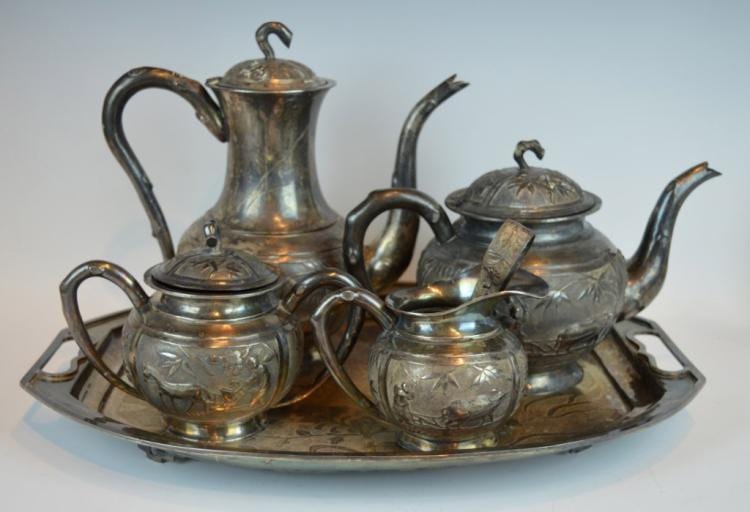 |
6-Piece Chinese Silver Tea Service | Eddie's Auction | 2015-01-17 | 176 | USD 4,500 (buyer’s-premium treatment unknown) |
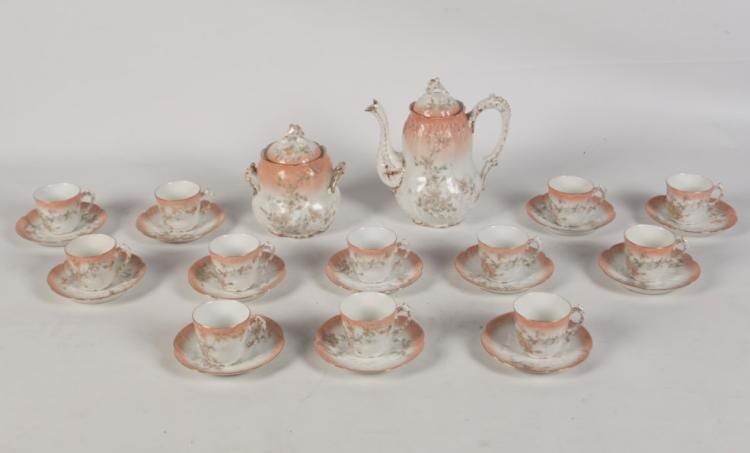 |
28 PIECE FRENCH PORCELAIN TEA SERVICE | Clements | 2015-01-18 | 241 | USD 60 (buyer’s-premium treatment unknown) |
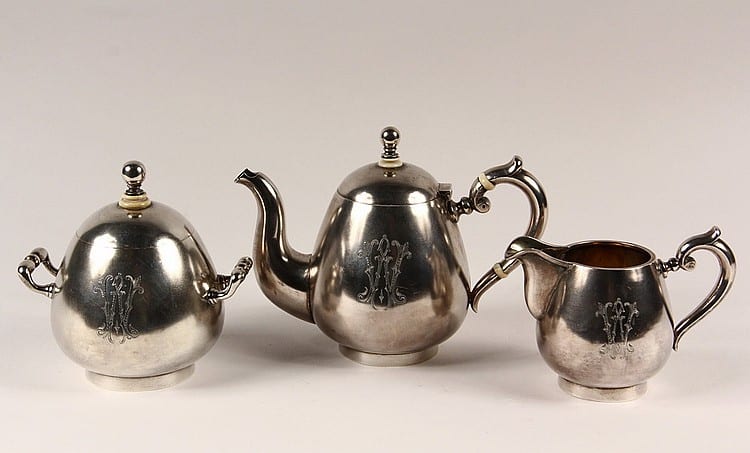 |
TEA SERVICE - Russian 84-Silver (3) Piece Tea Service with gilt washed interior, St. Petersburg 1893, assayer Alexander Sevier, probably by Erik August Kollin. 35.82 ozt tw. | Thomaston Place Auction Galleries | 2015-02-08 | 1188 | USD 1,400 (buyer’s-premium treatment unknown) |
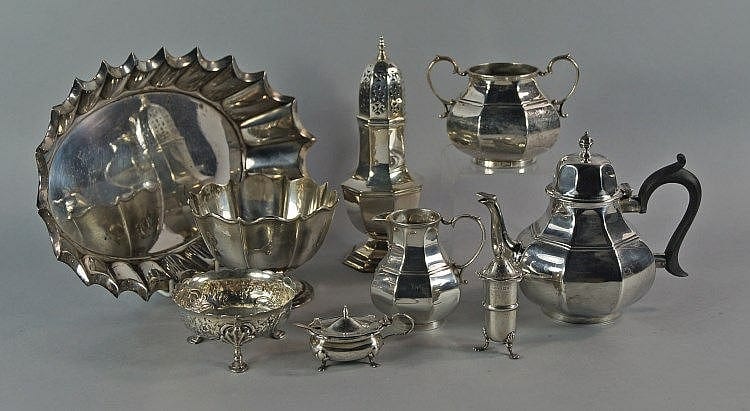 |
A Victorian silver bachelors tea service | Roseberys | 2015-02-07 | 224 | GBP 260 (buyer’s-premium treatment unknown) |
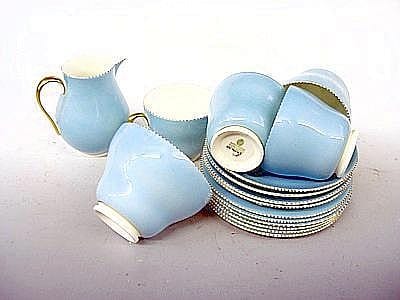 |
A Wedgwood bone china part tea service, decorated | Fieldings Auctioneers Limited | 2007-10-13 | 97 | GBP 3 (buyer’s-premium treatment unknown) |
How these auction records were verified
Each row retains its exact source URL, lot identity, retrieval time, access result, and immutable record hash. Inspect the public comparable provenance record.
Disclosure: prices are shown as reported by auction houses and are provided for appraisal context. Learn more in our editorial policy.
These auction results are market context, not an object estimate or identification.
Copper cookware through themed household bundles
A typical downsizing kitchen dumps plated servers, two transferware plates, and a glass sugar jar into one “lot it all” box. Split by material first, then keep any complete set together. The mixed damaged remainder is accessory material.
3. Copper cookware and old countertop appliances
Sight the handle rivets, side seam, and tin lining. Shine is not the evidence; a saucepan that still sits flat with its handle tight is the cookware form.
A grouped early-20th-century French copper lot is a cookware set. A single dented lid is leftover metal.
Check first: Photograph handle attachments and the interior lining before any polish.
4. Vintage silver and silver-plated cutlery
Read STERLING, 925, or a national hallmark on each piece, then count forks, spoons, knives, and servers in one named pattern. EPNS or unmarked plate is a different drawer. See the silver serving-piece guide before you weigh a mixed lot as scrap.
A Stieff Rose service is a cutlery set. Unmatched souvenir spoons are not.
Check first: Read STERLING versus plate, then count pieces in one pattern.
5. Vintage glassware and early Pyrex
Name the pattern from the backstamp and the color band, not from a shelf tag. A nested Americana mixing-bowl set is one object; mixed leftover kitchen glass is not.
Stack and profile shots let a buyer confirm the nest. For other colored and cut-glass families, see vintage glass types collectors still pay for.
Check first: Turn every bowl over and count whether the color band nests as one set.
6. Jadeite and colored glass vessels
Jadeite on this list means kitchen glass, usually Fire-King, not jewelry. Even color across a dinnerware or mixing group is the tell; a single green bowl with no mark is a leftover.
Rim and handle chips cut a counted jadeite group faster than light utensil marks.
Check first: Confirm Fire-King or another glass backstamp, then run a finger around every rim.
7. Waterford-style and premium crystal
Document the pattern, the acid stamp, and whether the lot is drinking ware or a decorative fragment. A counted group of champagne coupes is crystal tableware; a chipped vase shard is not.
Clouding and rim chips should be shot before the glasses are wrapped together.
Check first: Find the stamp, then inspect bowl cuts and rims under raking light.
8. Vintage textile pieces with complete provenance
A quilt sells when the pattern, region, and size are readable. Map stains and support stitching; “oversized” is not a measurement.
A Mid-Atlantic sunburst coverlet with a date story is this form. A bundled rag lot with no care history is not.
Check first: Record length and width in inches, then photograph the stain map before washing.
9. Vintage kitchen clocks and timer devices
Show the movement, the hands, and whether the timer still belongs to the case. “Functionally complete but aged” is the listing lane; “vintage curiosity” is décor.
A kitchen clock/timer form is not a mantel showpiece. Note battery conversions separately from the original mechanism.
Check first: Open the case for the movement and say whether it still times, or is décor only.
10. Gramophone needles, records, and needle-era accessories
Keep original tins, envelopes, and labels with the needles. A counted group of needle tins is the accessory form; a mixed “misc audio” bag is not.
Playable components should be separated from decorative-only packaging before the lot is photographed.
Check first: Keep tins and labels together, then split playable parts from empty packaging.
11. Vintage stationery boxes and writing sets
An inkstand, inkwells, and pen tray that still sit together are a writing set. Cut-crystal wells with a silver stand should be photographed as one object, not as loose glass.
Keep the set dry. Describe working ink status separately from the case.
Check first: Confirm the wells, lids, and stand still belong together before you empty the box.
12. Vintage barware and cocktail service
A named shaker with matching metal finish is a cocktail-service piece. Mixed leftover stemware is not a set.
Shoot interior rims where etching hides. Chipped glass should be pulled from sturdy stems before the lot is offered.
Check first: Match the metal finish across the shaker and tools, then pull chipped glass.
13. Kitchen and dining enamelware
Color is the first photograph; rust and enamel lift are the second. Buyers will accept honest utensil wear. Structural rust through the body is a different object.
A mid-century grouping that includes a named maker such as Cathrineholm is kitchen enamelware. Random enamel fragments are not.
Check first: Tap for loose enamel and list any active rust before you bundle the colorway.
14. Vintage cookware sets and serving trays
Measure length, width, and whether the tray still sits flat. A named Arts and Crafts handled tray is one serving-tray form; a warped mixed platter stack is not.
Do not title metal and brittle materials as one lot. Approximate weight helps a buyer picture the table.
Check first: Sight along the tray for warp, then record exact dimensions.
15. Vintage lamps and decorative fixtures
Photograph the base, socket, and switch as separate frames. If the wiring is unverified, describe the lamp as décor, not as a working fixture.
A named ceramic table lamp is this form even when the shade is later. See the converted-lamp guide when original fuel hardware has been rewired.
Check first: Shoot the socket and switch, then say whether it is offered as décor or as a working lamp.
16. Vintage bottles, apothecary jars, and packaging objects
Capture the top, the base, and any surviving label. A labeled maiolica pharmacy jar is the vessel form; unlabeled filler bottles are décor stock.
Do not advertise a medicinal history the label does not support. Contents, if any, belong in the notes, not in the title.
Check first: Photograph the label and the base mark before you wash either one off.
17. Mixed collectible household bundles with clear theme
A kitchenalia collection with a readable theme is a bundle. A junk drawer is not. Cap the lot at a count a buyer can inspect in one pass, and list each line: pans, lids, tools.
Disclose missing lids, fractures, and later replacements in the first sentence of the lot note.
Check first: Write exact lot lines and keep the theme to one room or one material.
Frequently asked questions
Which vintage household items still sell at auction?
Demand concentrates on complete, named kitchen and dining forms: tea services, transferware groups, sterling flatware, pattern Pyrex, Fire-King jadeite, Waterford crystal, quilts with a readable story, clocks that still look functional, barware sets, enamelware, serving trays, lamps, labeled apothecary jars, and themed household bundles. Age alone is not enough.
Do incomplete tea sets still sell?
Yes, but as leftovers. A teapot, sugar, creamer, and cups that share one backstamp read as a service. Mixed replacements and broken handles usually sell as accessory pieces, not as the set.
How do I tell sterling from silver plate in a drawer?
Read the stamp on each piece. STERLING, 925, or a national hallmark is one story. EPNS, silverplate, or no mark is another. Then count forks, spoons, knives, and servers in one named pattern before you treat the drawer as a service.
Should I polish copper or silver before consigning?
Photograph first. Heavy polishing can erase lining, hallmarks, and the kitchen wear buyers use to date a pan or spoon. Honest tarnish with readable marks is usually easier to judge than a freshly buffed surface.
When is a written appraisal useful for household items?
A written appraisal is useful when a complete service, named silver pattern, or large ceramic pair needs documented support for insurance, estate, donation, or sale. Many mixed kitchen leftovers do not need one. A free photo screen can say whether the evidence is enough to continue.
Search variations answered in this guide
- Do vintage tea sets still sell at auction
- Best vintage kitchenware to consign
- How to tell sterling from plated flatware
- Does old Pyrex still sell
- Vintage household items that move at estate sales
- What condition hurts vintage glass at auction
- How buyers evaluate old copper cookware
- Are vintage porcelain kitchen sets still collectible
- Signs a household lot is ready for a paid appraisal
- Do mixed household lots sell better than single pieces
Sources and method
This rewrite keeps the original 17 household forms. Auction comparable rows are reserved for the injected table and are not restated as sold prices in the cards. Five completed Appraisily appraisals from the evidence pack appear only on transferware/ceramics and silver cutlery. The other 15 forms have no matching completed appraisal at the pack threshold; none were invented.
Written and reviewed by the Appraisily Editorial Team. Editorial and comparable-sales standards are in the editorial policy. Last reviewed August 20, 2026.